When I was young – perhaps five years old – I caught on to the notion that you could call in to the radio station and request songs. I enjoyed listening to the oldies stations and wondering what song might come up next. This was in the era of Casey Kasem and the power of the Billboard Top 100, and music was a little more of a communal cultural situation.
In any case, I was a radio person back then and I liked the idea that you could influence what was going to be played. One day at the age of 8 or so I decided that I wanted to call in to request the Gordon Lightfoot song The Wreck of the Edmund Fitzgerald. I got the number. I (kind of) worked out what I was going to say. But when I got on the air to make the request, I made a fundamental mistake.

You have to understand that my father had a large record collection, and I knew about a lot of different music from my older siblings, so I had heard a lot of names. It was an easy mistake for a kid to make, damn it! When the DJ asked me what I wanted to hear, I was a little flustered and blurted out:
“Can you please play The Wreck of the Ella Fitzgerald by Gordon Lightfoot?!”
This faux-pas got quite a laugh, and not only from the DJ, but also from my family. In the aftermath of this flub I can state I have known the difference between the Edmund Fitzgerald and the great singer Ella Fitzgerald since that very day.
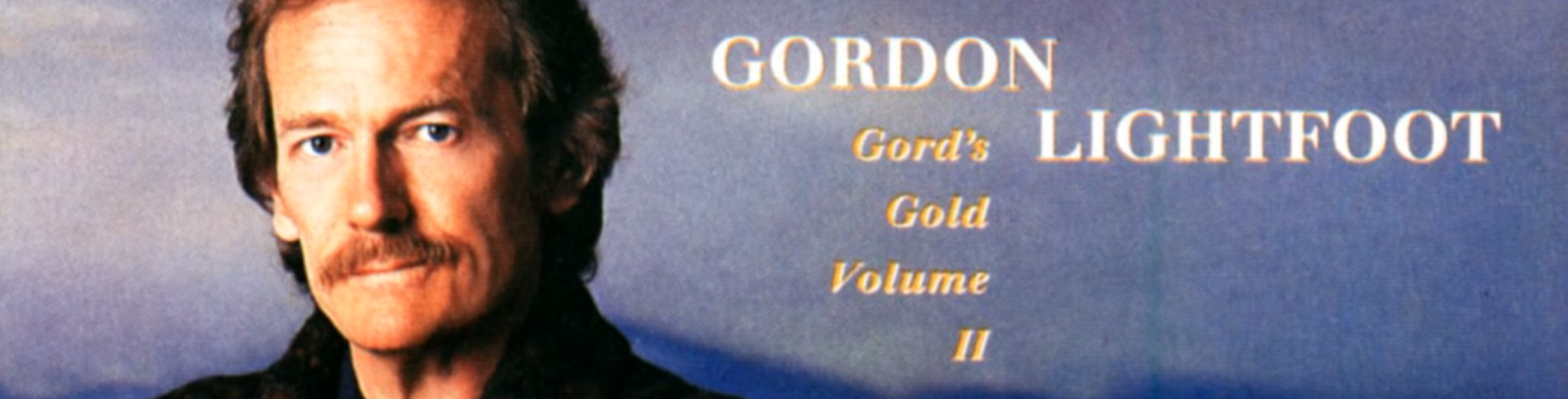
In all seriousness, though, given that I was so interested in the song it was only natural that not so many years later I would start reading books and articles about the events surrounding this notorious loss of the Edmund Fitzgerald. Gordon Lightfoot was one of the first singer-songwriters who captured and fired my imagination. He (among some others) caused me to think about time and experience in a different way; as something within me and happening alongside me, not just random stuff apart from my life. Perhaps it’s a testament to the very idea of songwriting and musicianship as artforms. For me, Lightfoot embodied that troubadour tradition. These artists sing the tales of history, document it in personal ways, and help shape a democratic view of history itself.
Of course, everyone knows most famously Bob Dylan as one of these history-singers. But there were many others. I would include people like Sister Rosetta Tharpe, Billie Holiday, Utah Phillips, and Natalie Merchant amongst that group. So many… From Woodie Guthrie and Townes Van Zandt to Tracy Chapman and Ani DiFranco and P.J. Harvey. It’s such a rich – and necessary – tradition.
I find it fitting that my interest in the event of the wreck of the Edmund Fitzgerald and learning about the history surrounding it – not to mention becoming curious about the whole Great Lakes region – is all connected to the art of singing out moments of collective experience. This, like so many other things, I owe to art and artists. This is the richness of life: Not in things, but in awareness. Not in owning, but in being.

Detroit Historical Society
Today is the 50th anniversary of that ship sinking on Lake Superior. There are many interesting articles currently available from the days and weeks leading up to today (including this one from the Smithsonian and this one from Popular Science). So read about the ship. Read about the song, and listen to it (here’s the first version, but I’ve always been partial to the 1988 re-recording Lightfoot made – it’s a tad longer and has a slight mood adjustment that feels symbolic and mystical to me).
Then take at least 29 seconds – one “for each man on the Edmund Fitzgerald” – and may those moments of silent remembrance of them cause you to consider what human commerce, ingenuity, and hubris can do in the face of Nature’s power.
 eikonktizo