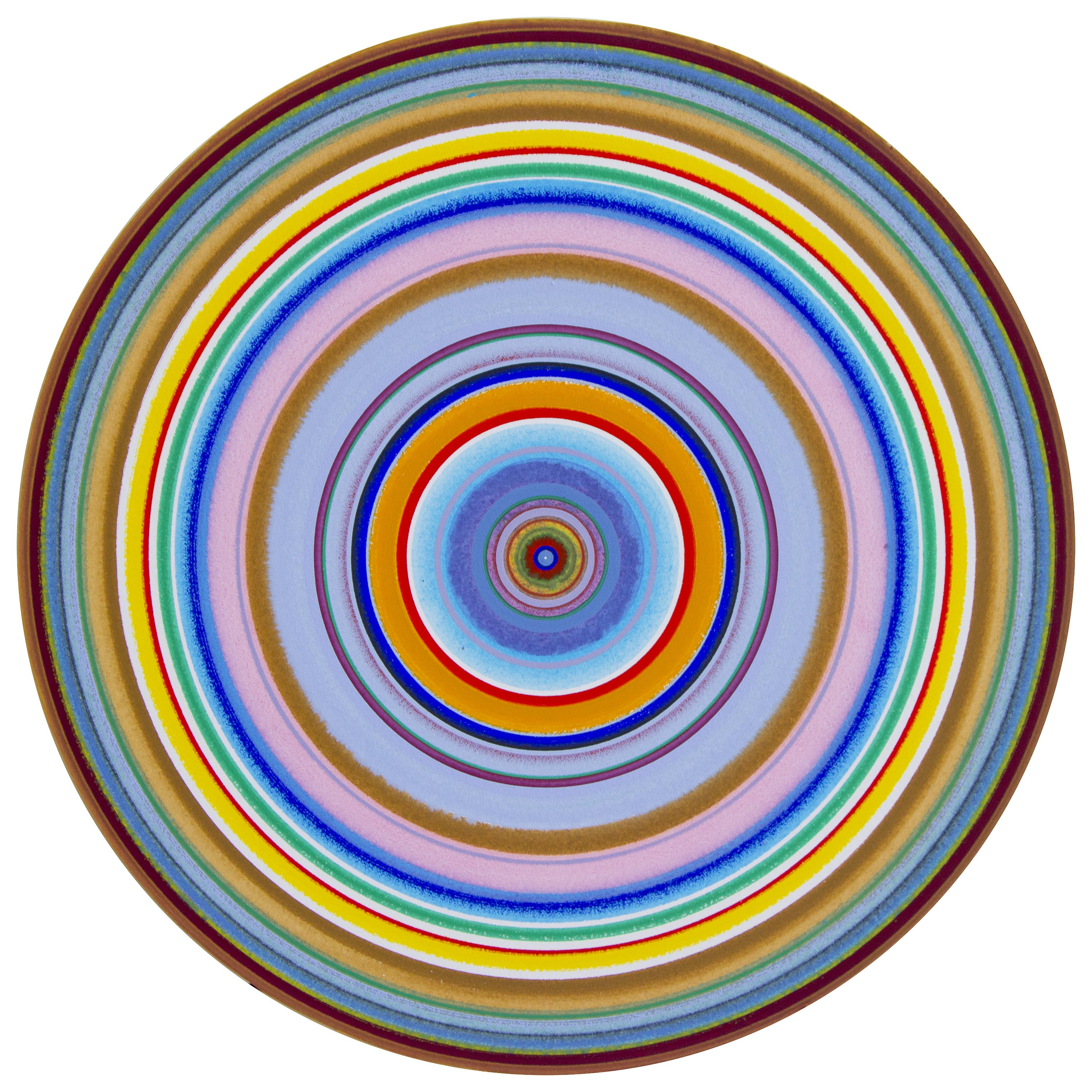
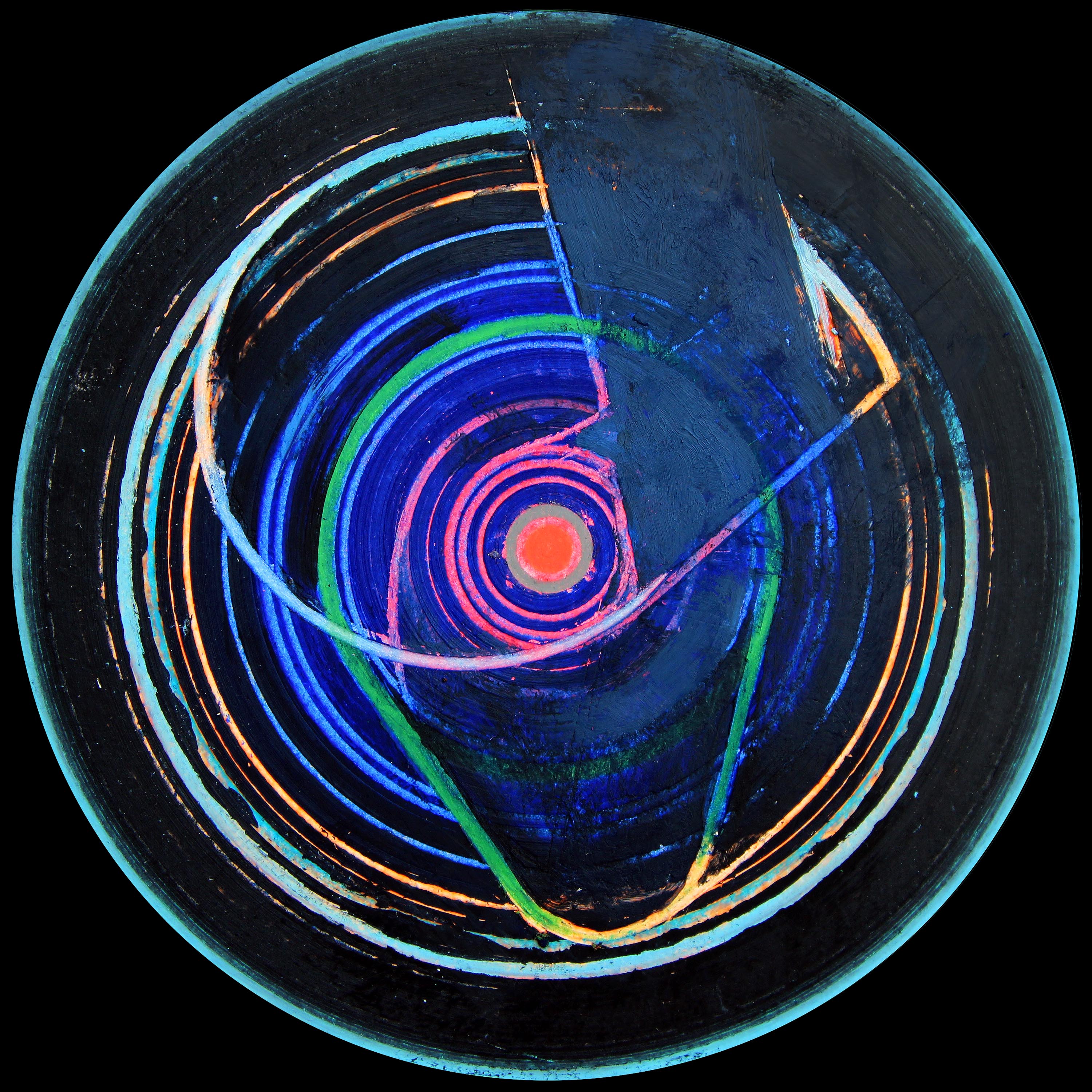
Beneath Ahab’s Doubloon (Mandala)
Gouache on paper mounted on panel, 15 inches in diameter by 1 inch thick, 2013.
Beneath Ahab’s Doubloon (Mandala)
Gouache on paper mounted on panel, 15 inches in diameter by 1 inch thick, 2013.
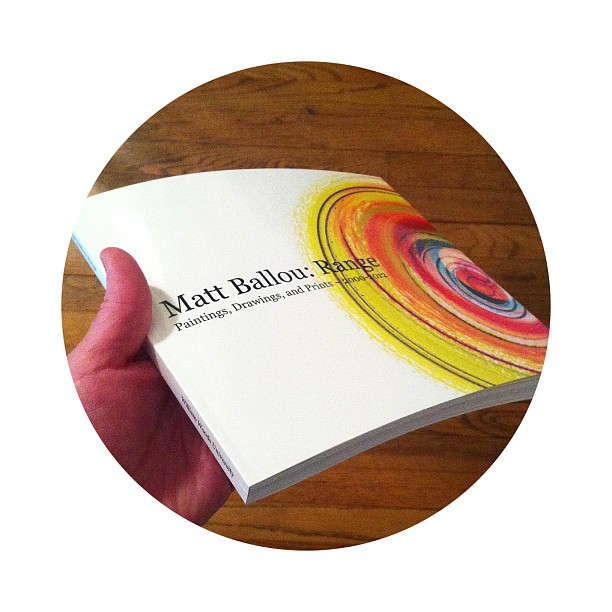
My new book, Range: Paintings, Drawings, and Prints ~ 2000-2012, is now available for purchase!
Back at the end of 2012 I had a solo exhibition at William Woods University. You can read about it and see some images from the reception here. It was a fantastic experience, and I am grateful to Jane Mudd and Jennifer George-Sain for inviting me to present my work there. It really was a resounding success.
I coordinated with William Woods to create a catalog of the exhibition that would present all of the work that was on display, as well as numerous additional artworks that couldn’t be included in the show but which have bearing on the overarching themes and formal ideas with which I was working. On top of the dozens of images it contains, the book features a series of short texts by me, as well as an introductory piece by the William Woods Gallery Coordinator Jennifer George-Sain. My mini-essays are designed to introduce the different shifts in my production and explain how the different series of work can be understood together. The title of the show, Range, really says it all; there has always been a broad range in my approach to artmaking. In spite of this, all of the pieces contain important threads that tie them together, and this book allows me to briefly introduce those connections and celebrate well over a decade of vibrant, productive time.
This full color book is 192 pages long and features many detail images that highlight special passages in certain artworks. It’s a pretty nice book.
Now here’s the special deal: I know the book is expensive. When you click over to the bookstore from the link below you’ll see just how expensive. But I am going to offer a hand-made, original mandala to everyone who provides proof of purchase. Let me say that again: for the price you pay you don’t just get the book, you get an original work of art as well.
You may be asking just what sort of artwork are we talking about? The pieces will be unframed works on paper featuring a mandala. When you send me your proof of purchase (the receipt that comes with the order or a picture of you holding your copy of the book, etc), I’ll provide you with some examples of what pieces are available and you can choose your own work. Each piece will be made on a piece of high quality fine art paper that is approximately 9 by 9 inches square (give or take a bit). Obviously since these are mandalas the works will be circular but the paper itself will be square. Each piece will be made in one or more of the following media: acrylic, oil, chalk pastel, oil pastel, colored pencil, graphite, and gouache. If you’d like to see a few examples of the type of works I’m describing, click here, here, and here.
If you’re interested, click the image below to see the book purchase page:

If you make a purchase, feel free to email me at balloum (at) missouri (dot) edu to find out how to get your artwork.
One of my former graduate students, Sloane Snure Paullus, lives in The Lone Star State and her family picked up a couple of my mandala tondos. Here’s the evidence:

Check out that green JFK bust! Booom!

I’m just honored to get to have my work in such close proximity to that chandelier, those lamps, and that rug! Nice interior design, Sloane!
Dedicated to George, who introduced me to A Question of Balance in the mid-80s.
~
It is interesting what stays with us from the early years of life. Seemingly banal or incidental elements can mysteriously transmogrify into certain means of grace. And grace is always strange.
It follows then that these grace-laden elements might be loaded with weirdness or saturated with some slow-acting agent of unforeseen change. Of course, that’s part of why the grace that has touched my life is different from the grace that’s touched yours. So often what is tremendously meaningful to one heart seems trivial, shallow, or just plain boring to others. Sometimes what changes me forever would do nothing to the person right next to me.
Nowhere is that fact more apparent than in the music with which we fill our lives. The bands we become attached to, what songs move us, or which albums are soundtracks to our personal transformations are usually radically different for everyone. Everyone seems to have a different constellation of sounds, a different set of aural landmarks. When we do find someone who shares our deep connection to a piece of music there’s instant rapport. When we encounter those who seem unable to grasp the importance of our historical tracklist we can find ourselves incensed.
With that preface let me say that A Question of Balance is one of the major musical touchstones of my life. Released in 1970 by The Moody Blues, Question is, for me, one of the most significant works of art to which I’ve been exposed. It is strange. It is bombastic. It is epic. It is philosophical. It risks existential engagement. It tries to take on everything. It is critical of our default positions. It asks us if this world we’ve made is really what we want. Before I knew much of anything about the wider world, I was connecting with the introspective spiritual and societal quandaries the band was dealing with in this classic concept album.
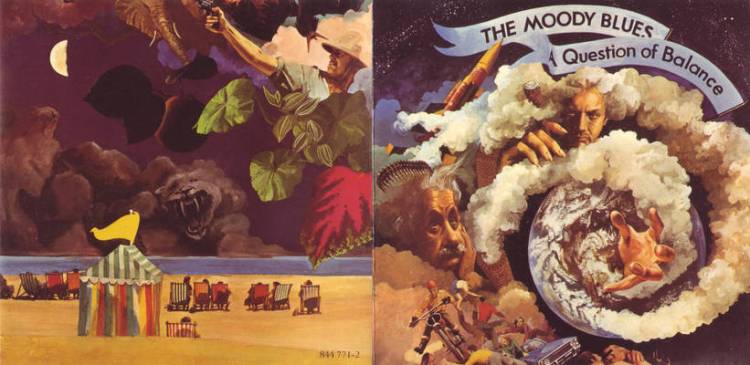
If you are aren’t familiar with the record and want to experience it you can listen to the whole thing here.
Hearing Question as a child was one of the things that would, by the time I was 13 or 14 years old, initiate in me a long-term investigation into the nature of meaning and experience. The sorts of questions the record poses set me off on what has been a lifetime of learning and intellectual exploration. It was a means of grace to me simply because it stimulated me to contemplate those bigger existential concerns that so often get drowned in the machinations of everyday life. Question, along with a number of other factors, created an ongoing state of contemplation in me that helped me avoid many of the pitfalls of adolescence.
There are a thousand things I could say about this record. Like how those jangling guitars at the opening of the album can instantly return me to George’s old golden/mustard/brown Dodge and the smell of propane. Like how the album’s assertions went with Chris and me on our adventures northward so many times. Like how its words were a reminder of the feeling of home as I ventured out across the country in my twenties. The sounds and questions and arguments of A Question of Balance accompanied me on many late nights in the studio, on the road, in contemplation, in worry, in joy.
I could spend time exploring any of those avenues, but there’s one aspect of Question that has really reverberated within me over the years. A major theme of the record amounts to acknowledging the relational consciousness that transcends obsessive, hyper-individualism. This one thread, running throughout the entire record but focused in one particular track, was definitely a seed that found good soil in me.
Below you can read the major content of that single track. Called The Balance (click here to listen to it), it is the last song on the album and is comprised mostly of Mike Pinder’s spoken word recitation of a poem co-written by Graeme Edge and Ray Thomas.
After he had journeyed,
And his feet were sore,
And he was tired…
He came upon an orange grove.
And he rested.
And he lay in the cool.
And while he rested
He took to himself an orange, and tasted it.
And it was good.
And he felt the earth to his spine
And he asked…
And he saw the tree above him…
And the stars… and the veins in the leaf… and the light… and the balance
And he saw
Magnificent Perfection.
Whereon, he thought of himself in balance –
And he knew he was.
~
And he thought of those he angered, for he was not a violent man.
And he thought of those he hurt, for he was not a cruel man.
And he thought of those he frightened, for he was not an evil man.
And he understood…
He understood himself.
Upon this, he saw
That when he was of anger
Or knew hurt
Or felt fear
It was because he was not understanding
And he learned Compassion.
And with his eye of Compassion,
He saw his enemies like unto himself.
And he learned Love.
Then, he was answered.
The tired wayfarer of the poem gains perspective from the Common Grace embedded in the world around him. He relishes the coolness of the orange grove, the simple pleasure of tasting the orange, and – suddenly – the glorious awareness of the Great Order that is before him and beyond him, yet is also permeating him. As he pays attention to the tree, the stars, the leaf, and the light his growing perspective and awareness coalesce into a unifying understanding. The traveler experiences what could be seen as the state of consciousness called Savikalpa Samadhi (something which has more recently been termed The Overview Effect) and he is fundamentally changed in his relationship to other human beings.
Suddenly he’s not obsessing about his rugged individualism any more; he’s thinking of others:
And he thought of those he angered…
And he thought of those he hurt…
And he thought of those he frightened…
Thinking of others – believing that they actually exist and are valuable. Considering others – imagining how your words, actions, or attitudes impact them. Revolutionary ideas, right? But it doesn’t stop there. The journeyman turns his new-found perspective on himself and starts to see that being enslaved to anger and hurt and fear displayed his lack of understanding. In fact, it showed his inability to understand at all apart from a revelation from beyond himself. Realizing this, and sensing his necessary reciprocity with the rest of humanity, our traveler learns compassion. That is, in giving up his self-determined privileged position he can no longer feel superior to or more valuable than those around him. He can, in acknowledging and respecting their value, live out a higher value in himself.
All of this can be passed off as trite, sure. It can be dismissed as sentimental, unrealistic, or melodramatic. It can be ignored as the cheesy platitudes of a bunch of hippies. Sure. But it can also be seen as aligned with the heritage of the great faith and wisdom traditions that have been passed down to us, traditions that certainly inspired the band while creating this album.
I know it’s all more complex than this. I can see how The Balance can come off simplistic and hokey. I know that real change and real meaning require more than a singular experience, more than surge of feeling… but there is something important here, something worth declaring, worth believing. Rejecting sentiments such as those contained in Question seems like such a shallowly postmodern thing to do. What have cynicism and petty ideological divides gotten us? I guess I’d rather stand in awe with the kitschy hippies than smirk in conceit with those who would disdain words – however sentimental – supporting basic human dignity and value.
~
Post Script:
My experience of A Question of Balance is a demonstration of Joseph Kupfer’s ideas about the inherent moral component of experiencing art. You can read more about this concept here.
The album is certainly worth buying and grappling with. Purchase it at iTunes or Amazon.
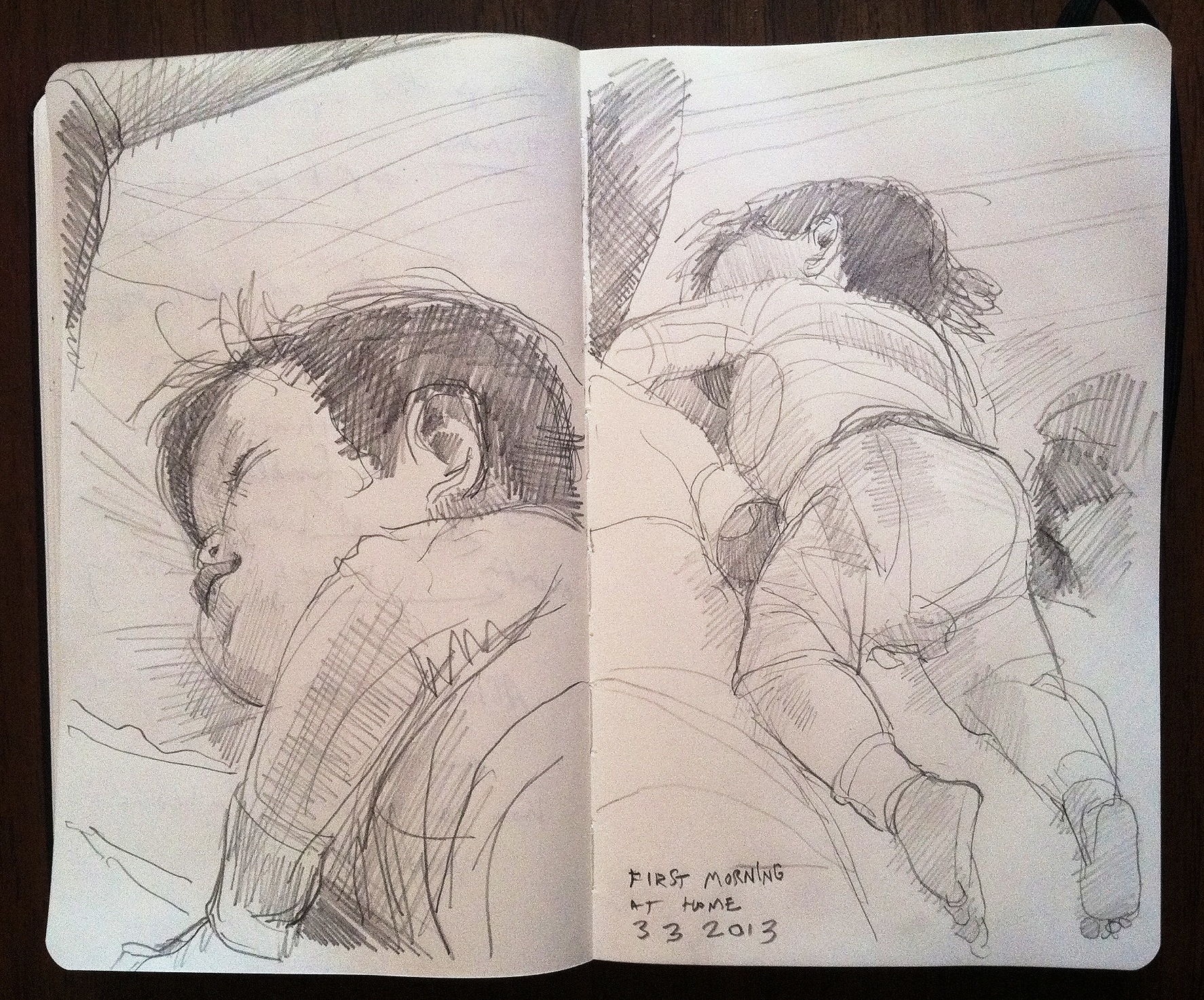
There will be other days to write and reflect on what we have done, how far we’ve traveled, and what is sticking with us… But today, just a simple sketch of my new daughter sleeping in her new bed in her new house.
In just a few hours we’ll be leaving the People’s Republic of China. We are ready; home and friends and family call to us.
Right now, though, CaiQun sleeps nearby. She has no way of realizing how much her life will change. We don’t either. As I looked into her eyes tonight, giving her a final bed-time bottle in her native land, I thought about how rich and beautiful and strange and amazing her country of birth is. We leave it, and hope to return. She is beginning an amazing journey. I’m priveledged to go on it with her, for at least this part.
As we depart China, I again make a post that features some (for me) lasting images of this Land. Two and a half weeks is certainly not enough time to really know much of anything about a country, but we will be forever changed by what we’ve seen, heard, felt, and known here. These images are just part of the rememberance I’ll take with me.
Enjoy. Click to enlarge. Visit China. Hear her sounds and see her sights. Love her people and acknowledge her history.
We’re a part of this world.
![IMG_5607[1]](https://mattballou.com/wp-content/uploads/2013/02/img_56071.jpg)
![IMG_5608[1]](https://mattballou.com/wp-content/uploads/2013/02/img_56081.jpg)
![IMG_5610[1]](https://mattballou.com/wp-content/uploads/2013/02/img_56101.jpg)
![IMG_5559[1]](https://mattballou.com/wp-content/uploads/2013/02/img_55591.jpg)
![IMG_5611[1]](https://mattballou.com/wp-content/uploads/2013/02/img_56111.jpg)
![IMG_5612[1]](https://mattballou.com/wp-content/uploads/2013/02/img_56121.jpg)
![IMG_5614[1]](https://mattballou.com/wp-content/uploads/2013/02/img_56141.jpg)
![IMG_5615[1]](https://mattballou.com/wp-content/uploads/2013/02/img_56151.jpg)
![IMG_5613[1]](https://mattballou.com/wp-content/uploads/2013/02/img_56131.jpg)
![IMG_5616[1]](https://mattballou.com/wp-content/uploads/2013/02/img_56161.jpg)
![IMG_5618[1]](https://mattballou.com/wp-content/uploads/2013/02/img_56181.jpg)
![IMG_5617[1]](https://mattballou.com/wp-content/uploads/2013/02/img_56171.jpg)
![IMG_5619[1]](https://mattballou.com/wp-content/uploads/2013/02/img_56191.jpg)
![IMG_5621[1]](https://mattballou.com/wp-content/uploads/2013/03/img_56211.jpg)
![IMG_5620[1]](https://mattballou.com/wp-content/uploads/2013/03/img_56201.jpg)


The title of this post might seem a little heavy handed… and I guess it is. But after my little adventure today the idea that propaganda has always been a means to shape how people (who are the objects of propaganda’s political and social aims) see themselves stands out to me. It makes sense that propaganda would provide a positive view for people to buy into; it needs to use that angle in order to work at all. I guess I knew all this years ago in the first years of my undergraduate education, but seeing it up close in a major museum in China was interesting.
![IMG_5444[1]](https://mattballou.com/wp-content/uploads/2013/02/img_54441.jpg)
I began the day attempting to see two significant art museums in Guangzhou, one of which is close to our hotel and one that’s a 20 minute drive away. I was given advice by a local that I could walk to the first one, but my efforts proved futile. It was an interesting hour and 15 minutes getting myself more and more disoriented and more and more lost in a strange city.
![IMG_5449[1]](https://mattballou.com/wp-content/uploads/2013/02/img_54491.jpg)
Eventually I found myself in a large train station with thousands of Chinese people and got into a line at the taxi stand. Once in my cab I gave the driver a slip of paper that a well-meaning woman at the hotel had written out for me in Chinese. After one failed attempt to get to the closer of the two locations, I gave him another line about the more distant museum and we made it there after 35 or 40 minutes.
![IMG_5445[1]](https://mattballou.com/wp-content/uploads/2013/02/img_54451.jpg)
The Guangdong Museum of Art on Er-Sha Island is a part of a large museum campus system on a beautiful island in the Pearl River right in downtown Guangzhou. The collection is primarily traditional-based semi-contemporary work. Most of what I saw was painting, printmaking, and large figurative sculpture from the 30s through today. They have significant holdings on display from the 50s, 60s, and 70s.
![IMG_5451[1]](https://mattballou.com/wp-content/uploads/2013/02/img_54511.jpg)
Just one aspect that I focused on during my 3.5 hour tour of the museum’s three floors was the way women were depicted in the propaganda era works on display. As you’ve noticed, I’m posting a number of details here to illustrate my point.
![IMG_5448[1]](https://mattballou.com/wp-content/uploads/2013/02/img_54481.jpg)
I am by no means an expert in Chinese art during Mao’s time, but I am aware of a variety of aspects of it. Getting to see these works in their country of origin and within their own context was a great experience. There was, to a piece, excellent craftsmanship in the work itself. The woodblock prints and oil paintings in particular were fantastic examples of the genre and time. I am sad to say that they were not all presented well, however. The framing was inconsistent – sometimes downright baffling (dozens of prints were matted with foamcore) – and many of the walls were scuffed and marked. In some rooms the arrangement of works seemed somewhat scattershot. But none of that can make one mistake the energy and physical presence of the best of the works on display.
![IMG_5446[1]](https://mattballou.com/wp-content/uploads/2013/02/img_54461.jpg)
These works were designed to present a powerful, healthy, vigorous and virtuous people. Look at the faces of these women I’ve posted: In one a young mother runs out to work in the early morning before dawn, implement in hand, her baby strapped to her back. In another, two women – stern-faced and sharp-eyed, look determined to defend their way of life… machine guns rest against their bodies. In perhaps the most recent example, three young women rest in dappled sunlight beneath the massive tires of some piece of heavy machinery; their labors afford them peaceful – and aesthetic – rest.
![IMG_5452[1]](https://mattballou.com/wp-content/uploads/2013/02/img_54521.jpg)
These propagandistic images succeed on a number of levels – they are expertly crafted illustrations, and so it makes sense that they utilize the visual language of illustration so well. They are illustrations of the regime’s aims and means. They functioned as didactic projections; they were the stained-glass window training centers of a new era. Yet they did more, as all propaganda does.
![IMG_5450[1]](https://mattballou.com/wp-content/uploads/2013/02/img_54501.jpg)
Artworks such as these offered viewers both a prescribed view they were conditioned to believe and a perspective that plays into what every human being wants for themselves. We want signifigance. We want inclusion. We want meaning. We want to be noble. In spite of the pernicious and sometimes evil ends to which propaganda of all kinds has been used I think we can agree that part of the reason that it works is that it gives an image of self-virtue that the human animal craves. In light of these things, can we blame any people of any time for buying in? I see the faces of these women and I have to wonder what their lives were – or are, if some of them are still living – really like. I can, at the very least, absolutely affirm that they were valuable, they were meaningful simply as human beings. The lives they lived, their loves, their sorrows, were all knit together into a weaving of the human consciousness in time and space. They were beautiful and strange, and they tried to believe in something beyond themselves that was, in fact, unified with all that they were. We all seek this, and we all want to know that it’s real.
The horror of propaganda is that it uses our own innate desire to be embedded in a broader truth against us.
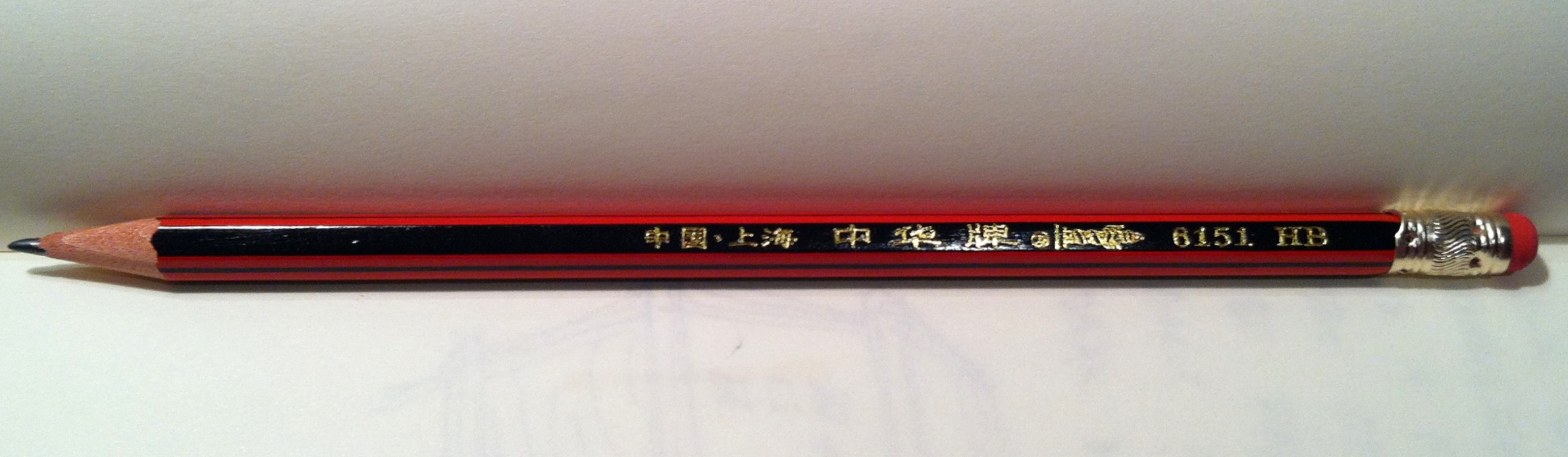
My wonderful daughter Miranda Grace tossed my pencil away – the one I’d bought expressly to use on this trip to China – and so I was forced to use my ball point pen for all sketches. But once we arrived in Guangzhou I found this silky little number and it’s giving me some nicer nuance to the quick sketches I’m doing in my journal.
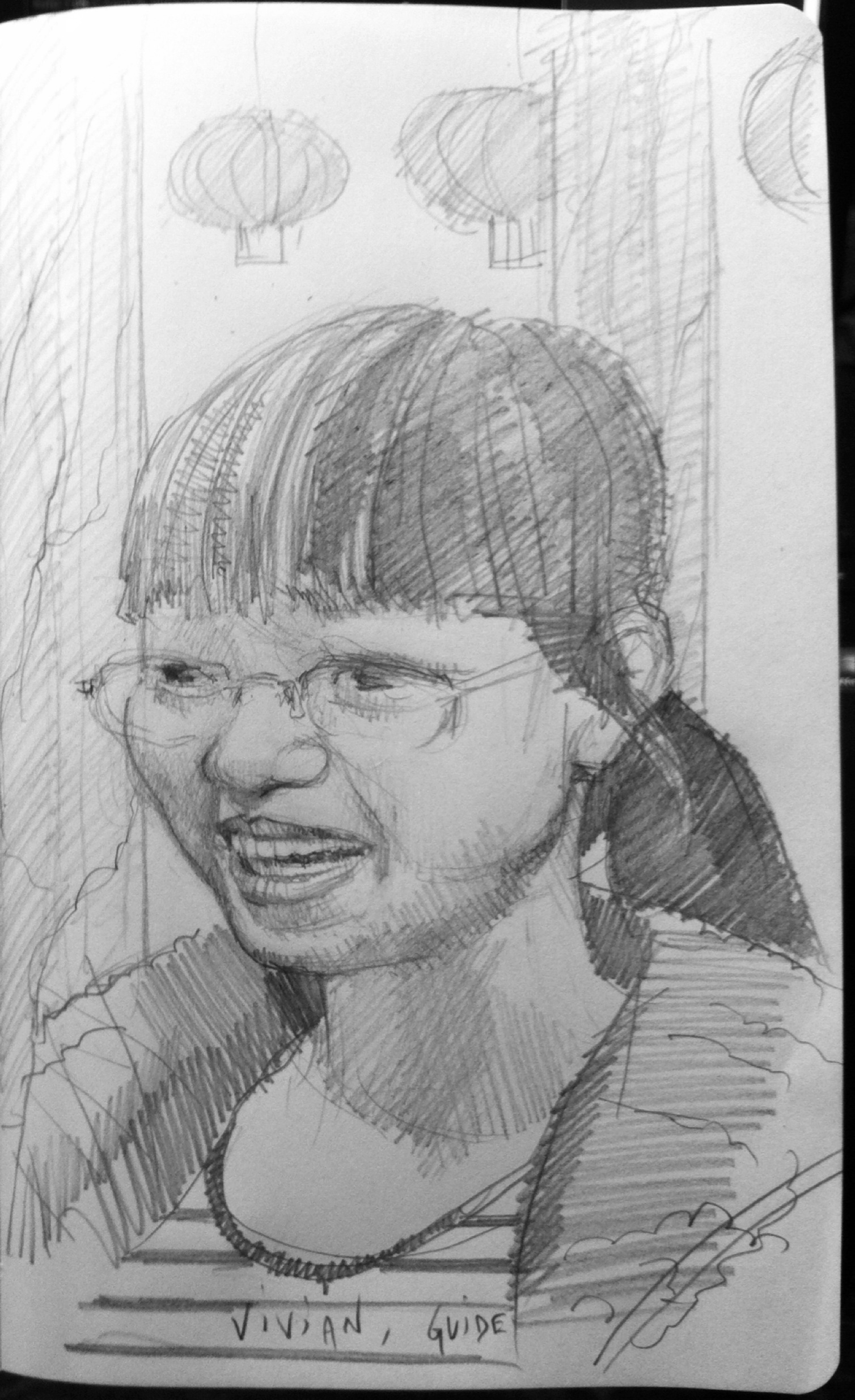
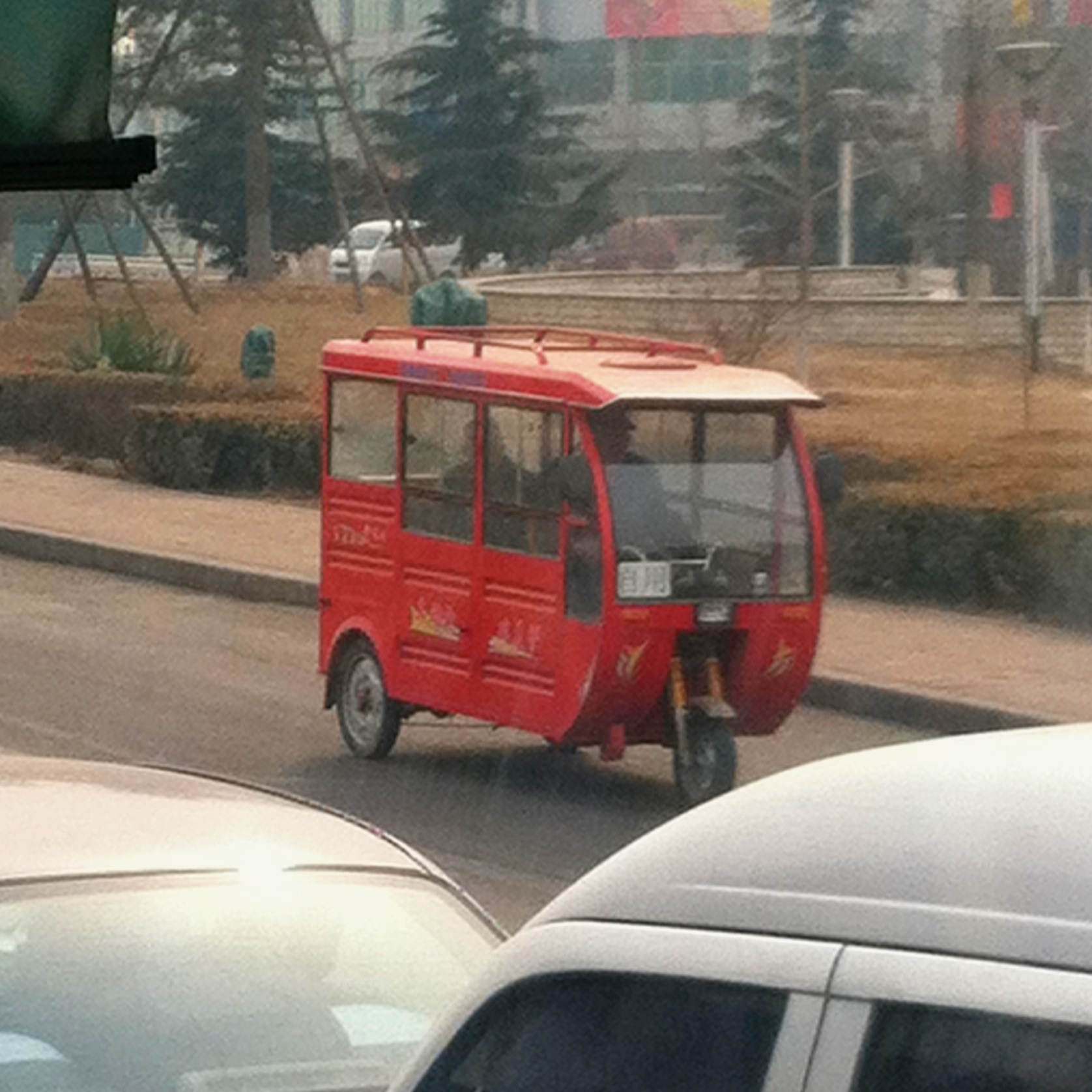
 Here are two quick drawings I’ve done since obtaining this Chinese pencil… one of a three-wheeled car we saw back in Zhengzhou and one of Vivian (one of our guides). Click for a larger view. Perhaps more will come soon. I’ve done a few drawings of CaiQun and I’m also adding in a few details of hotel rooms, architecture, vehicles (as you’ve seen), and other interesting bits.

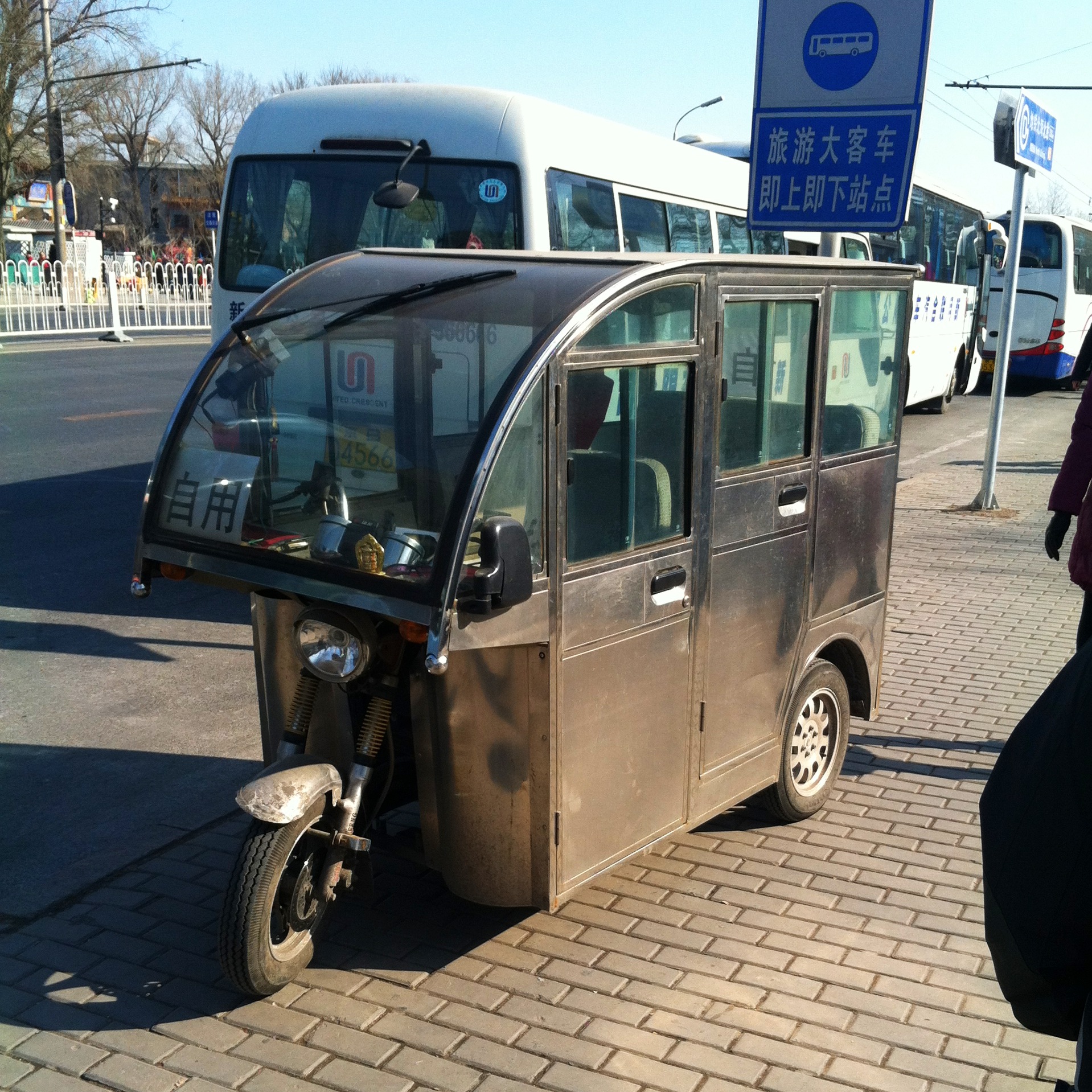
I’ve been taking shots of the massive variety of small, mostly two-wheeled, vehicles we have seen all over China. Since scooters are banned in Guangzhou (where we are right now), I figured that my photo journal is mostly complete. Below are a number of my favorite finds throughout Beijing, Zhengzhou, Luoyang, and a couple from today in Guangzhou. Click to enlarge. Enjoy.
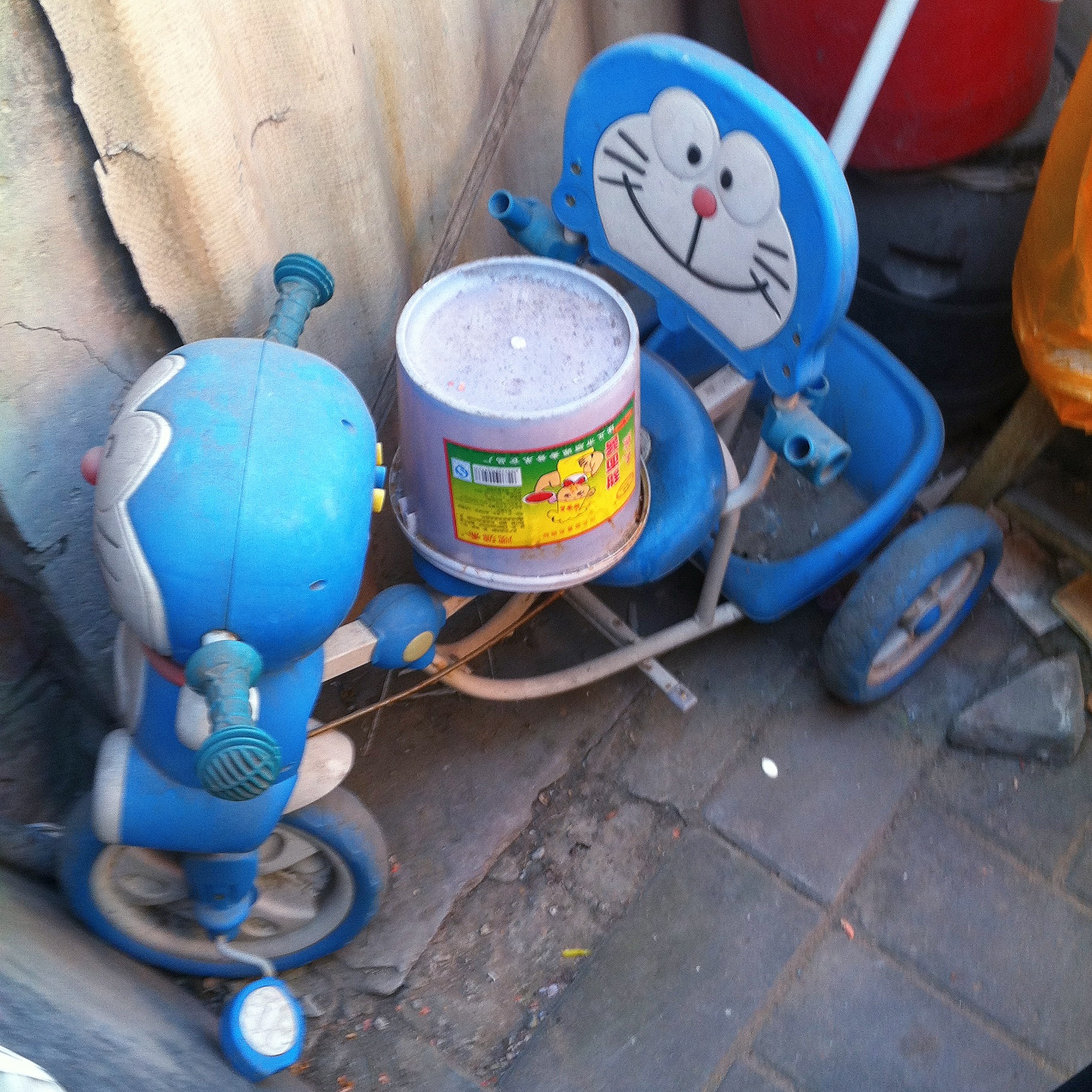
Gotta start em young!
 Many of the scooters we saw had these handlebar sheaths like huge gloves…


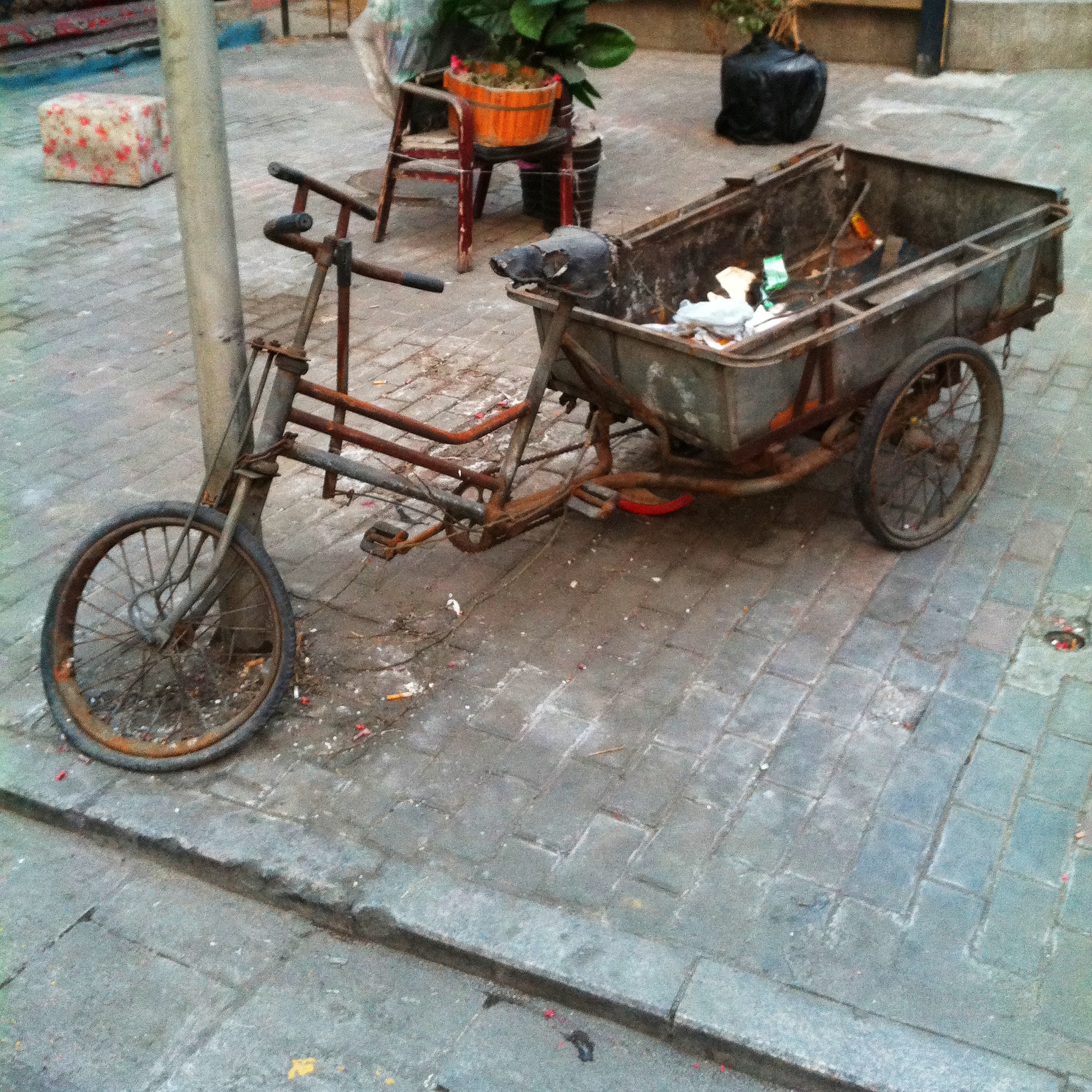
There were dozens like the one above – they all seemed to be used as garbage containers…


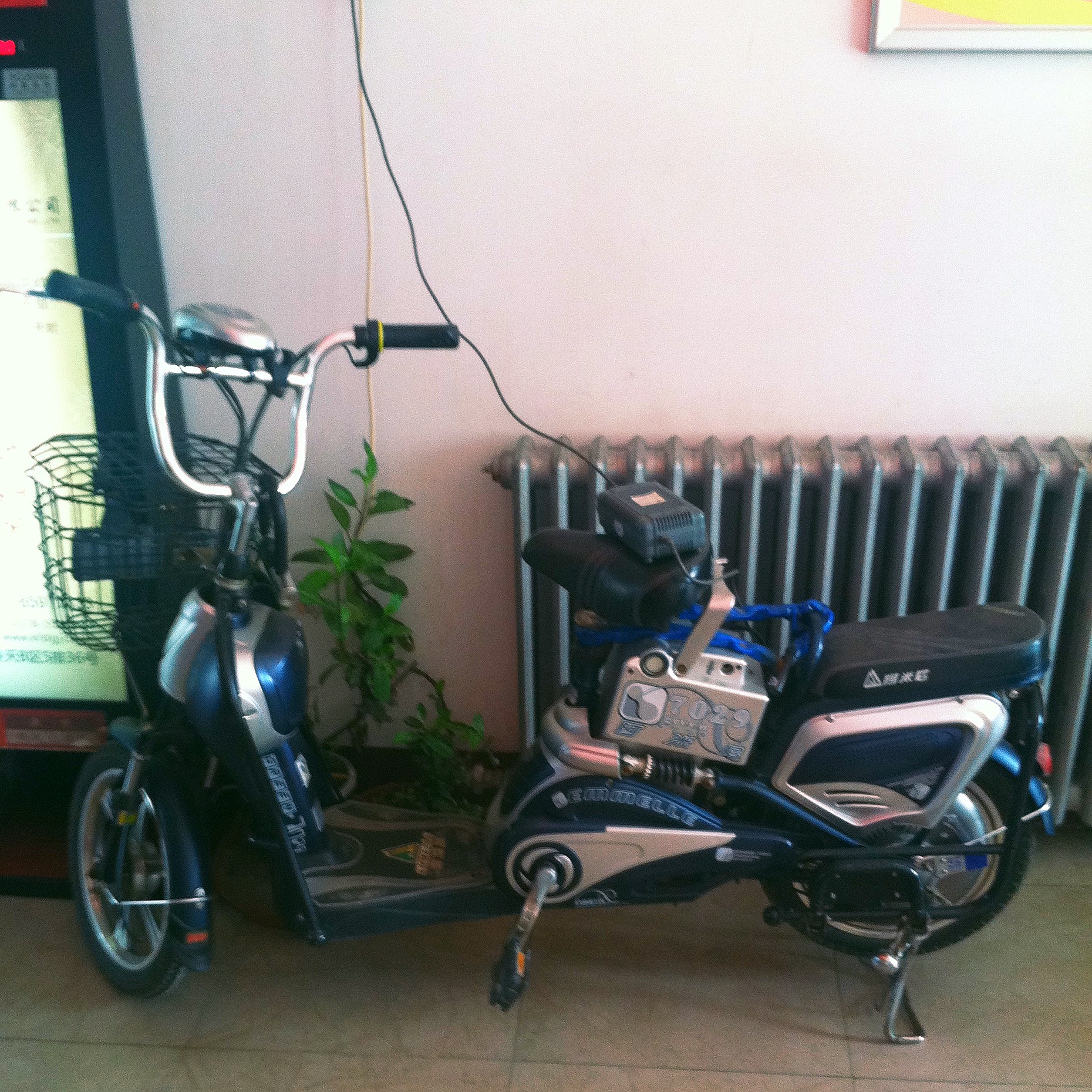


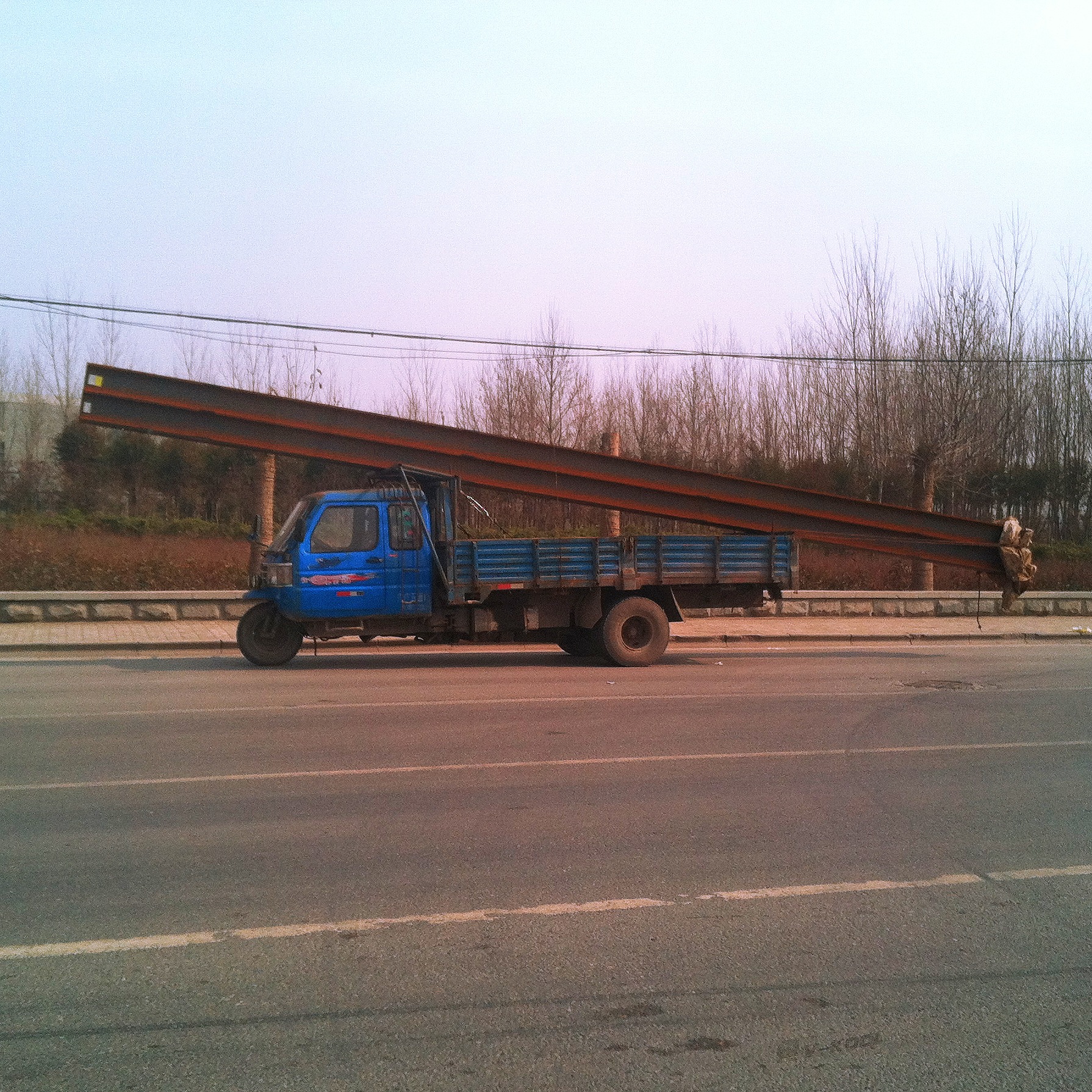
These massive trike dump trucks were all over the place… so strange!

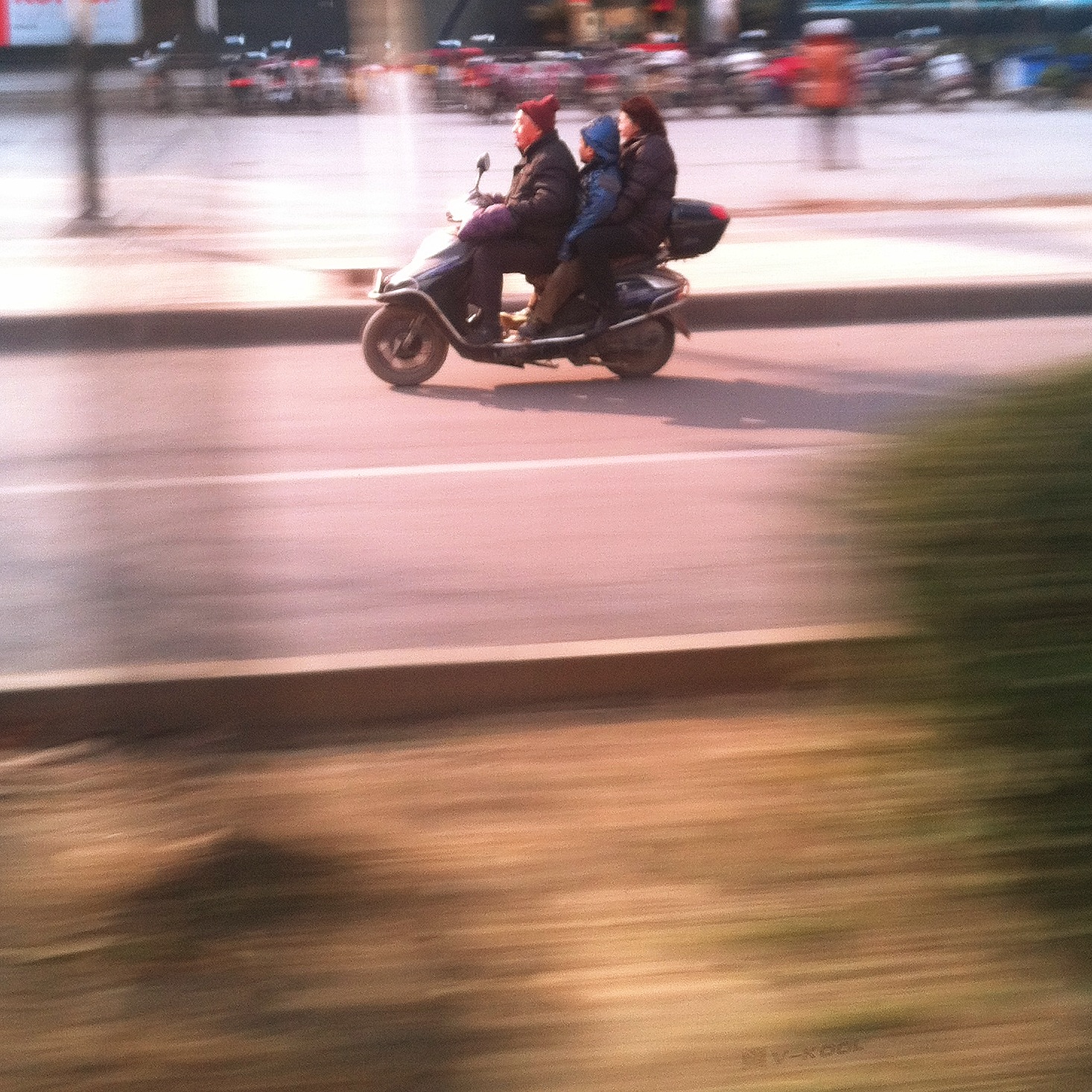
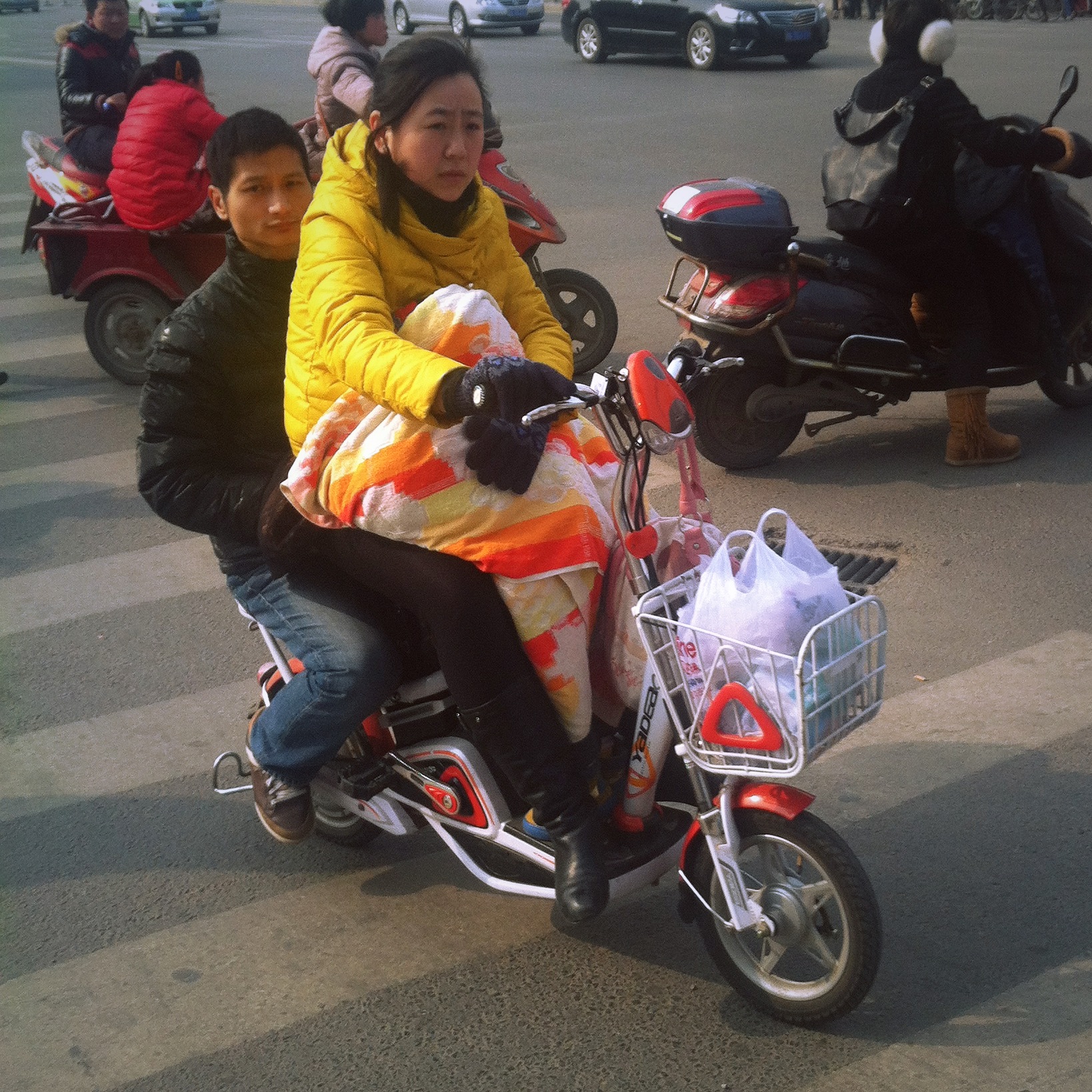
You just had to stand in awe of the parents or caretakers driving around the dense traffic with one, two, even three toddlers balanced on their scooters – real skill there.
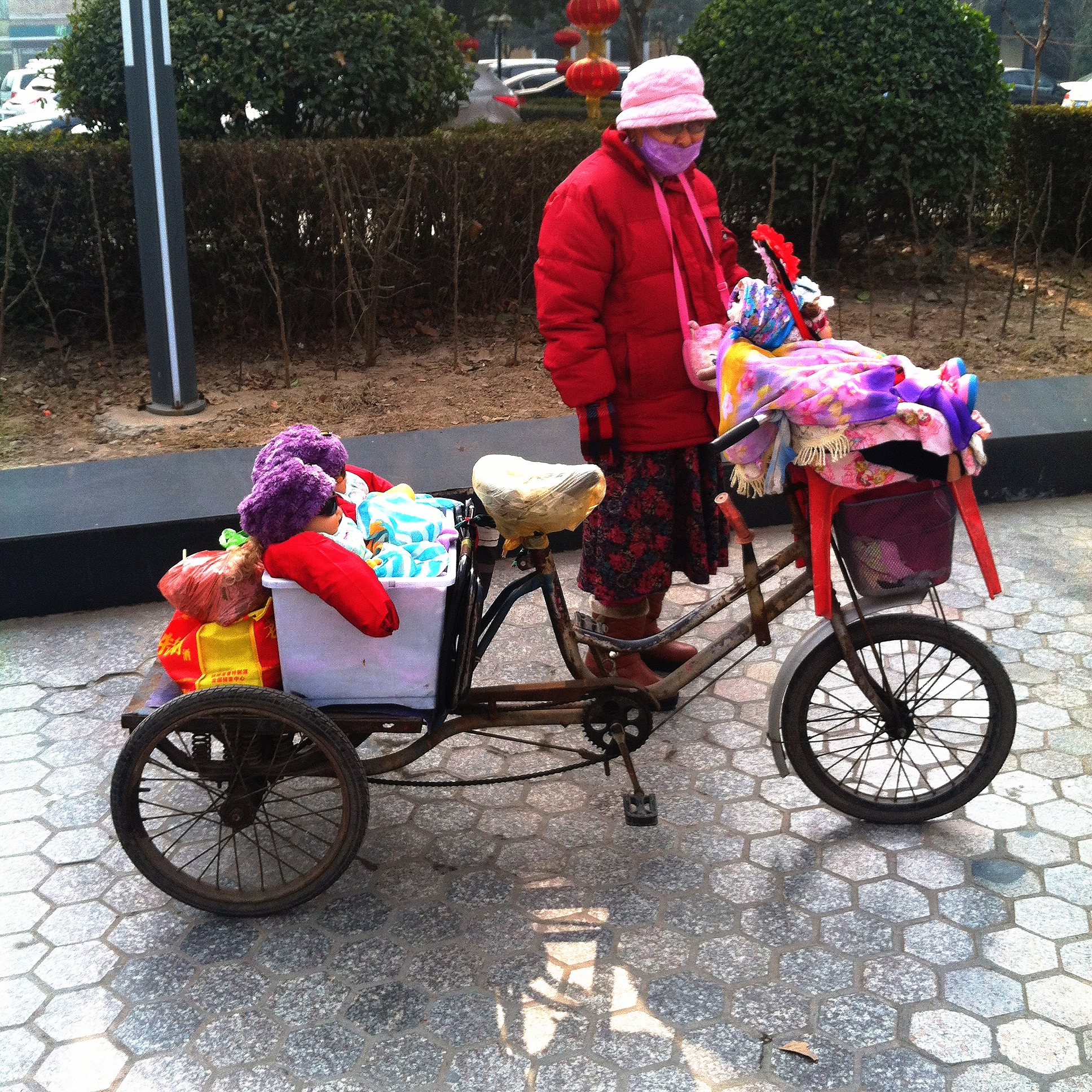
I have no idea what’s going on with the image above… We’re pretty sure those were not real babies in the back…

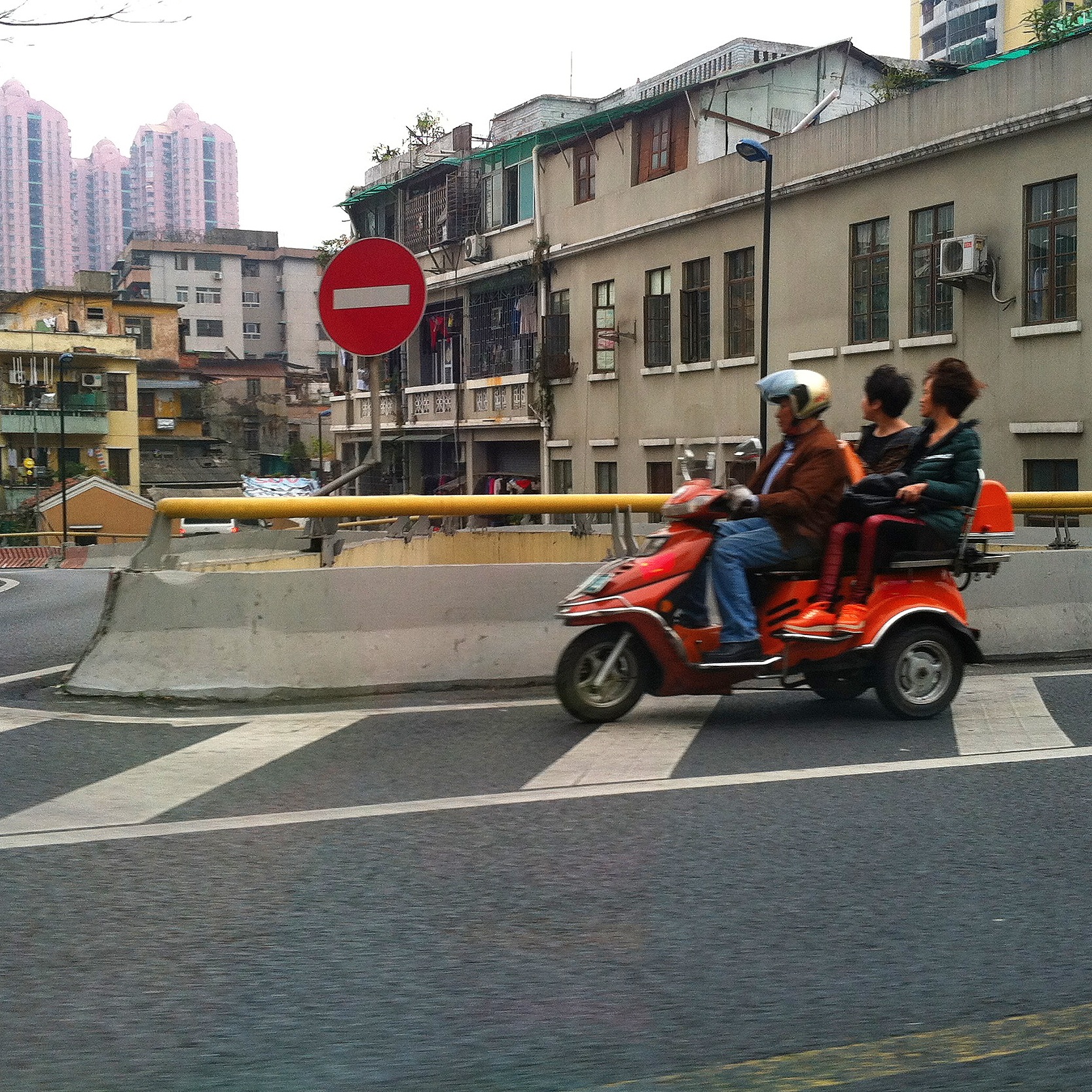

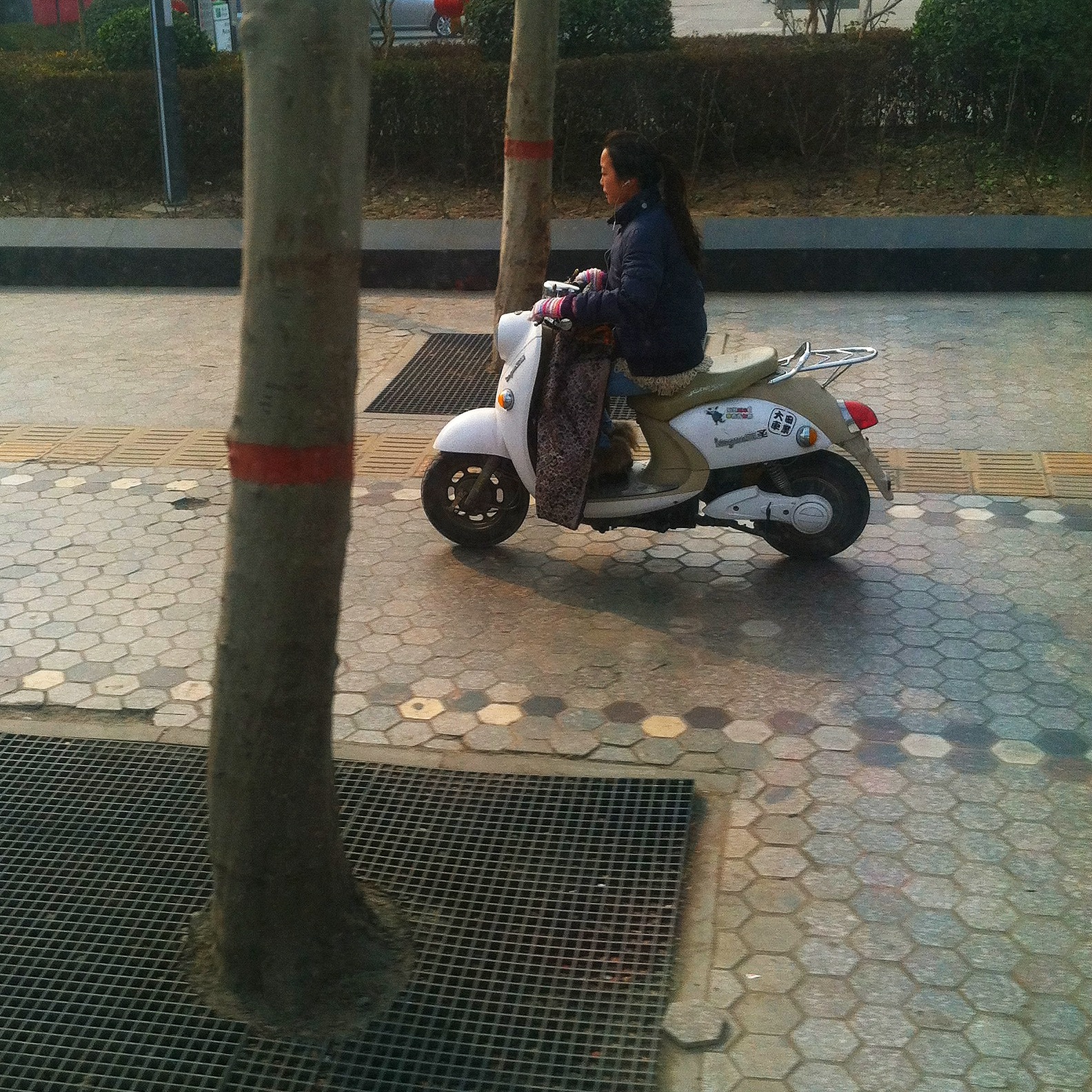

Snoopy scooter in downtown Zhengzhou…
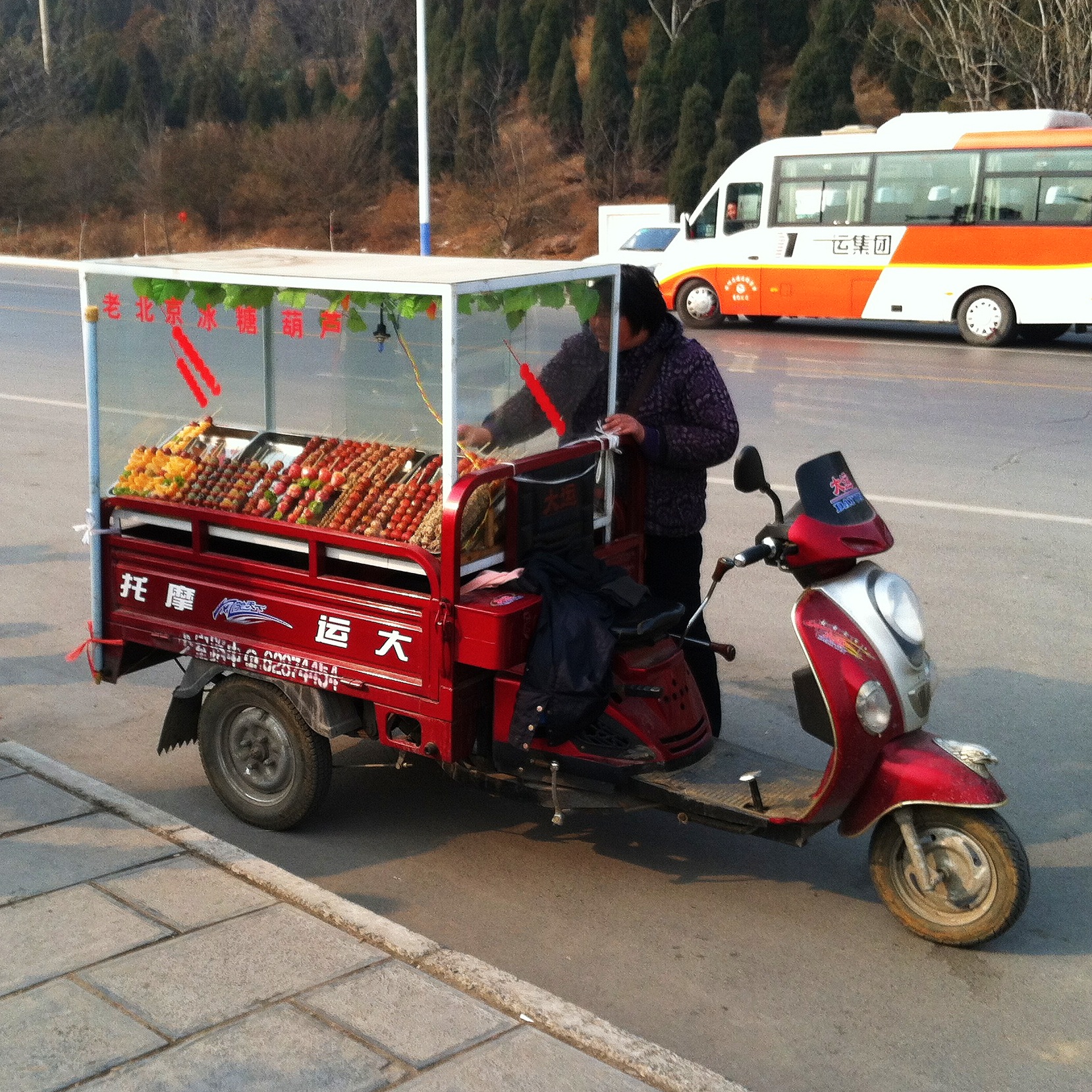
It took me so long to get halfway decent shots of the little kids on scooters that I also drew a few sketches in case I never got a picture! Here they are:
![IMG_5108[1]](https://mattballou.com/wp-content/uploads/2013/02/img_51081.jpg)
![IMG_5109[1]](https://mattballou.com/wp-content/uploads/2013/02/img_51091.jpg)
PS: anyone who thinks Italy has the corner on dangerous levels of scooter action, I dare them to spend a week in Zhengzhou.
 eikonktizo

