Stabilizing a 19th Century Painting

I recently was presented with an opportunity to help stabilize an old painting for Schilb Antiquarian, a rare book/map/art seller here in Columbia, Missouri.

jesusphoto

The painting hanging inside the front hallway of my home.

The piece came to Schilb unstretched and rolled, showing a variety of problems including craquelure and some loss of paint adhesion. The provenance of the piece as described by Schilb is as follows:

Unknown artist. Estimated mid to late 19th century. This painting was located in Peru at Hacienda de San Isidro Chonta, a farm that was established in 1703. In the 1960’s, President Juan Velasco Alvarado seized farming properties from around the country and, subsequently, peasant farmers took what they could from the farm, including this work from the ‘paroquia’ or house of worship. The piece comes to Schilb via an estate sale.

Here’s my breakdown of the situation and my plan to stabilize the piece:

Project:

Crafting a stabilizing substrate and support for a mid to late 19th century South American painting of Christ with Crown of Thorns (Artist Unknown).

Overview:

Work is approximately 24 by 20 inches. Medium is oil on linen and an indirect glazing technique. The surface of the work presents with general craquelure. Some areas of paint film exhibit contact, rolling, and loss-of-adhesion damage, but these are limited. The work has obviously been rolled for a significant period of time. Verso state of linen appears to show standard degradation of fibers consistent with exposure to oil paint and solvents over time. The painting has been framed in the past, and the surface of the work – which is currently unframed – was once stretched over 20- by 16-inch bars. Nail holes are visible around the edge. No special marks appear to be visible on verso or recto; no maker’s marks or indicators of provenance are present. Since there are no important marks on the back of the painting, it seems reasonable to cover the back of the work for protection and longevity.

Project Outline:

My plan is to use a PH Neutral Polyvinyl Acetate adhesive to attach the painting to a quality linen substrate. Once joined and dry, the two components will be laid over a wooden panel (which will also be treated with PVA sizing to make it resistant to atmospheric conditions) and sealed down. In this process the painting will gain stability and presentation quality. The surface of the painting will no longer be moving, so the existing surface damage will be contained and slowed. The verso of the work, which currently presents raw linen to the air, will be sealed in a PH Neutral environment and this will serve to slow the oil-based damage to the linen fibers.

1624761_10103985749028859_1520426922_n

In my workshop, after the piece was attached to the linen substrate and about to be stretched over the panel.

It was an interesting experience to work with this painting. I figure that no person other than the artist has touched the surface of this work more than I have. In photographing it, examining it, planning the stabilization, and then executing the process I found myself thinking about the history of the piece and where it’s been. A minor work, obviously vernacular, and without much to distinguish it other than its subject, the painting is still the work of a real artist who lived and worked and tried to be something. I’ve thought about that artist; what hopes motivated him or her? Perhaps they created dozens of these Christ paintings, maybe it was a single job to make ends meet. In 150 years will someone come upon one of my own works – a piece of little note or distinction – and find the time and desire to make sure it lasts a little longer? I hope so.

Here’s a high resolution shot of the piece in it’s state before the mounting. Click to see it large.

schilbJesus

Thanks to Scott Schilb for giving me the opportunity to meet this painting!

Working with the Adonit Jot Touch 4 and Sketchbook Pro

I recently began working with the Adonit Jot Touch 4 stylus. It’s a really phenomenal tool. As an artist who has been learning, working, and teaching in analog painting and drawing for almost 25 years, I have a really high standard for the feel of the art making tools I use. The Jot Touch 4 has been great to work with.

photo 3Interior of a Church, Digital Sketch created with Adonit Jot Touch 4 in Sketchbook Pro on iPad Air, 2014. 45 minutes.

Pros:

* The Jot Touch really does have analog level pressure sensitivity. It’s not really like drawing with a pencil or moving a brush, but it’s close enough to allow for the intuitive knowledge I have of those traditional approaches to apply.

* Excellent feel – the Jot Touch has the weight and surface quality of a fine ball pen. Holding and moving it feels natural and I soon forgot that I was using it. The mark of a good tool is that it feels both necessary and melds seamlessly with the nature of the task. The Jot Touch does this for me.

* Effectiveness. Particularly when paired with a nice application – I use Autodesk’s Sketchbook Pro on an iPad Air and a Kindle Fire – I find the Jot Touch 4 to be exactly as advertised. I have always been frustrated with different stylus options I’ve tried in the past but this thing does basically everything I need.

Cons:

* Price. The Jot Touch 4 is not something most people can just buy on a whim. It was recommended to me by a friend in the iPad app development field; I expected that it was a quality item. In exploring the device I could see how superior it was to basically every other stylus out there (except the Sensu brush, which I’ll talk about in a later post). The Touch 4 is expensive, but it’s worth it for graphic designers and artists. It just feels so much more natural than Wacom tablets or lesser stylus options.

* The palm rejection isn’t sufficient. I tend not to use it since I almost never simply rest my palm on a surface while I’m drawing. I view drawing as an action that originates in the body, especially in the shoulder. Even when sketching in a seated position I tend to keep my hand off the surface. It’s not writing essays, it’s making a drawing. That said, I think that a broader, more robust palm rejection area could be useful. I have tried it out a few times and just don’t feel that it’s effective at this point.

photo 1My Daughter Painting, Digital Sketch created with Adonit Jot Touch 4 in Sketchbook Pro on iPad Air, 2014. 20 minutes.

In the month since I started using the Jot Touch 4 I’ve made dozens of drawings, but a few really highlight how I use the device. Below are three movies that show a process of building a drawing. These are the prototypes for more developed demos that I will create for an online Beginning Drawing course at The University of Missouri next fall. The first two – portraits of friends – show the development of pieces made for my Becoming the Student series. Watch out for the posts about these two portraits coming up soon!

Digital painting of my friend Kevin Stark. Two hours.

Digital painting of my friend Michael Winters. One Hour 45 minutes.

Still Life Demo. One Hour 30 minutes.

All in all I’m really pleased with the Jot Touch 4 as it works within Sketchbook Pro. I have used the Sketchbook series of drawing apps for about a year and a half and have enjoyed them. The Pro is the best yet, and for the $5 price it’s completely worth it. Even without a stylus Sketchbook Pro is glorious.

Below: Red French Press, Digital Sketch created with Adonit Jot Touch 4 in Sketchbook Pro on iPad Air, 2014. 3 minutes.

photo 2

In Which My Daughters Get Their Wings

I took my girls to Menard’s today.

IMG_0604

We grabbed some pink insulation foam, pink and gold duct tape, and some rope.

We were making wings.

IMG_0605

After they chose the shape for their wings (a bit more butterfly/insect than fairy style) and helped me cut them out, we started decorating with the duct tape. We also watched some Daniel Tiger in the midst of the construction.

IMG_0607

With both girls fitted with pink and white rope harnesses, we ventured out into the graduate studios for a run…

IMG_0610

It was such a nice day out, we ran around a bit out behind some student dorms…

IMG_0614

It doesn’t get much cuter than that. But we still needed to add some PAINT!

IMG_0628

IMG_0626

Now that’s some glory right there!

girlswings

It was a good, good day :)


Becoming the Student, #5: Captain America

Daniel Glosson (brother to Billy) is another young, passionate guy that I know. I always enjoy sitting down with him. Recently married, working multiple jobs, serving in the community, and trying to work out his faith and beliefs in the world, Daniel is an energetic force of nature. IMG_8425

Glosson (Captain America), Colored Pencil and Gouache on Stonehenge, 15 by 12 inches, 2014.

On Art

“I think art is incredible. But I don’t value the idea over what’s right there in front of us. I definitely miss stuff all of the time and I hate that, but when someone shows it to me I’m blown away. If an artist is trying to make a statement but isn’t doing anything about it that makes me angry. I guess I’m practical to a fault. When I see a problem I’m driven to do something about it, not simply represent it or use it as inspiration.”

On Working at Schilb Antiquarian

“I’m so fortunate. I love the job. It’s awesome. I want to attain the same love for the store and the books that Scott has. I’m trying to learn all I can. I love the chance to just browse through these books, read them. It’s amazing, and now that I’m looking at all these old books and trying to wrap my mind around it, I can really see this expanse of human thought over the centuries. They way they thought, they way they progressed in terms of understanding and rationalization. We just have all this stuff, these records of peoples’ thinking and processing. The questions of what do we value most are all there, and you can see how people have approached it, be it fantasy or escapism or cold, hard truth in the scientific or mathematical works. We even have an exorcism text from 1683, Flagellum Daemonum – literally “beat the devil”! – and it looks like it’s got blood on the cover. Wild.”

On Eucatastrophe

“I think death is extremely beautiful. I love tragedies.”

On his Captain America shirt

“I’m not really a patriot.”

On Michael Bay and Thomas Kinkade

“Fortunately there are two things you and I both loathe – and I think it’s hilarious – that’s Michael Bay and Thomas Kinkade. I think that’s the greatest thing ever. I don’t know if it’s great to bond over hatred but I remember talking to someone about hating Michael Bay movies and they said ‘you need to meet Matt Ballou!’ I’m so happy about that, just knowing there’s another. Those Transformer movies make me throw up in my mouth.”

On Looking Like Billy Corgan

“I don’t see it.”

Chariot Class Starship

I know that my Star Trek nerdiness isn’t appreciated by everyone, but the heart loves what it loves. I recently came upon a fan-based starship design that is really striking and interesting. This is the Chariot Class – click the image to go over to a full post of renderings on the Trekazoid blog. This ship was designed by Chris Reyes and modeled by Howard Day over at Scifi-Meshes and appears to be connected to the USS Excalibur designed by concept artist Ryan Dening (see the Excalibur here). Reyes doesn’t have his own website, but his work is posted widely. Here is his original sketch for the Chariot Class from 2004, and below it a more recent digital model of the craft:

federation_chariot-class_00-2

uss20chariot2033cc2

Trekazoid also features some nice renderings of schematics for the ship (version #1, version #2), as well as a master systems display. Cool stuff.

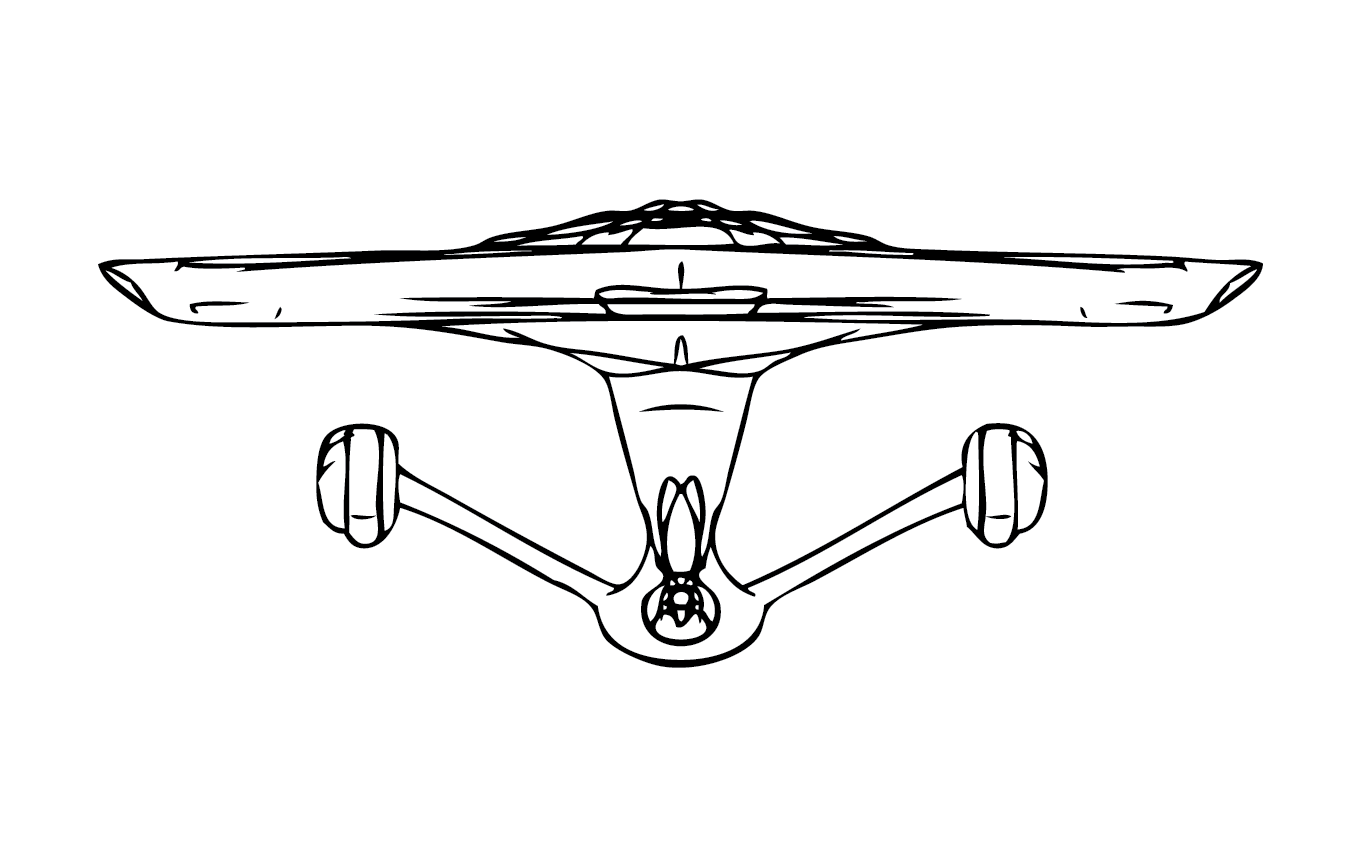
Though I’ve been working on new Lego Star Trek stuff, I’ve not got anything to post right now. But I’ve been so interested in the Chariot Class that I’ve done a few digital drawings of it and thought I’d post them here. They’re a variation on the overall design and very simple. Perhaps I’ll flesh them out with color later. Anyway, here they are:

Screenshot 2014-02-01 15.35.26 Screenshot 2014-02-01 15.36.47These drawings were done using Sketchbook Pro and then vectorized in Adobe Illustrator. Perhaps if my friend Daniel Glosson ever gets tattoos like his brother he could use these designs.

Becoming the Student, #4: Billy Glosson

In continuing the Becoming the Student project, I’m aiming to use different methods and mediums in building the portraits. In this piece, I focused on something tied directly to Billy’s identity and his presence in the world: his tattoos. I wanted to depict the color, the saturation, and the overtness of these artworks that have been put on his body. They’re really important to him as a way to tell a story and represent his deeply held beliefs.

IMG_8353Portrait of Billy (Fruit of the Vine), Pastel on Stonehenge, 19 by 22 inches, 2014.

Billy on his portrait:

“That’s really cool. I was wondering why you were staring at my midsection the whole time…”

Billy on maintaining awe:

“There’s not a method. I think our hearts are prone to becoming numb. Derek Webb has a song with a line that says ‘we love lovers less wild’ and I think that’s the truth. For me it’s about constantly coming back to the place where I’m asking God to reveal Himself. I want to create good longing in my heart. Difficult moments and hardships and conflict and frustrating things in my life point me back to grace. Another practical way is having people around me who can speak into my life; that’s been huge.”

Billy is on a quest to complete an entire sleeve of tattoos. To help him out, I suggested the classic image from The Cloud of Unknowing. I definitely think it’s skin-worthy:1979654_10103885160284509_1941637934_n

Becoming the Student, #3: Bobby Schembre

Bobby Schembre is a pastor, musician, questioner, lover of fine bourbons, and grill-master. In many ways we are different, but in many ways we are very similar… from the deepest hopes we harbor to the sorts of challenging questions we explore. Last week Bobby agreed to be a part of my “Becoming the Student” project. I greatly looked forward to our conversation. We moved through some intense existential territory over the course of our 2+ hour session. Some topics we touched on were: Pink Floyd and spiritual awakenings, how to understand the taste of bourbon and scotch, the nature of musical liturgy in contemporary Christianity, the glory and grace of our wives, and our experience of scientific awe.

Here is the resulting portrait:

IMG_8350Portrait of a Man (Bobby Schembre, 2/24/2014). Pastel on Stonehenge Paper, 22 x 24 inches, 2014. (Click for enlargement)

Bobby on musical liturgy and storytelling:

“I love the fact that we talk about how God is holy and untouchable and yet He’s here and gracious. It doesn’t make any sense really. Or that He’s indescribable and infinite and then we turn around and spend the rest of the service describing Him.”

“Part of the reality for me is that I can’t believe the bible or have a real experience of Christianity without being OK with deep tension. Everywhere, everything has a balance to it. Everything has a paradox involved in it. Nothing is just something you could put in a box and tie it up neatly and say, ‘I’ve got this.’ When we explore something about God there’s something else that makes us think, ‘well, what about this?’ And so one of the things I’m always thinking about in creating a musical liturgy is how can we expand the way we think about God, uphold the paradox, and marvel at the paradox of God.”

“I’ve been pondering my job as a ‘worship leader’ – which is just something we’ve made up – you know, what is this? I think part of the answer is that I’m a storyteller. I’m helping people think the story and sing the story of the gospel. It’s practicing a pattern.”

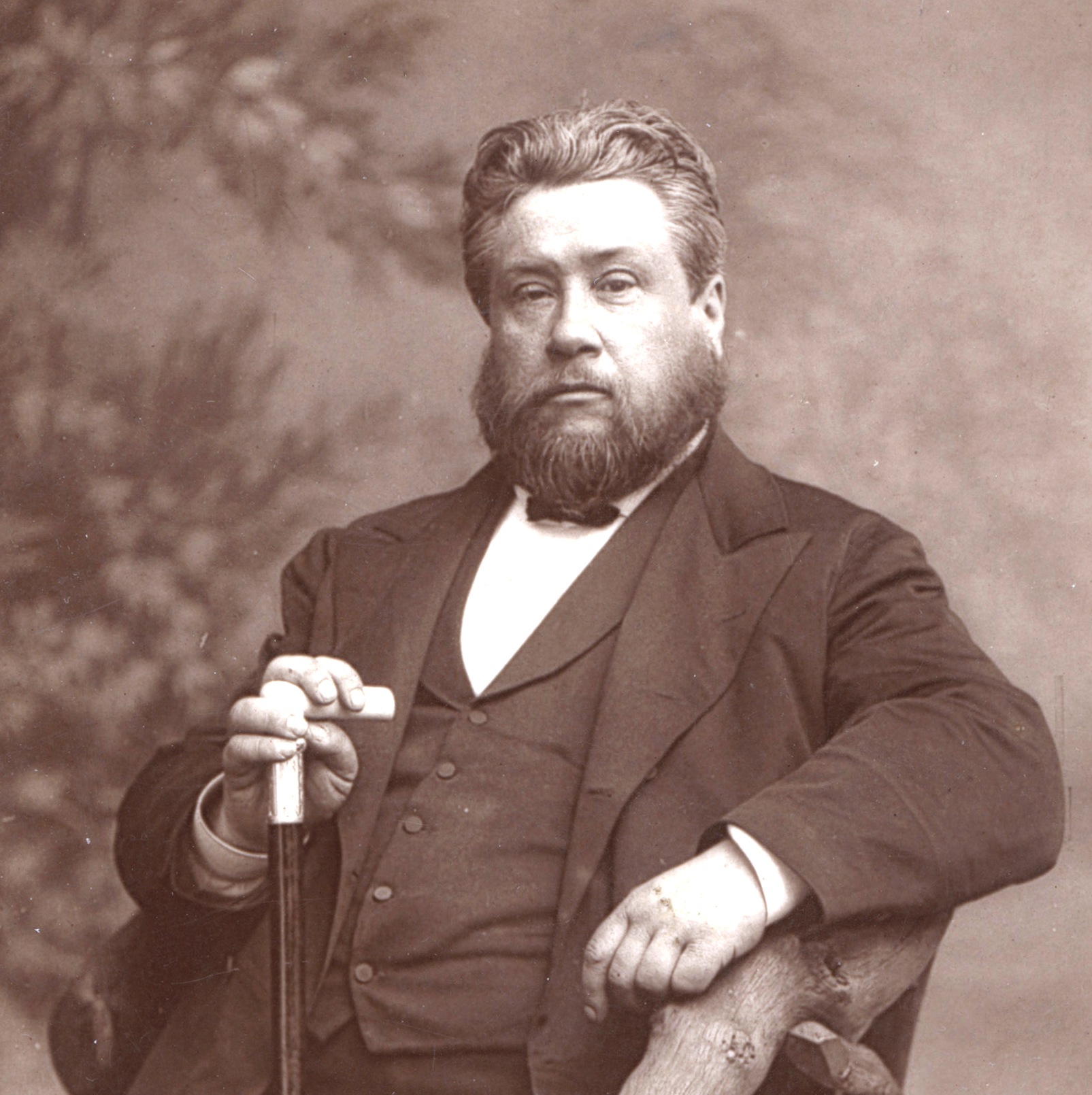
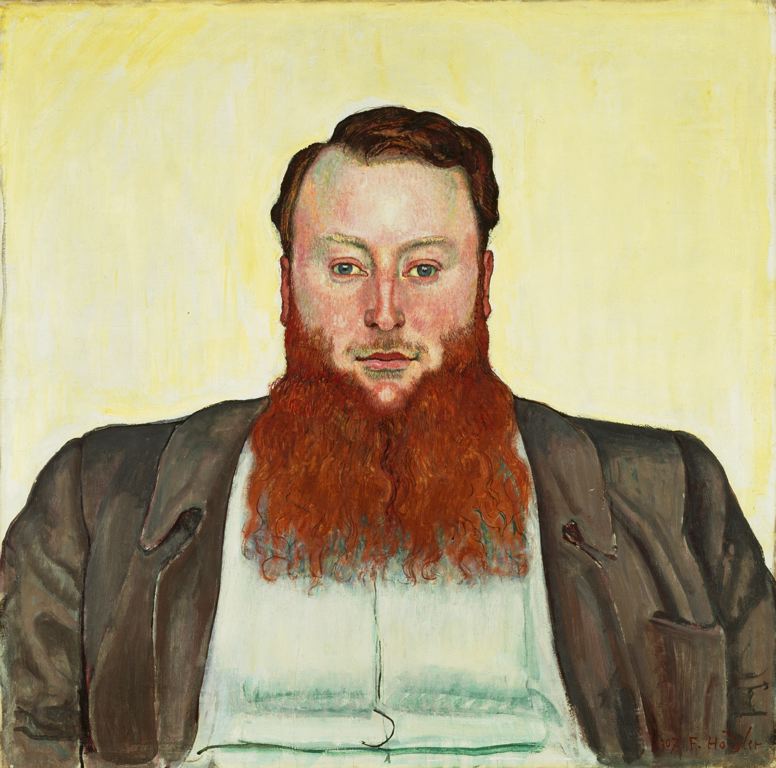
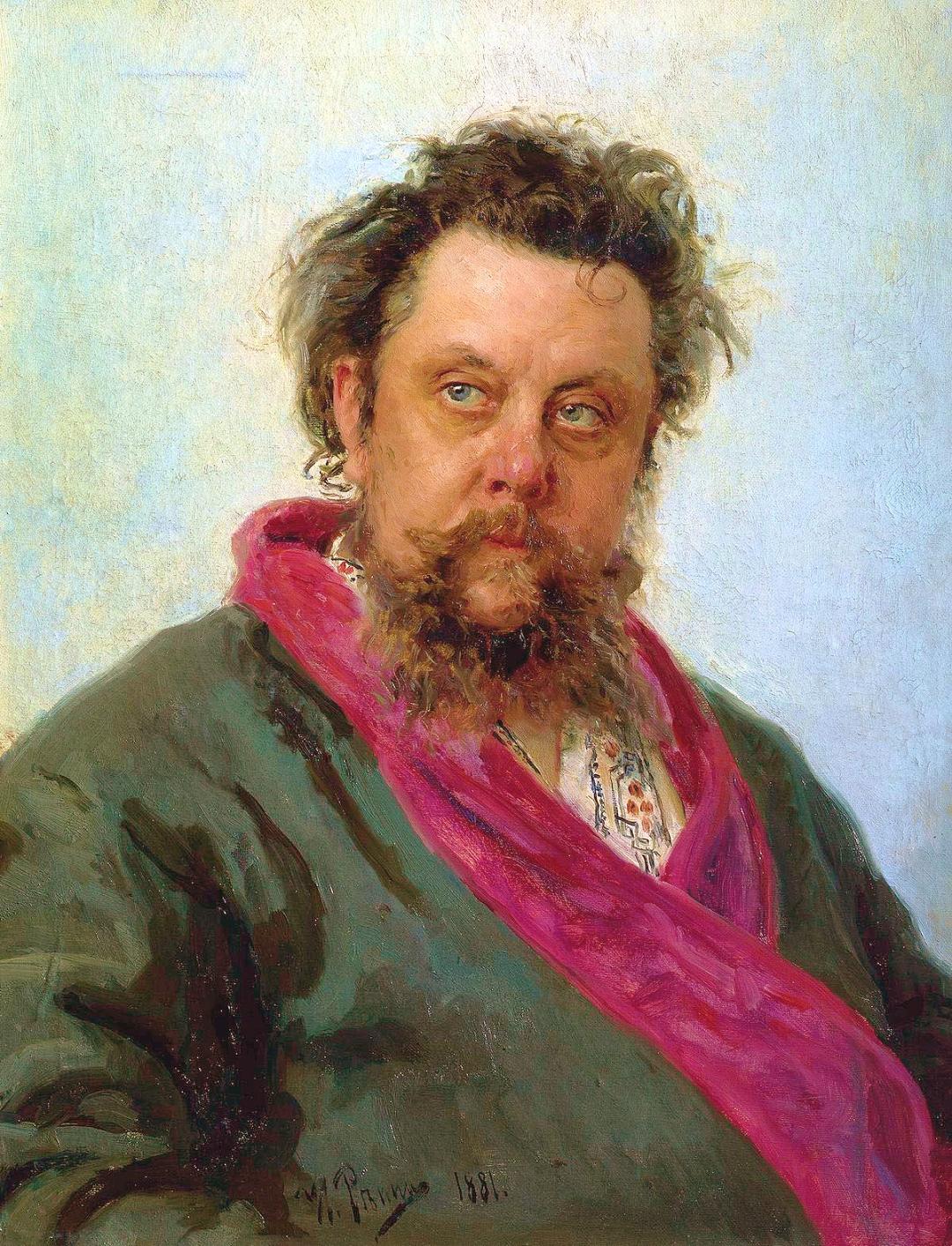
Bobby, with his manly beard and barrel chest reminds me of a few other bearded big men of history…

spurgeon_chair1Famed Christian pastor and author, C.H. Spurgeon

portrait-of-sculptor-james-vibertSculptor James Vibert by Ferdinand Hodler

Repin-portrait-of-the-composer-modest-mussorgsky-1881Russian Composer Mussorgsky by Ilya Repin

Also, there’s this great Portrait of a Man from the collection of the Art Institute of Chicago. Click to check it out.

~

Thanks for being a part of this portrait series, Bobby!

The Fine Arts Building Has Never Seemed So Mysterious

My current crop of Beginning Drawing students at Mizzou are doing some great work. Below are just a few of their Interior Space drawings – these works are their first attempts at realizing accurate perspective and accumulation of value. I think this group of (mostly) non Art Majors is doing nicely.

IMG_0381Cailin Carter

IMG_0386Jane Grossman

IMG_0387Libby McKown

IMG_0389Tayler Newcomer

IMG_0392Jordan Giljum

IMG_0390Mandy Lupardus

IMG_0388Blessing Ikoro

~

It’s shaping up to be a great semester!

Chris Ware, Ox-Bow, and a Drawing

Back in 2001 I was awarded a Fellowship Residency at Ox-Bow in Michigan (you can read more about that transformative time here). This was a time before browsing the internet by phone from basically anywhere was even possible; hell, I didn’t even have cell coverage there. There was only one internet connection accessible at Ox-Bow and that was via dial-up.

In the Inn (before renovations that happened back in 2004 or 05), there was a small desk tucked into a corner where people would use the phone to call home or connect their brick-like laptop to the web for a few minutes. I had quite a few late night phone chats there with my then-girlfriend/now-wife after which I’d use the phone jack to log into my email for a sending/receiving session.

One evening I walked into the Inn to see Chris Ware sitting at the desk, talking on the phone, and making a small drawing on a scrap of paper. Mr Ware, a famed-though-awkward comic book artist who had created the fantastic Acme Novelty Library series and the graphic novel Jimmy Corrigan, the Smartest Kid on Earth (Among many works. You should look at them – they’re quite profound and beautifully made) was at Ox-Bow to give a talk. And there he was: silent, hunched, and seemingly distracted from his phone call. His pen moved gently, pensively. His paper skittered over the pitted wooden desktop.

We – those who had to use that desk and that phone because no other forms of communication with the outside world we available to us – had been used to sketching absentmindedly while sitting there. I had drawn many a cartoon self portrait during that summer. Often our drawings would join together, becoming layered time capsules consisting of blue and black ink. Mr Ware’s sketch was added to the desk drawer to be subsumed into the mass of other drawings.

Some time later – a day, a week – I found myself rooting through the drawer for a paper upon which to put my jottings, and there was Chris Ware’s drawing. On a 4 by 3 inch scrap of Ox-Bow map (verso) a weary figure, perhaps bemused but certainly full of existential angst (a stylized self-portrait of the artist?), sat before an anachronistic rotary phone. The expression of the man, the drawing’s line work, and the overall feeling of the piece are all quintessential Ware.

And so, here it is for your enjoyment:

ChrisWareDrawing2001Both sides of a piece of paper with a drawing by Chris Ware on it. Ink on paper, approximately 4 by 3 inches, 6/21/2001.