Relevant Anachronisms

Ballou-AnachronismsWHT

Ballou-AnachronismsStudyWHT

Light and Shadow

Looking

Translation

Colors

The Dodecahedron

Hardwood Furniture

Angles

“Selfies” in Mirrors

Images

Slide Carousel Boxes

Symbol

Meaning

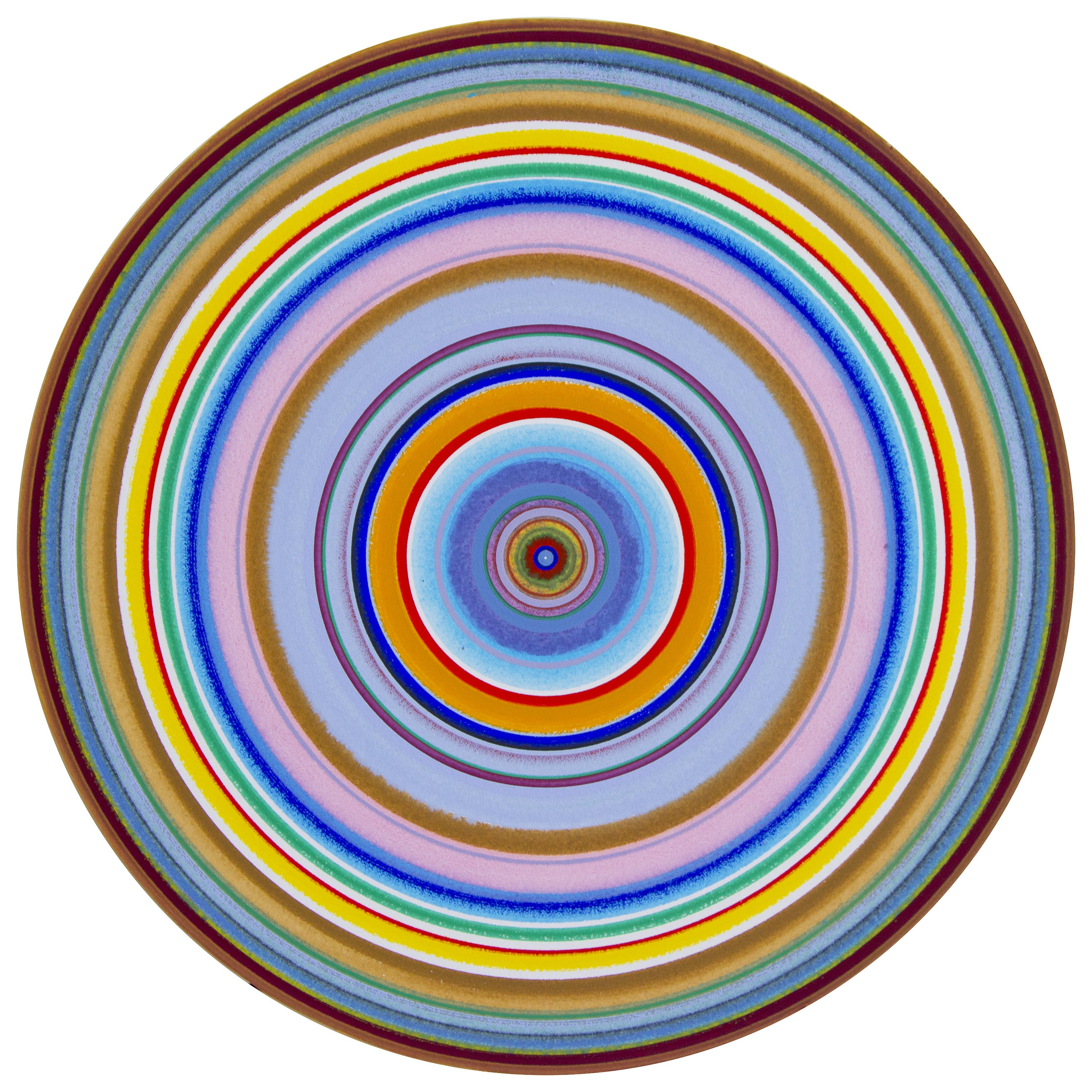
Above, top: Relevant Anachronisms, gouache on paper, 13 inches in diameter, 2012-2013.

Above, bottom: Relevant Anachronisms (Study), colored pencils on paper, 13 inches in diameter, 2012.

Solo Exhibition in Kansas

I’ve got a solo exhibition coming up October 5 – October 25, 2013, in Hays, Kansas. The exhibition, titled ASEVENANDAWONADOE* will take place at the Moss-Thorn Gallery of Art on the campus of Fort Hays State University. Featuring thirty new works, the exhibition will unite the representational tondos and abstract mandalas that I have been creating simultaneously over the last few years.

WORKINGSEVENANDAWONADOE copyHere is a brief statement about the show. A longer version will be presented during the closing reception:

ASEVENANDAWONADOE* – Paintings and Prints by Matthew Ballou

This exhibition explores the reality that a vernacular of meaning is constructed through our physical, emotional, and intellectual experiences. These experiences take place in the spaces that surround us, via the ideas that fill our minds, and through the objects that engage us. Meaning is imputed to these spaces, ideas, and objects rather than being necessarily inherent in them. This notion follows from the work of 20th Century Pragmatist philosopher John Dewey, who described how we “fund” our lives with significance through investments of time, emotion, and effort. These, in turn, come together to manifest the wealth of meaning we sense in our world.

By concentrating my artistic contemplation on objects that I have funded over the course of my life, I draw attention to not only their significance but also the modes, methods, and extents to which others have done the same. Conversely, by exploring issues that previous generations have investigated, such as the mandala form and geometric abstraction, I participate in the legacy of their contemplations. In a sense, I have borrowed from the storehouse they built while adding an investment of my own. The works on display here play on the distance between representation and abstraction, between the iconic and symbolic, between the organic and geometric, and between the received and the constructed.

*ASEVENANDAWONADOE is a word my young daughter Miranda invented during the time she was learning “real” words. It combined the structures of the new words she was encountering but was also, to her, connected to abstract concepts such as mathematics, pain, comfort, and security. An entirely made up word – yet one that relied on the received information and influences my daughter experienced – ASEVENANDAWONADOE is an example of something seemingly “meaningless” taking on meaning through experience, context, and subjectivity. In adding to the history and lineage of this word by including it in this exhibition, I further shape the contours of its potential meaning and more deeply connect it to the story of our family.

If Justin Timberlake and Robin Thicke Can Display Them, Why Can’t A Mom?

I saw this today on the Huffington Post (the inimitable Anne Harris brought it to my attention – thanks!), and it’s the 100% truth:

Click above to watch Hollie McNish’s spoken word recital about the appropriateness of breastfeeding and the inappropriate stupidity of the western world for having a problem with it.

Recently I’ve become more and more annoyed with the fact that women continue to be presented as eye-candy for men, while legitimate explorations of the body in art are consistently challenged. Writer Amy Wilder interviewed me a few weeks ago about this very issue.

These issues won’t go away. It’s happening right now in our culture. A few months after Robin Thicke’s idiotic and misogynistic music video went viral, Justin Timberlake entered the fray with his own. Both of these videos pair the fragmented display of women’s bodies with the rape-language of “you/i know you want it”. No, I won’t link you to the material I’m talking about. You’ve probably already seen it.

What it amounts to is millions of people apparently buying into the lifestyle and vision of the likes of Thicke and Timberlake (fully-clothed men who parade the bodies of women just to make a buck, who parade the bodies of women around for the delectation of and consumption of other men, who parade the purposely fragmented and de-individualized bodies of women around and pretend like it’s just a matter of “blurring lines”) while simultaneously shaming women for nursing their children in public.

It’s pathetic. It’s frustrating. It’s wrong. It’s wrong for specific profit-producing demographics (be they people or industries) to drive the cultural position and presentation of women’s bodies in this world. That’s exactly what’s happening here. It’s been happening for generations.

Part of what is playing into my anger about this is that I watched the documentary Girl Model, which really disturbed me. If you haven’t watched it, do it. It’s streaming on Netflix right now and is eye-opening.

On top of this, going through the adoption process over the last year really disabused me of the rose-colored-glasses ideas I had about the progress of women in the last couple of decades. Globally, it’s dangerous to be born female. In the west, where we think we can rest on the laurels of our “progressive” progress, it’s hard to make people understand this. I won’t recount the horrific stories that have been in the news recently. But it’s in THIS STUFF – where women are asked to APPEAR but not to ACT – that we continue to fail as societies. Our media continues to present a vision of women as young and as tight and as coquettish as men want them to be. The second their bodies resist the classification of appearance (for instance, when a woman breastfeeds her child or becomes too old to fulfill the wish-fantasies of 18 year old boys) they are simply denied. Hidden. Disappeared.

This is a major problem, and more people need to get angry about it.

I think about the world my two daughters are living in…

What Is A Great Image?

On May 22, 2013, I gave a public talk at the Boone County Chambers Room in Columbia, Missouri that addressed the question, “What is a great image?”

Below is audio from that talk synced up with the slide show that I used. If you’ve got an hour and are interested in how art, history, and human experience interconnect, you might appreciate this talk. Obviously it’s by no means exhaustive and has to skim over many issues, but I think it’s got some quality observations. I would greatly appreciate any questions, comments, or observations you might have after watching through.

And here’s a picture of me and my girls during the Q&A session after the talk :)

An Awesome New Diebenkorn Book

IMG_7460

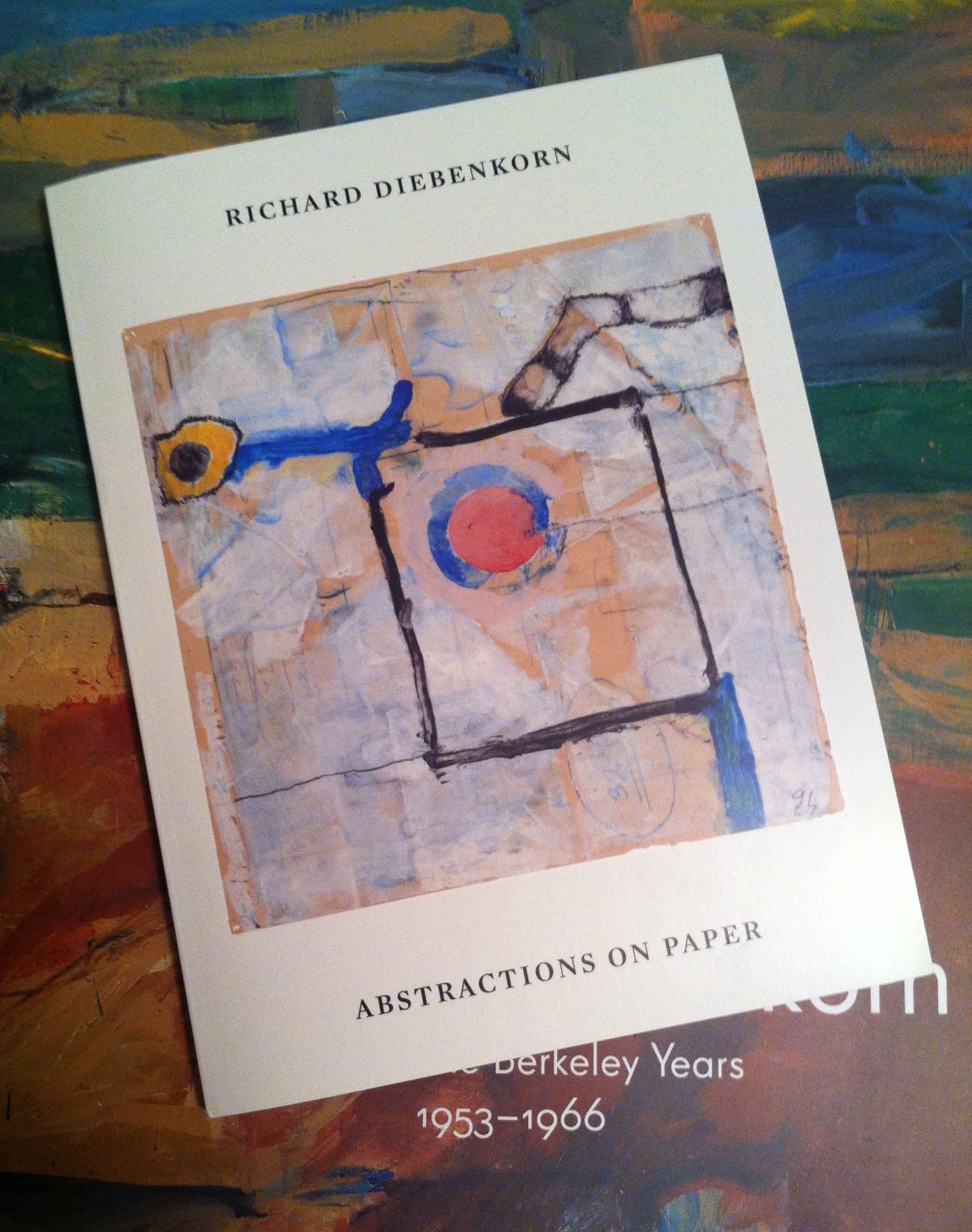
I just recently picked up a fantastic new Diebenkorn book, and it turns out to be very impressive. No, I’m not talking about the new Berkeley Years catalog (though I did buy that a few weeks ago and am enjoying it). This is a volume out of a small California publisher called Kelly’s Cove Press.

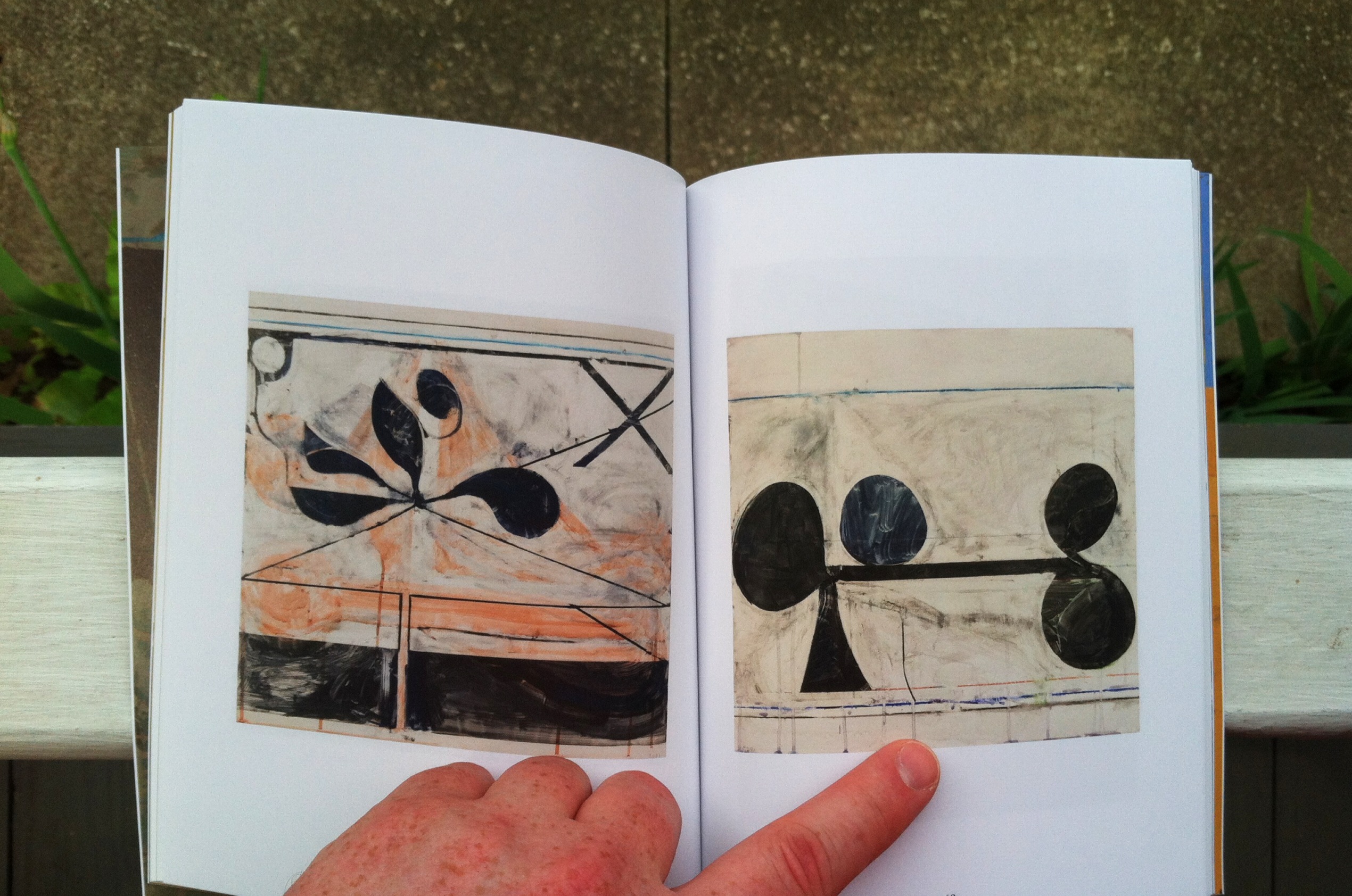
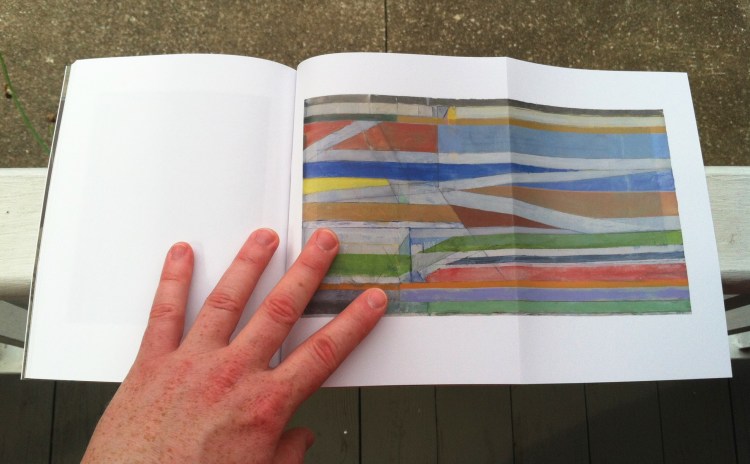
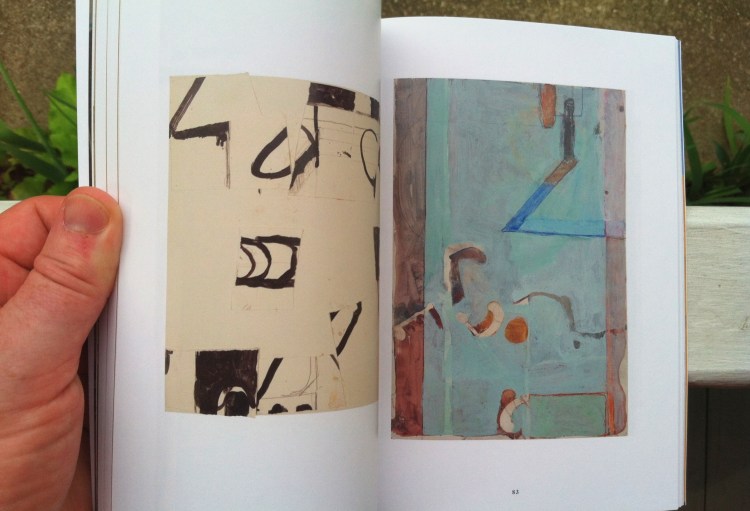
The book, Richard Diebenkorn: Abstractions on Paper contains 88 full color images and a few black and white shots of Diebenkorn’s studios. There are a few points that make this paperback book exceptional. First, it contains dozens of works that have never before been published. This isn’t because they were lacking in quality; many of the pieces shown here really display Diebenkorn’s quintessential processes very well. Secondly, the book shows abstractions on paper from all of the major locations where he worked throughout his life: Sausalito, Albuquerque, Urbana, Berkeley, Ocean Park and Healdsburg.
IMG_7457

The Healdsburg works contained in this book make it indispensable for aficionados of Diebenkorn’s work. I’ve followed every Diebenkorn publication, traveled to see his work in many states, and searched widely to find examples of his work. There simply is no other publication that contains as many Healdsburg-era works that I know of.

The book lacks any scholarly essays, which is a virtue. The only words are short quotes from the artist interspersed among the images and a short biography at the end. This gives us nearly 125 pages of beautiful artworks, printed nicely in an 8 by 6 inch format. I’ll definitely be keeping this book close to me for informal browsing. But don’t let the small size fool you – the overall feel and color quality is excellent.
IMG_7458

Authorized by the Richard Diebenkorn Foundation, the book was produced in support of what should be a fantastic traveling exhibition titled The Intimate Diebenkorn: Works on Paper 1949-1992. The exhibition starts at the College of Marin Fine Arts Gallery (Kentfield, CA – 9/28/13-11/21/13) and then moves on to San Jose State University (4/15/14-5/17/14), American University (Washington DC – 11/8/14-12/14/14), Sonoma Valley Museum of Art (6/6/15-8/23/15), and ends at The University of Montana (Missoula, MT – 9/24/15-12/12/15).

IMG_7459

This book is well worth the mere $20 it costs to pick it up. If you’re into Diebenkorn, it’s essential. If you love Abstract Expressionism, works on paper, gestural painting, collage, West Coast art, or the California art traditions, you’ll love this book. Click here to buy it.

~

I’ve had the chance to write about Diebenkorn’s work a few times. My most recent essay about the artist is Diebenkorn’s Ocean Park: Provisional Action, Provisional Vision, and is available to read here.

The Best Way To Do A Q&A

I gave a couple of talks last week, one for the community at large and one for the teaching symposium held here a few days ago.

Perhaps my favorite part of giving talks/lectures is the Q&A time afterward. I get into it. Here’s an example:

DSC_0599

That’s me in 2008, answering a question at the Glen Arbor Art Association. There I am, totally sun-burned, wine in hand, and in my element.

But I think the best way to answer questions is after my daughters run up to the front of the room and want to be with their dad while he talks:

MCTalk-DadGirls1smallThanks to Shalonda for capturing this image.

Wow. That’s a lot of life lived between the first image and the second.

For the record, Miranda asked a question herself while there in my arms. After looking at the image of one of my paintings up on the screen at the time, she asked, “Dad, don’t you think we should draw more back into that painting?”

No, babe, I think it’s done :)

This Week in 2005

Screen Shot 2013-05-14 at 4.59.04 PM

This week in 2005 Alison and I arrived in Florence, Italy. Above is the path we took almost every day during our stay – from our apartment on Via Ricorboli (right hand of the picture) to the Church of Santa Felicita. (On the left – click the image above to explore the area).

Why did we make the nearly 2 kilometer trek so many times, even if our final destination was in some other part of the city?

Because Pontormo’s epic Deposition resides in that church. Here I am gazing up at the piece:

OLYMPUS DIGITAL CAMERA

I must have spent 6 or 8 hours in front of that painting. I have thought about it, written about it, and taught about it many times over the last 8 years. This painting is ingrained in my life.

I can’t wait to walk once again along the Arno, sidestep the Ponte Vecchio, slip into the cool silence of Santa Felicita, and see it again.

New Router Table Now In Effect

Back in November of last year I did some initial work on my new router table – you can click here to see what my early sketches were. I created this to replace my simple tondo jig system that I made back in 2010 (click here for info on that tool).

Today I finished work on the table – at least enough to make it functional. There are a few cosmetic details to work out, but for now it’s ready to roll. Here are a few images.

table3

table2

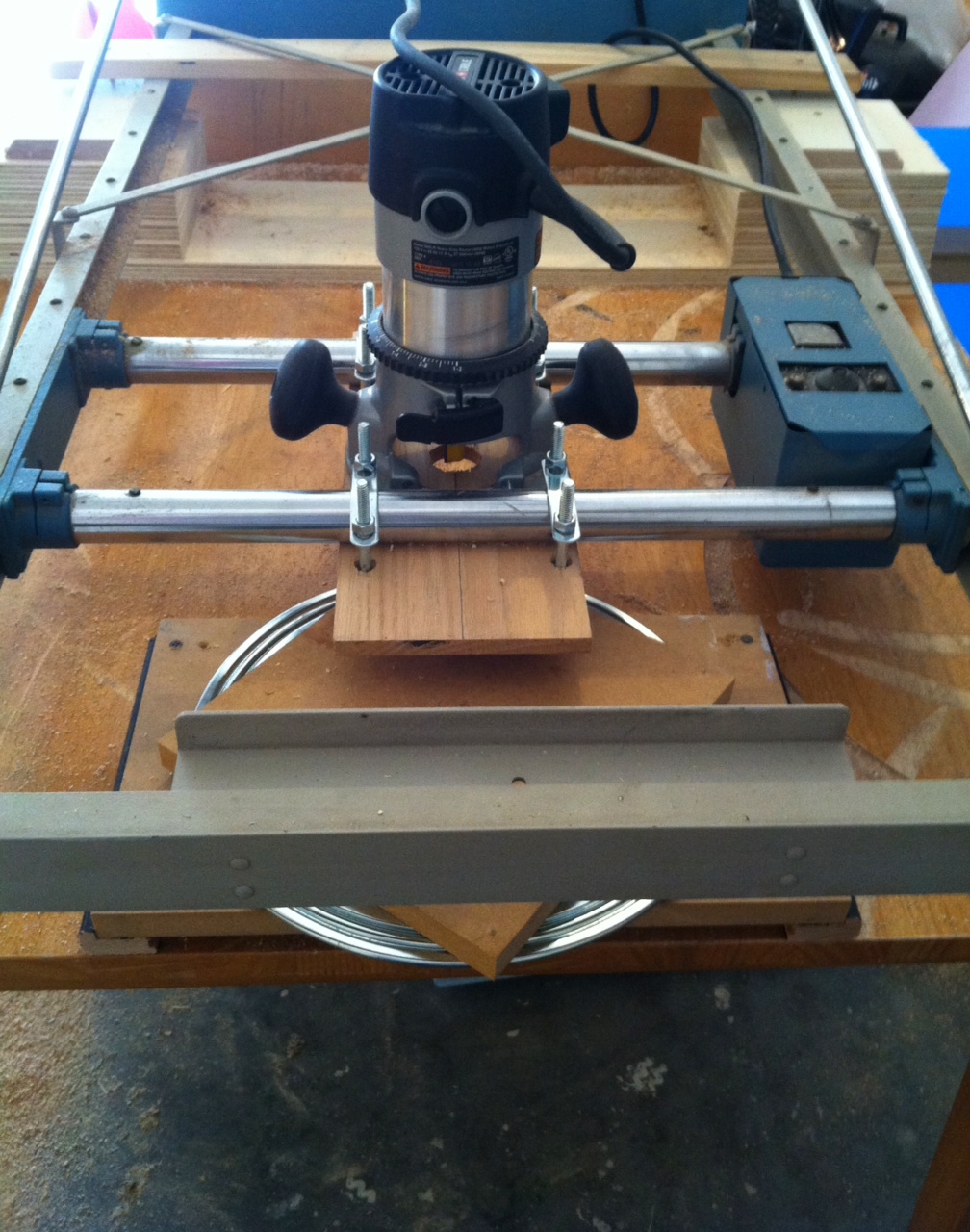
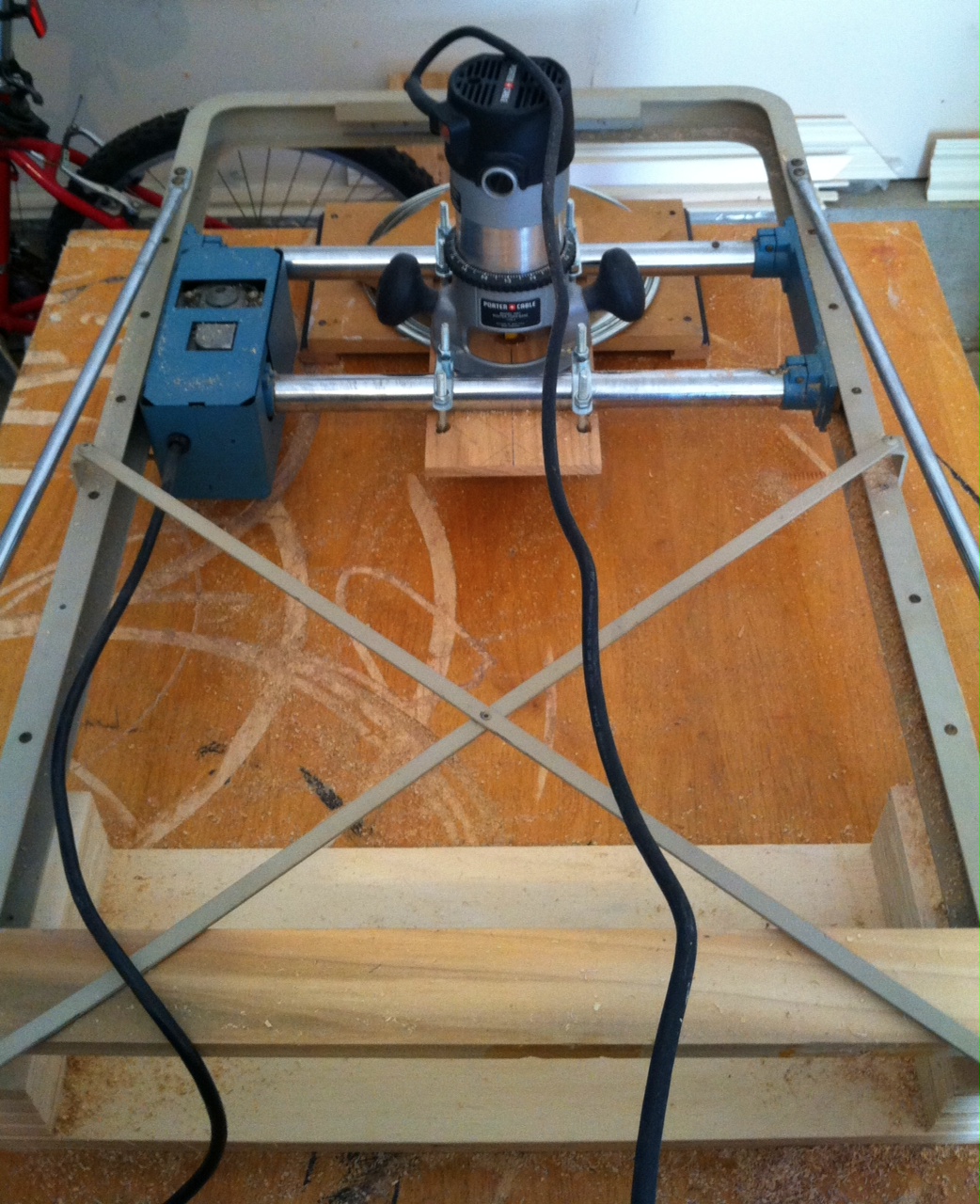
These first two images are fore and aft shots, giving a general overview of the beast. The active ingredient is a mid-range Porter Cable Plunging Router. The router has been attached to a Beseler 45MCRX Photo Enlarger body that I scavenged and hacked last year. The motor still works great, which means that my router can be moved horizontally over the table allowing me to make multiple plunges at different locations on the wood. The whole layout of the table is very close to a sketch I made last year.

table1

Here you can see the underside of the router carriage (top half of image). The bit plunges through the oak carriage deck and into the wood that’s to be cut. The wood is sitting on a “lazy susan” deck that grips the panel and may be easily rotated past the router bit.

table4

This is a shot of the lazy susan rotating deck. You can see the points that protrude through the deck (there are four – one point at each corner) that hold the wood in place as it’s being routed into a circular panel.

The first tondo I cut this afternoon was a resounding success. Here’s hoping for many more. It’s definitely an improvement on my old tondo jig. The big plus to this table is that I will be able to make circular frames for my tondo works. I wanted to have the movable routing deck precisely for this feature, and now we’ve got it. I’ll keep you updated.