The Wreck of the ELLA Fitzgerald??

When I was young – perhaps five years old – I caught on to the notion that you could call in to the radio station and request songs. I enjoyed listening to the oldies stations and wondering what song might come up next. This was in the era of Casey Kasem and the power of the Billboard Top 100, and music was a little more of a communal cultural situation.

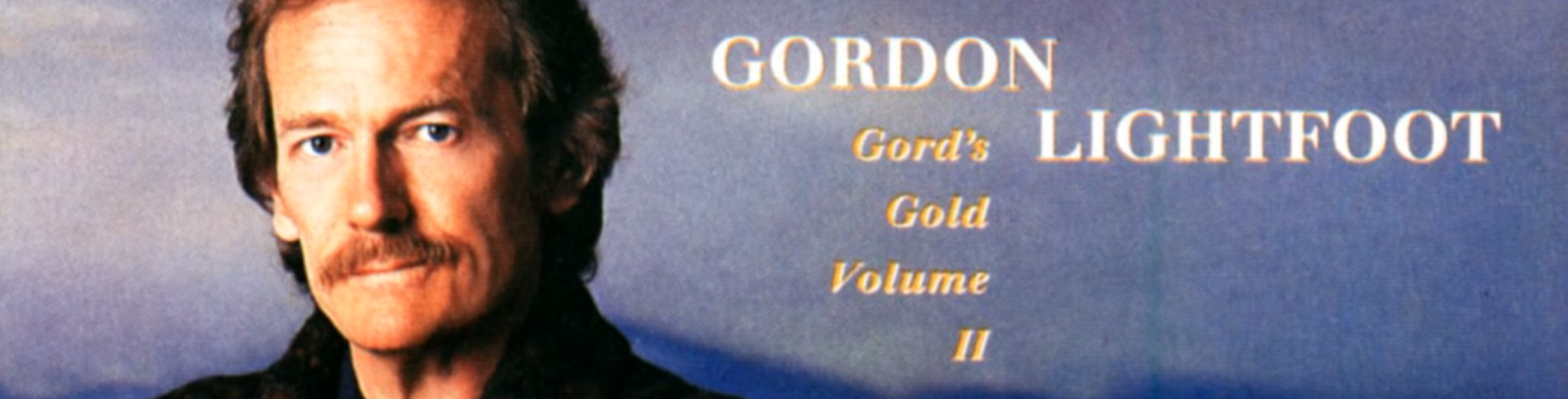
In any case, I was a radio person back then and I liked the idea that you could influence what was going to be played. One day at the age of 8 or so I decided that I wanted to call in to request the Gordon Lightfoot song The Wreck of the Edmund Fitzgerald. I got the number. I (kind of) worked out what I was going to say. But when I got on the air to make the request, I made a fundamental mistake.

You have to understand that my father had a large record collection, and I knew about a lot of different music from my older siblings, so I had heard a lot of names. It was an easy mistake for a kid to make, damn it! When the DJ asked me what I wanted to hear, I was a little flustered and blurted out:

“Can you please play The Wreck of the Ella Fitzgerald by Gordon Lightfoot?!”

This faux-pas got quite a laugh, and not only from the DJ, but also from my family. In the aftermath of this flub I can state I have known the difference between the Edmund Fitzgerald and the great singer Ella Fitzgerald since that very day.

In all seriousness, though, given that I was so interested in the song it was only natural that not so many years later I would start reading books and articles about the events surrounding this notorious loss of the Edmund Fitzgerald. Gordon Lightfoot was one of the first singer-songwriters who captured and fired my imagination. He (among some others) caused me to think about time and experience in a different way; as something within me and happening alongside me, not just random stuff apart from my life. Perhaps it’s a testament to the very idea of songwriting and musicianship as artforms. For me, Lightfoot embodied that troubadour tradition. These artists sing the tales of history, document it in personal ways, and help shape a democratic view of history itself.

Of course, everyone knows most famously Bob Dylan as one of these history-singers. But there were many others. I would include people like Sister Rosetta Tharpe, Billie Holiday, Utah Phillips, and Natalie Merchant amongst that group. So many… From Woodie Guthrie and Townes Van Zandt to Tracy Chapman and Ani DiFranco and P.J. Harvey. It’s such a rich – and necessary – tradition.

I find it fitting that my interest in the event of the wreck of the Edmund Fitzgerald and learning about the history surrounding it – not to mention becoming curious about the whole Great Lakes region – is all connected to the art of singing out moments of collective experience. This, like so many other things, I owe to art and artists. This is the richness of life: Not in things, but in awareness. Not in owning, but in being.

The SS Edmund Fitzgerald as seen from the Ambassador Bridge in 1965.
Detroit Historical Society

Today is the 50th anniversary of that ship sinking on Lake Superior. There are many interesting articles currently available from the days and weeks leading up to today (including this one from the Smithsonian and this one from Popular Science). So read about the ship. Read about the song, and listen to it (here’s the first version, but I’ve always been partial to the 1988 re-recording Lightfoot made – it’s a tad longer and has a slight mood adjustment that feels symbolic and mystical to me).

Then take at least 29 seconds – one “for each man on the Edmund Fitzgerald” – and may those moments of silent remembrance of them cause you to consider what human commerce, ingenuity, and hubris can do in the face of Nature’s power.
Rush and Nostalgia for the Future

Growing up I found intense comfort in the music and lyrics of the iconic Canadian band Rush. Rush hold a particular place in the history of rock music, as they were both iconoclastic and unapologetically moral and humanist in orientation. Their songs were not the realm of edge lords or shock rockers. They didn’t make songs about sex, drugs, violence, or stupidity. Much to the contrary. They thought deeply, expressed those thoughts intensely, and were able to stand out in completely unique ways because of the quality of their unified talents.

Rush pioneered rock music as an intellectual pursuit. They were compelling because they stood on principles, and communicated deep commitment to human concerns without couching it in schmaltz. You can sense honesty in their dedication to their musical craft and in the meaning embedded in the lyrics Neil Peart wrote.

John Dewey, a central philosopher of the pragmatist movement, established much of the foundation surrounding art as a moral structure in society. Don’t misunderstand me; I don’t mean propaganda or dogma being used within art to influence or instruct. I mean deeply human values translated into actionable expressions of yearning and awareness.

“Anthem of the heart and anthem of the mind
A funeral dirge for eyes gone blind
We marvel after those who sought
Wonders in the world”

Anthem

In Rush we see full expressions of a world where reason, empathy, and the better angels of our nature have had free reign. We find artifacts proving the best human capacities for love, attention, and hope.

When I think back on what inspired me and what stuck with me for all of these years, I think it is the sense of hope and expectation that they created. Actually, maybe hope is the wrong word… I think yearning might be a better way to describe it. Hope, in a sense, lacks agency. It sees life as something that happens to a person rather than what a person chooses, navigates, or constructs for themselves and alongside others.

“They travel on the road to redemption
A highway out of yesterday, that tomorrow will bring
Like lovers and heroes, birds in the last days of spring
We’re only at home when we’re on the wing
On the wing

We are young
Wandering the face of the Earth
Wondering what our dreams might be worth
Learning that we’re only immortal
For a limited time”

Dreamline

Yearning, on the other hand, is motivational and self-actualization in process. It’s visualization. It’s being the change you want to see in the world. The ability to reflect, imagine the world you want to inhabit, and take real steps to make it real in some way… that’s yearning. It’s the combination of instinct and clear-sighted determination.

In some very real ways, Rush was the soundtrack to my own determination to at least TRY to expand my world. To get educated. To travel. To live as an artist. To read, think, and feel deeply. Songs like Middletown Dreams and Subdivisions called me to broaden my horizons. The lyrics of Dreamline and Ghost of a Chance made me dream, and then helped me transform those dreams into practical plans.

“Dreams flow across the heartland and feeding on the fires
Dreams transport desires
Drive you when you’re down
Dreams transport the ones who need to get out of town, out of town”

Middletown Dreams

“Like a million little crossroads
Through the back streets of youth
Each time we turn a new corner
A tiny moment of truth”

Ghost of a Chance

One of the other realms that Rush inspired me to think about and explore more fully was science. As a young person I was exposed to young earth creationism and other forms of science denial. Songs like Natural Science and, later on, Earthshine, prove that transcendent awe and appreciation for the wonders of the universe are not the purview of religious belief. As I read about the science behind everything from evolution to astrophysics, I unlocked a sense of astonishment and pure joy that had not been available to me before. In reading folx with diverse perspectives, from Stephen J Gould and Annie Dillard to Douglas Adams and Ellen Dissanayake, I found that there was a way to be excited about the glories of space, time, and biology without appealing to supernatural explanations. There’s so much that we can see, hear, touch, measure, and practically explore without needing to imagine things outside of the universe to justify them all.

“Wheel within wheels in a spiral array
A pattern so grand and complex
Time after time we lose sight of the way
Our causes can’t see their effects”

Natural Science

In some way, the feeling that I’ve always had while listening to Rush is a kind of nostalgia for a past dream of a future where good truths prevail. Where the right thing is done, and everyone can see it. Where the light of knowledge is appreciated. Where attempting to understand “life, the universe, and everything” is given the highest of accolades, appreciated more than fleeting beauty or physical ability. Where honesty, good faith, and mutual aid are seen as true societal values. I think that future is possible, and I think we are actually closer to it than we’ve ever been as a species. In a time where this country is divided and anxious, it’s easy to think that future is not possible. But it objectively is. This is the best time to be alive for most human beings.

This Thanksgiving week, I’m thankful for the world, for life, for music, and for Rush. Here’s a link to a playlist of some of my favorite songs they’ve made: