An ongoing project…
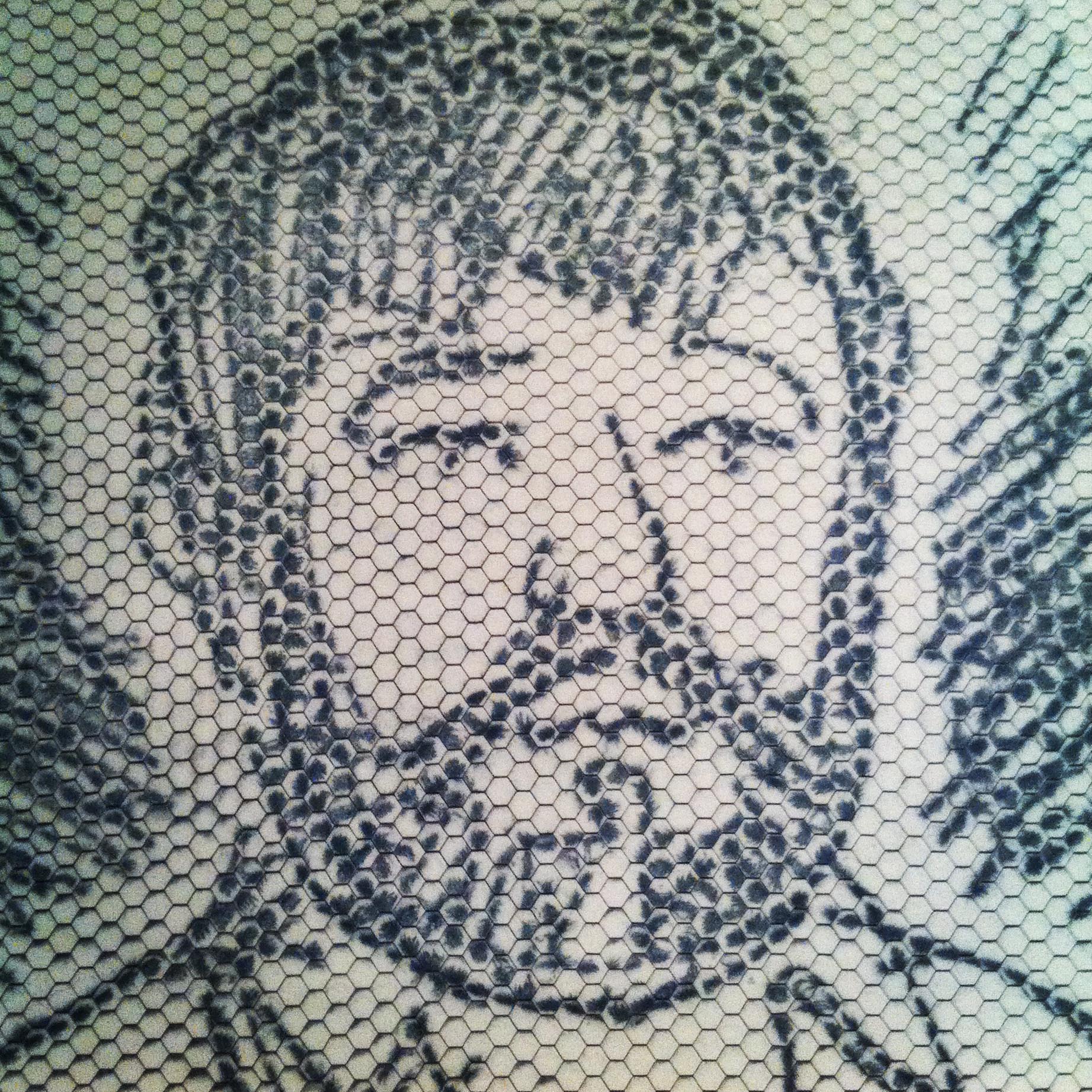
Bobby

RD

Ian
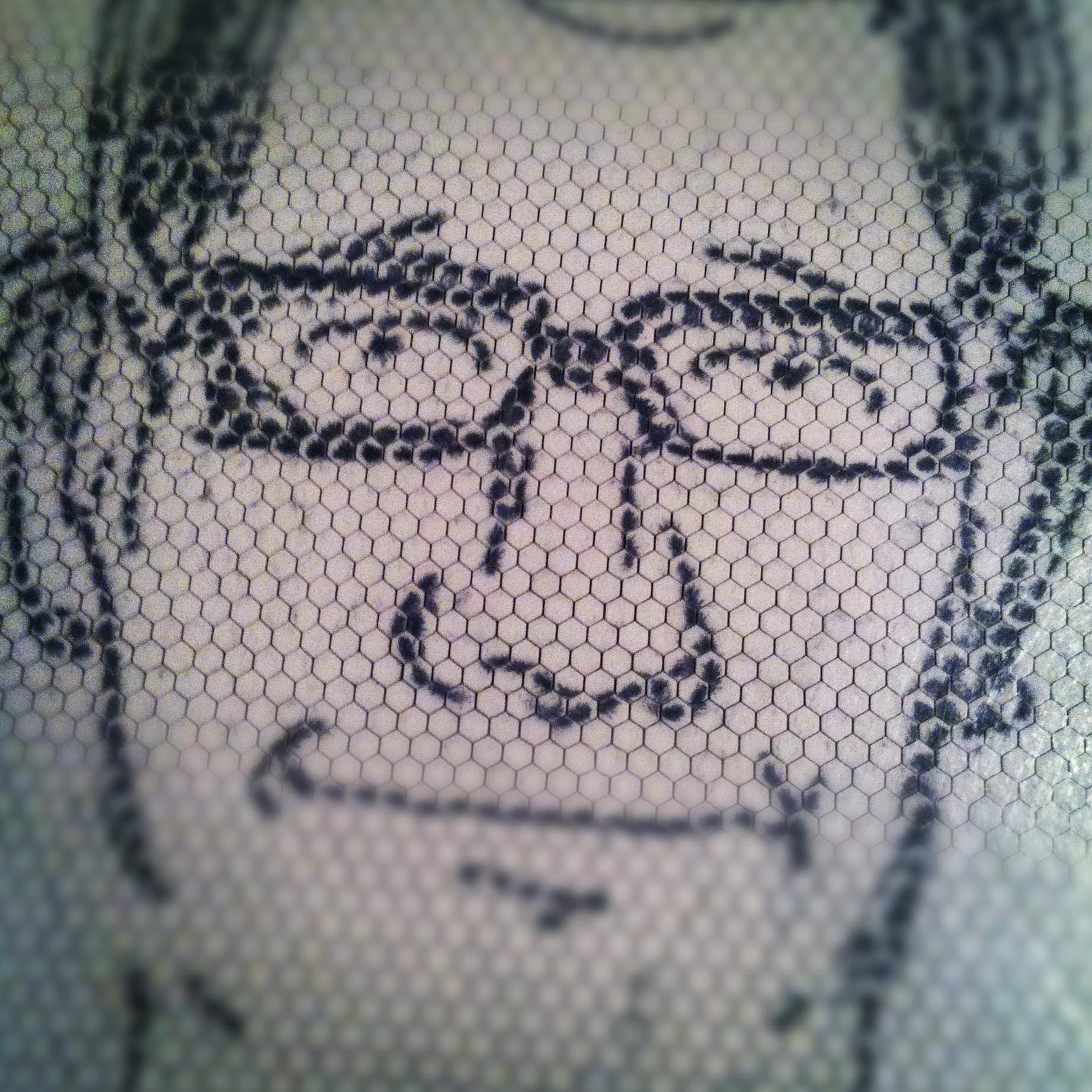
Marcus
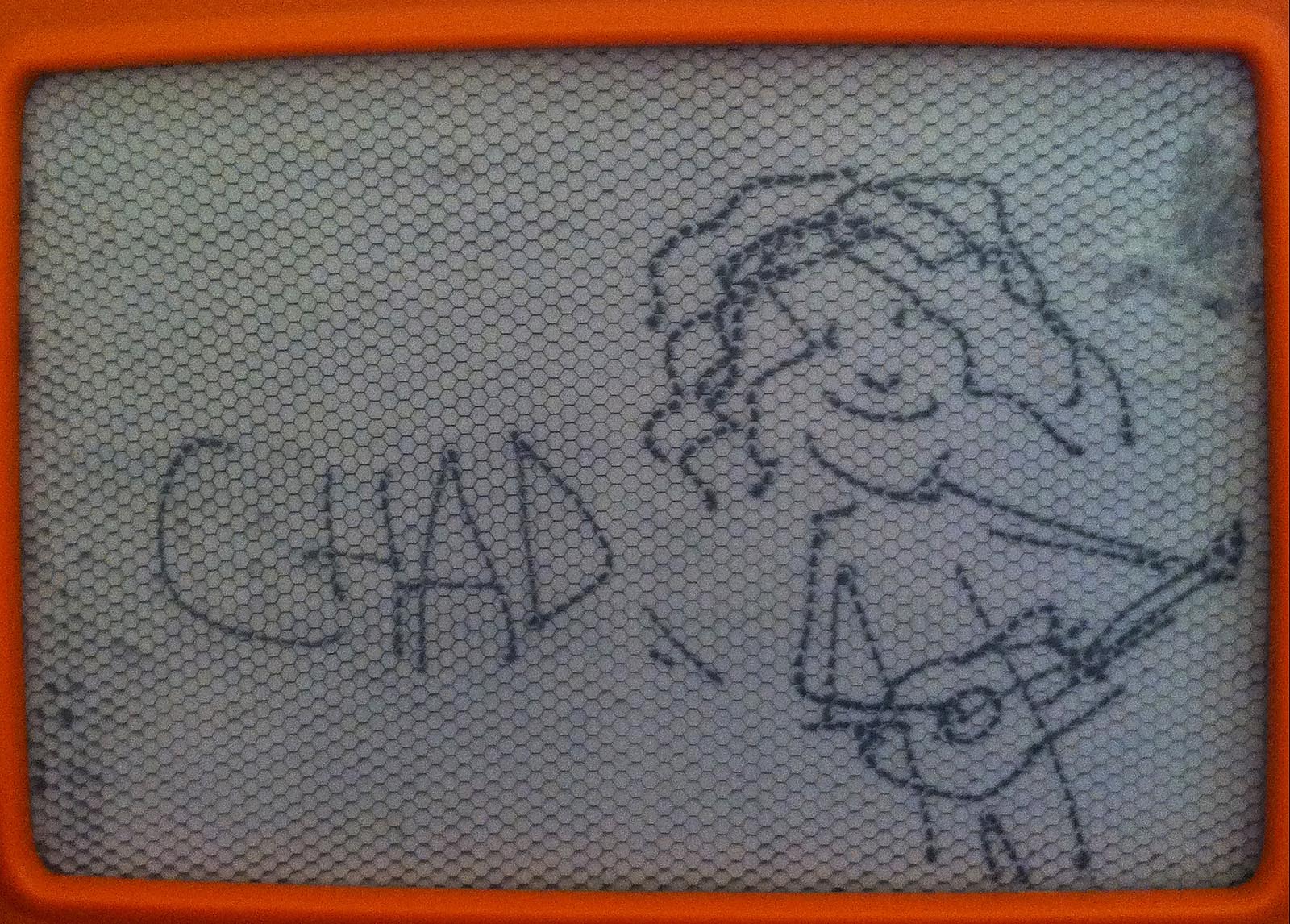
Chad
An ongoing project…
Bobby
RD
Ian
Marcus
Chad
Beginning Color Drawing, first week exercises…


This group seems really dedicated and interested… here’s hoping for some epic work this semester!
My daughter draws. See for yourself:
 Working hard on the Magna-doodle.
 A tableau with a foot and the finished work…
 The facility of a Twombly!
 Her mother interprets the ineffable script.
 The work table is itself a work of art…
 A swift, sure hand speeds over an uncertain surface: glory!
I create paintings, drawings and prints in an attempt to address – through archetypal themes and symbols – the fundamental questions, ideas, hopes, and concerns I have about being in the world. I write texts in an attempt to integrate rational conceptions and reflections with my passionate, sometimes illogical, image making. In tandem, these avenues of expression form a multifaceted arena of investigation and inquiry that I use every day to – hopefully – understand and make sensible the miraculous reality of being.
The statement above relies on the fact that I am deeply interested in three main aspects of the human condition: being, symbol, and body.
I am intrigued by the state of evocative subjective experience that Gaston Bachelard described as “the astonishment of being.” Thus, though I am interested art of all kinds, I take particularly to those forms that connect with our embodiment or sense of being. This means the physical world, the objects we use and love, and the bodies we inhabit are particularly important to the sort of art I want to see and make.
It follows then that I find the expression of meaning through symbol – that is, the potential for objects to accumulate and resonate with meaning – to be a central interest of my art-making practice. Anything containing meaning has been, as John Dewey wrote, “funded” with importance through the physical interaction and intellectual contemplation human beings have invested in it over time.
The body is the zone of incident where being-ness and the structures of significance coalesce. Therefore, I foster a deep appreciation for the human body as a container for and calibrator of meaning and knowledge. As a maker of images – be they painted, drawn, or printed – I function as a symbolist in the traditional sense; I create tableaus for the relational contemplation of that which is beyond the facts of appearance. In doing so I hope to stimulate an evocative, transformative experience in my fellow human beings.
Every semester I have to make more posts about how awesome my Color Drawing classes are.

Above: Marissa Valentino’s amazing Colored Pencil drawing of a head from our group project.

Students assembling one of our large group drawings.
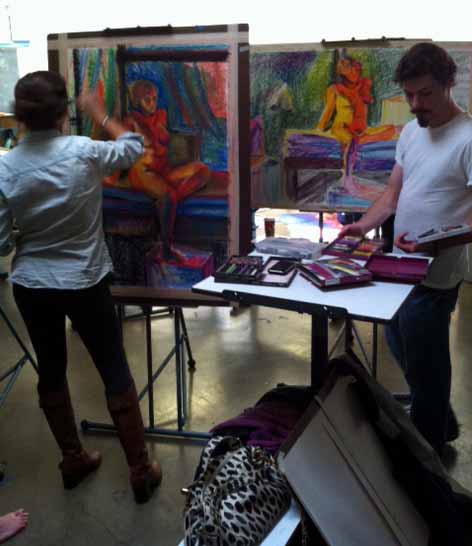
Hannah and Vincent hard at work on a final figure work for the course.
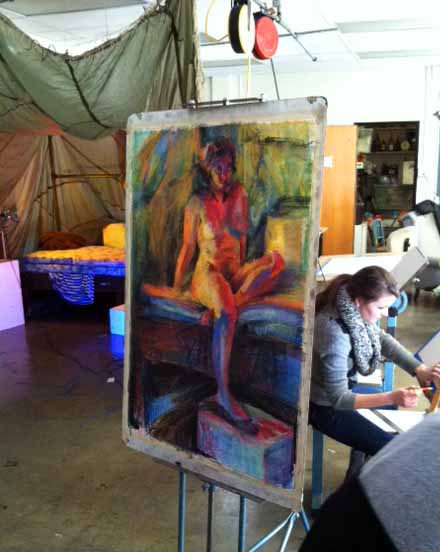
Emily Armstrong’s 44 by 30 inch figure drawing in progress on the easel. You can see our parachute stage setup there behind. We love that parachute!

Above and below: A selection of drawings from the second half of the semester we pulled out for a group crit – some in progress, others complete. Overall a great effort by my students this year!


India Watts working on her Matisse master study.

The final group project installed in one of the stairwells at the University of Missouri.
I’ve got another amazing group of Color Drawing 1 students this semester. Below I’ll highlight just a few of the many who’ve distinguished themselves this year. Please click on each to see them up close.

A work in colored pencil by Marissa Valentino. About 18 by 18 inches.

A drawing by Lirong Gong. Chalk pastel, 24 by 18 inches.
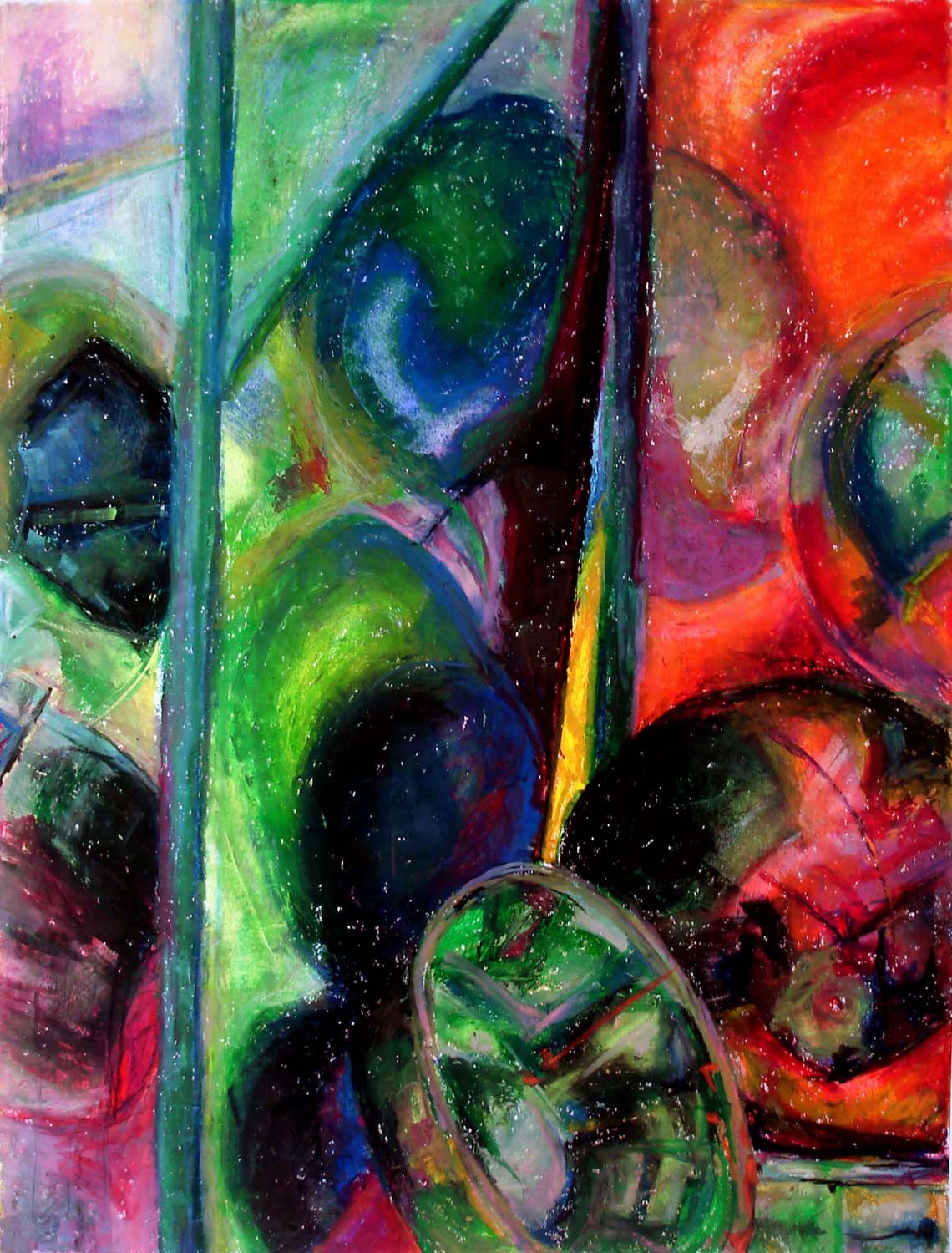
Megan Schaffer has an amazing sense of material handling. Her oil pastel work here is 30 inches by 22 inches – it’s just one of 4 or 5 that are really stellar.
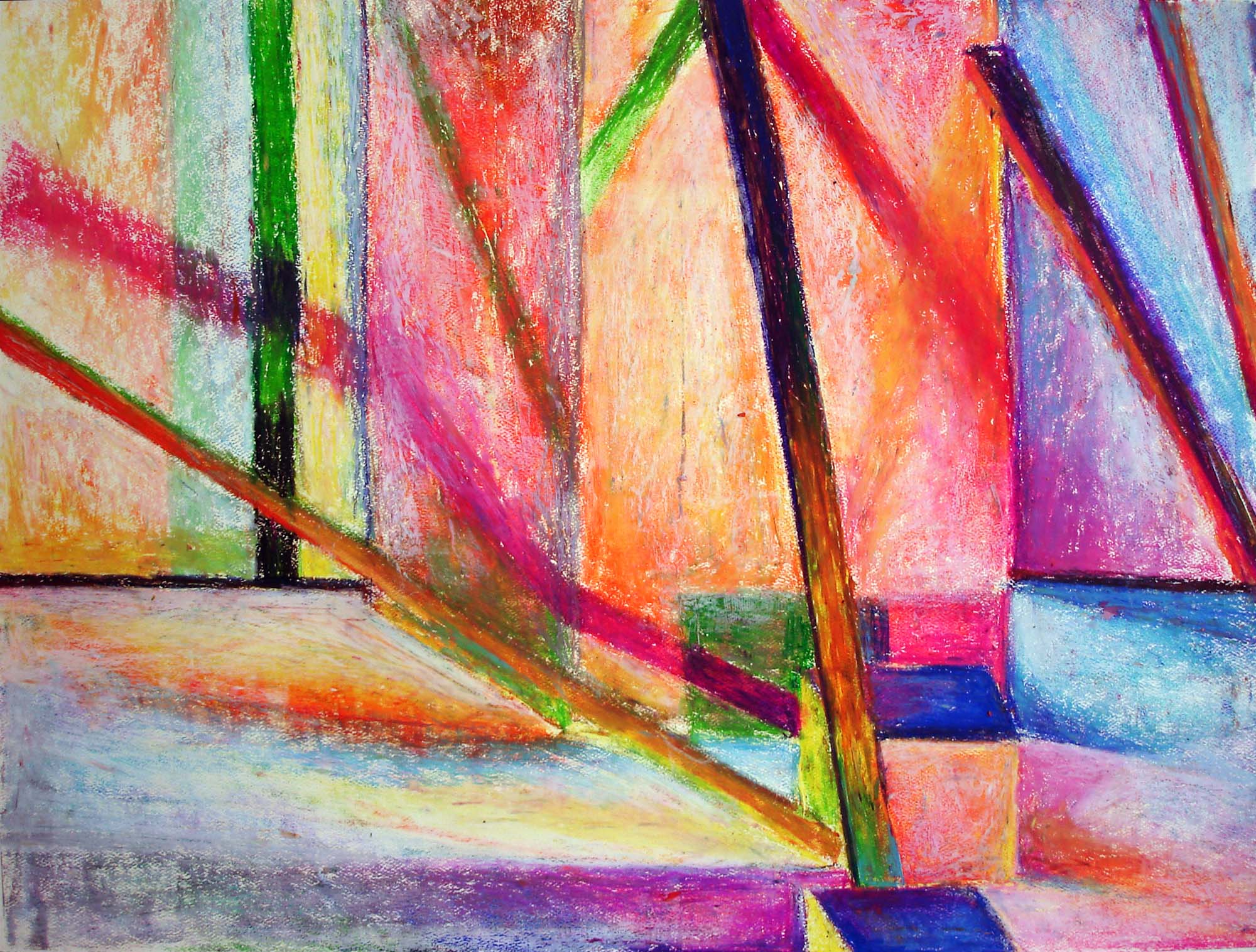
Carly Kurka working the chromatic shadows, 18 by 24 inches, oil pastel.
. 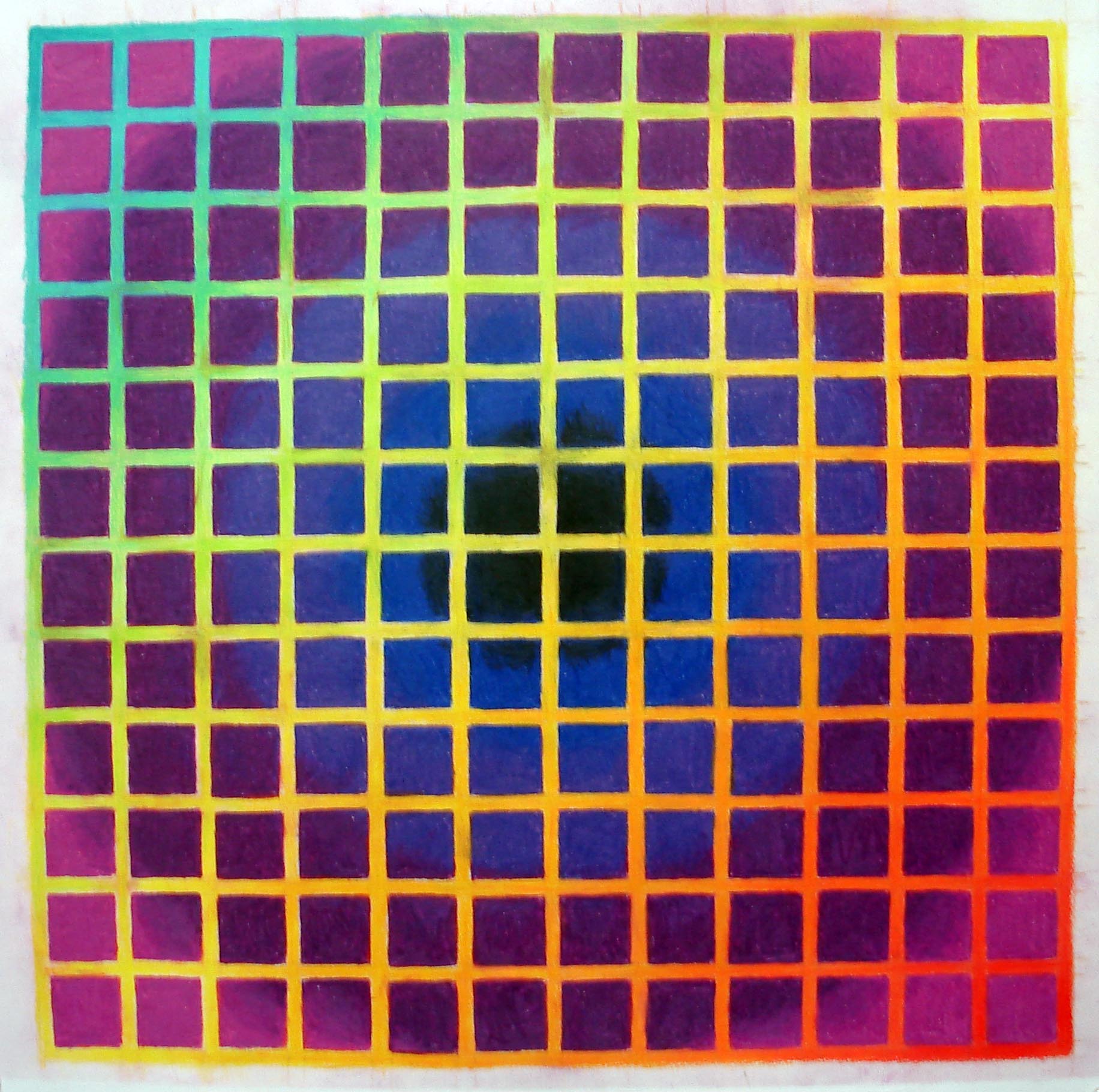
Becca Wholey’s grid work fulfilled the project parameters expertly – 16 by 16 inches, colored pencil.
It’s been a privilege to work with these students – here’s hoping they continue on with me in Color Drawing 2!


The best part about this drawing session with my daughter was the way she put her left hand over mine when she’d go to make a mark with her right…
Jacob Maurice Crook and I have a show together at Moberly Area Community College. We installed today and the exhibition opens this coming Monday, June 6th. I hope you can get there to see the show – MACC’s gallery space is quite nice – but if you can’t make it, check below for some shots of the work installed. Click each image for enlargement.

1 ) Crook’s main wall arrangement. One larger oil painting, a small work in oil, and a mezzotint.

2 ) Crook’s inner room set – two oil paintings flank a beautiful graphite and gouache work.

3 ) Crook’s side wall, with an oil piece, two large mezzotints, and a graphite work.

4 ) Crook’s behemoth Hitt Street Garage, an 18 foot, 7 inch oil painting.

5 ) Ballou’s main wall set, with images from Chicago during 2000 and 2001.

6 ) A grouping from Ballou’s 2008 Illinois beach house series.

7 ) Ballou’s 2008 Michigan light photos.

8 ) The 2004 Whitney Ceiling set, installed physically for the first time here (I presented them online during 2010 at this link.)
If you are now sufficiently inspired to see the show for real, MACC is located at 101 College Ave. Moberly, MO 65270.
And here are our statements for your perusal:
Looking Over the Overlooked Exhibition Statement
Matt Ballou and Jacob Crook present work that engages with the proliferation of commonplace, yet ignored, spaces in the urban and suburban landscape.
Using primarily photographic images, Ballou depicts an iconography of geometries and formal tensions based on his experiences with specific interior and exterior spaces over the last decade. Several bodies of work from very different locations around the United States take center stage. These include a latticework of appropriated images showing the ceiling of the Whitney Museum of American Art in New York City, a multitude of manipulated photographs of a skylight in a rural northern Michigan home, and a series of images of the degrading arcs and angles of a dilapidated municipal beach house in northern Illinois. Installing the images in broad arrays allows for a serialized, comparative reading that creates interplay between the total effect of the group and the specific characteristics of individual images. The works are not meant to be singular expressions but rather cumulative contemplations of space, place, light, and the modular effects of specific structures.
A dedicated representational painter and draftsperson, Jacob Crook’s work starts with repeated observation and detailed consideration of the overlooked arenas that quietly dominate the American landscape. Relying heavily on James Howard Kunstler’s book The Geography of Nowhere, Crook’s paintings, drawings, and prints attempt to come to terms with what Kunstler describes as the American “obsession with mobility, the urge to move on every few years” and the results of that tendency: “we choose to live in Noplace, and our dwellings show it.” Casting his eye on the margins of suburbia, Crook tries to locate the dynamic tension that exists between the land and our mundane domination of it. Crook carries on the legacy of landscape painting while rejecting its inherent valorization of the subject matter. Instead of merely creating pleasant pictures, his work uses the historical authority of both painting and the landscape to project a subversive series of questions toward viewers.
Together the work of these two artists is a vision of what American space has become. Not an entirely negative perspective, the work is meant to provoke an introspective attitude in viewers, challenging assumptions and calling questions to mind: “What spaces do I want to live in? What has dictated the sorts of spaces I live in by default? What is my responsibility for the reality of these spaces?” The artists hope that by bringing their own investigations – as humble or as banal as they might seem – to viewers, a thoughtfulness and contemplation might be stimulated.
Biographical Information
Ballou is an Assistant Teaching Professor at the University of Missouri where he has taught since 2007. In 2011 he presented a major solo show at Gordon College in Wenham, MA and will exhibit with internationally renowned artist Tim Lowly at the 930 Art Center in Louisville, KY during the summer of 2011.
Crook earned his BFA from the University of Missouri in 2009. His work was recently included in the prestigious Fort Wayne Museum’s Contemporary Realism Biennial. He has been accepted to Syracuse University’s graduate printmaking program for the fall of 2011.
Jacob Maurice Crook | Artist Statement
My work is a contemplation of how the physical design of our surroundings can influence social behavior and also offer insight to cultural practices that inform the nature of such designs. In choosing the subject matter of my imagery, I focus my sights on the fringe of suburbia, attempting to locate dynamic tensions existing between the landscape and the homogeneous developments quietly dominating its topography. I chose to reject the idealized depiction of subject matter inherent in the history of American landscape painting. Instead of merely creating pleasant pictures, I use the history of both painting and landscape to project a subversive series of questions to viewers: What spaces do I want to live in? What dictates the spaces I live in by default? What responsibility (if any) do I take for the reality of these spaces?
Matthew Glenn Ballou | Artist Statement
These photographs were never meant to be artworks per se. Over the course of many years I have used photography as a way to decipher my own eye, as a way to better understand what visual dynamics draw me to certain scenes or arrangements of form and space. So most of what you see here was entirely reactive and instinctive at the beginning. I was attempting to see something in what others might easily overlook. Ultimately it worked, and in many ways these images have become historical and canonical to me. They are also nostalgic in that they are documents of places and times that carry personal significance. In them I see my own eye remixed, my own memory re-contextualized. In them I see a field of visual forces at play, which I have taken and used, reused, and reapplied. I present them in this way at this time to heighten my experience of their formal tension and balance in contrast with my emotional feeling for the spaces and times they represent. I present them so as to experience all of this again, anew. It is the contrasts and resonances made possible by this new context that bring artfulness to the work. The images themselves remain snapshots while the relationships among these fragments become a place for art experiences to reside: between the lines, in the overlooked spaces, around corners, beyond sight.

Two Bells, Acrylic on Panel, 24 inches in diameter, 2011. Click for a larger version.

Certain Ideal Forms #1, Graphite on Paper mounted on Panel, 24 inches in diameter, 2011. Click for a larger version.
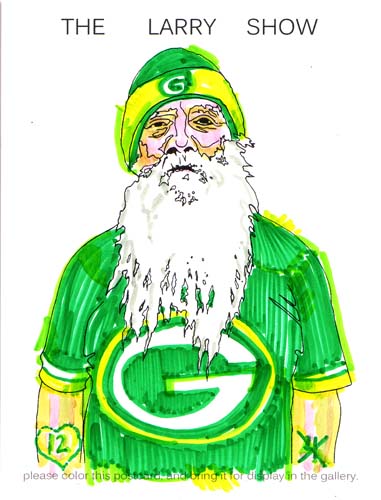
So the upcoming “Larry” show, curated by the awesome Sloane Snure Paullus, has postcards that solicit drawing upon said postcard (to be exhibited alongside the work of 40+ artists [including me and some of my best students] at the George Caleb Bingham Gallery at the University of Missouri this summer)… Below are some of my very own “The Larry Show” postcard drawings. Enjoy, and click for larger versions :)
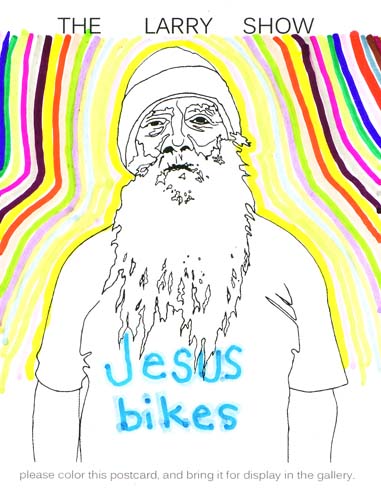
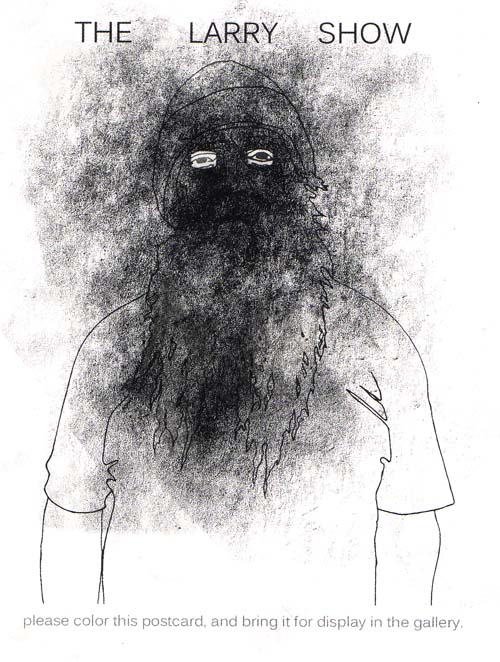
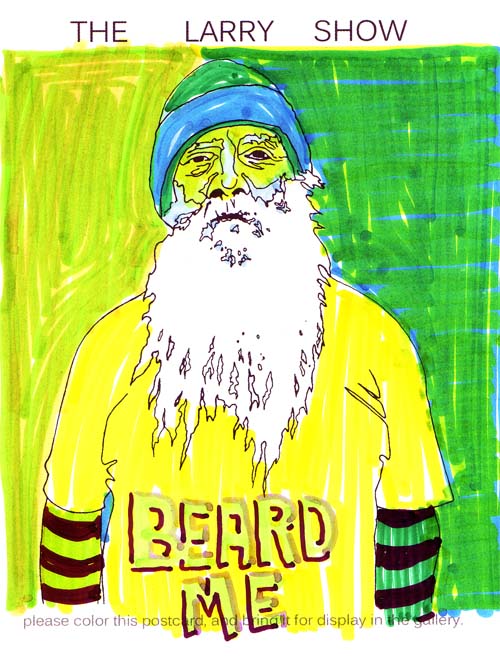
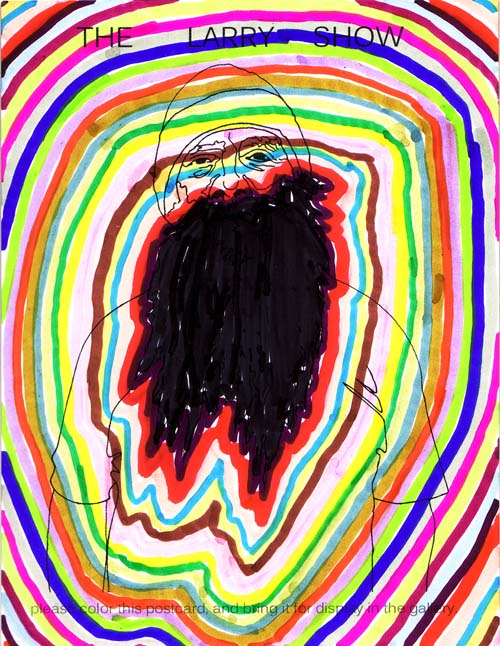

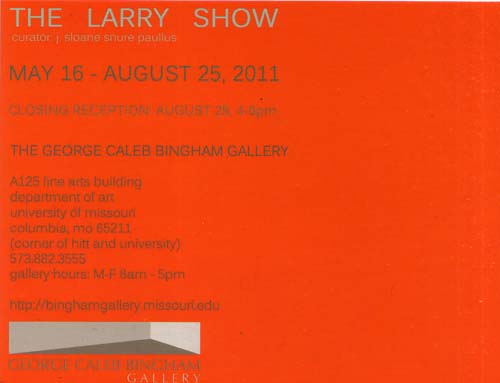
And here’s the verso, giving details about the show… I hope you can make it. There’ll be a whole wall of visitor-submitted card drawings (including a few more of my own), so be sure to see the show!
 eikonktizo