Recently, my friend Aarik (whom I haven’t seen in person in about two years, which is a travesty) made an intriguing post on Twitter. He was musing about the idea of publishing an anthology of reflections regarding an important single line from some song, film, poem, or other source. He suggested calling this journal Hold The Line and I’ve been thinking about the idea every day since I skimmed my eyes over his tweet.

It goes without saying that each one of us could offer many dozens of lines from the treasure trove we carry in our minds. Lord knows I’ve been moved by everything from scriptures to contemporary internet memes. When I glide back over my life, though, it’s clear that some lines are held more closely to my core – to the experiences they influenced – than others.
Lying in bed last night I decided to make an entry in Aarik’s theoretical journal. My Hold The Line for today (for right now, since probably it would be something else in 20 minutes), is from Mazzy Star’s 1993 masterpiece, So Tonight That I Might See.
“Come so close that I might see the crash of light come down on me.”1
There’s something so powerful in the idea that when we come together we approach transcendence: come so close that I might see. It’s a proposition, a hope. If/Then. If this other entity is close enough to my core, then perhaps I may experience a charged glimpse of something beyond me. Then it would also be within me, a kind of multiplicity that blows out me-ness with all-ness.
Even so, my perspective – my sensate awareness – is also central. This is like Annie Dillard’s “tree with the lights in it”2 or Moses’s burning bush; the intimate presence, both terrifying and awesome, brings astonishment. Come so close that I might be more than me. Ego death. Samadhi. A disappearance of masks and pettiness in lieu of some true (if only momentary) unity.
Let there be light – and it crashes.
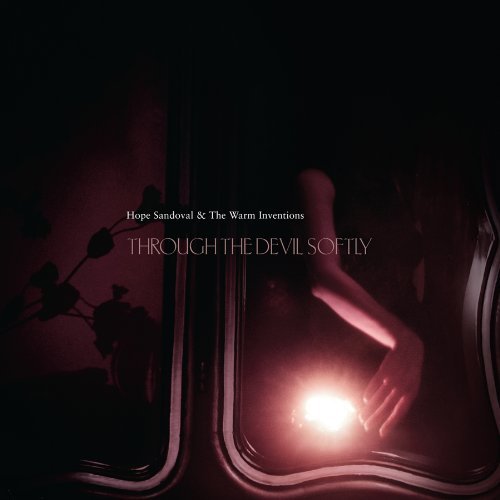
There is a bit of an out-of-body charge to the order of operations in Hope Sandoval’s mumbled words, in the “gothic hallucination”3 of Roback’s droning guitar tone. From closeness to sight to the mystical crash of light. Closeness catalyzes an outside, transmundane experience. I see the light come down on me in that moment. Sharp, electric, like an accidental brush against a live wire or the vertigo of a hypnic jerk.
I have felt that pulsing disorientation a few times. With Robin, her blond bob, and the small of her back all those years ago. With Miranda, born like a bomb, a modern Minerva bursting fully-formed into new reality. Even last week, suddenly seeing a former student after years and almost bursting into tears over it.
Maybe the crash of light always carries tears along with it.
Cliché, I suppose. But also real experience and astonishment… moments of enlightenment brought on by the presence of another real person.

1) Mazzy Star. “So Tonight That I Might See.” So Tonight That I Might See, performance by Sandoval, Hope and David Roback, Capitol Records, 1993.
2) Annie Dillard, Pilgrim at Tinker Creek. New York, NY: Harper, 1998. Page 35-36.
3) Moreland, Quinn. “Review – Mazzy Star: So Tonight That I Might See.” Pitchfork, Pitchfork, 14 June 2020, pitchfork.com/reviews/albums/mazzy-star-so-tonight-that-i-might-see/.
 eikonktizo