Celebrating the Genius of Miyoko Ito

I have mentioned the importance of Miyoko Ito many times before (here, here, and here), but there’s a little more to celebrate this Christmas day: I just received the new book Miyoko Ito: Heart of Hearts hot off the press.

Published by Pre-Echo Press, and featuring the research and writing of Jordan Stein, Heart of Hearts is the major publication that Miyoko Ito and her work deserve. Jordan Stein is an active and insightful curator who has developed a major presence nationally over the last decade. His research into and presentations on Ito are extremely significant, adding great depth to what is available on the artist.

Detail of Orange Cloud from 1977 by Miyoko Ito as shown in Heart of Hearts.

Loaded with chromatically accurate images, Heart of Hearts is the most complete compendium of Ito’s work available. Beyond this, the book provides a single place from which students and admirers of her painting can find all pertinent information about her life and process. Stein’s essay provides key context, deftly connecting Ito to not only her roots in the Chicago art scene but the broader aesthetic superstructure to which she belonged.
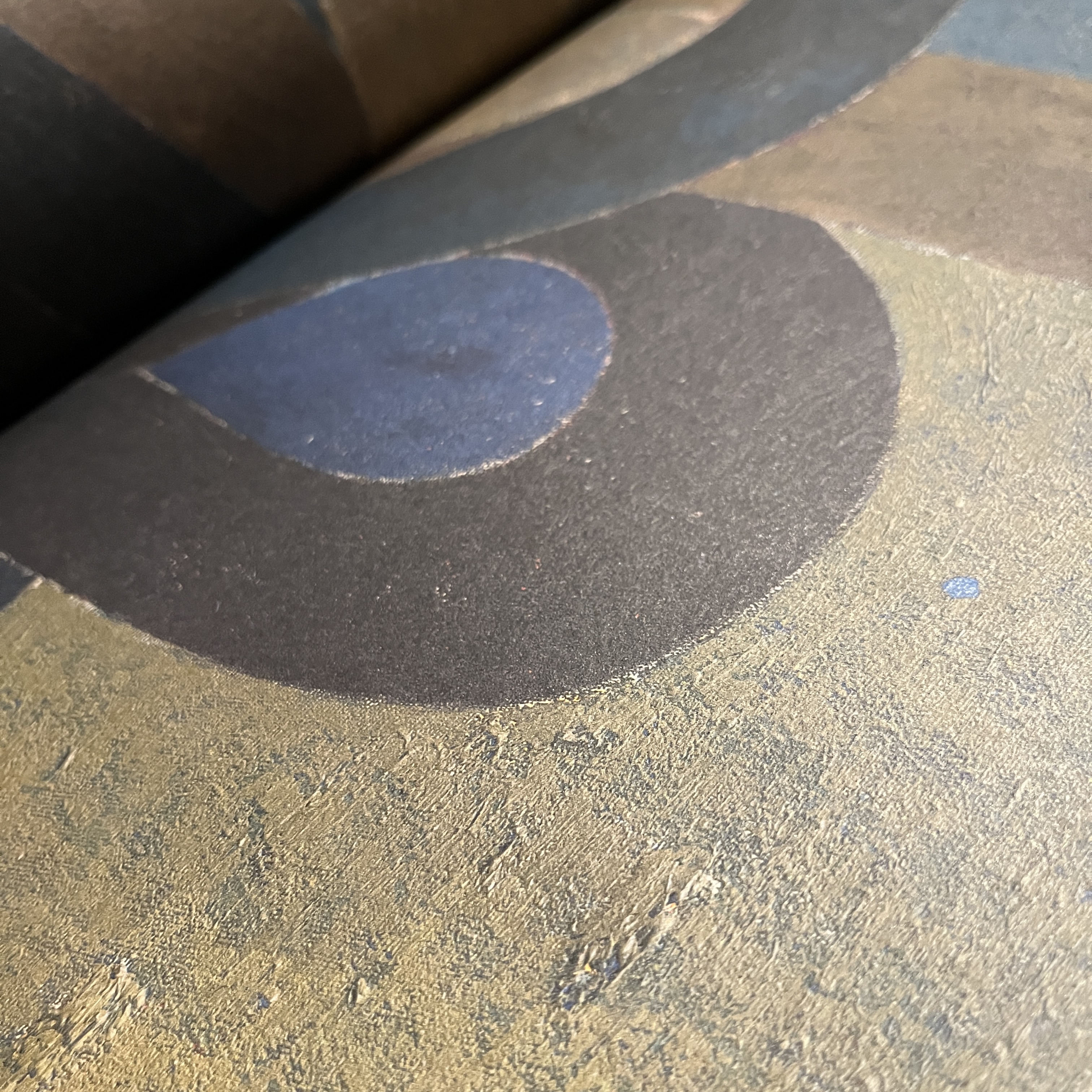
Detail of Susquehanna (The River) from 1959 by Miyoko Ito as shown in Heart of Hearts.

These two arenas – solid text and quality images – really set this publication apart. From the beautiful debossed cover (front AND back) to the matte surfaces of the large full color spreads, this book delivers. The sense of texture and painted action is wonderfully realized in these pages. I kept being surprised by the surfaces of the paintings coming to life. This is an ESSENTIAL book for anyone interested in mid-20th century painting generally, or Miyoko Ito in particular. To finally have one volume that really pulls it all together is just wonderful.


Front and back covers of Heart of Hearts.

This book is an appropriate celebration of Miyoko Ito as a person and as an artist. It includes nearly all of her work, some of which have been lost. While not technically a catalogue raisonne, it might be the next best thing, as it provides the most complete picture of her work that we’ve ever had. For this, we can thank Jordan Stein and Pre-Echo Press.

In my opinion Miyoko Ito: Heart of Hearts is the most important publication dealing with American painting since Yale’s four-volume catalogue raisonne of the work of Richard Diebenkorn. Go buy it.

Poltergeist (1982) is really good.

I watched Poltergeist again this year, and am still so impressed with it. There are a lot of reasons, but a few things really stand out.
It’s not just the expertly crafted and paced music (Jerry Goldsmith).

It’s not just the practical, in-camera, optical effects (Richard Edlund, John Bruno, Nilo Rodis-Jamero).

It’s not just the fantastic physical and emotional presence of JoBeth Williams (an absolute classic performance that should have been rewarded).

JoBeth Willams as Diane Freeling

It’s not just the introduction of one of the most compelling characters in all of cinema (Zelda Rubinstein as eccentric medium Tangina Barrons).

Zelda Rubinstein in Poltergeist.

All of that is great and worthy of note.

But it’s also that the children and women are centered. They’re not “hysterical” nor are they “irrational.” They see and know deep realities, even if they can’t understand or entirely describe them (a theme borrowed from Spielberg’s Close Encounters of the Third Kind). These characters are the central interpreters. They stand in for the viewer. We don’t dismiss the father as a moron, but neither do we have to make him the hero. Furthermore, we don’t have to MANUFACTURE the heroism of the Carol Anne, mom Diane, or mystic Tangina. The film naturally makes them function in ways that stimulate the narrative arc without BS or montage-based tropes. They don’t miraculously and instantaneously become triumphant; they live through a trajectory of growth. They don’t automatically know everything; they use their innate characteristics to attend to the film-reality in specific and logical ways.

Heather O’Rourke, JoBeth Williams, and Craig T. Nelson in Poltergeist.

Sure, there are other examples of these qualities in popular (and more niche) media. But an average suburbanite mom coming into contact with a situation so physically and conceptually counter-intuitive gives this movie a sense of genuine humanity. Its influence is still palpable in the the horror genre some forty years on, and it’s an experience always worth a revisit.

See it if you haven’t yet (it’s available on MAX)!

The Body as Zone of Incident Guest Lecture

This past week I gave a talk for The Honors College at The University of Missouri. The theme this fall was The Art and Science of Living, and they asked me to give a guest lecture about the nature of the body in the context of my work. I chose to focus on a number of artists who have shaped my ideas about the meaning of the body. – from Anne Harris and Robin F. Williams to Kathe Kollwitz and Charles White.

To hear the talk and see all of the artists and images I explore in the presentation, click the link here.

Andrew Wyeth. Spring. Tempera on panel. 1978.

Panel Discussion on AI and Art

I had the opportunity to sit on a panel at The Columbia Art League on October 12, 2023. Moderated by Diana Moxon and including CAL Executive Director Kelsey Hammond, the wide-ranging talk engaged with a lot of what artists are thinking about in the age of AI. Watch the video below to see a visual presentation of our research, examples, opinions (and humorous asides) as you follow along with the discussion.

OK Computer Panel Discussion Video

Many artists were mentioned in this presentation, and many others could have been included. A few of them were Daniel Ambrosi, Joey Borovicka, and Geo K. Weissler.

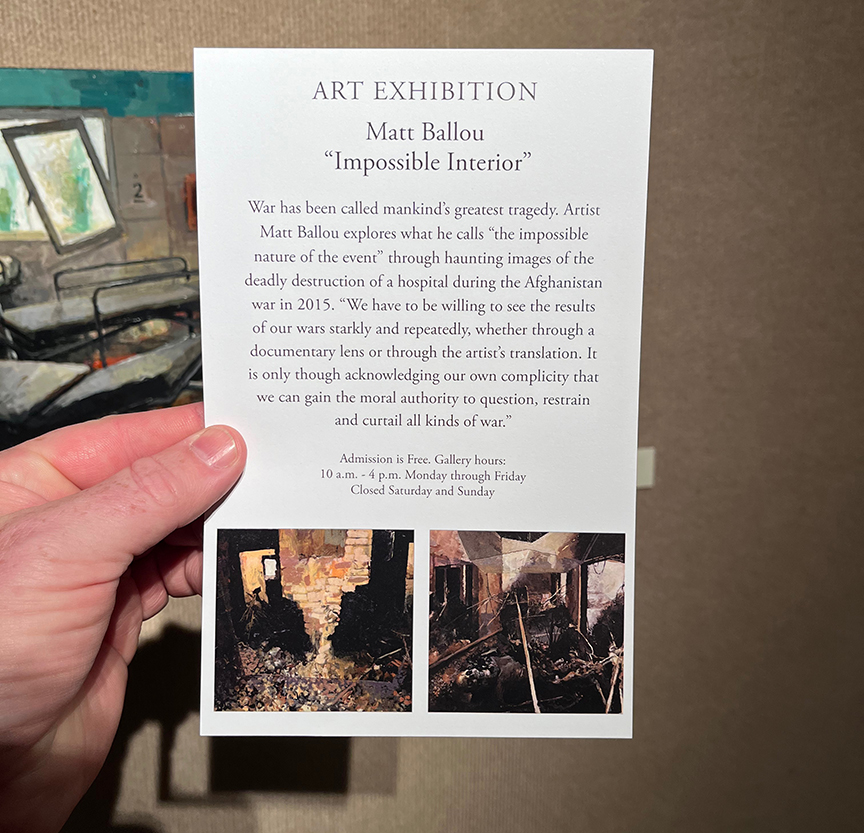
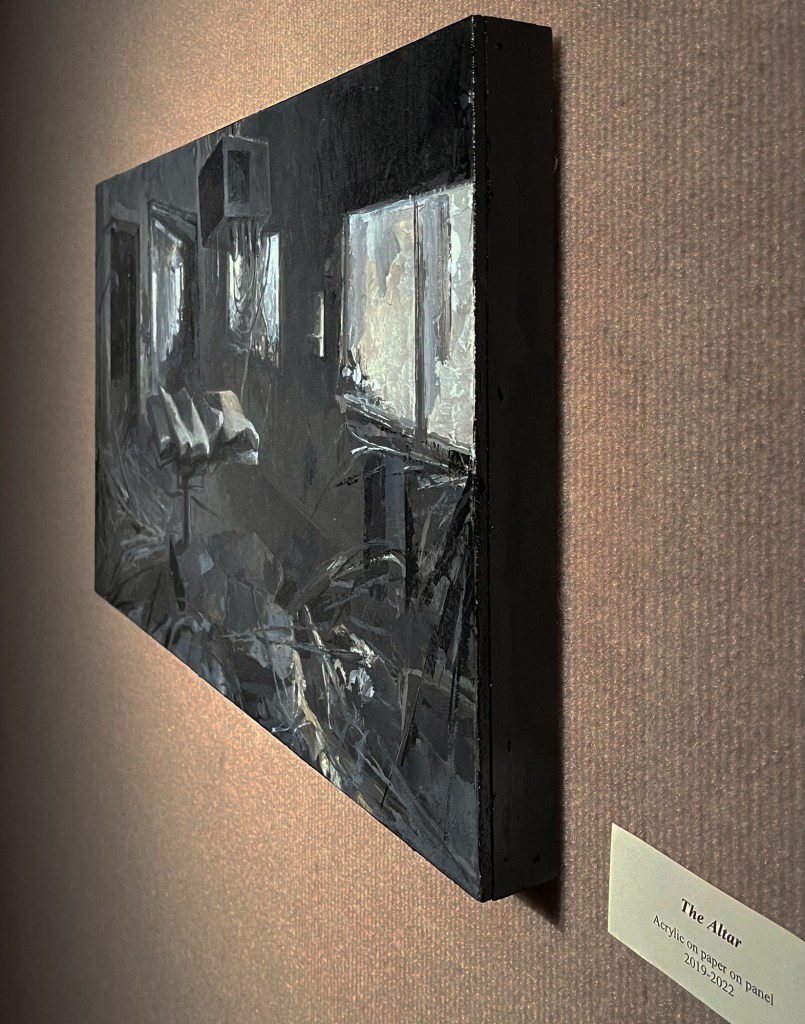
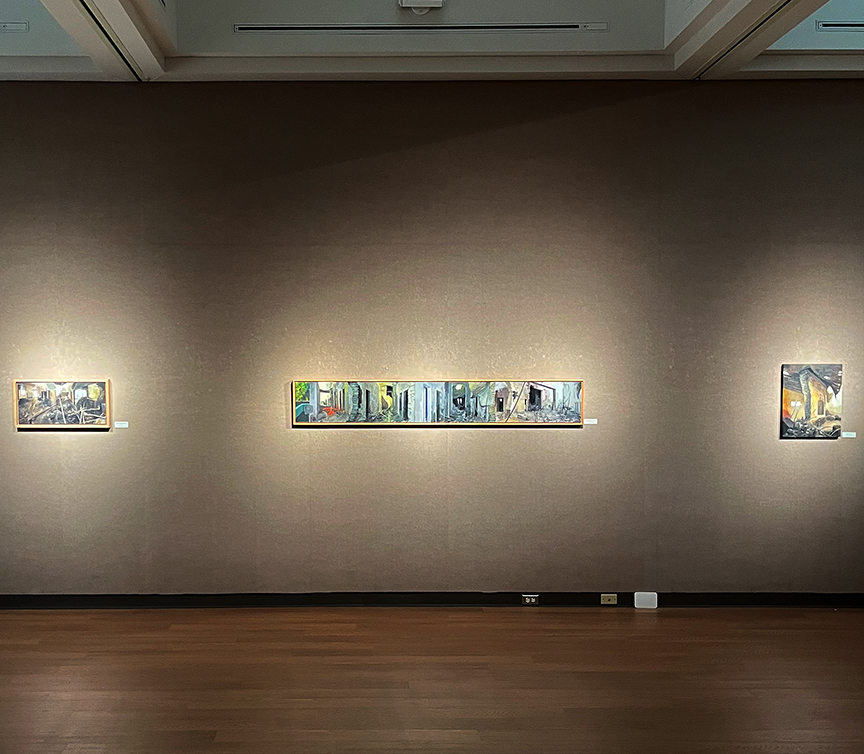
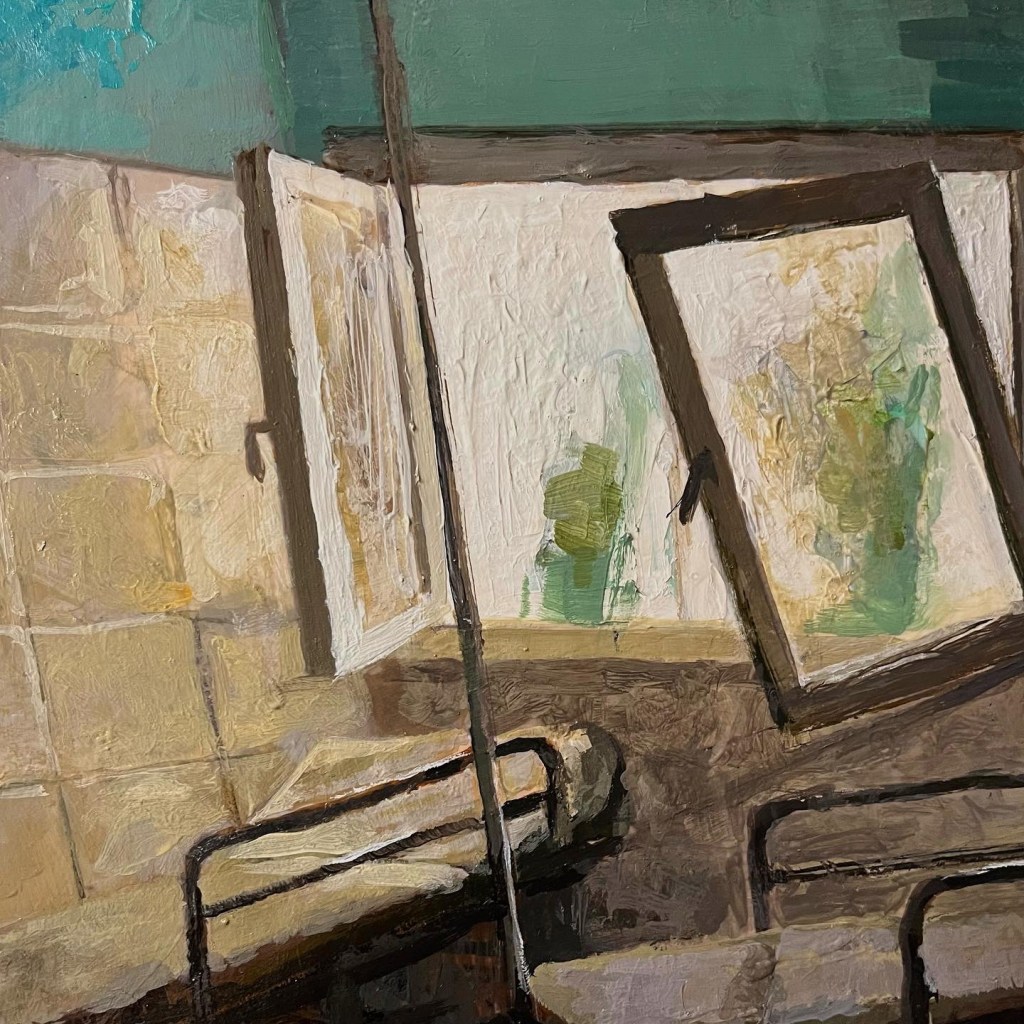
Impossible Interiors at William Woods University

I’ve got a group of works on display at William Woods University in Fulton, Missouri. The show runs through October 6th, and I’ll be giving a talk that evening. For a preview, look below.

This is the third time I’ve shown this body of work, and I’d like to get the chance to show it again. The subject of the work – a “friendly-fire” bombing of a Doctors Without Borders hospital in Kunduz, Afghanistan. If you’d like to see more about this situation, check out my writing about it here.

The card for the exhibition.
Back of the card with description of the show.

I’m also pleased to have a small group of my collaborations with Joel T Dugan also on display at the gallery. These Phoneme works are some of my favorites, and there are a number of just finished works included.

A Little Cartography

Many years ago, my Cousin Chris and I were constant companions in the woods around Camden, NY. In particular, we explored the region between our homes. His place was several miles away to the west if you took the old dirt road that emerged onto the highway 50 yards from the house I grew up. We also did a lot of camping and hiking in the woods east of my own home.

Here’s what that area looks like today (well, a few years ago via Google Earth):

I grew up along Route 70 – Wolcott Hill Road – about two miles from the town of Camden. Wolcott Hill Road runs roughly South to North away from Camden, so this view is oriented with East at the top and West at the bottom. You can see the small lake in the lower half of the image; that is a reservoir, and part of Camden’s waterworks system. If you were to walk due West from the South corner of the reservoir, you’d come out on Wolcott Hill Road right next to my childhood home.

From the ages of 12 to 16 or so, I started making maps of our haunts out in this section of land. When I was 19, I decided to make a larger, more refined version of the map, bringing together all of the various places we used to camp and hunt. The result is below.

Watercolor map of area around my home. 24×22 inches. 1996.

There are some obvious mistakes of guesstimation here, most glaringly in the position of Route 85, which we locals know as Skinner Settlement Road. There is also some distortion of the placement of various fields, and a bit of miscalculation of distances, but I’m pretty pleased with my effort since I did not use any proper map as a source.

There are some great memories here.

At Winter’s Night, we camped in -2° weather. In the morning, we were lying in impressions in the hard snow caused by our heat coming through the tent.

At Cowadunga, we cooked venison in beer and used hard, flat cow poop for fuel – hence the name we gave the place.

The Reservoir Cabin Site was a special spot, and we stayed there quite a few times.

One night, at View, we had amazing, super clear skies all night long. It seemed as if we could see forever.

Though we never camped at Lone Tree Hill, we often climbed the massive maple there.

At Earthview we had one of our strangest camping trips ever, when we were accosted by a large number of Woodland Jumping Mice. What seemed like dozens of them came through our area, but the issue was that this was in the wee hours of the morning, so it was very dark, and the rhythm of their jumps through the underbrush sounded like footsteps. Pretty wild.

I’m glad I made documents like this throughout my teenage years. Though most are in a more rough or not so presentable state, they represent my attention to and interest in my surroundings and experiences. I’m glad to have them.

Seize The Sixth, Again

Background

Eric L. Sweet left us suddenly on April 6, 2015, at age 44. Sweet was a beloved member of the MU Art faculty, having worked at MU since 2012 as an Adjunct Assistant Professor, teaching Printmaking, Drawing and 2-D Design courses. He was an alumnus of the Art program, having earned both his BFA (1997) and MFA (2011) from the University of Missouri. In 2008, he received an MA in Printmaking from the University of Missouri-Kansas City. Sweet was an active member of the Southern Graphics Council International and the College Art Association.

The “Running Devil” icon that was embroidered on one of Eric’s shirts.

To celebrate Eric’s life and positive role as an educator, Sweet’s wife, Catherine Armbrust, established The Eric Sweet Exhibition & Speaker Series to continue passing on his gift. I have created a series of work celebrating Eric almost every Seize the Sixth, and this year is no different. I will be donating 100% of the sales of these pieces to the Fund. This program was created because he strongly believed in the importance of community accessibility to art and encouraged meaningful conversations about the state of contemporary art. Funding this annual exhibition and speaker series for the gallery is the perfect way to make contemporary work accessible to the MU and Columbia communities, and to honor this special man who made an impact on so many lives. In fact, the initial funding goal was met in 2021 and the very first iteration of The Eric Sweet Exhibition & Speaker Series took place on December 6, 2021. See the exhibition poster here.

Look over my limited series of CNC relief cuts, posted below. If you’d like one, contact me. You’ll get an icon of Eric’s life and students and community members will get to see art because of the donation I make from the sale. As Eric (and his 4th grade teacher) might say, “You don’t HAVE to, you GET to.”


The Artwork

I’ve made eight artworks for Seize The Sixth this year. There is one group of five CNC relief cuts that feature the classic “running devil” icon that Eric had embroidered on one of his work shirts. Below the devil is featured part of Eric’s axiom, “YOU GET TO.” It’s a proclamation of hopefulness and gratefulness. Here’s a detail of the Running Devil carving if you want to see a close up view.


There are three of these – just the Running Devil without the text.

How to get one?

I can take PayPal, CashApp, and Venmo (click each for a link to my info). If you’re local you can give me cash. The cost $50 each for these. Ones with text are 5.25×5.75 inches and those without text are 4.5×5.5 inches. Each piece is made on a PVC sheet and painted in gold spray paint. Each is signed and numbered. The ones with text are numbered 1 through 5 and the ones without text are numbered 1 through 3. First come, first serve. Feel free to email me if you have any questions – balloum (at) missouri (dot) edu.

Why no Sweet Audio this year?

Most of the time I’ve been able to put together a compilation of classic Sweet audio clips. Unfortunately, I couldn’t find any more usable clips this year. There’s a chance I still have some in the depths of my files, but I just couldn’t locate anything for this year. In lieu of that, please head over to SoundCloud and check out the previous years’ offerings!

Ballou SweetTalk collections for 2018, 2019, 2020, and 2021.


Now, go Seize the Sixth! Remember… you don’t HAVE to, you GET to!

A Talk at Missouri Valley College

On February 25, 2022, I had the privilege to meet with students and give a talk over at Missouri Valley College. It’s about an hour away from Columbia where I teach, and the talk was in support of my exhibition at the college, Digital Art: Exploration and Education. I gave a brief overview of my use of digital tools, from nearly 25 years ago through today. If you’d like to watch the talk, I’ve added in all of the visuals I used, but I also worked in supplemental videos and other support information to bring more background to the talk. Many thanks to Mary Linda Pepper Lane, Sarah Fletcher, and Mike McJilton for their hospitality and conversation during my visit.

Below are a number of the works I showed in that exhibition. Left to Right, Top to Bottom: “Young Joe,” “Cardiac ICU,” “Touched Pelvis,” “Color Figure Study,” “Hitt Street Parking Garage,” “Jesse,” “Self Portrait With Neck Girth.”

Subway Abstractions, Chicago

More than 20 years ago, when I first came to Chicago to study art at The School of The Art Institute of Chicago, the city shocked me. I was constantly in awe of the people, the exchange of pressure between the land and the lake, and the iconic architecture and spaces that mark this quintessentially American city.

I spent a good deal of time at subway stations and riding the L train rails. So much of what I remember about Chicago is from the vantage points the CTA afforded me. A lot changed in the years I spent there, and I witnessed a lot of those changes aboard the L or from the buildings where I took my classes at SAIC. I was always seeing through the modulating weather and variances of sunlight and season. It all kept my attention. Light, glass, rock, water, cloud, steel, snow, or asphalt; they all intrigued me.

My dad’s trusty Minolta was with me during those years, and I took many hundreds of photos. It was an attempt to understand what my eyes were being drawn to, and how my Eye – my aesthetic sense – wanted to see. It’s wonderful now, in looking back, to see how I was being developed (through education) and developing (through instinct and choice) the categories of judgement and intuition that would inform all of my work right up to today.

Among those photos is a series of pictures of empty signboards within subway stations. Often they would be left open for a while when advertisements were being changed out, but many times they stayed vacant for weeks on end. They had an austerity, and seemed to me to speak the language of modernist abstraction and abstract expressionism. What was interesting to me, beyond that formal similarity to intentionally crafted artworks, was that these were the result of the natural environment of the subway. The dust and grease and grime combined with blowing air – almost like a lung or the systolic/diastolic rhythms of the heart – to create strange inflow behind the placards of ads.

In other cases, workers who routinely painted around the frames designed to hold the placards, would inadvertently create dynamic fields of shapes via over-spray. This was a rhythm, too, a movement of maintenance and service reflecting the attempt to keep these arterial passageways operating. The spaces within the ad frames were a different kind of arena, moving at a different pace from the rest of the L train structures.

Thus that area behind the ads became a kind of palimpsest of the subway, but also of the city itself. The deposits of dirt accumulated in swaths of gray scale gradients. Intimately connected to the subway tunnel textures and layers of paint, the dust-fields were allowed to stick, protected behind ad boards for who knows how long.

Once revealed, these delicate, dirty paintings, which had been made by the trains and the people and the detritus of Chicago, held (it seemed to me) beauty. I loved them. I rode the L looking for them at every stop. I took dozens of photos. Perhaps one day I’ll try to publish them in a better form – I still have the original negatives, after all – but for now, I present a few of them here.

Come so close that I might see…

Recently, my friend Aarik (whom I haven’t seen in person in about two years, which is a travesty) made an intriguing post on Twitter. He was musing about the idea of publishing an anthology of reflections regarding an important single line from some song, film, poem, or other source. He suggested calling this journal Hold The Line and I’ve been thinking about the idea every day since I skimmed my eyes over his tweet.

It goes without saying that each one of us could offer many dozens of lines from the treasure trove we carry in our minds. Lord knows I’ve been moved by everything from scriptures to contemporary internet memes. When I glide back over my life, though, it’s clear that some lines are held more closely to my core – to the experiences they influenced – than others.

Lying in bed last night I decided to make an entry in Aarik’s theoretical journal. My Hold The Line for today (for right now, since probably it would be something else in 20 minutes), is from Mazzy Star’s 1993 masterpiece, So Tonight That I Might See.

“Come so close that I might see the crash of light come down on me.”1

There’s something so powerful in the idea that when we come together we approach transcendence: come so close that I might see. It’s a proposition, a hope. If/Then. If this other entity is close enough to my core, then perhaps I may experience a charged glimpse of something beyond me. Then it would also be within me, a kind of multiplicity that blows out me-ness with all-ness.

Even so, my perspective – my sensate awareness – is also central. This is like Annie Dillard’s “tree with the lights in it”2 or Moses’s burning bush; the intimate presence, both terrifying and awesome, brings astonishment. Come so close that I might be more than me. Ego death. Samadhi. A disappearance of masks and pettiness in lieu of some true (if only momentary) unity.

Let there be light – and it crashes.

There is a bit of an out-of-body charge to the order of operations in Hope Sandoval’s mumbled words, in the “gothic hallucination”3 of Roback’s droning guitar tone. From closeness to sight to the mystical crash of light. Closeness catalyzes an outside, transmundane experience. I see the light come down on me in that moment. Sharp, electric, like an accidental brush against a live wire or the vertigo of a hypnic jerk.

I have felt that pulsing disorientation a few times. With Robin, her blond bob, and the small of her back all those years ago. With Miranda, born like a bomb, a modern Minerva bursting fully-formed into new reality. Even last week, suddenly seeing a former student after years and almost bursting into tears over it.

Maybe the crash of light always carries tears along with it.

Cliché, I suppose. But also real experience and astonishment… moments of enlightenment brought on by the presence of another real person.

Album cover for Mazzy Star’s So Tonight That I Might See.

1) Mazzy Star. “So Tonight That I Might See.” So Tonight That I Might See, performance by Sandoval, Hope and David Roback, Capitol Records, 1993.

2) Annie Dillard, Pilgrim at Tinker Creek. New York, NY: Harper, 1998. Page 35-36.

3) Moreland, Quinn. “Review – Mazzy Star: So Tonight That I Might See.” Pitchfork, Pitchfork, 14 June 2020, pitchfork.com/reviews/albums/mazzy-star-so-tonight-that-i-might-see/.