The Larry Show Postcards!!!

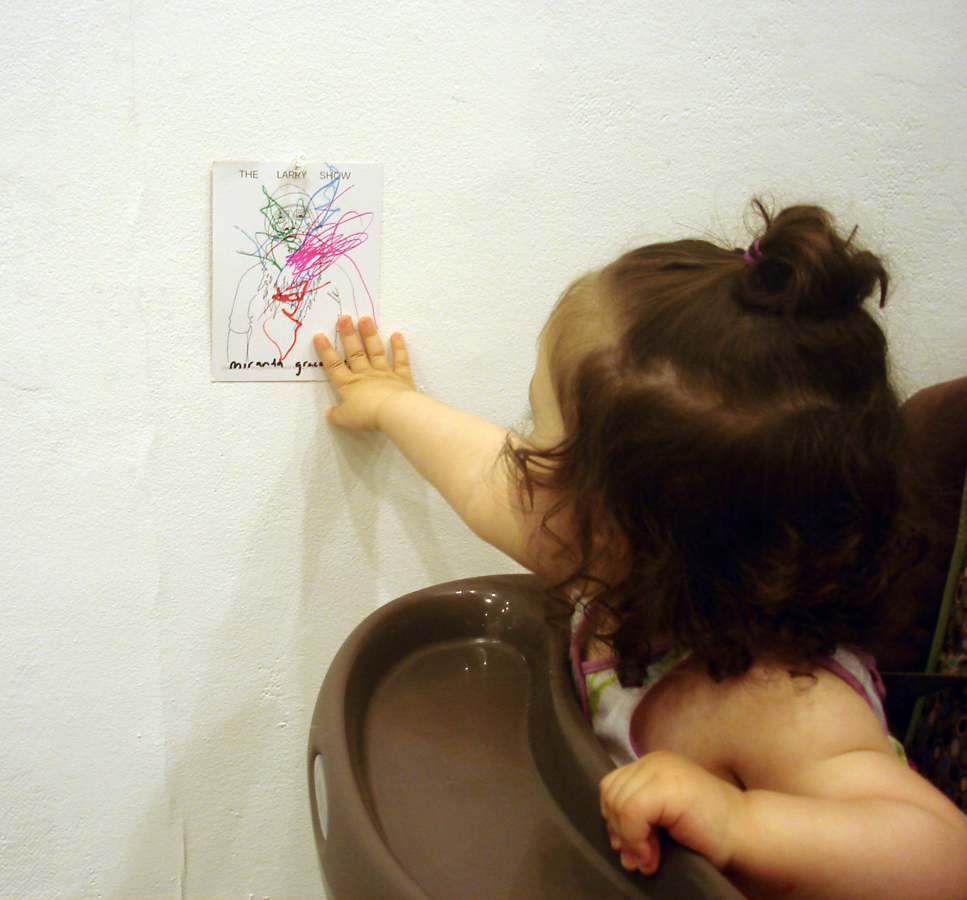
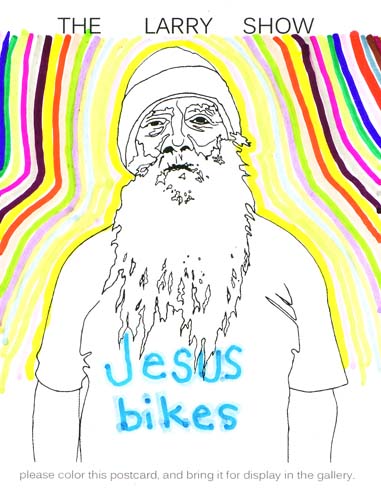
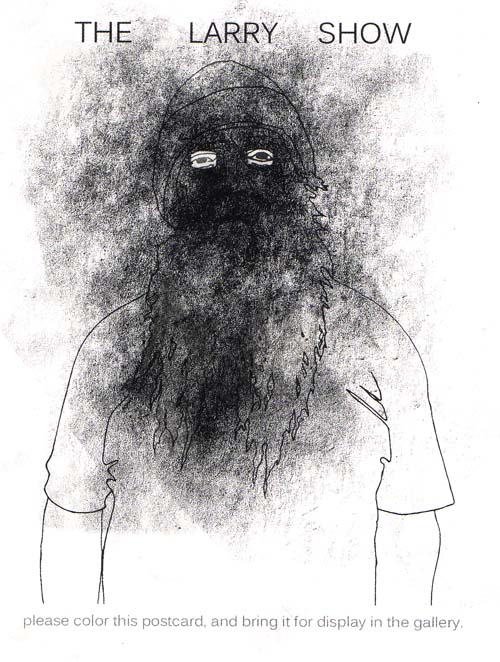
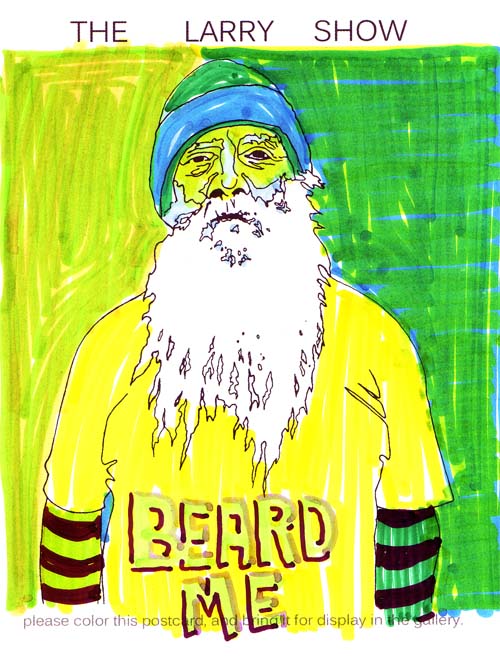
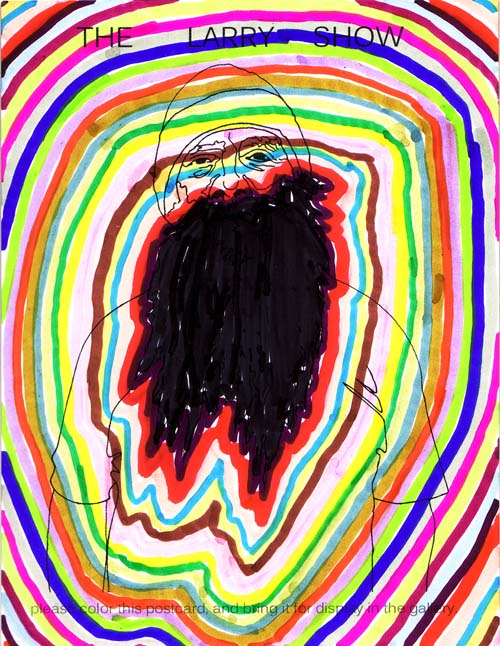
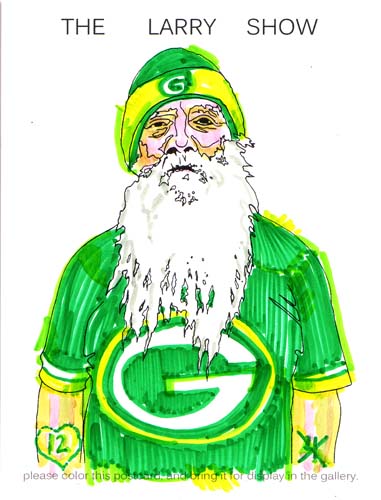
So the upcoming “Larry” show, curated by the awesome Sloane Snure Paullus, has postcards that solicit drawing upon said postcard (to be exhibited alongside the work of 40+ artists [including me and some of my best students] at the George Caleb Bingham Gallery at the University of Missouri this summer)… Below are some of my very own “The Larry Show” postcard drawings. Enjoy, and click for larger versions :)

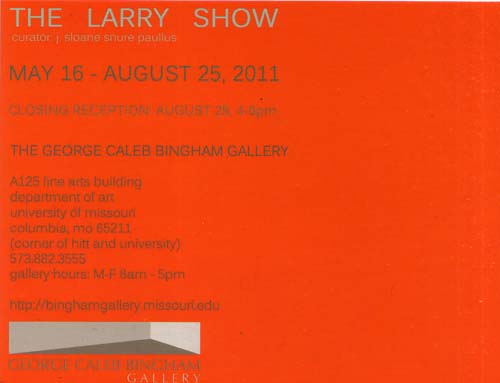
And here’s the verso, giving details about the show… I hope you can make it. There’ll be a whole wall of visitor-submitted card drawings (including a few more of my own), so be sure to see the show!


Beginning Color Drawing Spring 2011 Group Project

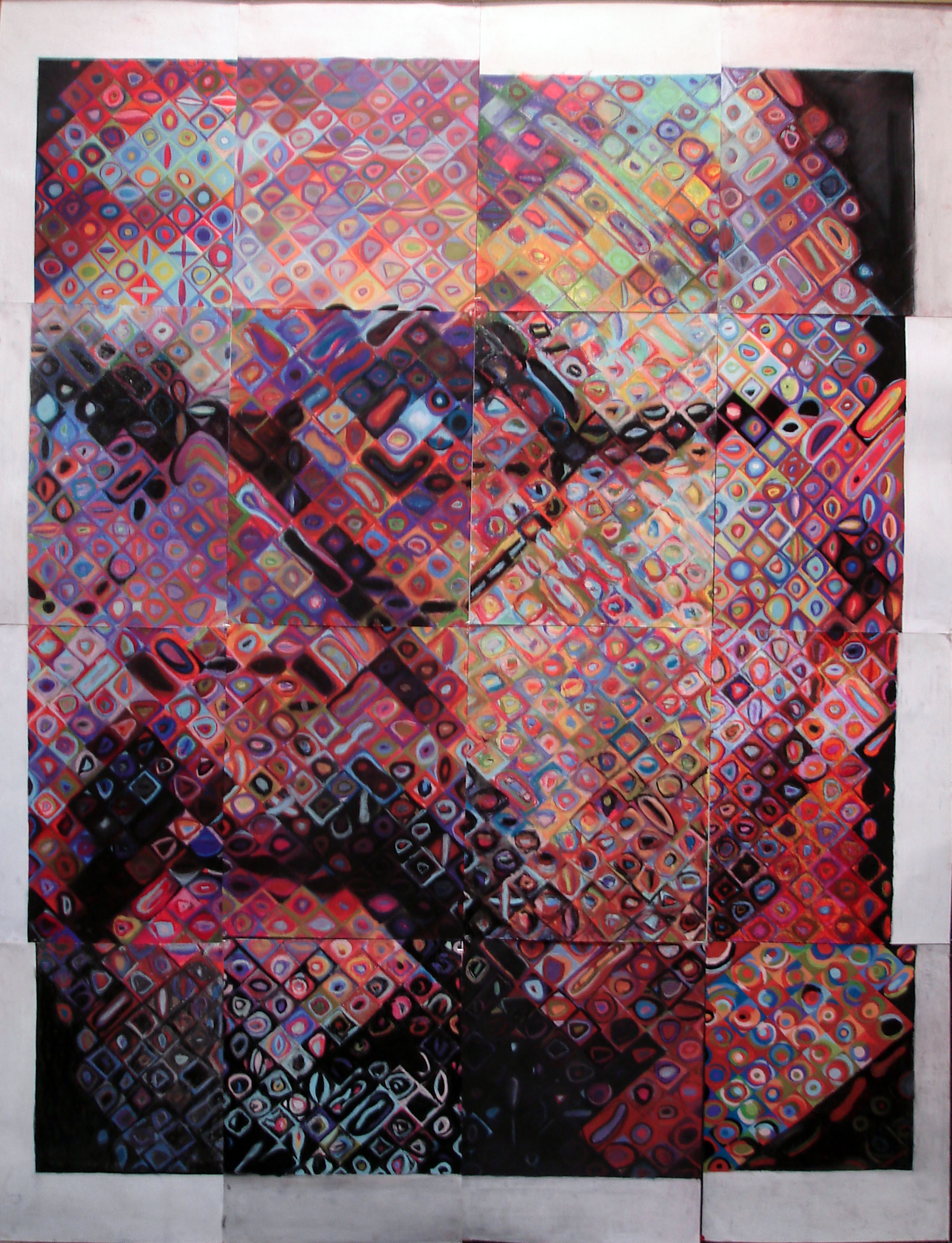
Once again, my Beginning Color Drawing class at the University of Missouri has created a large work together as a capstone to the semester. Seeing these big drawings happen has been a very rewarding aspect of my teaching.

This one is obviously a copy of one of Chuck Close‘s self portraits. And below is how it looks from the hallway. Click on the images to see them in larger glory!

These are mostly fun, low-pressure way to create something unifying after spending the whole semester developing and practicing skills. I love  this project. Click here and here to see some past efforts!

Inspiration: Natalie Hellmann

Natalie Hellmann, a wonderful ceramist and person, is holding her MFA Thesis Exhibition this month. She has been an absolute joy to work with over the last three years, and I know I’ve learned much that I would never have known if not for our discussions.

Aarik Danielsen talks to Natalie about her trajectory as an artist in this feature in the Columbia Daily Tribune.

And here’s a link to a shorter article about her and her show.

I was asked a number of questions about Natalie and her work for that short article. Obviously space didn’t permit them to publish all of my thoughts, so I want to include them here as a way to honor Natalie.
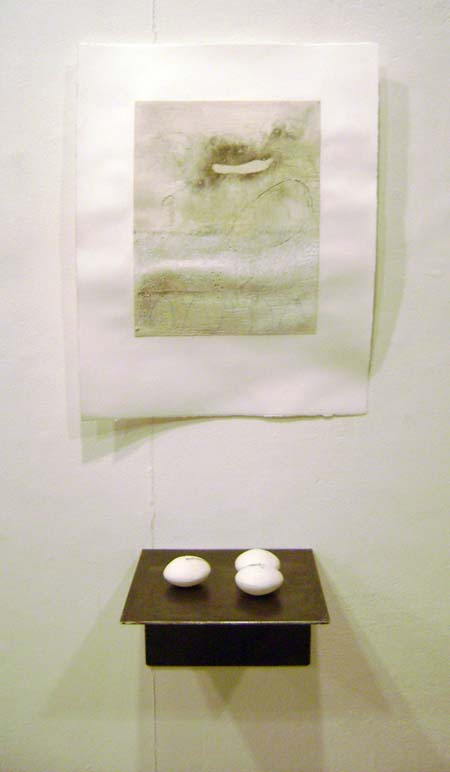

Interview Question: “What do you enjoy most about her growth as an artist since you’ve met her? How has she grown?”

My response: “I am most impressed with how Natalie has held onto the core things she has cared about for many years while at the same time found ways to grow in her understanding of the materials and integrated relationships of form, content, and emotion with which she has worked while in grad school. Practically, this means that she has made numerous attempts to invest her project with fresh investigations, often working with different forms, structures (and orientations of these two) in order to determine what felt right. In many ways what she presents in this Thesis work seems inevitable, as if it all just had to be. But this is not the case. Natalie has studied her own work and intuitive expressions while also looking to other artists, writers, and philosophers who seek poetical understandings of human experience rather than just rational, direct, closed meanings in that experience. Natalie’s work is thus not meant to function as didactic communication first and foremost. Instead, it has grown to become a kind of emotional sounding board, wherein viewers may, if they are inclined, examine themselves via the suggestions of the forms. The work is more about awareness of being than declaring some specific message. I enjoy the fact that I got to participate in her exploration, be around her welcoming spirit, and grow in my own apprehension of what art can do through my time with her. ”
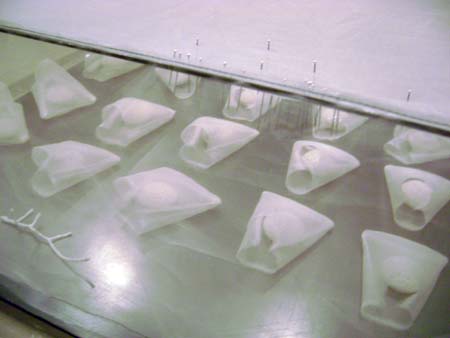
Interview Question: “What do you think her viewers are going to enjoy most from her exhibition this coming week?”

My response: “I think that viewers who allow themselves to intuitively consider the objects and arrangements in Natalie’s show will find a resonance in their own past experiences of feeling, seeing and being. What I mean is that, to me, the strength of Natalie’s work has always been in its gentle invitation to participate in awareness and emotional connection to shapes, colors, and surfaces. Being with Natalie’s artworks is something akin to standing by a stream and looking at the smoothed stones beneath the undulating water – if you’re in the right frame of mind, your emotional and psychological experience can become one of calm awareness. I think that’s the “repose” that Natalie suggests in the title for her exhibition. I hope that viewers will both experience and appreciate that quietude and tenderness; it’s something not often seen in art.”

Thank you, Natalie, for your work, your spirit, and your presence.

Collage, by Zeinab Chaichi Raghimi

One of my grads has developed a booklet containing a number of her collage works from last year. Please go over to Lulu and check it out by clicking the image below (it’s one of my favorites of the ones she made last summer). The booklet is pretty cheap to purchase (you can download a full-color, 25 page version for a couple bucks) and has some excellent images as well as a statement in English and Farsi. I think Zeinab is doing some great work here at the University of Missouri and I hope a few people will support and encourage her by picking up a copy of the booklet. Just click on the image below to go to the Lulu page where it’s for sale.

Inspiration: Ian Shelly

Ian Shelly was a graduate student at the University of Missouri in ceramics, working with the great Bede Clarke. He was among the first grads I taught and eventually developed good relationships with. His work, balanced in an evocative place between technical precision and playfulness, utilizes a modular methodology to arrive at installations that are unique and impressive. I sense dualities in his work: it’s emotional and flippant, gentle and muscled, intentional and intuitive. But it is in the continuum between those poles that deep meaning is conveyed. His project while at MU was impressive, and he’s continued that during his long-term residency at Hub-Bub in South Carolina. His work is now featured on the accessCeramics website.

Another Semester, Another Round of Glory

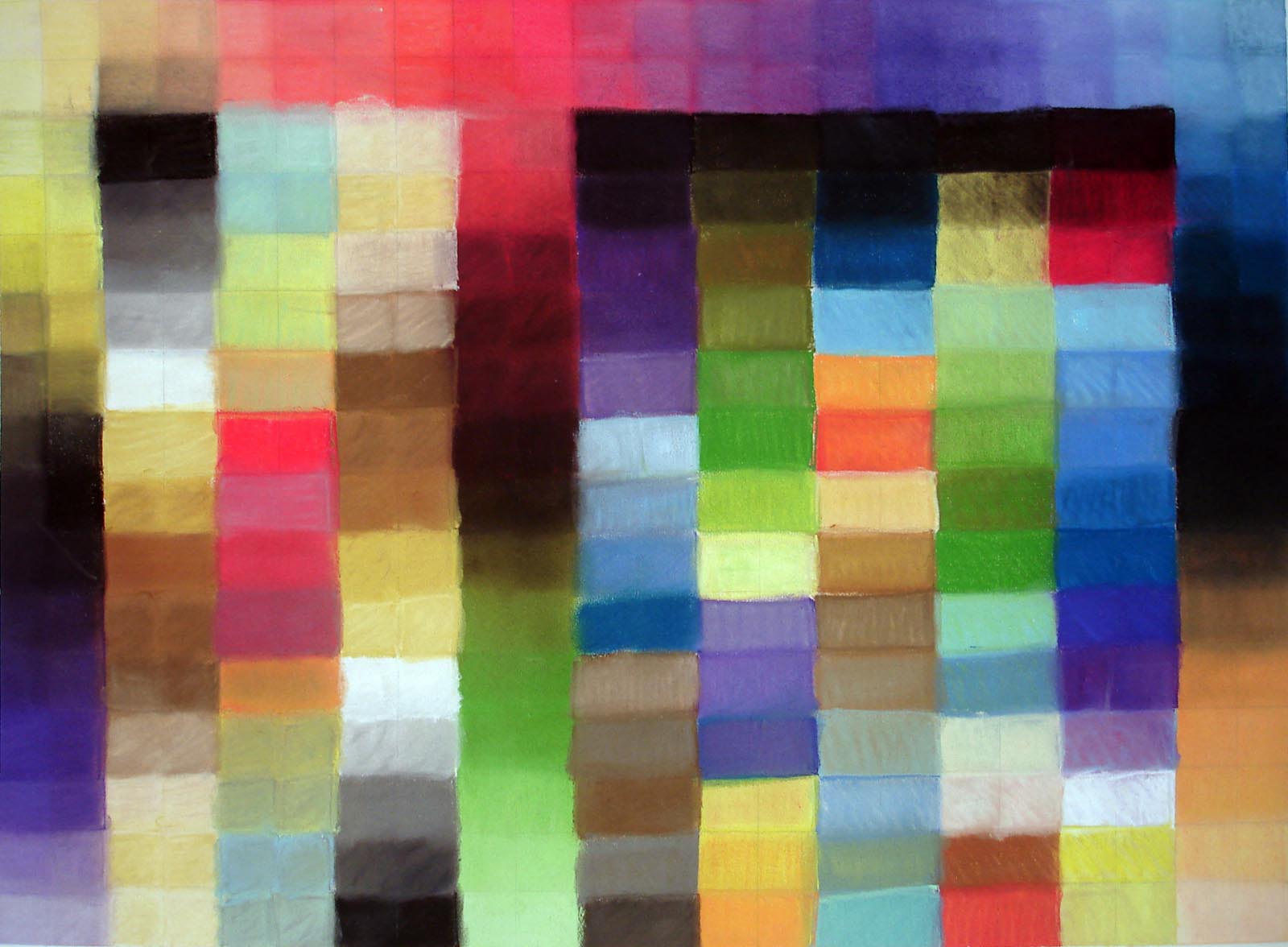
Yes, it’s Beginning Color Drawing time again… Once again it’s been a great start to the semester. I feel pretty astounded at the talent of my Beginning Color students; even though they’ve all taken Drawing 1, and some have had other studio courses as well, they’re all making big strides. It’s fantastic work. Take a look:

Andrew Vincent “Grid #1” Chalk Pastel, 24 by 18 inches, 2011.

Melissa Hoefer “Grid #2 Colored Pencil, 18 by 18 inches, 2011.

Emily Armstrong “Two Colored Pencil Object Group Studies” Colored Pencil, 24 by 18 inches, 2011.

Lauren Roberts “Grid #1” Chalk Pastel, 18 by 24 inches, 2011.

Mitchell Baggett “Colored Pencil Object Group Study” Colored Pencil, 12 by 18 inches, 2011.

I know I’ll be posting more work from this group…

Tale of the Tin Foil

Back in 2007 I was teaching a Beginning Drawing class at the University of Missouri – one of the first of my time here. I was challenging my students’ notions of process and rendering. So many young people come into art classes believing that mere transcription – literally photographic-type replication – is the standard of quality. Basic verisimilitude rules their ideas of what is good and they have little to no idea of material, process, or context.

Early on in the semester I told them that if they used the strategies I was trying to teach they’d be able to do more than merely replicate what they think they know: they’d be able to feel an experience of the space and air and object-ness of their subject matter; they’d be able to move beyond trying to recreate the surface details of a photograph and begin to sense the deep masses of shape and movements of light that under-gird formal composition and communicative meaning. I told them that – moving from these general underlying abstractions, through a process of accumulation, toward the specifics of forms in space and light – they’d be able to do far more than attain photo-realistic images; they’d be able to make evocative explorations into the nature of being.

I don’t think they really believed me.

They didn’t realize that the subject of our class was not the simple manufacture of pictures, not the creation of images that corresponded to their referents in a sterile, monocular, photographic representative mode. Instead, what we were aiming at was (and still is in my Beginning Drawing courses) an exploration of sight itself. The subject and aim of my classes is to help students become aware of their own conscious seeing, and to inform that sight with particular sorts of logical and intuitive approaches to what is before their eyes.

They’re always dubious, but I think most of my students go with me on that journey of discovery and awareness.

In any case, that first class in 2007 challenged me. They essentially said, “you can’t use these observational, sighting-and-measuring, general-to-specific, experience-not-execution techniques to make something better than a transcribed photograph.” They asked me to try my hand at tin foil – crinkled, wrinkled up, then spread back out again.

Above is the final drawing – click through for a detailed view. Below is an animation of the process – I took images to show the students how I moved through the construction of the drawing (click on it to see the procession of images):

Color Drawing, Fall 2010

Another semester, another feeling of pride. My beginning color drawing students are pretty awesome.

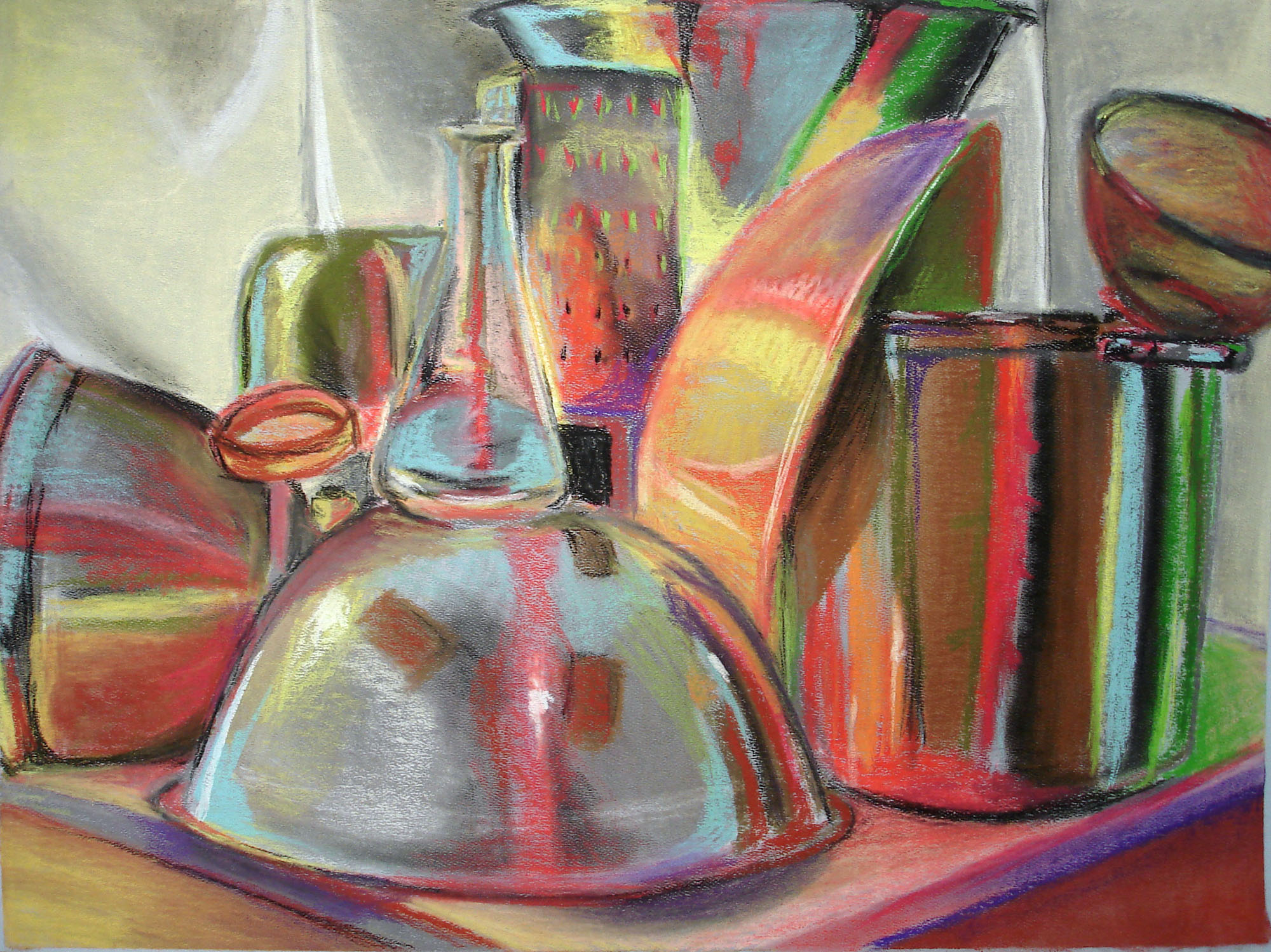
Carrie Casper Reflective Still Life

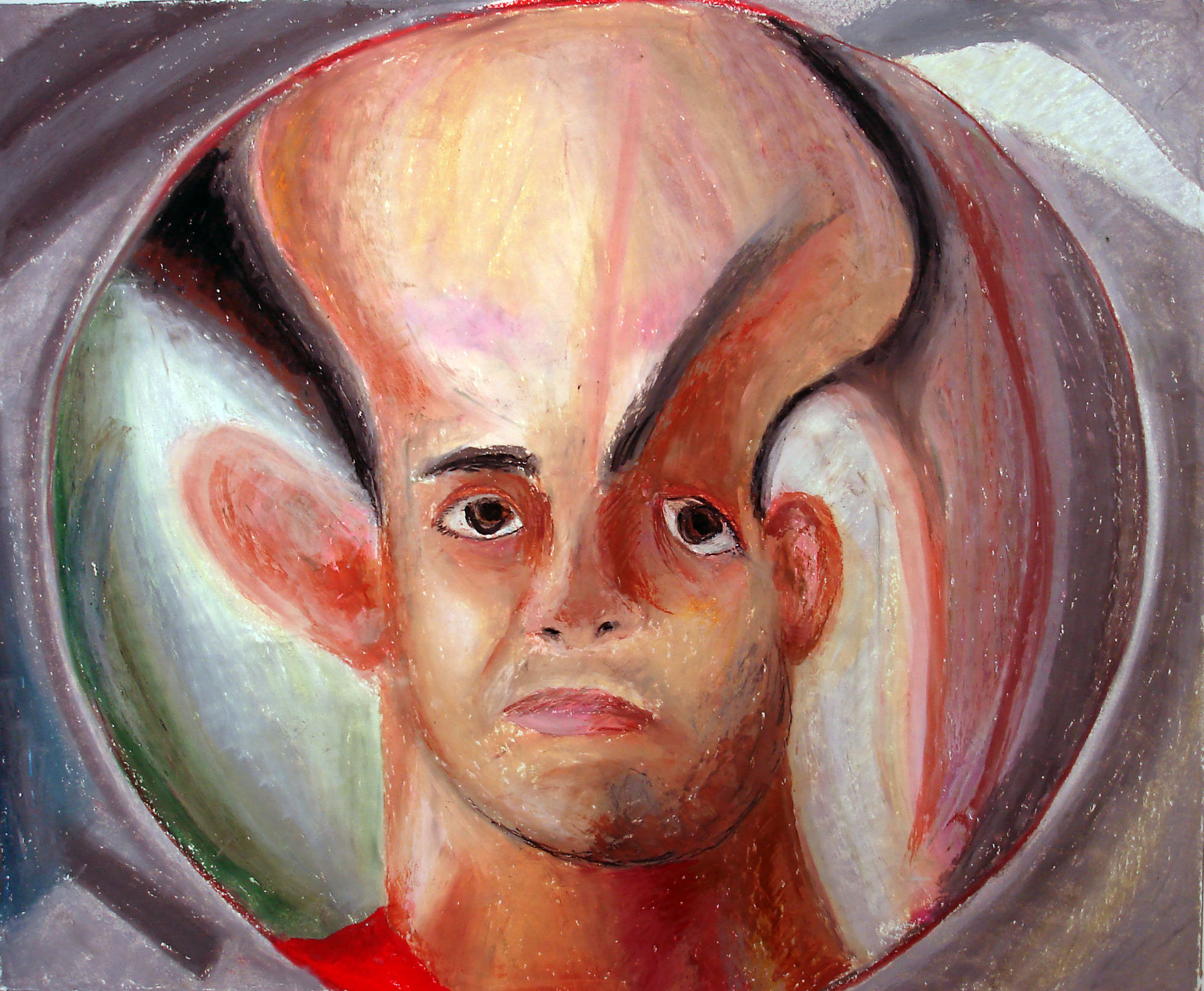
Dustin Roberts Reflection Self Portrait 1

Alex Forkin Reflection Self Portrait 2

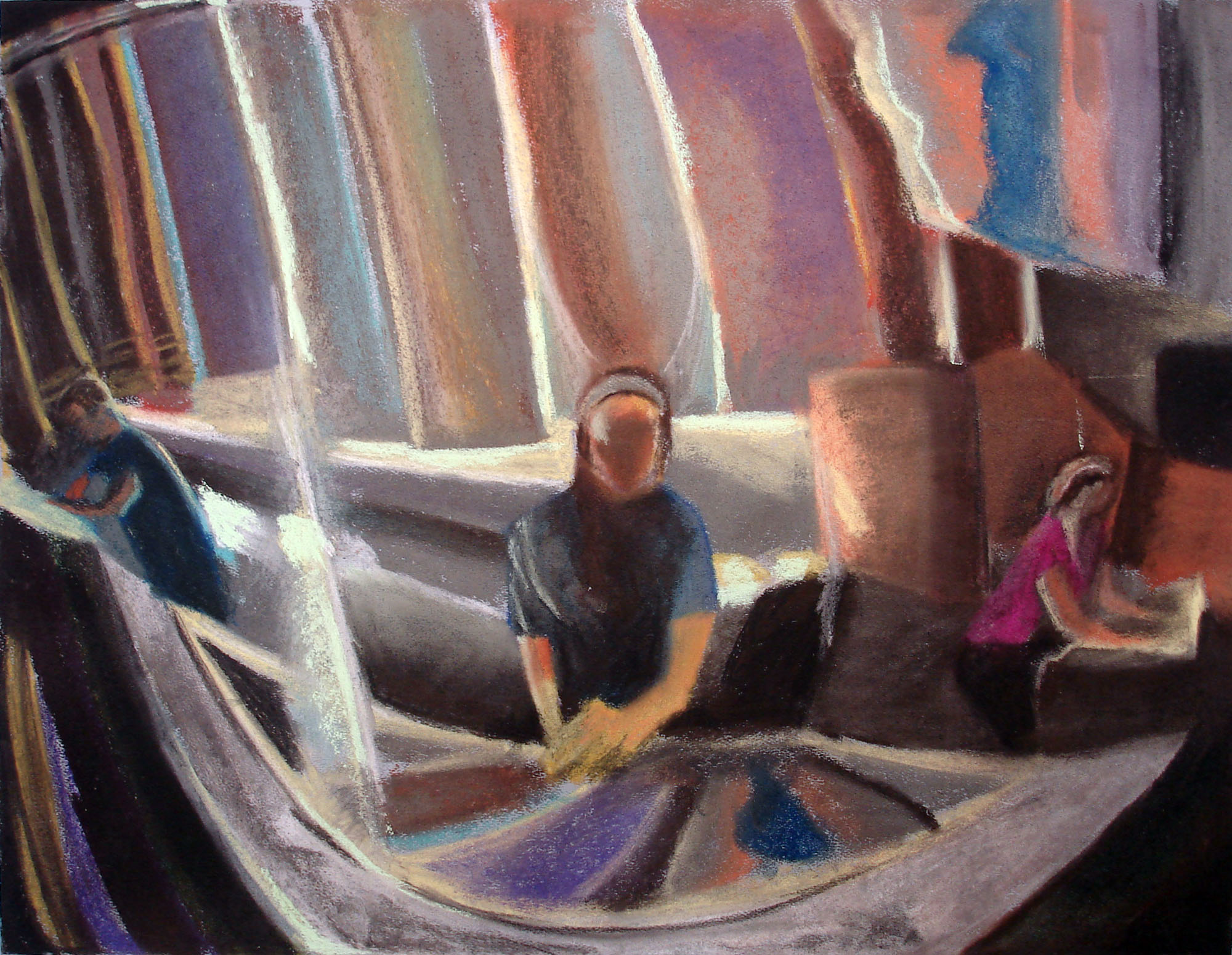
Alex Forkin Reflection Chromatic Environment 2

Katie Kullman – Reflection Self Portrait 1

Nikki Warren – Grid Project 2

Ashley Claussen – Reflective Still Life