Becoming the Student, #0: Geo the Woodworker

I first met Geo when my wife and I lived up in Evanston, IL. He was iconic on our street, his long gray hair always a sight to see. He and his family own several of my artworks, and I have always enjoyed my conversations with the man. He is a gentleman and a scholar, and given to grand gestures and deep sincerity. Once, back in 2009, he drove 8 hours (one way!) to see an exhibition of mine and take me out to dinner. He’s a really unique soul and I’m glad to know him.

In late 2013 I had the opportunity to draw Geo at a pastel workshop I was giving at the Evanston Art Center (in conjunction with an exhibition I was in there). I was glad that Geo was willing to sit for me; I’d always though him a man possessing a regal bearing, similar to a Founding Father or deity.

DSC_0412Geo the Woodworker, Pastel on toned paper, 24 by 18 inches. 2013.

After I began working on my Becoming the Student series, I realized that my drawing of Geo was, perhaps, the true initiation of the project. So, in the spirit of Becoming the Student, I asked Geo to tackle a few questions for me, and his answers are below. After reading through them, be sure to check out his website to see his fantastic work!

On How Long He Has Been a Woodworker

“I started in with wood even before I knew it.  Then in college I had the opportunity to study with a real master carver and through that experience I just knew… it seemed to be in my blood. That was back in 1975, so at least that long.”

On What Life Lessons and/or Epiphanies Working With Wood Has Given Him

“I guess I’ve learned that it – the work, regardless of subject or use – is all the same. Here’s the bottom line: it is not what you do but HOW YOU DO IT. Every stroke of the chisel counts, whether you are carving The Baby Jesus, the Presidential Shield, or just making a Push Stick to use on that big table saw. You must come to know that everything counts forever or nothing matters at all. I would suggest that you move toward the light in all things.”

On The Most Beautiful Work of Art He Has Seen or Heard

“First, a poem: Maud Muller, by John Greenleaf Whittier.  Second: my Foo Dogs. My wife gave them to me for my 50th birthday and they are as good as good gets!”

On How His Creativity Had Changed Over The Years

“I believe it has gotten thicker, not just longer or with greater elasticity. This is a blessing to be sure. But all things considered I’d have to say it’s thicker, yeah. More thick.”

On What Values Motivate Him as a Man, Dad, and Artist

“OTHERS! All my life, it has been the ability I have to help others, to inspire others, to challenge them. That’s what I love.”

On How To Recharge Creativity

“Go outside. OPEN your eyes. Read a book. Take in a beach, a mountain, a river. Go to the Wailing Wall. SEE and BE. Remember: hard work is hard work. The ‘best you can do’ is rarely the easiest answer.”

On His Earliest Art Experience

“I’m not sure how old I was, but I have clear early memories of my aunt sitting in a kitchen somewhere knitting. I asked what she was making and she said, “Another sweater, just like the one your uncle is wearing.” Well that seemed hard to believe: ‘YOU made THAT??’ Sure enough. At the time I didn’t know yet that my mom and her sisters could knit like that: an Irish fisherman’s sweater with those rope patterns up the front. How could a person do that? It was impossible for me to imagine how it was done. It’s like at the Consecration, but even better. I mean, you get to WEAR the sweater. Yes, I was raised Catholic; I always thought that catholic meant, ‘closer to the real Art’.”

On How Being a Dad Has Changed His Work

“My son is here to remind me that we are all but links in an endless chain. As the old poem (Thanatopsis, by William Cullen Bryant) goes:

‘The youth in life’s green spring, and he who goes

In the full strength of years, matron and maid,

The speechless babe, and the gray-headed man

Shall one by one be gathered to thy side

By those who in their turn shall follow them.’

The speechless babe, and the gray-headed man–Shall one by one be gathered to thy sideBy those who in their turn shall follow them.
Read more at http://www.poetry-archive.com/b/thanatopsis.html#I2Z2Tok0sel6VB3M.99

SO LIVE!”

~

imageGeo’s self portrait before the portrait demo I made. Epic!

~

Thanks, Geo, for your friendship and exuberance over the years!
New Router Table Now In Effect

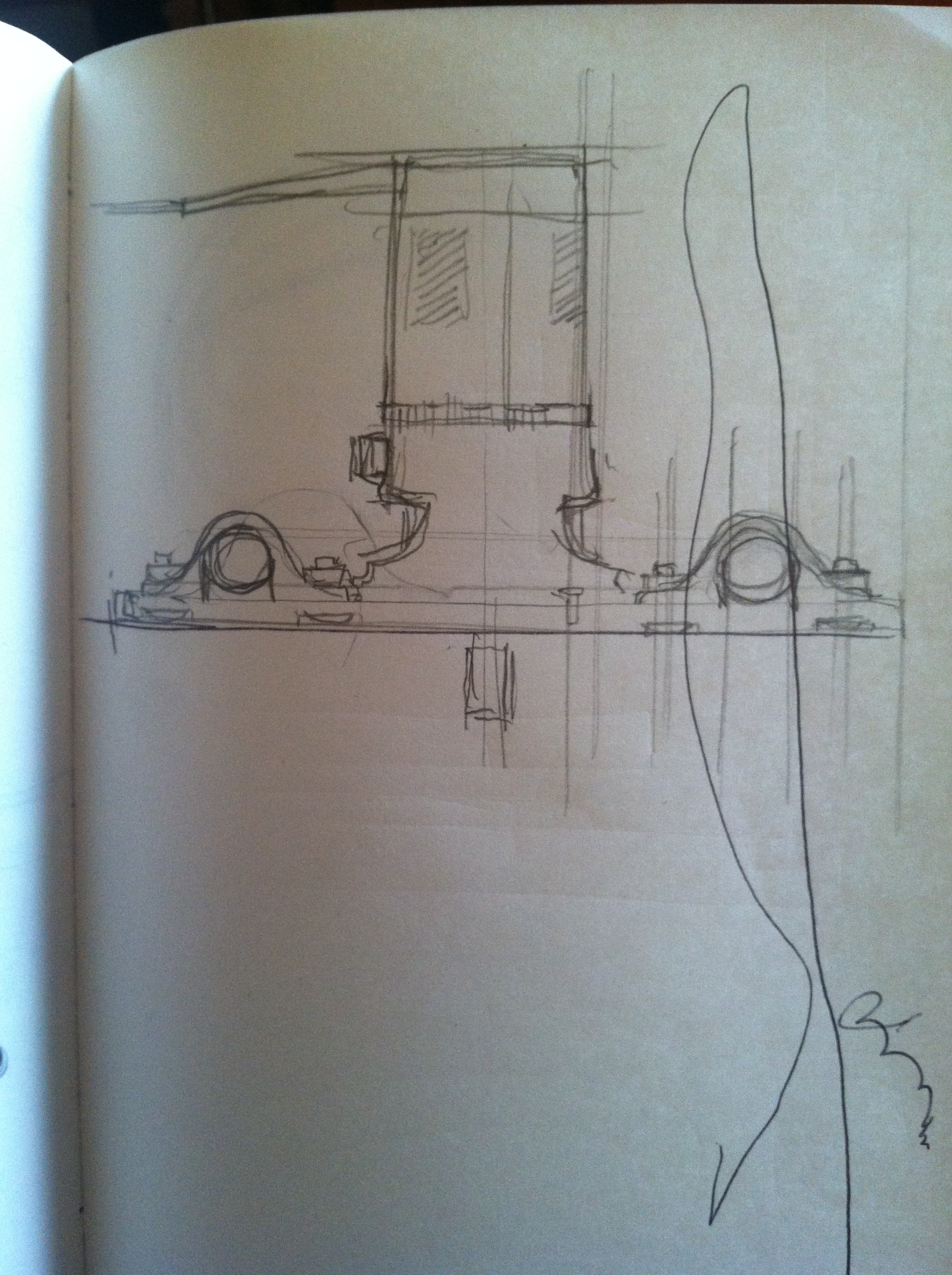
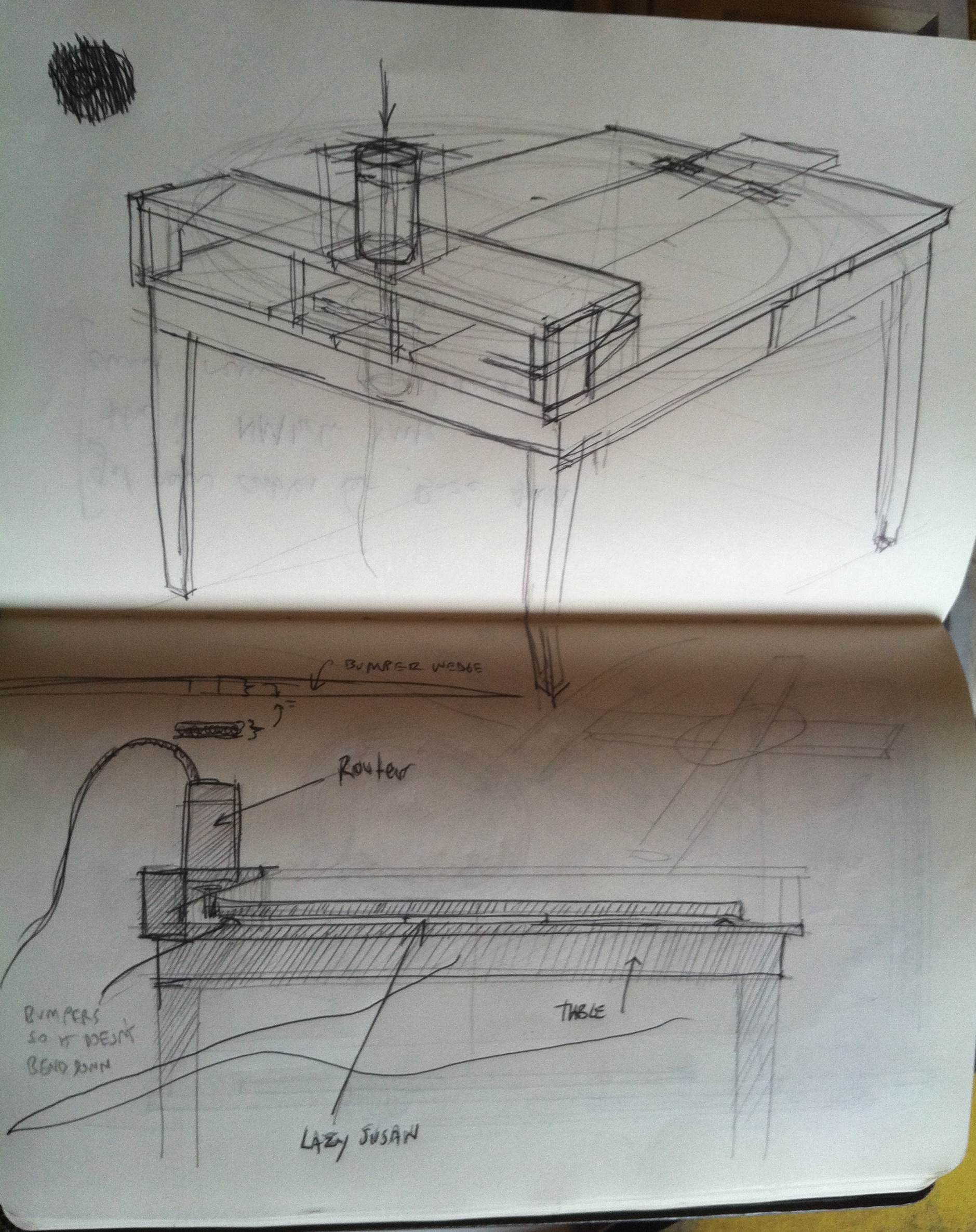
Back in November of last year I did some initial work on my new router table – you can click here to see what my early sketches were. I created this to replace my simple tondo jig system that I made back in 2010 (click here for info on that tool).

Today I finished work on the table – at least enough to make it functional. There are a few cosmetic details to work out, but for now it’s ready to roll. Here are a few images.

table3

table2

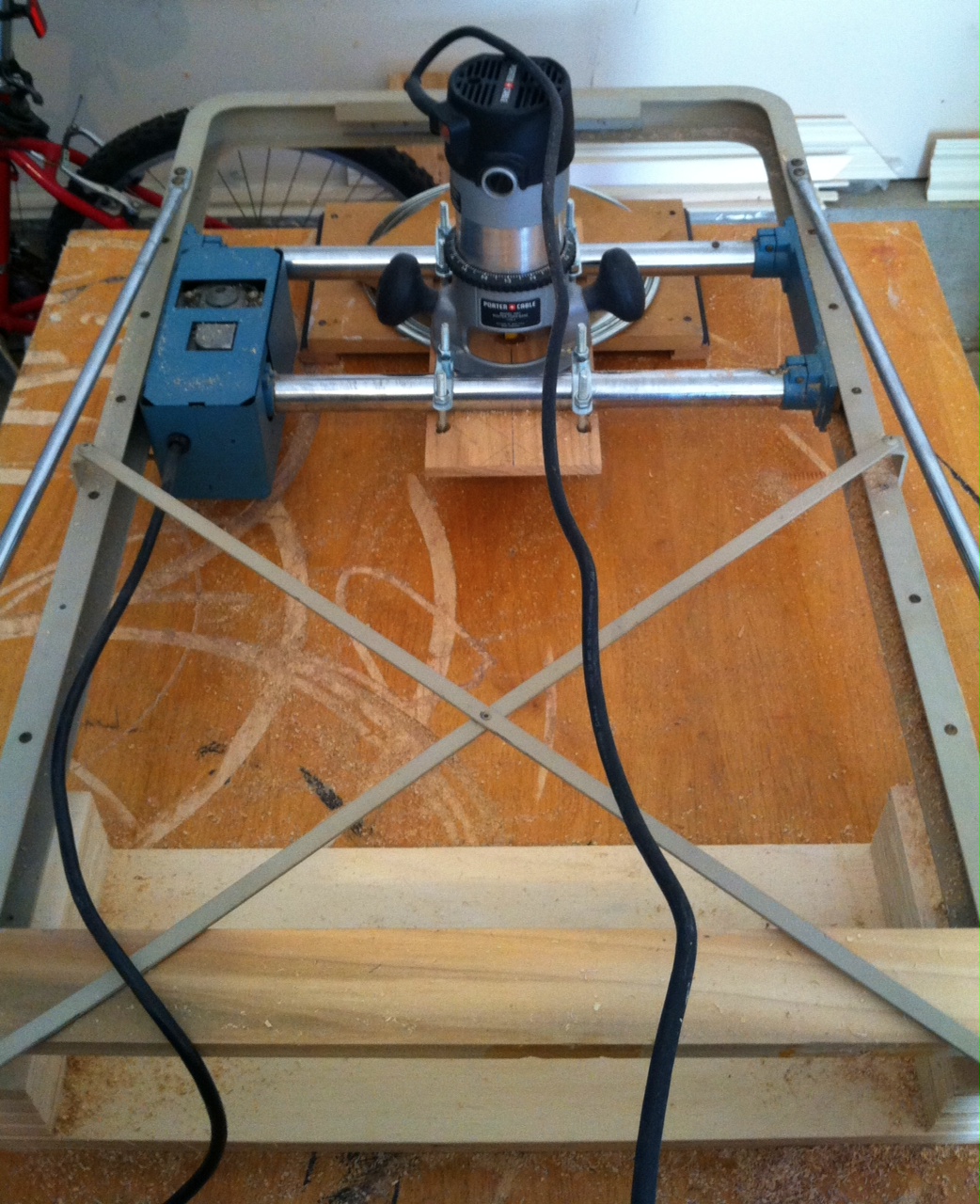
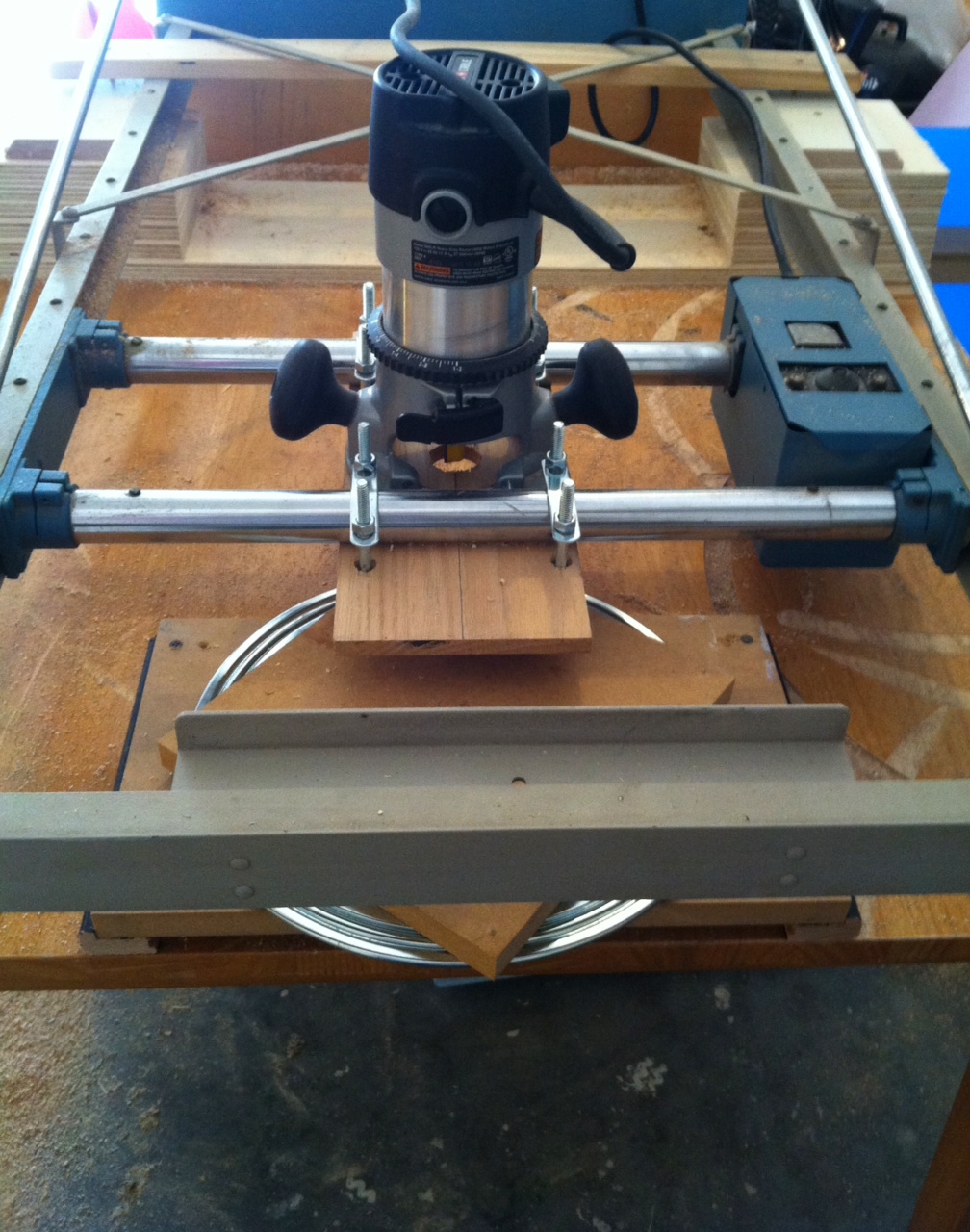
These first two images are fore and aft shots, giving a general overview of the beast. The active ingredient is a mid-range Porter Cable Plunging Router. The router has been attached to a Beseler 45MCRX Photo Enlarger body that I scavenged and hacked last year. The motor still works great, which means that my router can be moved horizontally over the table allowing me to make multiple plunges at different locations on the wood. The whole layout of the table is very close to a sketch I made last year.

table1

Here you can see the underside of the router carriage (top half of image). The bit plunges through the oak carriage deck and into the wood that’s to be cut. The wood is sitting on a “lazy susan” deck that grips the panel and may be easily rotated past the router bit.

table4

This is a shot of the lazy susan rotating deck. You can see the points that protrude through the deck (there are four – one point at each corner) that hold the wood in place as it’s being routed into a circular panel.

The first tondo I cut this afternoon was a resounding success. Here’s hoping for many more. It’s definitely an improvement on my old tondo jig. The big plus to this table is that I will be able to make circular frames for my tondo works. I wanted to have the movable routing deck precisely for this feature, and now we’ve got it. I’ll keep you updated.

Tondo Jig

I’ve finally gotten to set up my tondo making jig in my new woodshop. Here’s a run down of how it looks and an example of what it can do.

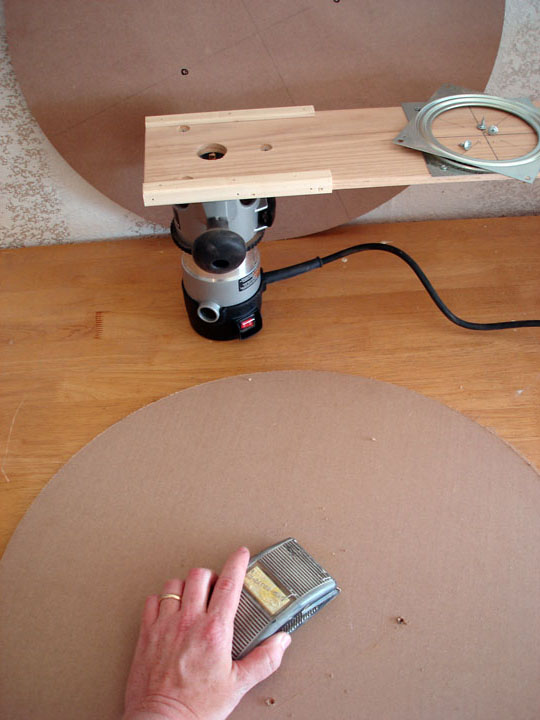
Here you can see the basic layout. I’ve created the body of the jig on a nice piece of half inch by 6 inch by 3 foot oak. Being a hard, strong wood, the oak will hold the mounted router well. The router itself (a nice mid-range Porter Cable model) is attached by removing its base plate and mounting it to the oak board as shown. The screws are recessed to assure good connection to the router.

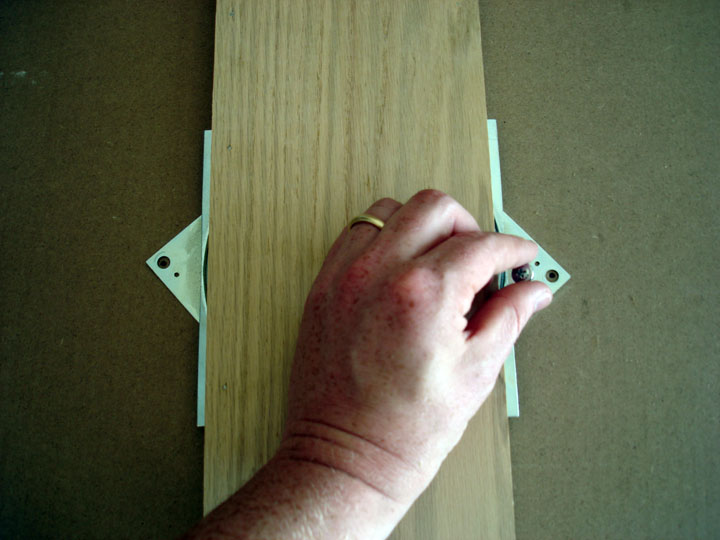
Then I mounted a small “lazy susan” type ball bearing swivel deck to the other end of the board. I’ve measured and pre-drilled stations for the swivel deck in my standard tondo sizes – 12 inches (to give me a 24 inch tondo), 20 inches (40 inch tondo) and 24 inchs (48 inch tondo). I set it up to move the swivel deck to reduce wear and tear on the router mount area. I don’t want to take the router off at all. You can see how I’ve put some base plates along each edge of the board on the router end so the swivel deck and router approach are level when placed on the board to be cut.

To cut a tondo, I select my size (in this case, I want a 24 inch tondo) and put the swivel deck there (above). Then I screw down the other side of the swivel deck to the board to be cut so things are nice and secure (below).

Then – with the bit still recessed up into the body – I will start the router and slowly plunge the bit about halfway into my wood. I learned in my previous experience with cutting tondos to take it slow and cut in a few passes to ensure a good, smooth cut but also to protect the router. The harder the wood, the more wear on the router – obviously with this piece of MDF the router could have done the entire cut in one pass, but I feel more comfortable taking a few extra minutes to keep the tool nice.

After the first pass – and each subsequent one – I use my compressor to blow out the dust. This increases the ease of the next pass and keeps the risk of charring or actual combustion down. I also make sure to blow out the vents of the router since the sparking within the motor can ignite dust that collects there.

In the above picture you can see the bit being adjusted down for the final pass.

After the final cut I remove the excess wood and blow off the dust (above), then remove the swivel deck and start to sand any burrs (below)

Here’s a look at the edge of the tondo – pretty smooth cut!

And the final products!