The Glory of Ken Russell’s “The Devils” – a Film For Our Time

“At the time that I made The Devils, I was a devout Catholic, and secure in my faith. I knew I wasn’t making a pornographic film. Far from it. In fact, the movie had the blessing of the Jesuits. Even to this day it is still taught at Loyola University in Chicago as a good Catholic movie. For myself, although I am not a political creature, I always viewed The Devils as my one political film. To me, it was about brainwashing, about the state taking over. It is based entirely upon John Whiting’s play The Devils, and upon the writings of Aldous Huxley. Huxley was by no means a sensationalist – he was a historian of some note.

According to Huxley’s The Devils of Loudun, in 17th-century France there was a crisis caused by the desire of Cardinal Richelieu, the king, and their cohorts to pull down the walls of the city of Loudun. This would render Loudun defenseless, so it wouldn’t be a threat to the crown or the church. The same had already happened to other cities, with the result that they subsequently had to concede to every indignity and injustice imposed upon them. The people of the town felt that as long as the walls of Loudun were standing, then they could defend themselves.”
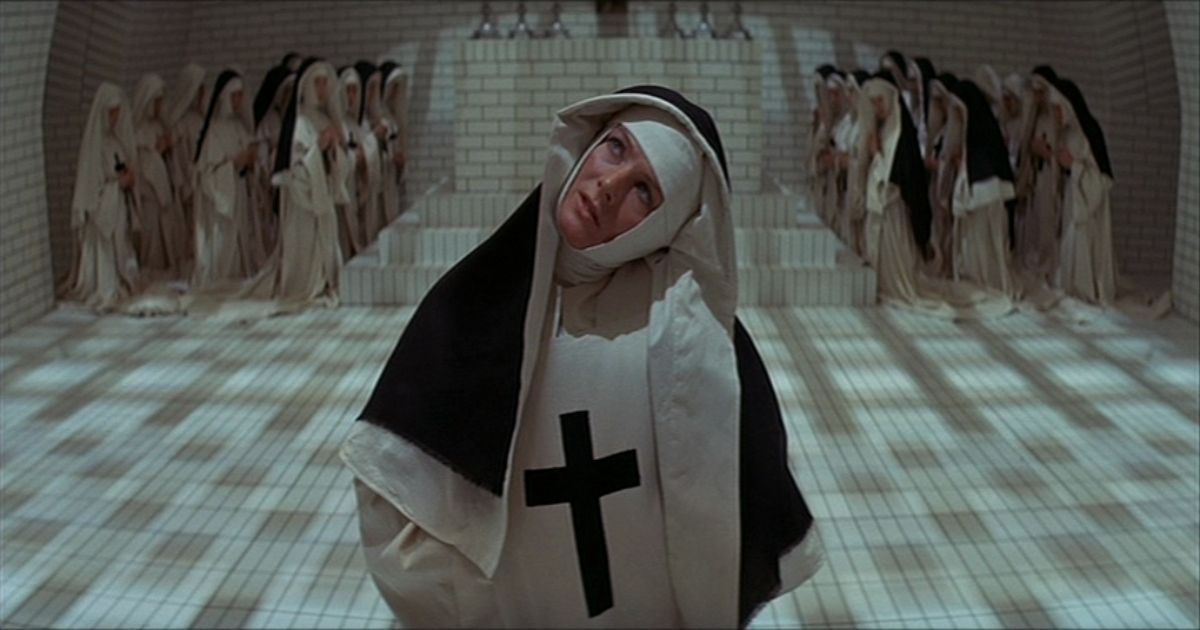
–Ken Russell, 1995.

All stills are screenshots from The Devils provided by fancaps.net.

The Devils, a controversial film that came out in 1971, is an expression now 55 years old, yet it is perfectly tuned for the moment in which we find ourselves today.

The movie details a period beginning around 1629 and culminating in 1634 when a religious insanity overtook a group of nuns – and eventually the entire French town of Loudun. Not only an amazing document of dramatic creativity, technical nuance, and not a little bit of performative “chewing the scenery,” the film is also perfect for America right now. It speaks to the exact trends and issues going on in the West generally, but in America specifically.
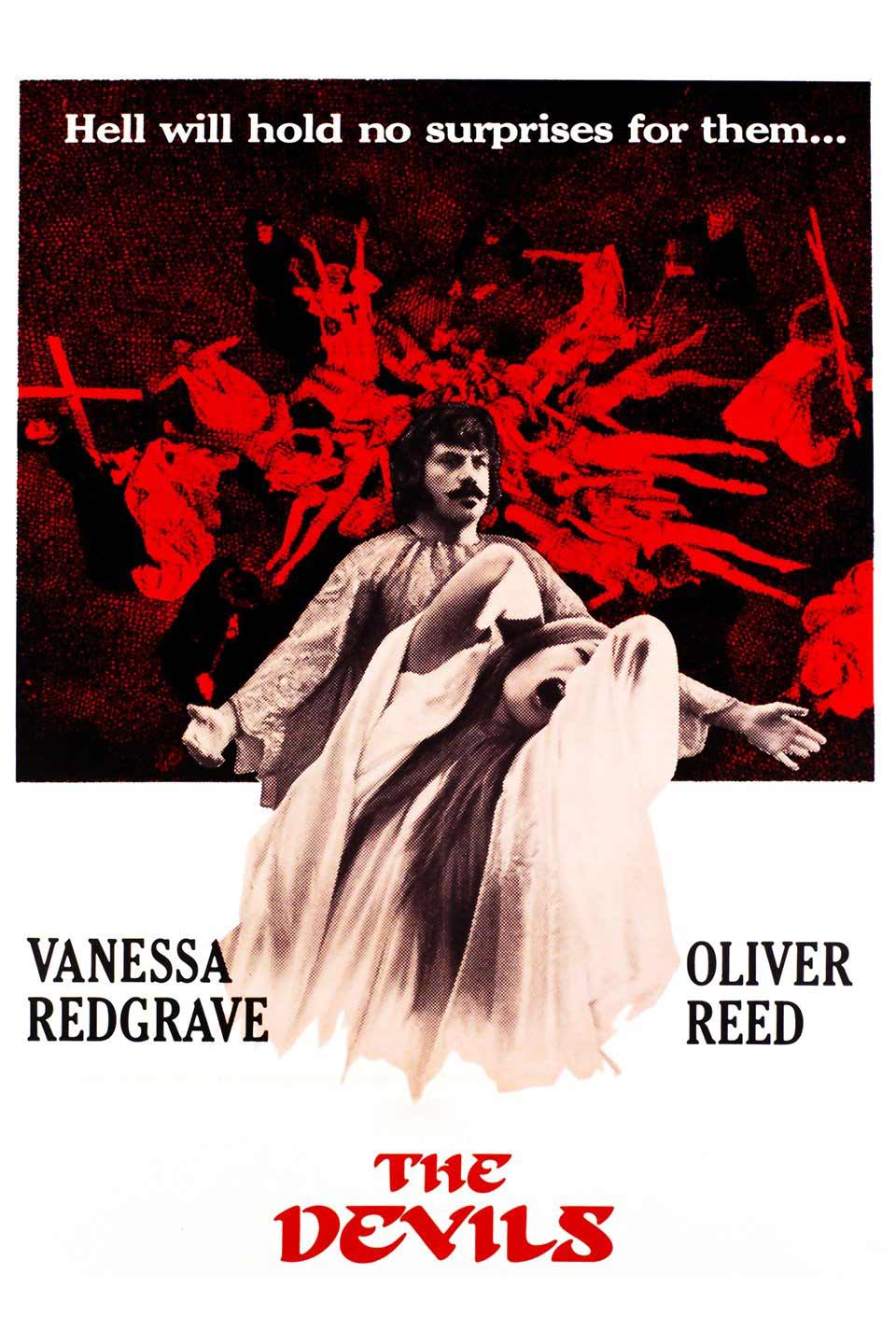
Anchored by incredible performances from Vanessa Redgrave and Oliver Reed (as well as a wonderful cast of supporting characters), the film explores religious insanity and the ways in which the lust for power and political expedience can often be couched in the language of faith. It also demonstrates the ways in which religious thinking is magical thinking, as well as how the imaginary world of “devils” and “evil” can displace (and even destroy) practical systems of governance and social fabric.

With symmetry and visually visceral themes that must have inspired Alejandro Jodorowsky‘s The Holy Mountain (1973) and Santa Sangre (1989) respectively, The Devils is filled with imagery and language that highlights the tension between social complexity and aesthetic contrast. There’s a sense in which the entire structure of the movie is about the play between a complex and ever-reinterpreted social contract and the black-and-white thinking that dominates the performance of dogma. When politics gets connected to those fraught poles, something has to break. We’ve seen it over and over again… and that’s one of the reasons the Founding Fathers of America tried to forever separate church and state. They knew the lessons of history in ways we don’t seem to recall today. Indeed, at almost the same time as “devils” were found in Loudun they were present on our own continent, to just as bitter ends. Some instincts die hard.
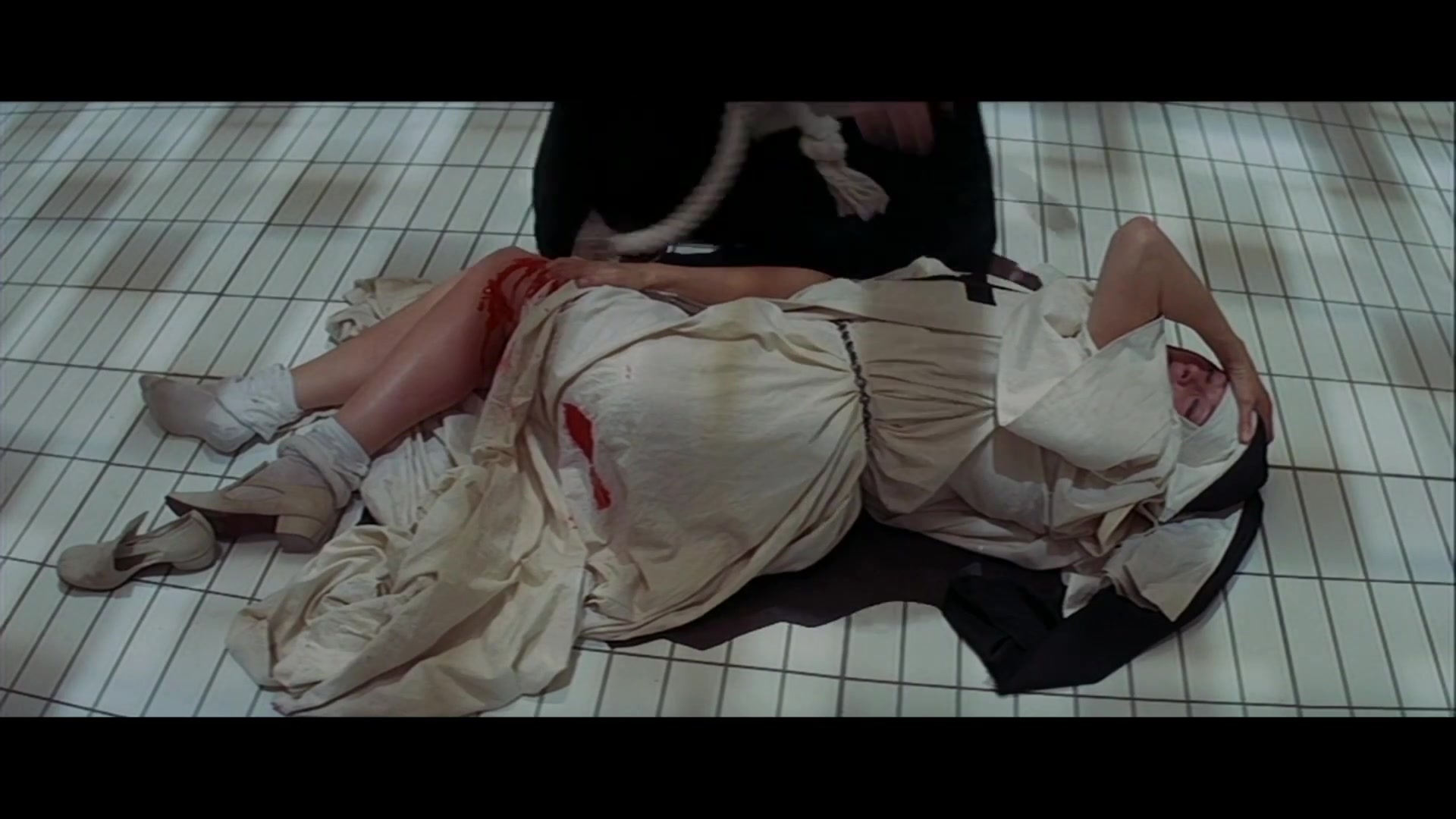
This movie is not for the faint of heart. People who have experienced violence – sexual or otherwise – or any kind of physical trauma, should probably steer clear or view the visuals available online (such as fancaps.net) to see if they want to subject themselves to the movie itself. Interestingly, in spite of its intense imagery, perhaps the most violent events are kept off screen or slightly hidden by a hand, fabric, or structure.
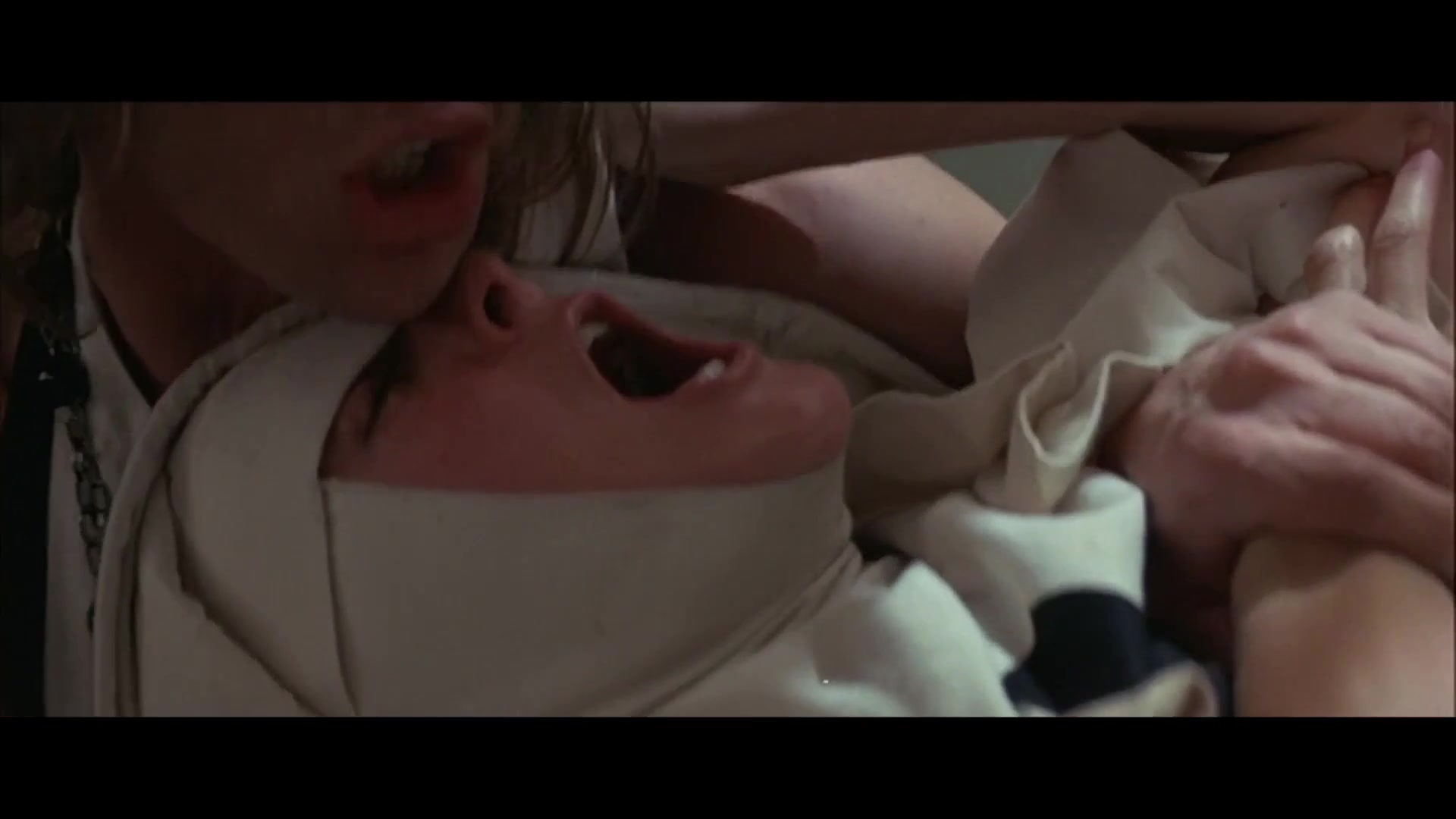
Oliver Reed’s performance as Father Urbain Grandier is, in part, a reputational rehabilitation. In the same way that Mel Gibson valorized William Wallace, stylizing him as primarily an inspiration for “FREEDOM!!” Ken Russell does something similar for Grandier in his film. Certainly, Urbain Grandier was a complex and flawed individual. In the movie we go from despising him, to almost respecting him, to practically cheering for him at the end. In this narrative arc, there’s an inversion taking place between the two main characters of Urbain and Mother Superior Jeanne des Anges. On the one hand is the sensual, secularized priest who is motivated by his own sexual and political power. On the other hand is a nun who has devoted herself to the service to God but who is hounded by her own sexuality and by the deformity of her own body. These two characters form the crux of the narrative. The film creates a connection between her deformity and malformed lust for Grandier and his transformation from womanizer to dedicated husband.
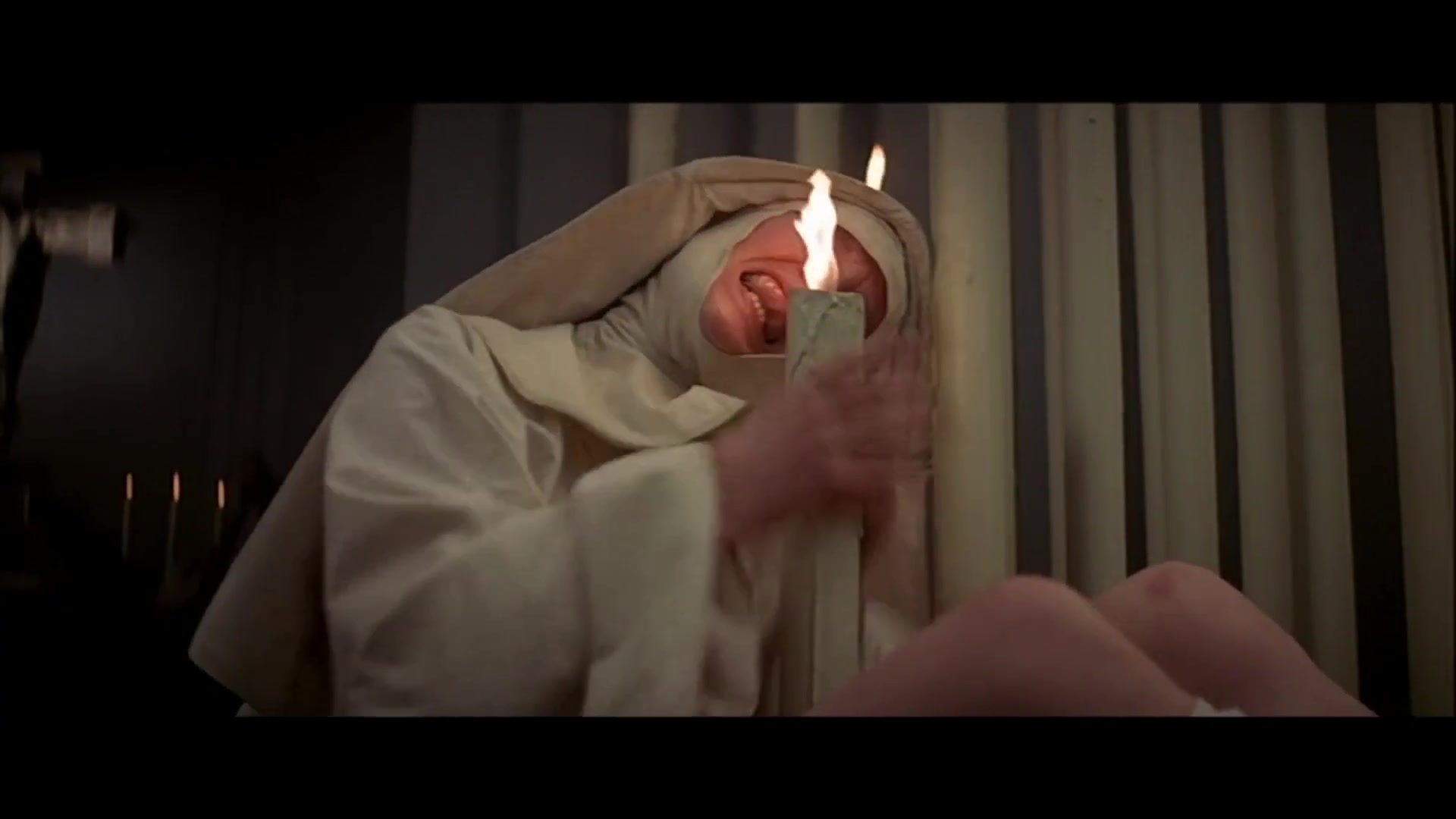
The monumental quality of the filmmaking here calls to mind the grand epics of Hollywood past and future. One might see how Nolan wishes he could craft a work of historical referent of similar power. Or, conversely, how Spielberg answered the challenge with his own takes on history, psycho-drama, and technical wizardry.

For me, the aesthetic choices – the whiteness, the blackness, the curvilinear and angular choices – are what sets Russell’s attempt apart. The sheer massiveness of the Loudun walls contrasts with the cramped interiority of some of the nunnery cells. There’s a strange geometry at play – in the cathedral and Grandier’s chambers as well as in the structure of the nuns cloister.
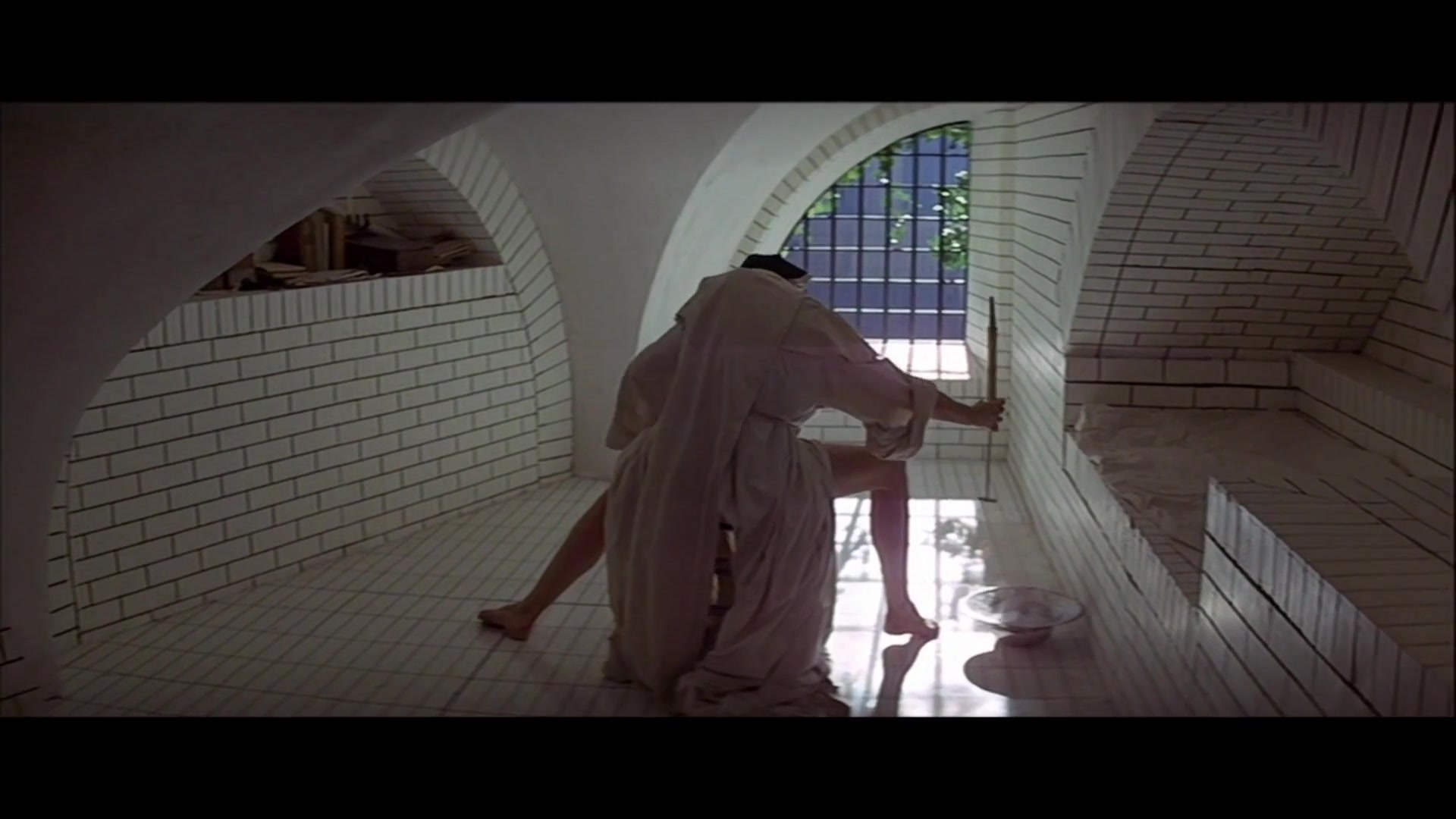
I won’t spoil the story for you. It would be easy to post images of the debauchery, the church-and-state-sanctioned torture, or the epically-scaled destruction. But you have to choose to see it yourself. It’s beautiful, strange, challenging, and hard… but it is also deeply human. This is a film about who we are. It is intimately connected to how we’ve tried to understand ourselves. And it’s a critique and an indictment. Even today we allow ourselves to be divided over assumption, over dogma, over instinct and blind lust. Even though we know better, and have created systems to help us know better, we fail to follow the “better angels of our nature.”
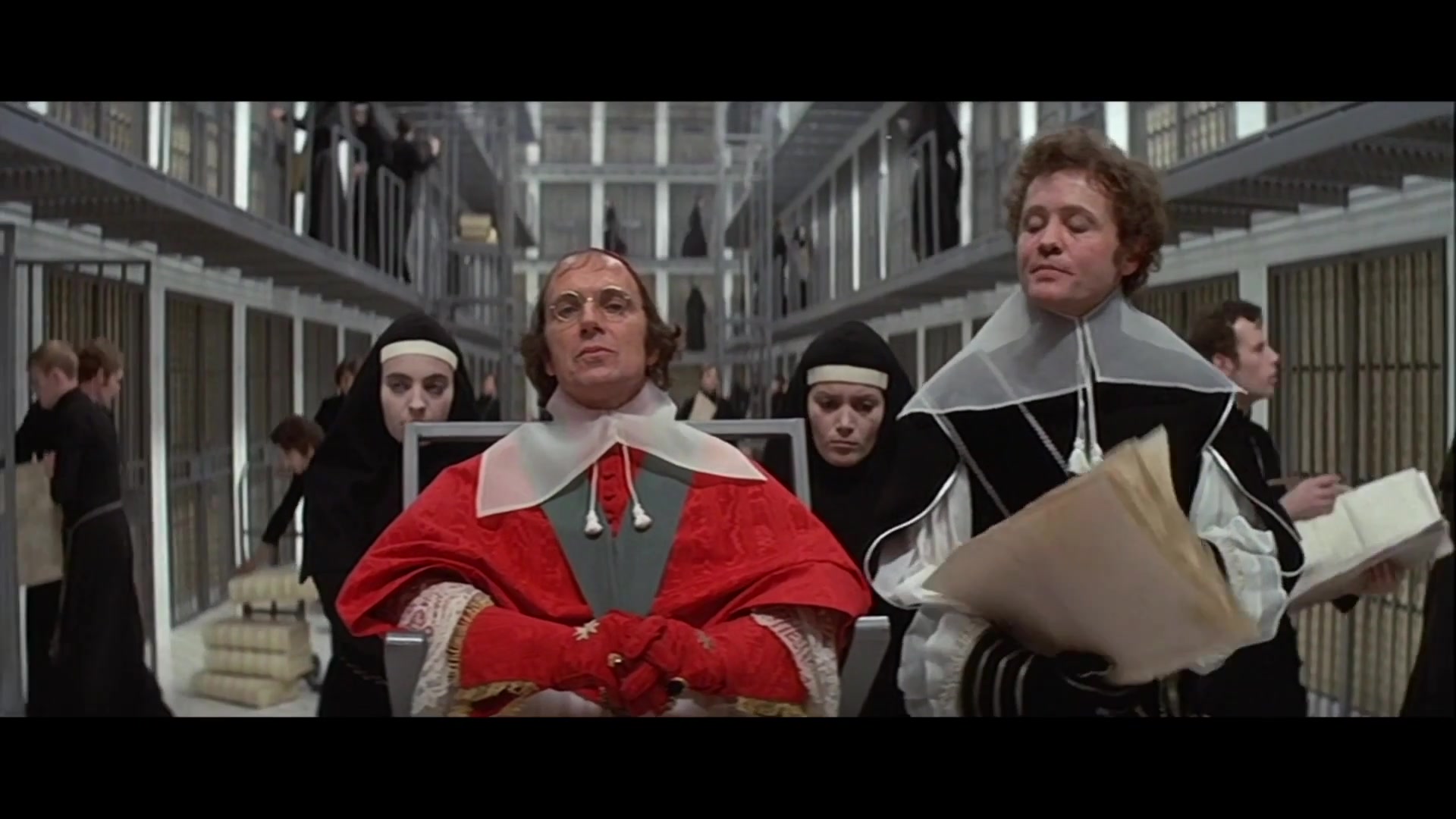
One of my favorite scenes was Cardinal Richelieu being wheeled through the church archives by attendants lol

One final thought: contemporary consciousness theory has impact here. There are thinkers in this area (pioneered by Julian Jaynes) who believe that people in fairly recent centuries did not consider all of the things they thought, dreamed, or imagined as coming from their own mind. Jaynes in particular thought that before circa 1000 CE, most people “were not conscious of their own thoughts… and that stories about gods speaking to people originated from people hearing their own inner voices and mistaking them for the voices of external deities telling them what to do.”

If we entertain this idea, then allow it to dovetail with the known power of religious thinking – not to mention social and familial pressures – it is easy to see how magical thinking, mental illness, and religious fervor could coalesce into the kinds of events we see in the historical background of The Devils of Loudun or The Salem Witch Trials. In so many ways we are captive to the adaptive biological constraints that both gave us the modern world and trap us in tribal and fearful thinking.
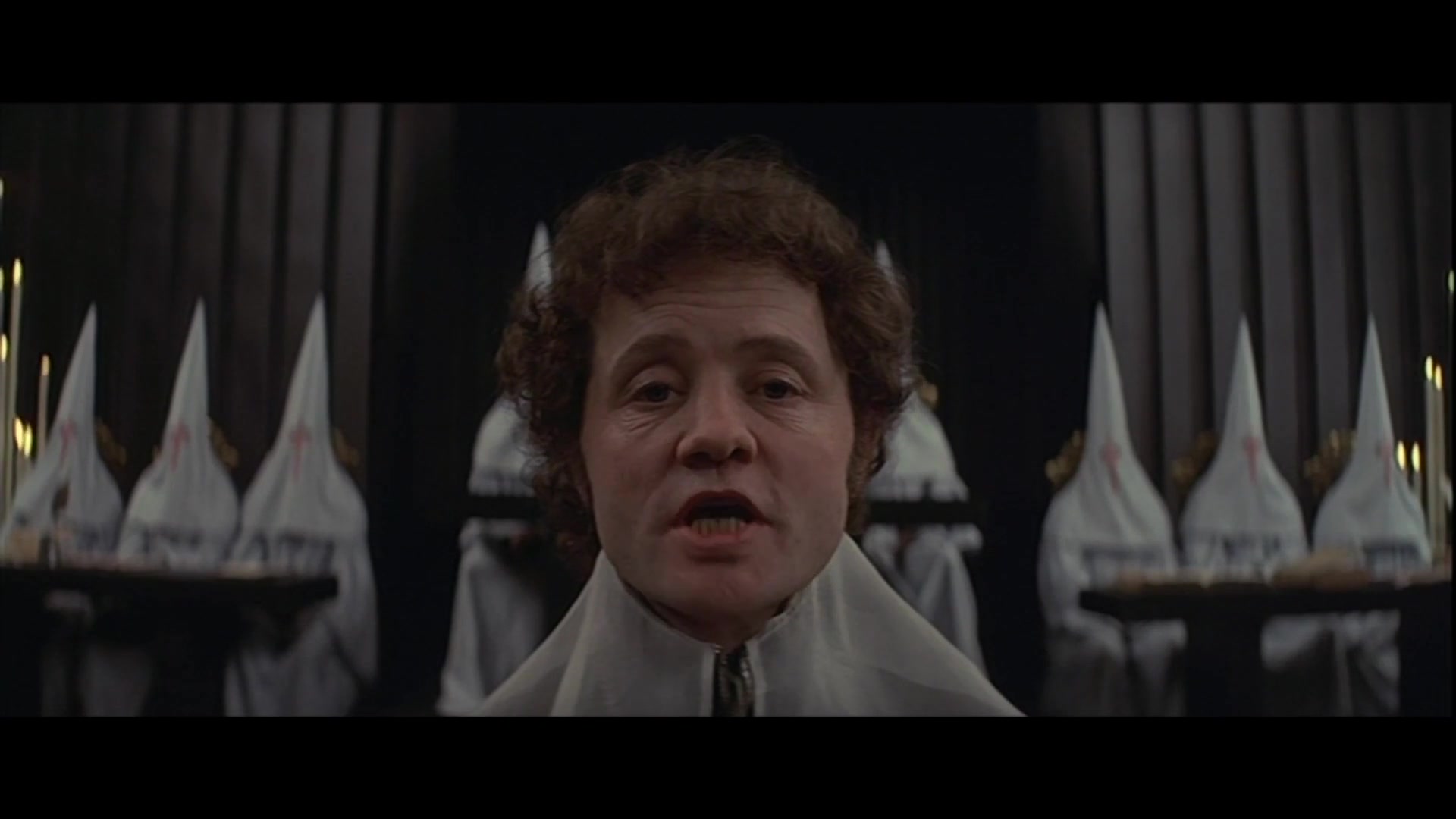
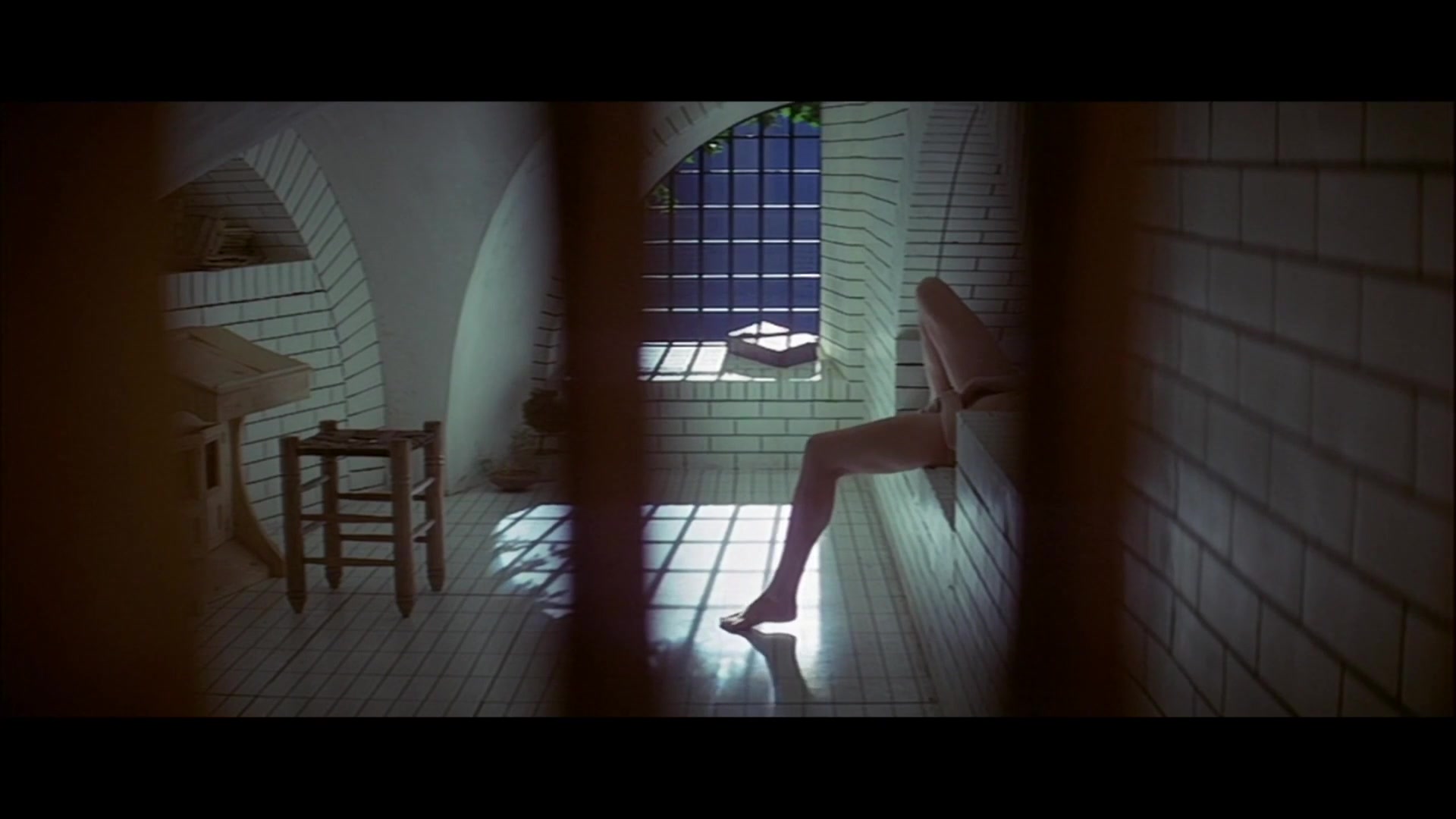
Ken Russell’s The Devils gives us a vision of that. I encourage you to watch it and read more about the situation that inspired it. We are living through the exact same kind of thing right now. People are allowing magical dream-logic to determine how they will conduct their lives. People are imagining fantasies about other humans rather than thinking through the implications of their social, political, and relational choices.

It’s time for us to grow up as a species. There are no devils, only our own flawed assumptions speaking to us. Can we coordinate with each other to triangulate truth or will we continue to silo ourselves, breaking off good will and the joy we could share?
Whole Lotta Shows This Month

I’m excited to be in a number of very interesting shows this month across the region. Click on the images of the exhibition announcements below to learn more! There’s a gallery at the bottom featuring some of the work I’m showing in these venues.

I’m pleased that three of the four shows feature my WHENEVERwhen series of works, which have steadily been gaining traction in shows and collections over the last few years, most recently entering the collection of Bradley University and several private collections regionally. I have a large collection of them going up in October at Saint Vincennes University as well.

The show at Sager Reeves was something I jumped at when extended an invitation by Hannah Reeves. It gave me a chance to play with sculpture and other aspects of working in the round that I don’t often afford myself. I’m really proud of the works that are being shown in this exhibition.

Order & Chaos at Saint Louis Art Guild, MO:

Plane Sight at Public Defender Art Gallery, IL:

Pattern Play at Columbia Art League, MO:

Cryptids and Other Creatures at Sager Reeves Gallery, MO:


Works at Sager Reeves: Portal and Penitent, Barrel Bob, and Father and Son (Double Cthulhu Portrait). You’ve got to see them in person! (Photos by Sager Reeves Gallery)

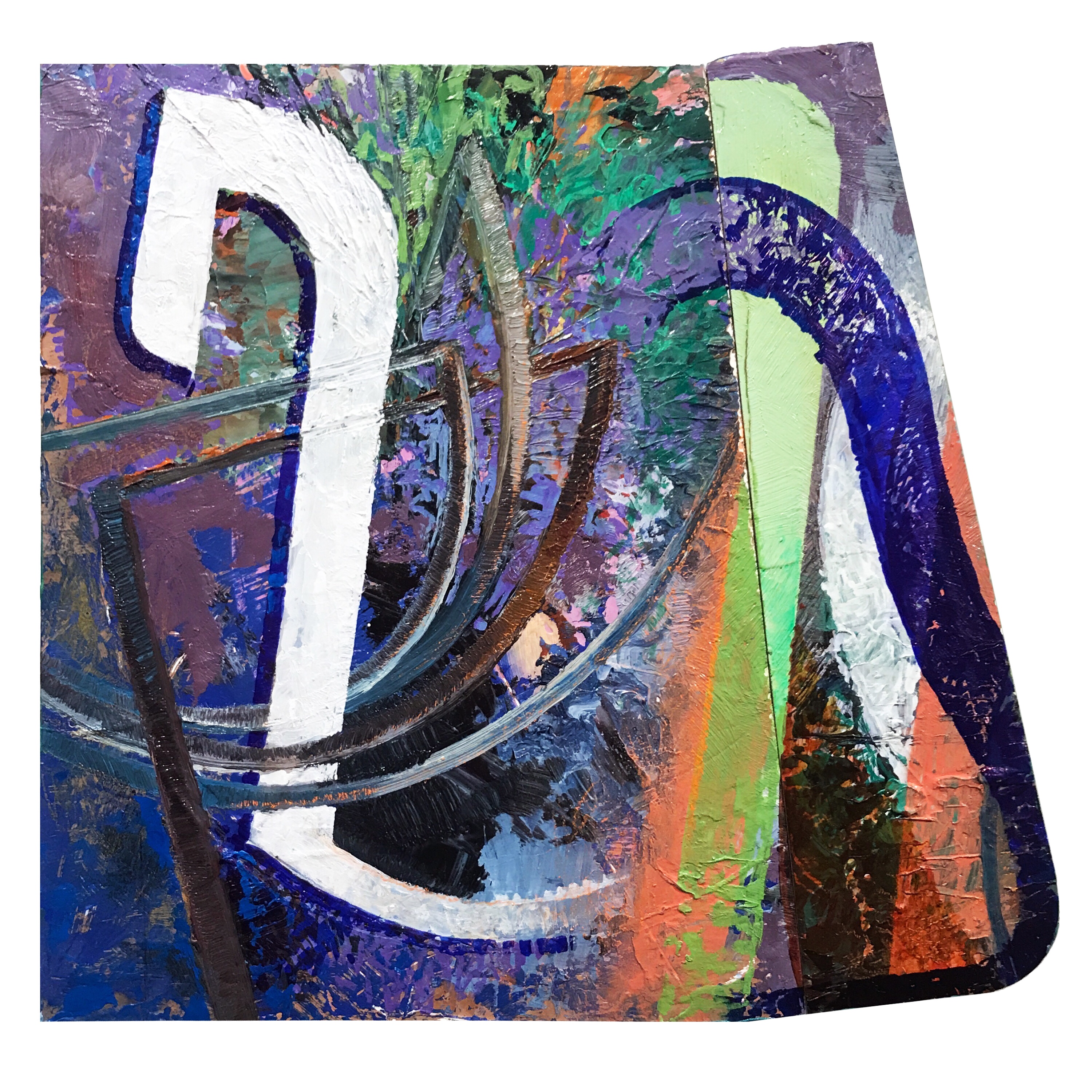
Conditional Contexts, Pierce Pounce, and False Flag – some of the works on view at the other venues!

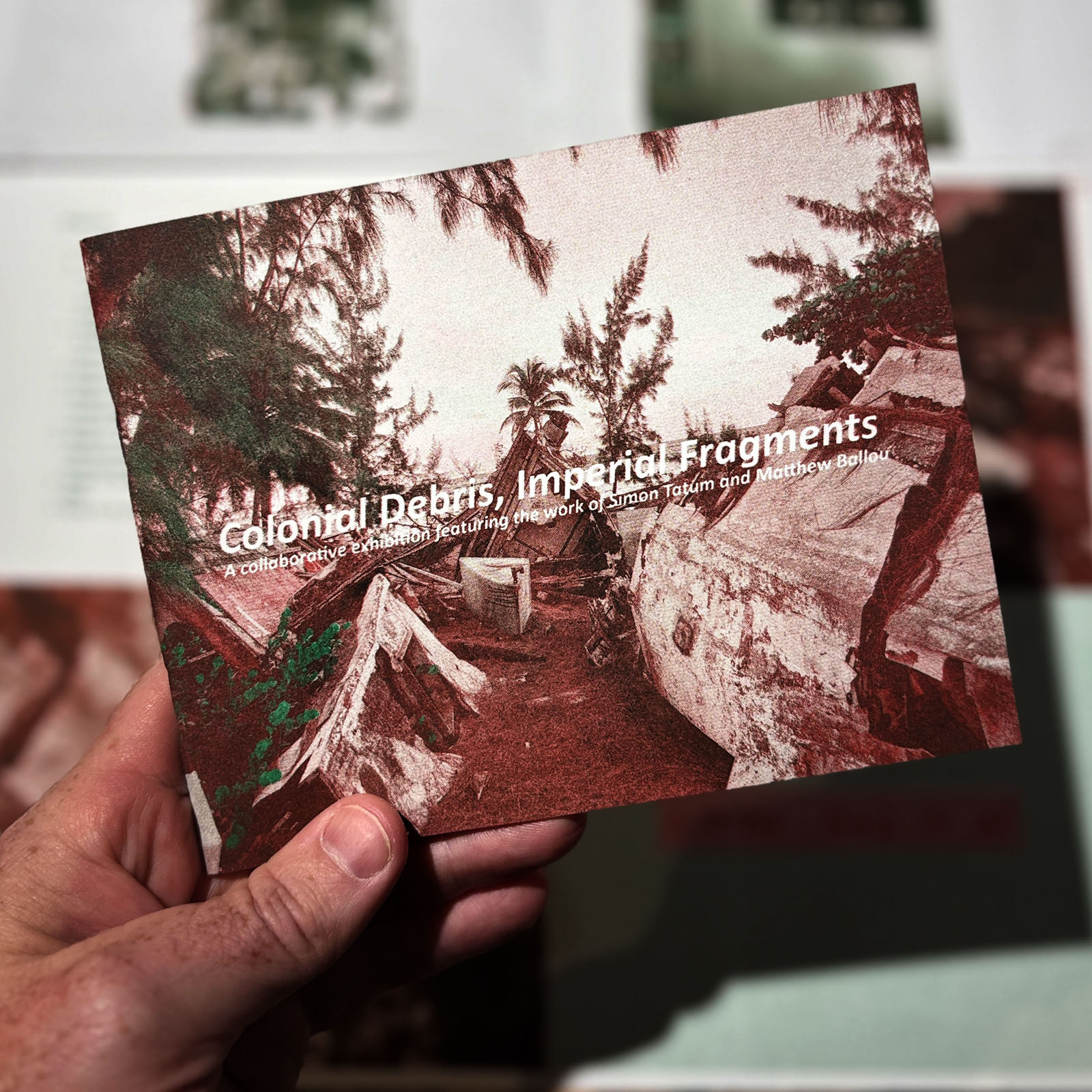
Colonial Debris, Imperial Fragments – A Catalog

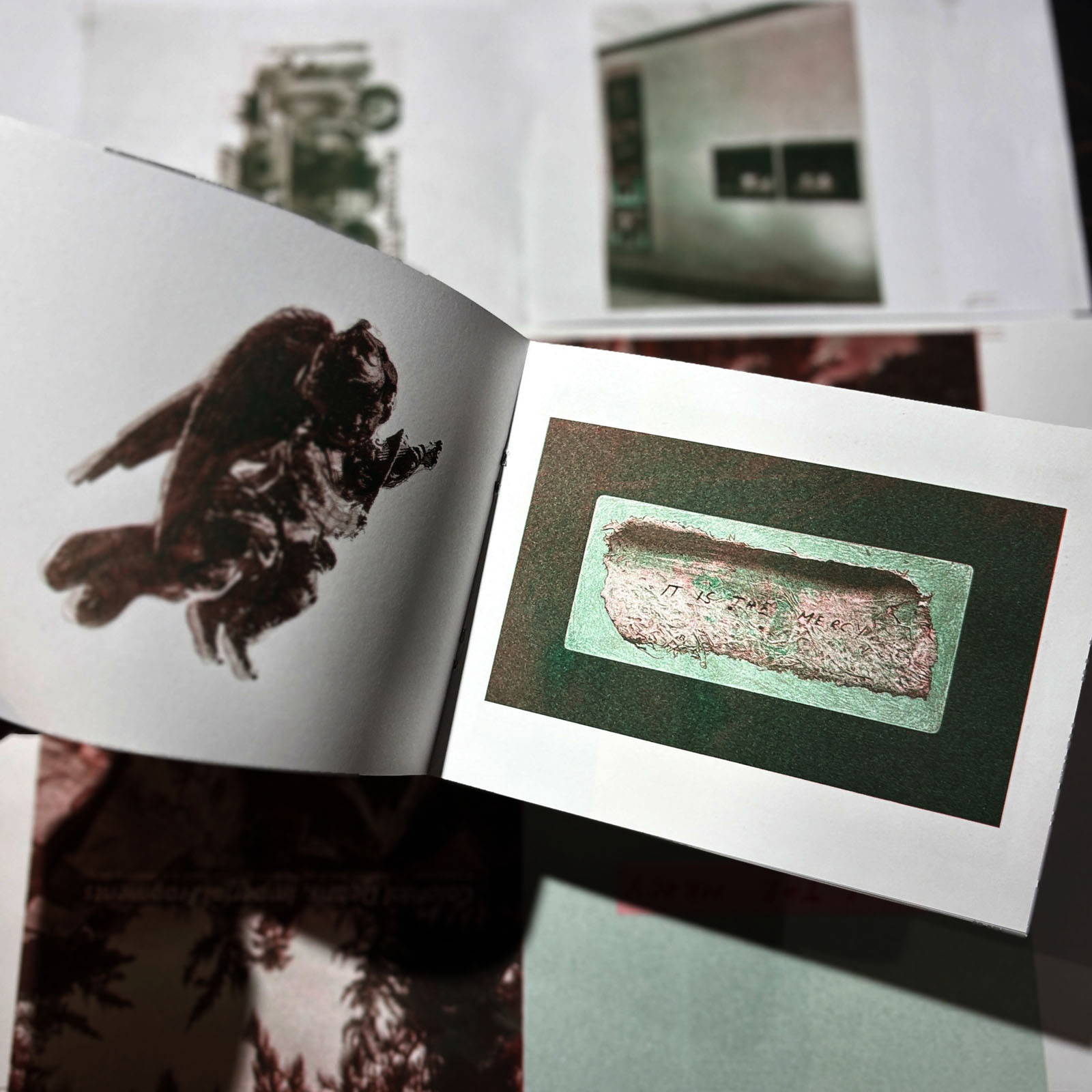
I’m pleased to announce the publication of a catalog about the exhibition that Simon Tatum and I had at Vanderbilt University last year. Working with Oswaldo Garcia at The Riso Room, housed within Mizzou’s School of Visual Studies, I was able to produce a slim volume that highlights some of the work and writing that Simon and I produced for this show. We hope to take the exhibition around to other venues, and these catalogs feel like a great physical supplement to proposals. Click below to take a look inside.

The images show representative examples of the work we include, as well as updated texts that give an overview of the history and context we’re working within. I’m excited by how the risograph process has captured the documentary quality of Simon’s work and the surface development of my own pieces. I love the way the back cover shows Donald Crowhurst’s final coda, “IT IS THE MERCY.” Taken from his logs, this is Crowhurst’s actual writing reproduced.

If you’re interested in obtaining a copy for $25, please send payment via one of the options below:

New Publication: Heaven Replied

One of my favorite prints (and a few words) has been reproduced in this new book from Renascence Books., located in Nashville, TN. The book is an anthology of work related to Gaza/Palestine from 30 artists around the globe. 100% of profits will be donated to mutual aid for Gazans. See the blurb from the back of the book below, and follow this link to purchase your own. This book is the creation of a diverse group of people who have a variety of connections to Gaza/Palestine and who come from many different faith traditions and worldviews. But we’ve come together to make a visible, physical artifact of care and support for real folx on the ground over there. They should not be forgotten in all of the vitriol and political obfuscation. Please, support the effort and the artists within this hopeful book if you can.

I offer my work for this project as a prayer that agency, protection, and hope may soon return to this ancient land, that mothers may soon cradle their children in safety, that fathers may soon sing ancient songs to them with confidence and joy.

Everyone deserves peace and a home.

Go Home, 2019… You’re Drunk

Dani's boyfriend had an interesting experience in a bear at the end of Midsommar...
Dani’s boyfriend had an interesting experience in a bear at the end of Midsommar…

Some years I do a year end list or two (Here’s 2016, 2015, and 2011). Why not? I mean, 95% of the lists out there are lame, so why not throw my 2 cents in to the hopper?

Top Songs of 2019 (which may or may not have been released in 2019)

Timebends by Deerhunter cover artwork

Here are the songs that have dominated my Spotify listening the last year… If you’d like to take a listen, click on the Spotify Playlist Link here.

  1. Timebends by Deerhunter from the album Timebends (2019)
    • A sprawling, rambling, operatic jam, this track is a phenomenal breath of fresh air. At nearly 13 minutes it has enough room to breathe and transform as it goes. It is a joy to take in.
  2. Cop Killer by John Maus from the album We Must Become The Pitiless Censors of ourselves (2011)
    • I discovered this ethereal, weird song while watching Russian Doll this year. The oddly (and almost cliched) vampiric delivery of the transgressive lyrics force a detached, otherworldly vibe.
  3. Doin’ Time by Lana Del Rey from the album Norman Fucking Rockwell! (2019)
    • Lana Del Rey is phenomenal mood-maker and NFR! is a great effort. I’m drawn to many songs on the record, but this is quintessential LDR. Bartender is also a standout track. My only real low for this album is the horrible cover art; get a graphic designer, Lana.
  4. Tiberius by The Smashing Pumpkins from the album Monuments To An Elegy (2014)
    • Tiberius signaled a real return to form as the lead track on William Corgan’s reconstituted Pumpkins lineup in 2014… though I didn’t experience this album until 2019. It might as well have been recorded in 1996 for all the melodic bombast and lyrical melodrama it contains.
  5. True Dreams of Wichita by Soul Coughing from the album Ruby Vroom (1994)
    • Mike Doughty‘s Soul Coughing made some of the most unique and catchy tunes of the 90s. True Dreams of Wichita – like many of the songs Doughty has written – is loaded with imagery and visual/linguistic puns. The phrase turning paired with a sharp evocation of location and emotion is just good poetry.
  6. Pitch Or Honey by Neko Case from the album Hell On (2018)
    • Neko Case is nothing short of a national treasure. Outspoken (follow her on twitter [@NekoCase] for some serious fire) and totally aware of her power, Case brings intensity from the first note to the last on the Hell On album. Pitch Or Honey is the perfect song for an artist like me; the refrain “am I making pitch or honey?” is a question all creatives – indeed, all people – have to ask ourselves. I want to make sweet sustenance, not just crap to gum up the works. Neko knows.
  7. I Only Play 4 Money by The Frogs from the album Starjob (1994)
    • I was introduced to this legendary shock/lo-fi/weirdo-rock band from Milwaukee, WI in 2001 while ensconced in the woods between the town of Saugatuck, MI and Lake Michigan. It was a strange time. Recently I’ve been obsessed with this song and the number of versions where the likes of Eddie Vedder and Billy Corgan sing and play on the song. Go to YouTube and just search for the track to discover these funny, chaotic iterations.

Best Shows of 2019 (that I watched in 2019, at least)

Regina King as Sister Night from HBO's Watchmen
Regina King as Sister Night from HBO’s Watchmen
  1. Watchmen – HBO (2019)*****
  2. Russian Doll – Netflix (2019)*****
  3. Schitt’s Creek – POP (2015-2019)****
  4. Dark – Netflix (2017-2019)****
  5. True Detective Season 3 – HBO (2019)****
  6. Better Call Saul – AMC (2015-2019)****
  7. Black Mirror – Channel 4 and Netflix (2011-2019)***

Watchmen is an incredible thing to see exist as art in today’s America. It’s everything you want art to be – challenging, genre-breaking, character-driven but not subservient to tropes and minor concerns. While many producers of American culture believe that they can fulfill the representation of people of color or tell formerly-non-centered stories with token characters and shallow arcs (I’m looking at you, Disney) Watchmen doubles down on history, context, and powerful performances with developed characters. The ensemble cast is top notch, but Regina King (Sister Night) and Yahya Abdul-Mateen II (Dr. Manhattan) absolutely dominate as the main characters. Jeremy Irons, Jean Smart, and an amazing Louis Gossett Jr. anchor a group of actors – both veteran and very young – who really buy into the deep magic of the Watchmen universe in ways that give keen insights to what is happening with racism, rising nationalism, and the frayed edges of our political establishment right now… wow. All that and an alien squid shower.


Best Movies of 2019 (well, watched in 2019)

Florence Pugh as Dani in Midsommar
  1. Midsommar – Directed by Ari Aster (2019)
  2. The Lighthouse – Directed by Robert Eggers (2019)
  3. Mandy – Directed by Panos Cosmatos (2018)
  4. The Ballad of Buster Scruggs – Directed by the Coen Brothers (2018)

Midsommar is a powerful film about family, death, belonging, and the social construction of meaning. The tension created between how death visits Dani’s typical American family and how it visits the cloistered, alien, cult-like community she visits in Sweden calls us to reconsider how we understand the trajectory and significance of our lives. Are these very different notions of human dignity, purpose, and value truly at odds? Might the strange, pagan ritual of Midsommar offer something altogether deeper for those who believe? Excellent, challenging film making.

Dani simultaneously experiencing existential brokenness and the assurance of communal emotional support in Midsommar.

The Lung Situation

I wanted to give a general overview of what’s been going on with me health-wise.

I have a lung disease.

Sick lung…

It’s been making things hard for me for a while – beginning in June of 2019. That’s when an epic case of Viral Pneumonia hit me hard. We tried a number of things to kick it, and eventually a short run of steroids seemed to do it. But during that Viral Pneumonia my primary care Doctor ordered a CT to check for blood clots in my lungs (my sister had a lot of clots and died of a pulmonary embolism, so it was a fear for me).

The CT didn’t show clots… but it did show damaged lung tissue. Blood work was ordered. A culture of a series of my nasty phlegm nuggets was done. Over the months I’ve had dozens of tests. I had a bout of aspergillus that made it hard to see the underlying cause of things.

The last few months (August through October) have seen a steep downturn. My ability to get oxygen into my body has been really hurt. Without supplemental oxygen I am able to maintain an oxygen saturation of about 87%. I’ve seen it go lower than 79% at times. Normally, the average person is able to maintain 98 or 99 percent oxygen saturation almost all the time. Once you get below 91 or 90 percent your body can’t maintain itself properly; the fall-off is steep.

What began as intermittent exhaustion and strange bouts of breathlessness solidified into constant problem by August. I have worked out almost every day since my heart attack (Feb 2016), but I have not been able to do “normal” workouts since the beginning of August. Basically, I “earn” the same amount of heart-rate elevation and physical exertion just trying to get around the house and walk to my classroom as I used to get doing a full on hour at the gym. This is because I’ve apparently lost 15 or 20 percent of my lung capacity (according to the Pulmonary Function Tests I’ve had). Activities that used to barely register as effort at all are now breath-busters. I’m on oxygen all night long (5 liters pushed through my CPAP) and 30 to 40 percent of the day using my portable oxygen condenser.

I was given an initial diagnosis of Interstitial Lung Disease, which basically has two primary causes – either autoimmune or environmental.

The doctors on my Pulmonary team ordered CT scans that showed them two things: first, the “changes” to my lung tissue are continuing but, second, there seems to be no permanent damage at this point. The main issue with Interstitial Lung Disease is the scarring that can happen. Once lung tissue scars, that’s it; it’s basically permanent. But when the cause is environmental, and if the scarring has not yet taken effect, the situation can be reversed.

My doctors decided that a Bronchial Biopsy was necessary. I had a Lung Lavage during the same procedure (I encourage you to Google what a Lung Lavage entails… the more intense variations are something else). Unfortunately during this biopsy/lavage procedure part of my right lung collapsed. I spent the next 30 hours in the hospital to provide therapy to my lung and make sure that I healed from the collapse and the biopsy.

So what’s next? My doctors will look at the biopsy and lavage analysis to chart a course forward. My condition looks like a cross between Interstitial Lung Disease and Hypersensitivity Pneumonitis. I hope to learn more this week and trust that a course of treatment will manifest.
As it stands now I feel like about 50% of the person I was last semester. Doing everything – sleeping, getting around, parenting, teaching – is hard. I’m thankful for the support around me, good health insurance, good doctors at all levels (especially my Cardiologist and my Primary Care doctor who believed me when I said things were different with this).

I will update here when I know more.

2017 Pride

I completed a number of projects in 2017 and started a few more. Setting goals and keeping an eye on the prize during the vicissitudes of daily life can be hard, but I’ve gotten better at it over the years (thanks mostly to my loving partner, Alison). I already mentioned stuff about my exercise routine, and posted about my exhibition of recent work (that opens today!).

Back in May I set some goals for the year while at the Wakonse Conference on College Teaching in Michigan. Here are my written goals:

I’m happy to say that I’ve worked to complete most of these items and even those I’ve not yet finished have been pushed forward. I’m glad, given how agitating 2017 was socially and politically, that at least in terms of family and my work I’ve been stable and focused. The results are things of which I am really proud.

Probably highest on my list is the publication of my essay On Scholarship: Empathic Attention, Holy Resistance. It appeared in SEEN Journal and explores the importance of attention in an environment of political vitriol and “fake news.” I hope you’ll pick up a copy and read it – it’s one of the best things I’ve written in years, and it shares space with artists and writers and thinkers I admire. I’m really thankful for the opportunity to have this piece out there.

A shot of the cover of the SEEN Journal and a copy of the first page of my essay. Above is a copy of The New Territory.

I am also super excited to be working on a piece for The New Territory. If you are a Midwesterner, you need to get this publication. I am working on a piece exploring the work of Joey Borovicka and adjacent ideas about interiority, Midwestern space, and solitude. I can’t wait to get it finalized and ready for the editors to sort through. Getting to write about key ideas and the work of others is very important to my identity as an artist and educator. I also just love being involved with publications like The New Territory and SEEN. They are labors of love and works of passion that really do the hard work of shoring up meaning, intellectual effort, and spiritual yearning.

I hope to continue this trend in 2018, as I’ve got the Promotion to finalize!


Statement for a new exhibition of WHENEVERwhen works, January 2018

Note: I’m getting the opportunity to show a new group of WHENEVERwhen pieces right off the bat in 2018. Here is my statement for the exhibition, with a few of the works interspersed within the text. I’ve enjoyed some wonderful experiences at Sager Braudis Gallery over the years, and this is the high point. I’m pleased with their installation and think the work looks great there. Of course, I’m biased. I’d love to hear what you think. You can see some gallery information here.

Splint – Oil on panel with custom oak frame. 2015-2017.

For more than twenty years, my painting, drawing, and printmaking have oscillated between symbolism-heavy representational imagery and formal explorations in the tradition of 20th century abstraction. This seemingly broad swing of subject and purpose in my work is directly related to my conviction that the core visual dynamics of either mode are, essentially, the same. I often tell my students that I’ve been making the same picture for my entire artistic life.

Sometimes I have felt led to apply those underlying compositional forces to the service of representational imagery, and other times I have felt the need to strip away everything but color, material, and surface. When I pursue abstraction, the resulting work is a foray into perceptual and physical experience. Thus, even though the works do not depict discernible objects, they are still – to me – realist in the sense that they focus on observational and haptic (sense of touch) phenomena. Conversely, my representational paintings are always abstract inquiries into the nature of meaning, purpose, and human engagement.

Periodically, when the communication of abstract, metaphorical ideals feels incongruous to me, I move intuitively into abstraction. The last time this shift occurred was about two years ago. I was coming out of a long period of working exclusively in the tondo format and had begun to readdress the rectilinear format standard to most painting and drawing. I had rejected it previously because it felt too much like a window or door space. I was looking to depict my ideas in some other form of oculus, something more subjective and mysterious. I started, in sketches and digital studies, to break the picture plane in a number of specific ways. These breaks were related to the work and ideas of artists such as Magalie Guerin, Vincent Fecteau, and Marcelo Bonevardi (among others). I was also greatly influenced by my research into Eastern and Western mandala forms as well as the newer generations of digital painting and drawing apps I was using.

Then, at age 39, I had a heart attack.

The near-death I experienced purged my interests. Though I have completed a few straight representational works since that cardiac arrest in February 2016, the vast majority of my work has focused on a series of abstract investigations I call WHENEVERwhen. In the WHENEVERwhen series I deploy an array of formal strategies that accumulate over time and leave a record within the work. These strategies are diverse; they might function in terms of simultaneity of form – for example, an area may appear to manifest as both light and solid structure – or display a counterintuitive sense of weight and balance. I have also incorporated a significant amount of collage, relief cutting, carving, and digital prototyping into my working methods.

Icon Eikon – Oil, acrylic, marker, and spray-paint on shaped panel. 2016-2017.

Another significant development of the WHENEVERwhen series was my use of shaped surfaces and disrupted framing. I have been obsessed with making frames a part of the work for many years. At first I used clean, minimal float frames. More recently the frames both hold the work and are painted on or defied in specific ways – often through cutting and reassembly – in order to fit them into the pictorial language of the work. This integration of the frame is important to the sense of edge, continuity/discontinuity of the visual field, and aesthetic structure I seek. A number of my WHENEVERwhen works are framed in vintage oak reclaimed from old church pews and University of Missouri drawing desks. This 50 to 70 year old wood adds a density that corresponds to the surfaces and textures comprising my work.

The WHENEVERwhen series is serving as a kind of pivot within my life as an artist. I am bridging influences across history and media in ways I have not done in the past. I am pushing through old modes of working and thinking. My proclivities are both affirmed and challenged. My assumptions are acknowledged, and either used or left aside. Of course, this pivoting is also happening in the paintings, drawings, and prints themselves. Somewhat disheveled and awkward, yet bursting with chromatic beauty, these works are artifacts of aesthetic exploration, distillations of influence, and tributes to rigorous play.

Matthew Ballou – December 2017

A la Lutes – Acrylic, gouache, Sharpie, and graphite on relief structure. 2015-2017.

Here are some installation shots of some of the work… I hope you can come and see the work before the show closes at the end of January.

img_0259img_0262img_0261img_0260


Restraint&Limitation Exhibition at Mizzou

I have curated an exhibition at the George Caleb Bingham Gallery at the University of Missouri called Restraint&Limitation. This show features the work of Anna Buckner, Sharon Butler, and Gianna Commito, along with some people with connections to Columbia, Missouri – Hali Oberdiek, Jessica Thornton, Elise Rugolo, Lauren Steffens, and Jennifer Ann Wiggs.

Lauren Steffens’s floor piece, Rugolo’s encaustic work, and Gianna Commito’s sharp-edged abstraction in the exhibition.

It is a spare, economically arranged show. It’s openness grew out of my musings on abstraction of all sorts. I have long felt that bigger is not really better when it comes to abstraction, and I set out to bring together just a few examples of works that do this. Here is my curatorial statement for the show (a text/painting pair) with a number of shots of the installation interspersed. There will be a catalog of this exhibition available soon.

Detail shot of Ballou’s Curator’s Statement.

Curator’s Statement for Restraint and Limitation

Contemporary abstraction is a huge, multifaceted project.  From Katharina Grosse, Julie Mehretu, or El Anatsui to Cordy Ryman, Odili Donald Odita, or Amy Sillman, the range of potential and diversity of referent available to artists is obvious.

There are no clear boundaries, no distinct definitions that provide a unified perspective on the practice of abstract painting. That contemporary abstraction utilizes the history, physical interactions, and conceptual structure of painting is axiomatic. Yet to suggest that it is limited to the realm of painting is a dramatic misunderstanding.

Detail of Anna Buckner’s Dutch Still Life.

The old discourse that endlessly returns to the interplay between abstraction and representation has lost any potency to report on what is actually happening in much of contemporary abstraction. With this exhibition, I hope to present a sliver-like view into the modes of abstraction that intersect with painting as a form and which, in unique ways, demonstrate the limitations of depiction and representation to clarify the kinds of experiences that abstraction affords us. I also seek to show how smaller works may defy the conceit that abstraction is most powerful in its more monumental expressions.

Commito and Buckner works hanging in the show.

A side view of Butler’s four goodmorningdrawings and their presentation.

The three primary artists here are women from different stages of their careers. They show commitment to the aesthetics and procedures inherent in painting practice today, yet bring diverse pressures to the form. Buckner – a newly minted MFA – pieces scraps of fabric into small, taut grid fields. Butler – with decades of art making and writing behind her – brings us small digital drawings created on her iPhone. Commito – a mid-career educator and artist with broad impact – focuses on sharp geometries and wonderful chromatic synergies. Their influences – ranging from post-paint materiality to provisionality to traditional hard-edged painting – form an invigorating view into a restrained yet evocative corner of artmaking.


Detail of an Elise Rugolo work.

Grouping of Wiggs pieces, with Commito off to the right.

Post Script ~

I was particularly excited to have Butler in this exhibition – ten years ago we participated in an online “shared critique” event that took place on the now defunct Thinking About Art blog. I was writing about the work of someone else, but Butler was assigned to write about one of my paintings. I thought her response sharp, knowledgeable, and strong. Though she did seem to dismiss that work, I was pleased to have her voice address my art making, and I have followed her closely ever since. Her art making, writing, and blogging – especially with the influential site Two Coats of Paint – are important. I’m really glad to have be a part of this.

Another view of the installation of Butler’s works.

LEGO Sculptures on display

Thirty-four of my LEGO sculptures, created 2010-2017, are on display at the George Caleb Bingham Gallery at the University of Missouri right now. These include five bronze pieces as well.

Since I was a child, LEGOs have been a staple in my creative habits. Often, when I am met with some creative block, when I am disillusioned, or when I simply need a change, LEGOs are my go-to outlet. They offer a kind of open-ended opportunity to make things without any conceits or justifications. Usually, at least for me, this kind of building amounts to a formal exercise within certain boundaries. After all, LEGOs are a finite tool. They have limited application and range. In spite of this, however, they allow for many hours of engagement and a diversity of resolution. LEGOs really are a creative partner in my life.


Over the last 10 years or so I’ve been interested in a number of practitioners of contemporary sculpture and their work has influenced how I have played with my LEGOs. First and foremost is Vincent Fecteau, who crafts strange, small sculptures that exhibit a wonderful sense of hidden interior space. Additionally, Barry Le Va’s dark and geometric wall and floor installations (and the awesome drawings for those installations) are also important to me. Didier Vermeiren’s solemn, dense sculptural works manifest a kind of austerity and clarity that challenges me. These artists (among many others) inspire me to play with associations of form and color, as well as with the implications of scale. Fecteau in particular has strongly influenced all of my work over the last 6 or 8 years. 

The sculptures collected here, both those made of standard LEGOs and those crafted in bronze, are meant to function like poems of form: slight, strange, awkward, yet solid in a sense. In them I have gone through an iterative process of placement and association. In my mind, it’s all shape dynamics and formal play. These miniatures have stimulated my paintings, drawings, and prints for a long time. At this point I see them as part of my overall work, though definitely a part that’s still in development.