Tale of the Tin Foil

Back in 2007 I was teaching a Beginning Drawing class at the University of Missouri – one of the first of my time here. I was challenging my students’ notions of process and rendering. So many young people come into art classes believing that mere transcription – literally photographic-type replication – is the standard of quality. Basic verisimilitude rules their ideas of what is good and they have little to no idea of material, process, or context.

Early on in the semester I told them that if they used the strategies I was trying to teach they’d be able to do more than merely replicate what they think they know: they’d be able to feel an experience of the space and air and object-ness of their subject matter; they’d be able to move beyond trying to recreate the surface details of a photograph and begin to sense the deep masses of shape and movements of light that under-gird formal composition and communicative meaning. I told them that – moving from these general underlying abstractions, through a process of accumulation, toward the specifics of forms in space and light – they’d be able to do far more than attain photo-realistic images; they’d be able to make evocative explorations into the nature of being.

I don’t think they really believed me.

They didn’t realize that the subject of our class was not the simple manufacture of pictures, not the creation of images that corresponded to their referents in a sterile, monocular, photographic representative mode. Instead, what we were aiming at was (and still is in my Beginning Drawing courses) an exploration of sight itself. The subject and aim of my classes is to help students become aware of their own conscious seeing, and to inform that sight with particular sorts of logical and intuitive approaches to what is before their eyes.

They’re always dubious, but I think most of my students go with me on that journey of discovery and awareness.

In any case, that first class in 2007 challenged me. They essentially said, “you can’t use these observational, sighting-and-measuring, general-to-specific, experience-not-execution techniques to make something better than a transcribed photograph.” They asked me to try my hand at tin foil – crinkled, wrinkled up, then spread back out again.

Above is the final drawing – click through for a detailed view. Below is an animation of the process – I took images to show the students how I moved through the construction of the drawing (click on it to see the procession of images):

Color Drawing, Fall 2010

Another semester, another feeling of pride. My beginning color drawing students are pretty awesome.

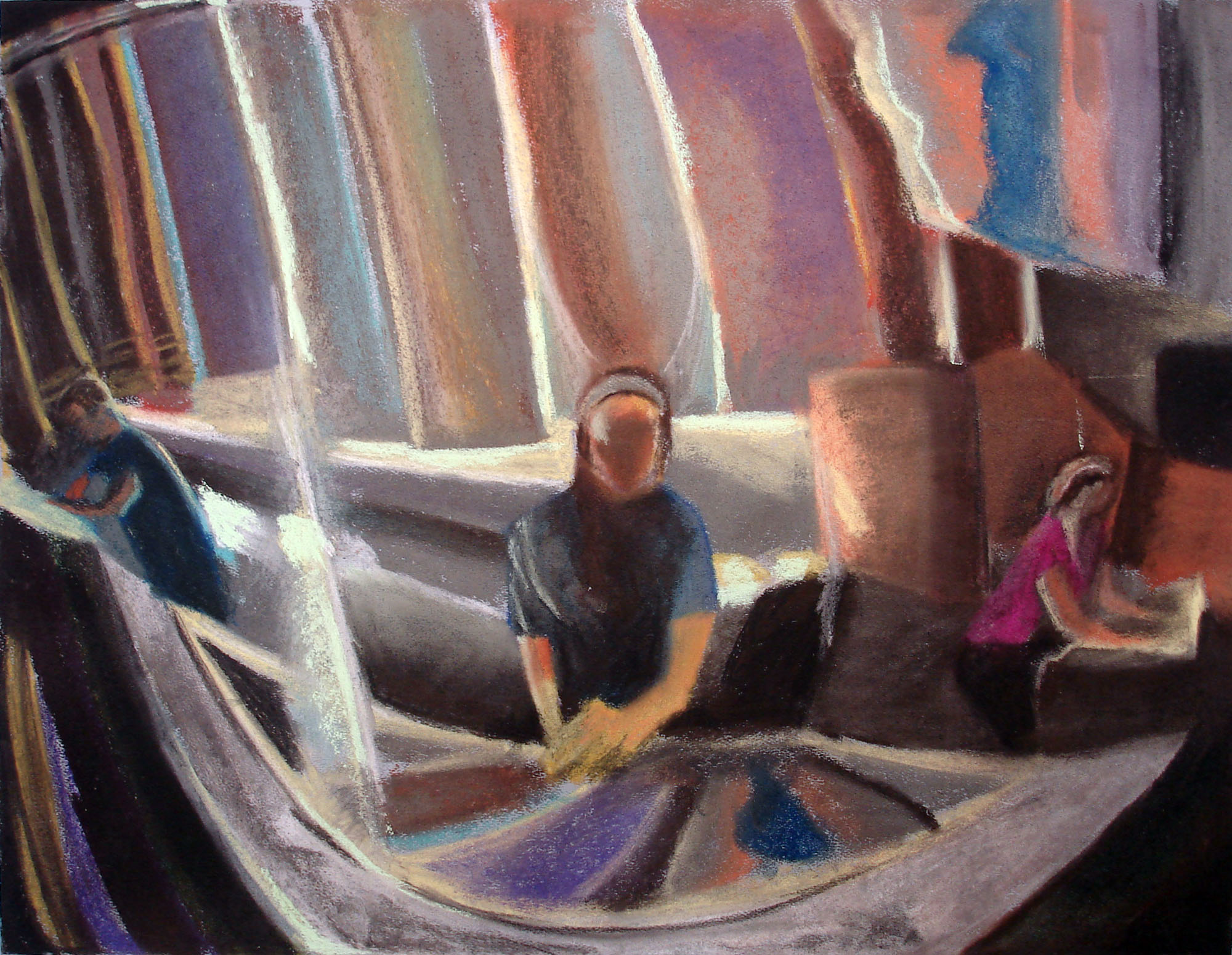
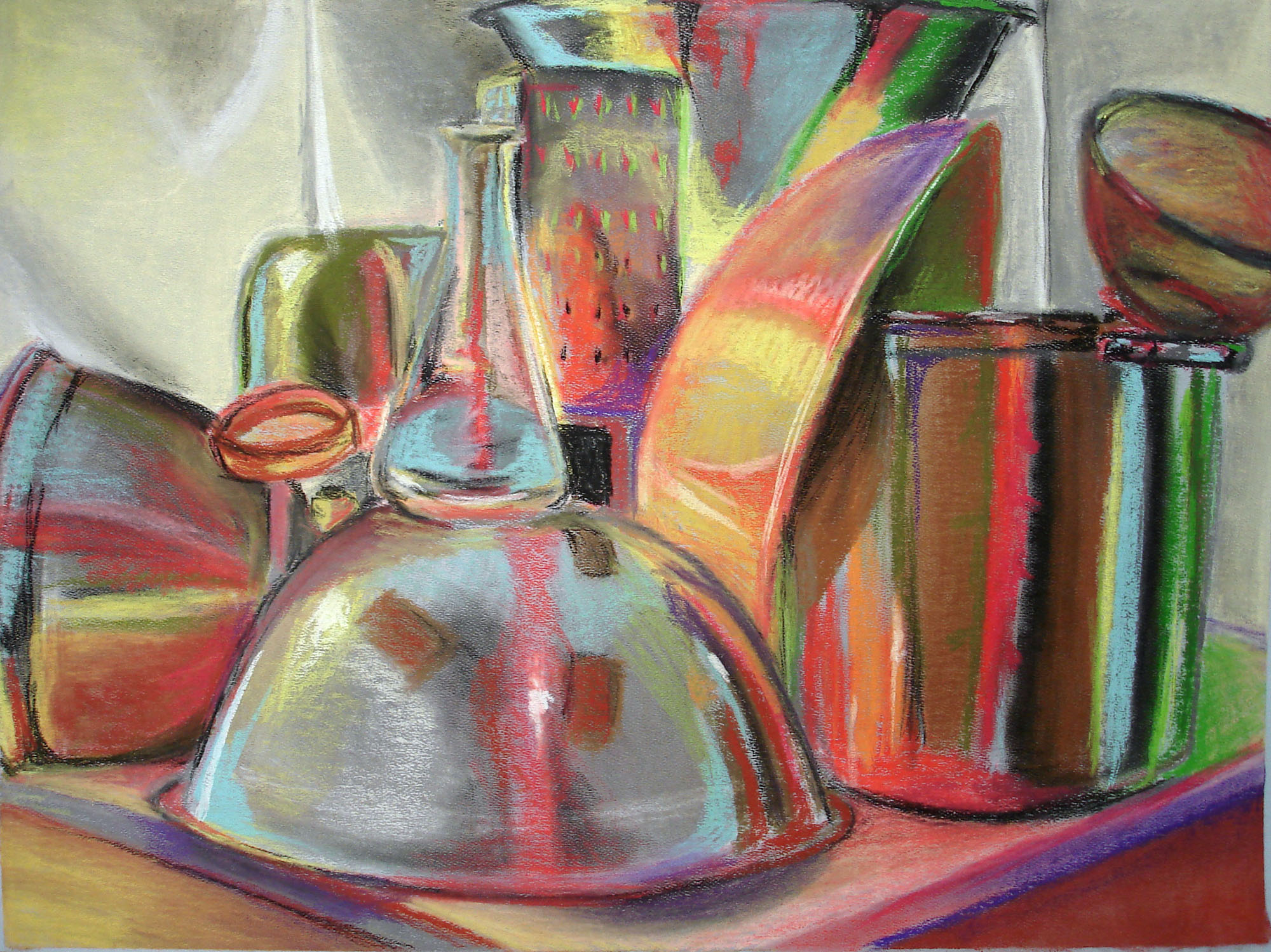
Carrie Casper Reflective Still Life

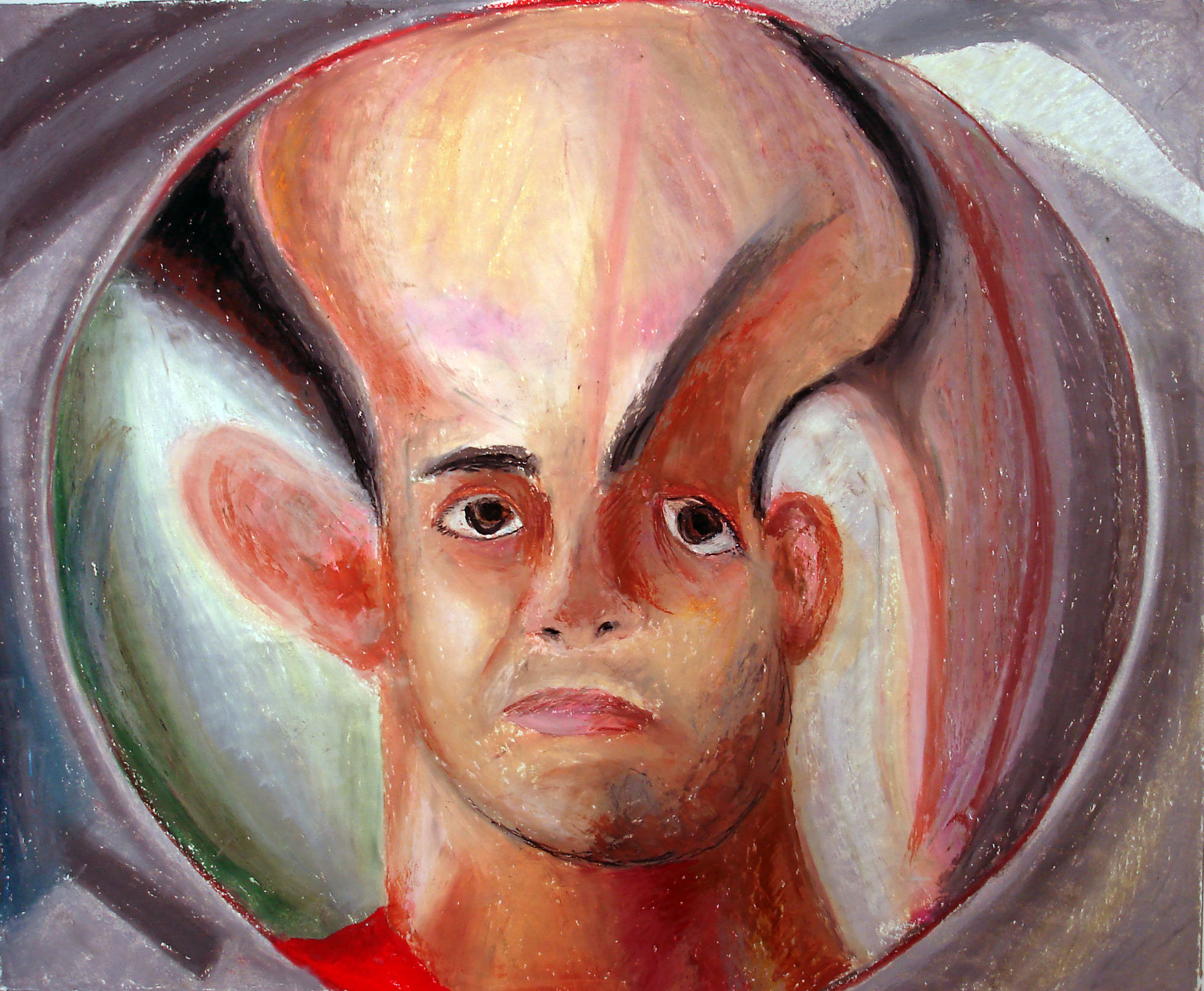
Dustin Roberts Reflection Self Portrait 1

Alex Forkin Reflection Self Portrait 2

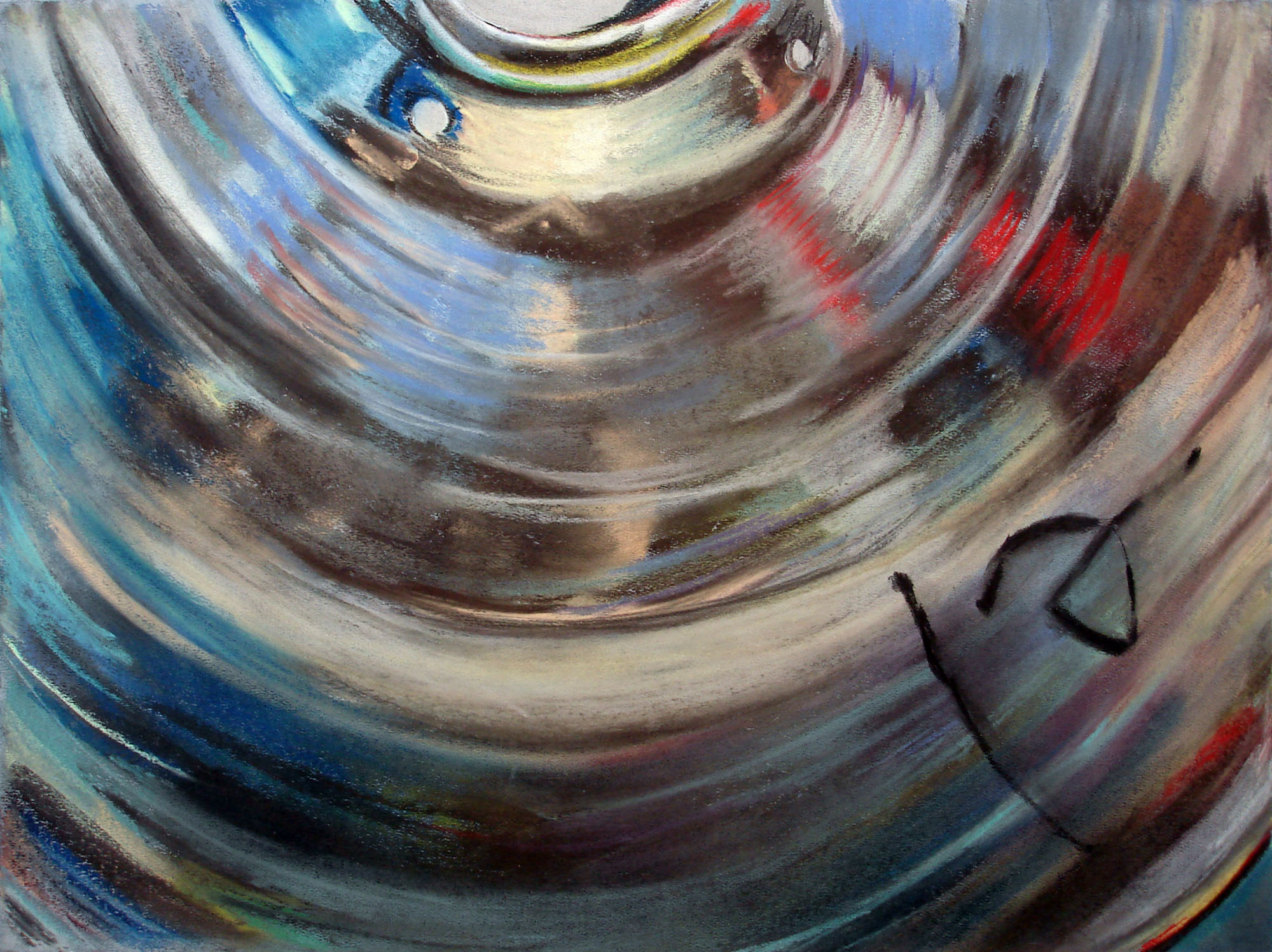
Alex Forkin Reflection Chromatic Environment 2

Katie Kullman – Reflection Self Portrait 1

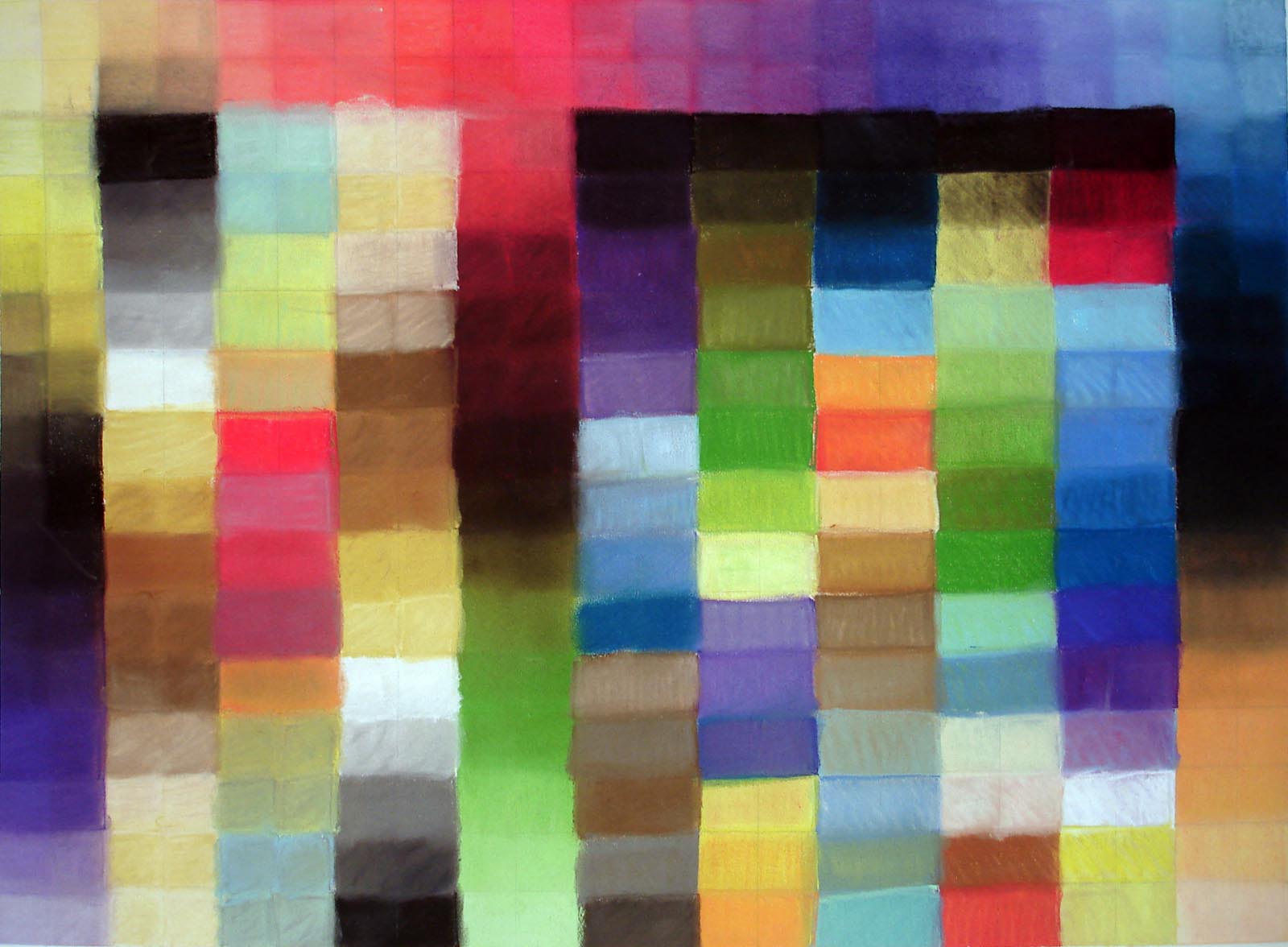
Nikki Warren – Grid Project 2

Ashley Claussen – Reflective Still Life

Matt Klos at Mizzou

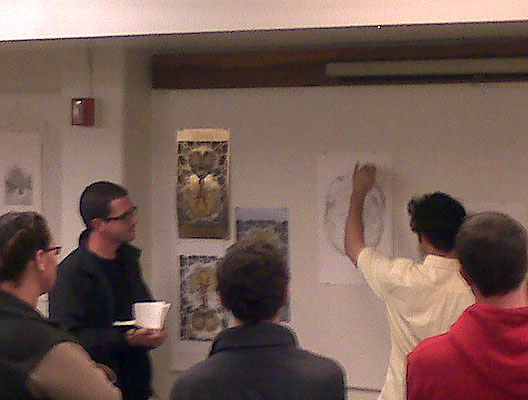
Thursday and Friday, October 28th and 29th, 2010, painter and educator Matt Klos visited the University of Missouri Art Department. His talk – as much a short lecture on the richness of painterly exploration over the last 75 years as it was an elucidation of his art – was a vibrant and refreshing event.

After the talk, Professor Klos led a large group of Mizzou undergraduate students in a critique of works from art majors Derek Frankhouser, Marcus Miers, Danielle Moser, and John Schneider.

The talk and critique were well attended and really modeled the intense, engaged dialogue we are trying to foster among our undergrads here.

Thanks, Matt, for coming!

For more on Matt Klos, see here.

Martha Macleish and the Shadows

I took a group of my students (from the University of Missouri at Columbia) over to Kansas City to see a bit of art this past weekend. The main attraction was the Martha Macleish show at Longview Community College. One of the things I found so interesting about her work is the fact that the shadows they cast – being illuminated by the syncopated lamps of a gallery lighting system – are at least as physically striking and necessary to the experience of the art as the objects themselves are. These shadows seem to extend each work in that they transfer the structure and form of the piece into space and onto the surrounding walls and floor. While this seems obvious – it’s what all shadows do – in this case it’s much more significant. This is because the laminated, layered construction of the work is mirrored in the stratified step gradients of the multi-vectored shadows and the negotiated, sometimes grungy, sometimes glossy finish of the materials is echoed in the distended, bending atmospherics created as light falls over their spaces and shapes. The effect is mesmerizing and stimulating, leading viewers to shift their perspective again and again, bobbing and weaving around each piece to see the secrets they hold in their multi-faceted alignments and angles. The work is very much worth seeing if you get the chance. Martha granted me permission to post some images of the shadows her work created at the Longview show. Click on each to enjoy them larger.

Ballou Talk at University of Missouri, July 2010

On July 21, 2010, I gave a talk at the University of Missouri. I’m posting the audio and my slide show as a 47 minute video for people who are interested. This isn’t a highly detailed academic type discourse at all – it is a very general overview of my interests/inspirations and a discussion of where my work has been going over the last few years. The video is embedded below – give it a few seconds to appear:

Feel free to email me or post comments of you have questions or thoughts.

Color Drawing, Spring 2010

A year ago I started teaching all levels of Color Drawing (Beginning, Intermediate, and Advanced) at the University of Missouri. While I really enjoy all of my classes, the Color Drawing sections have been particularly special to me.

So here’s just a review of some of the great work from this semester…

Danielle Moser, Beginning Color Drawing: Reflection Project Drawing, Oil Pastel, 24 by 18 inches.

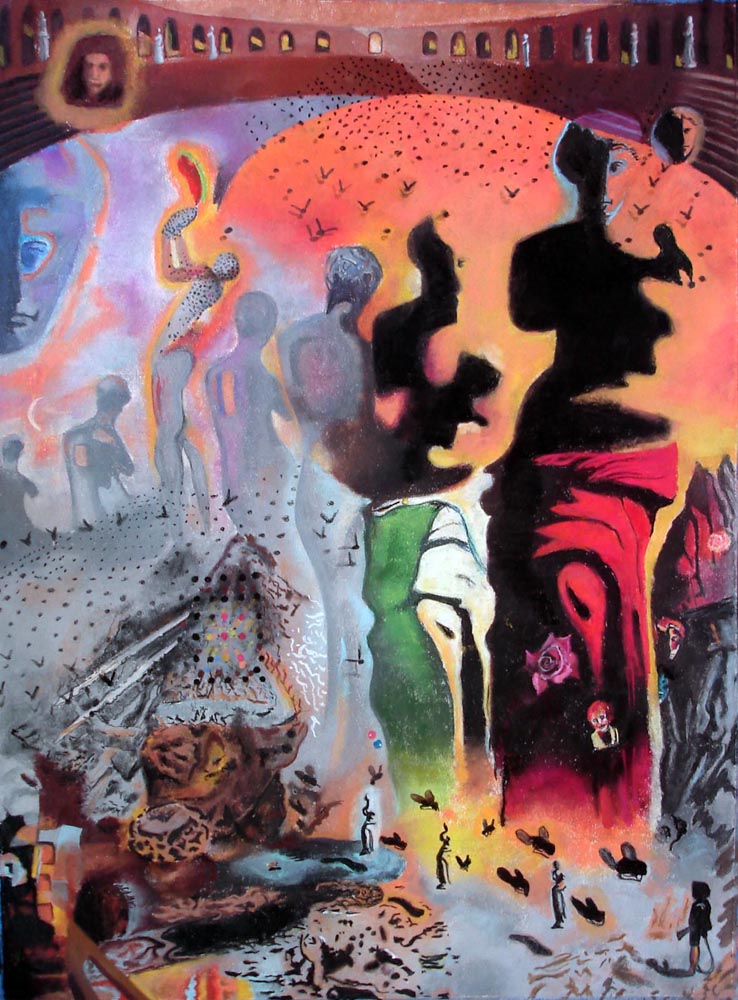
Jillian Blanck, Beginning Color Drawing: Master Copy Drawing (after Dali’s The Hallucinogenic Toreador), Chalk Pastel, 30 by 22 inches.

Scott Fisher, Beginning Color Drawing: Master Copy Drawing (after Michelangelo’s Libyan Sibyl from the Sistine Chapel), Chalk Pastel, 30 by 22 inches.

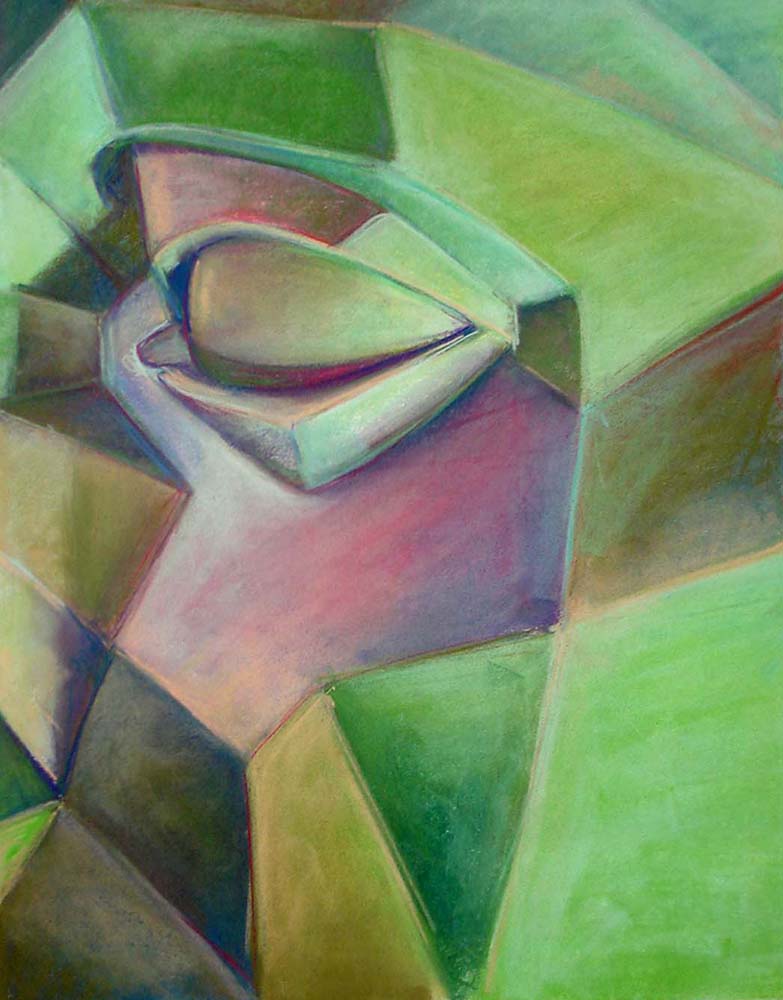
Holly Meador, Intermediate Color Drawing: Head Planes Model Drawing, Chalk Pastel, 44 by 30 inches.

Holly Meador, Intermediate Color Drawing: Self Portrait as Flaming June (after Lord Frederic Leighton’s Flaming June), Chalk Pastel, 30 by 36 inches. (Unfortunately, this drawing was stolen from my flat files at the University – I’m actually pretty pissed off about it. How can we expect our students to be willing to put forth their best efforts when their peers don’t respect that work? Really unbelievable.)

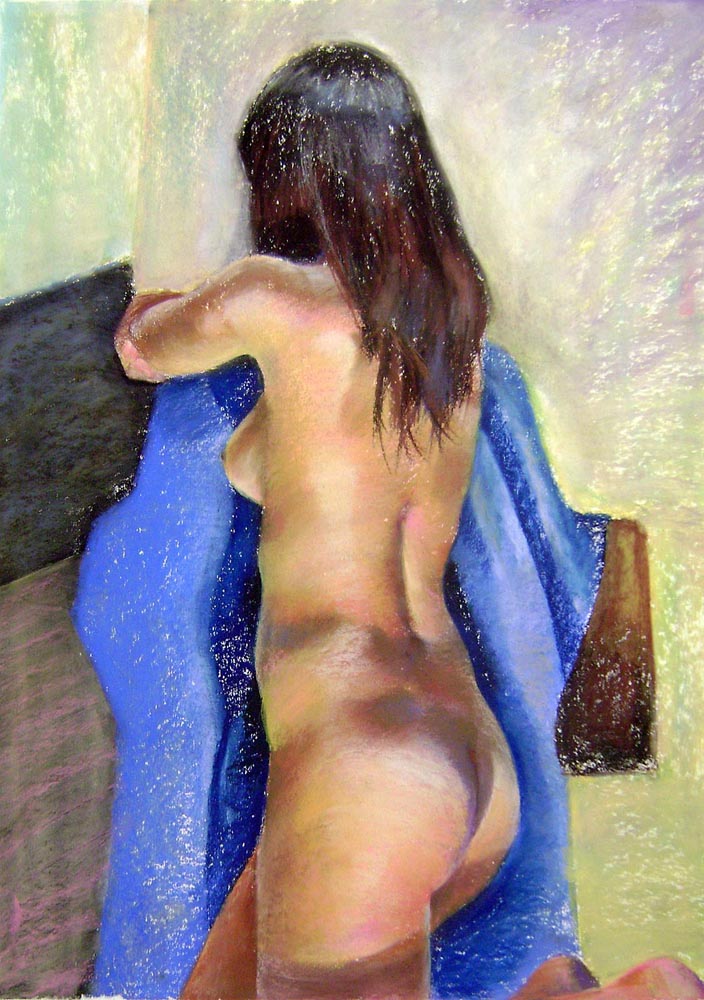
Roxanne Kueser, Advanced Color Drawing: Courtney, Chalk Pastel, 24  by 18 inches.

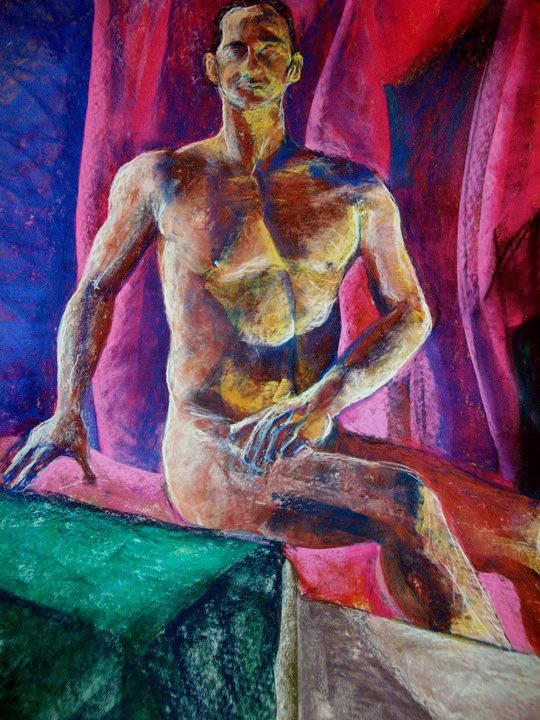
Brittany Carney, Advanced Color Drawing: Neil (The Proper Posture), Chalk Pastel, 24  by 18 inches.

Marcus Miers, Advanced Color Drawing: Untitled Composition, Chalk Pastel, 60  by 45 inches.

I want to thank all of my Color Drawing students for making the class so enjoyable. I could have easily had 100 drawings to show from the production of my 24 students; I don’t mean any disrespect to those I’ve not displayed here. These works do show the overall quality and worth ethic I’ve seen throughout all of the students this semester. I’m so glad I got to work with them. Here’s to setting the bar high for next semester!