Chromatic Totality

I’ve got another amazing group of Color Drawing 1 students this semester. Below I’ll highlight just a few of the many who’ve distinguished themselves this year. Please click on each to see them up close.

A work in colored pencil by Marissa Valentino. About 18 by 18 inches.

A drawing by Lirong Gong. Chalk pastel, 24 by 18 inches.

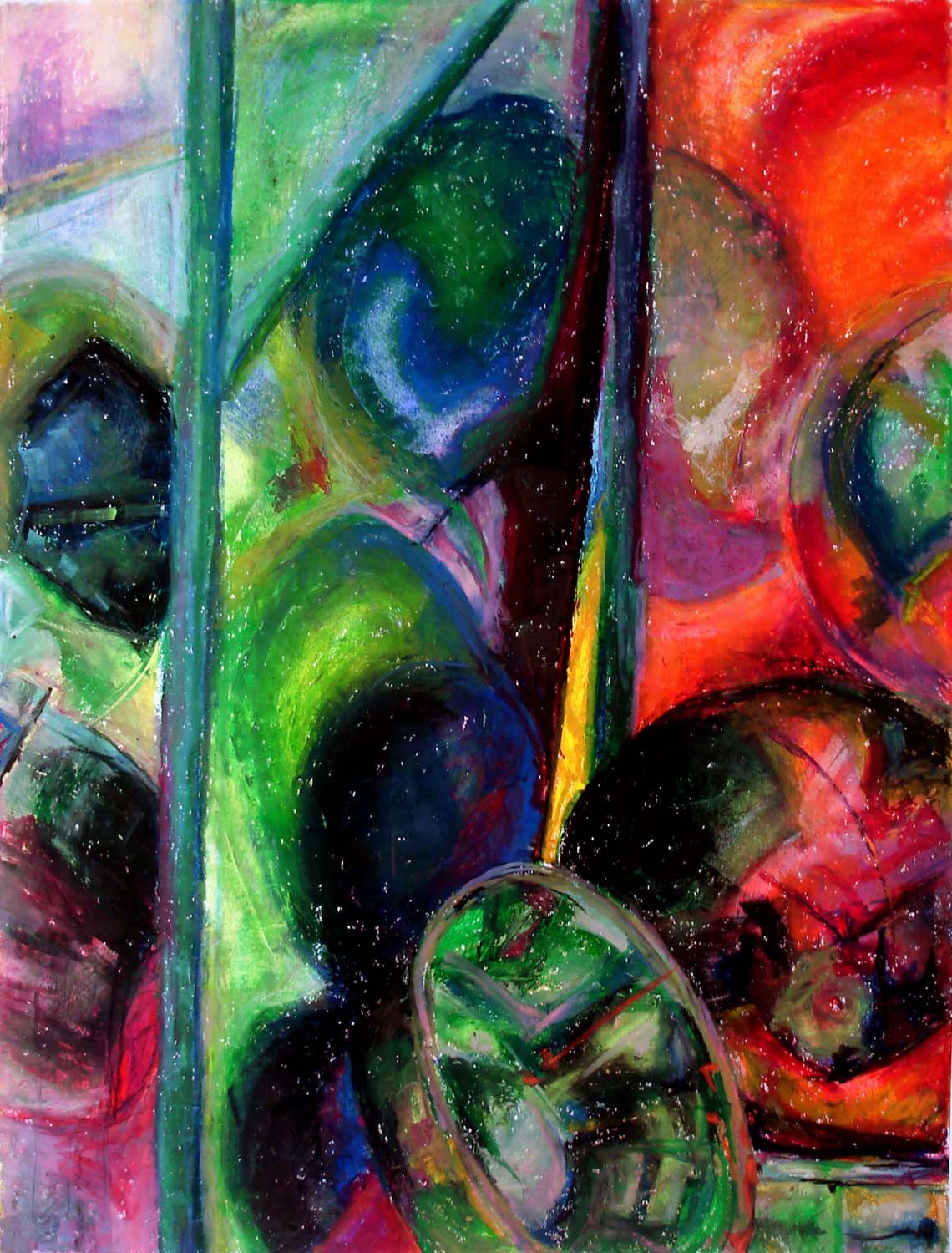
Megan Schaffer has an amazing sense of material handling. Her oil pastel work here is 30 inches by 22 inches – it’s just one of 4 or 5 that are really stellar.

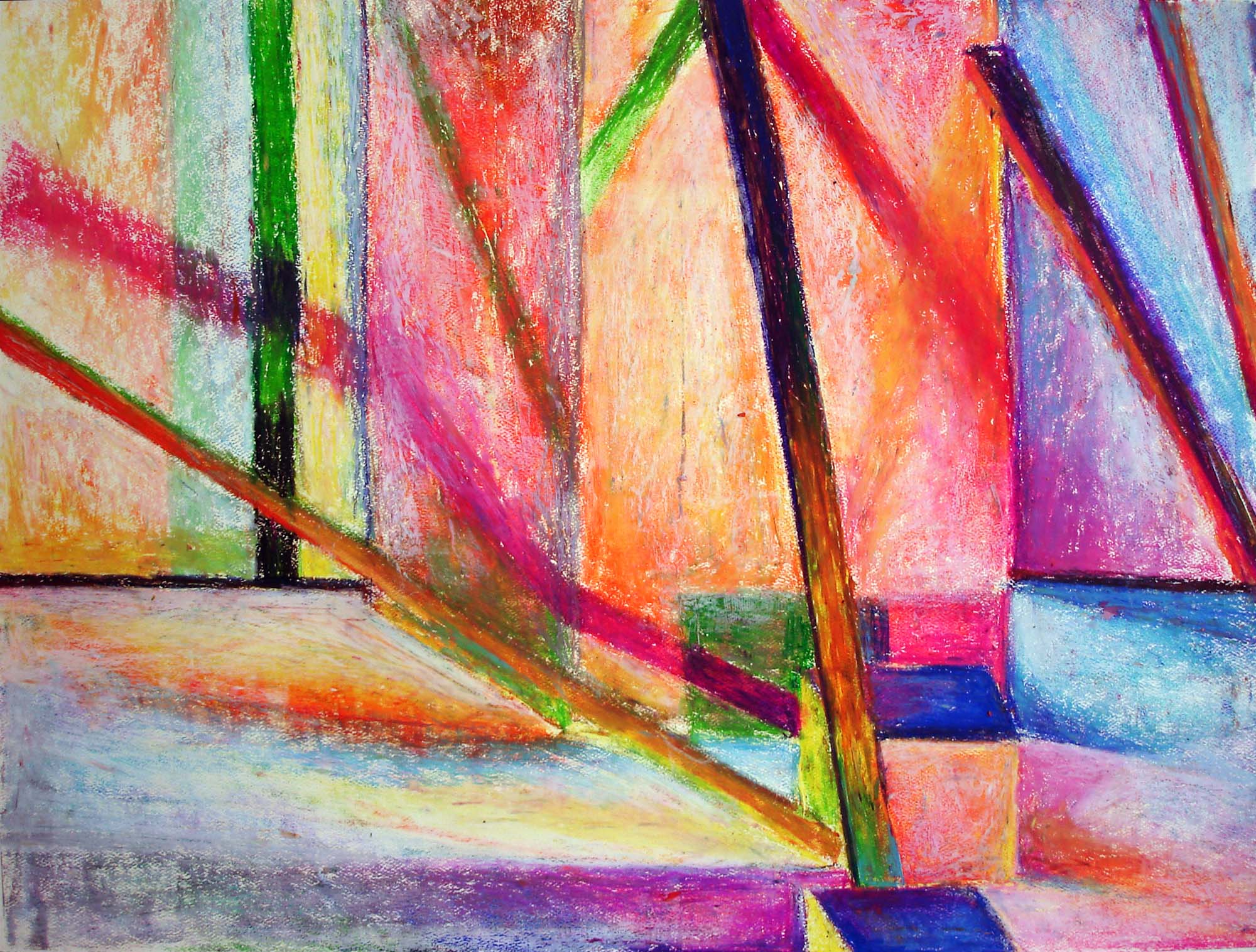
Carly Kurka working the chromatic shadows, 18 by 24 inches, oil pastel.

.

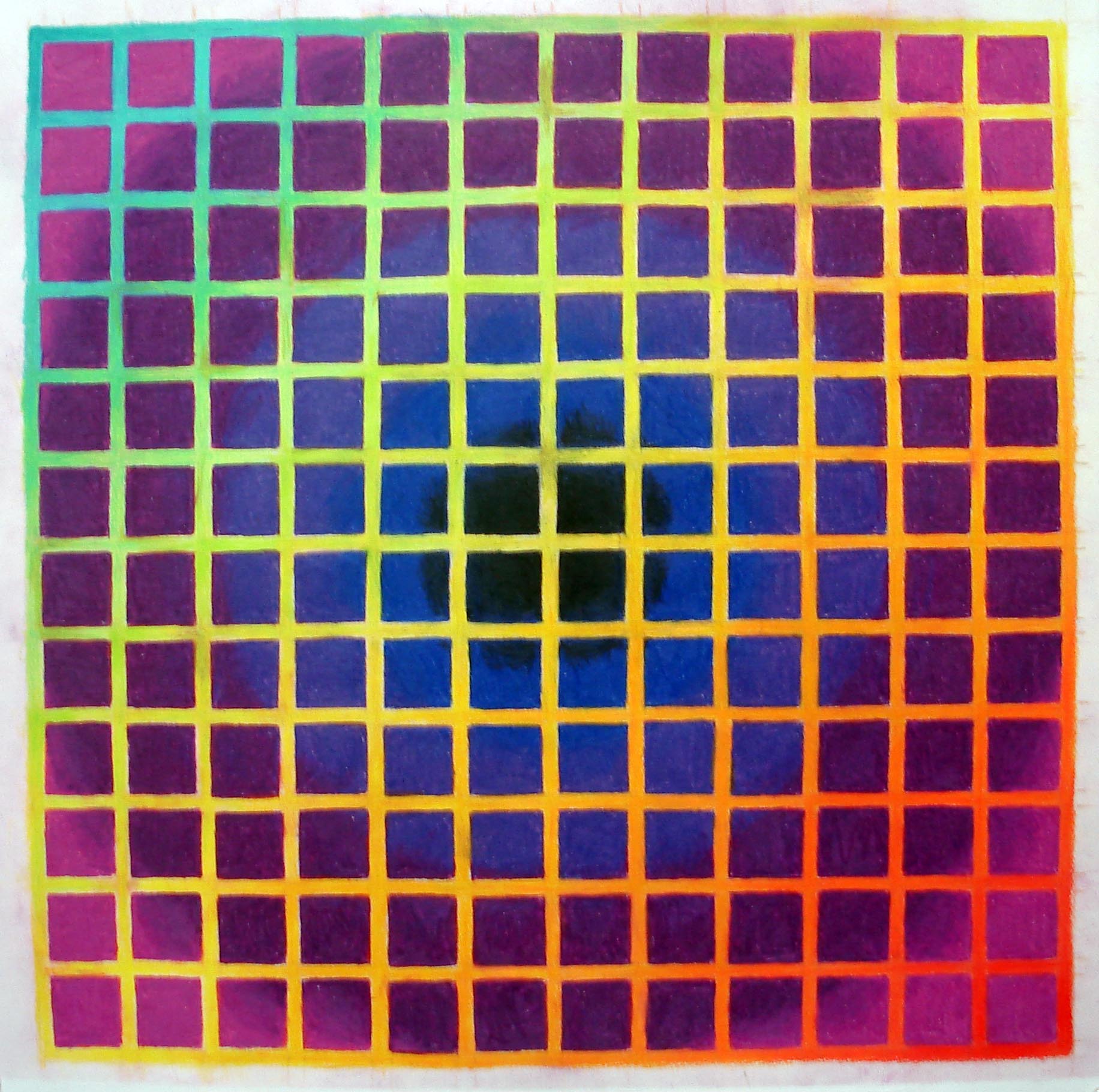
Becca Wholey’s grid work fulfilled the project parameters expertly – 16 by 16 inches, colored pencil.

It’s been a privilege to work with these students – here’s hoping they continue on with me in Color Drawing 2!

Inspiration – Richard Serra

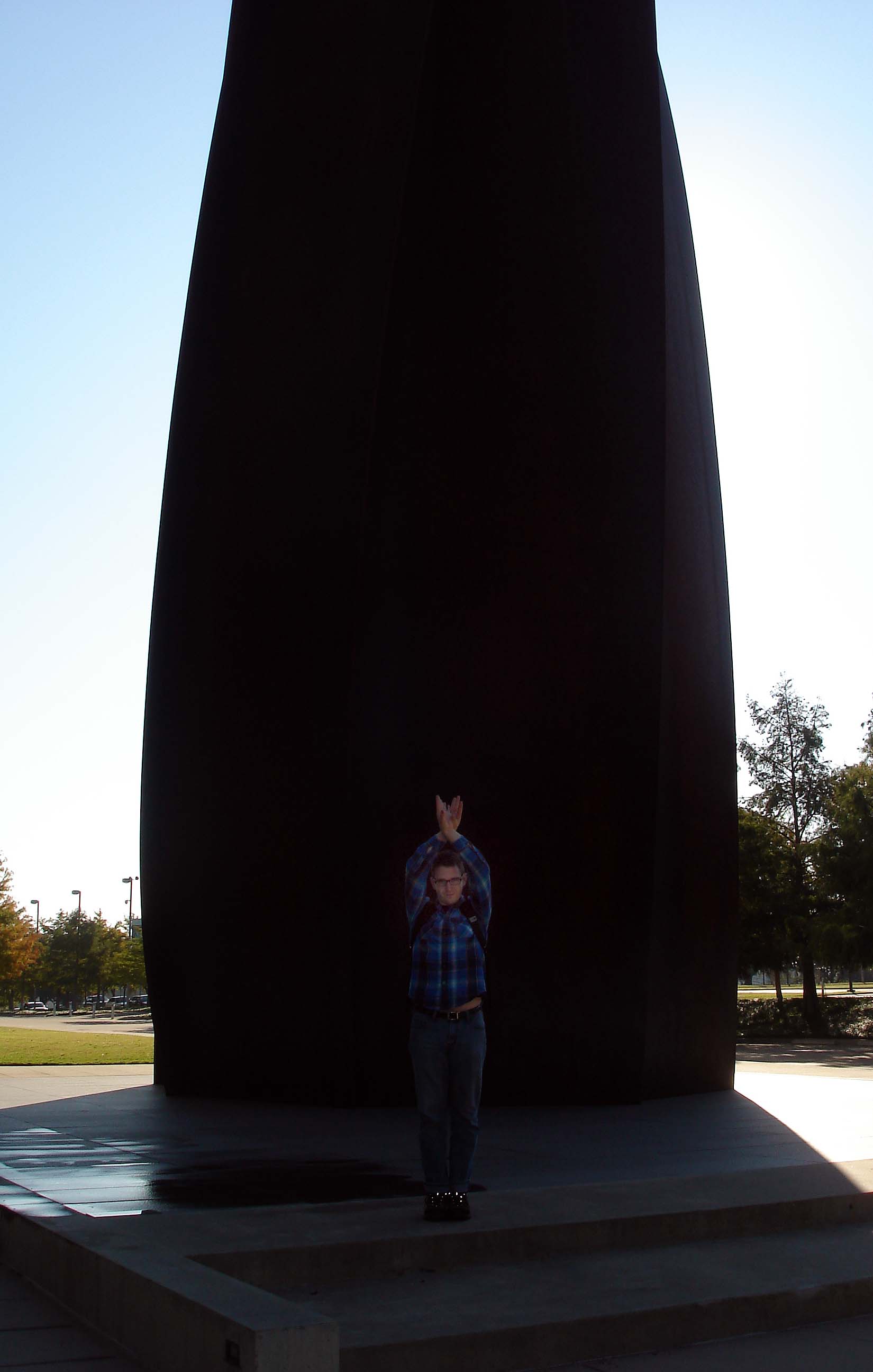
Just got back from a trip to Dallas/Fort Worth to visit the Diebenkorn Ocean Park retrospective at the Modern Art Museum of Fort Worth. It was stunning, and I’ll be writing my reflections on the show soon. But before we even got inside, we experienced one of the best Richard Serra sculpture I’ve ever seen. Below are some shots from my visit – I’m with one of my best students and friends, Marcus Miers.

Marcus at the base.

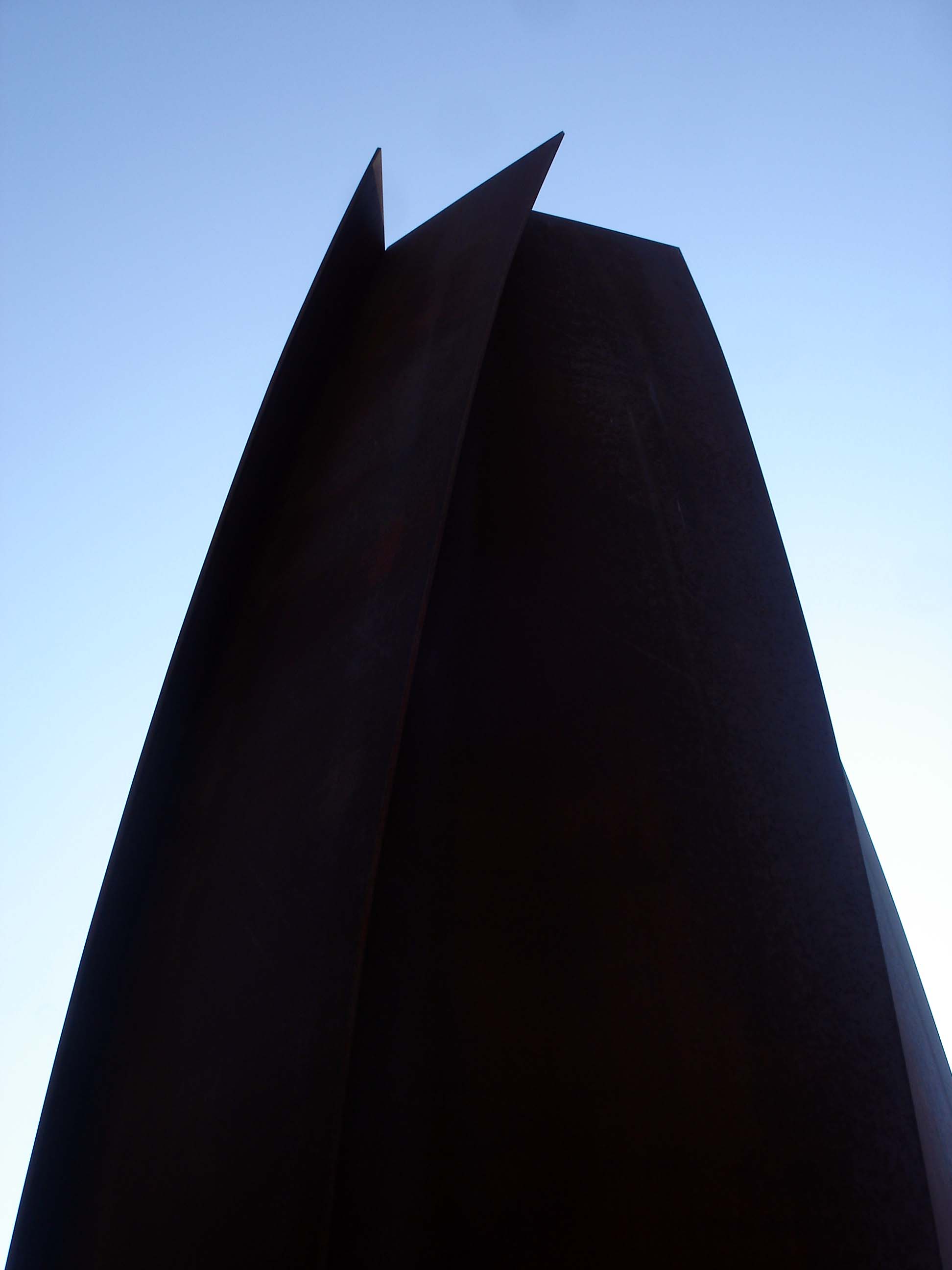
A shot of the cor-ten behemoth against the sky.

A spire of light wedging into the interior of the piece.

Gazing upward from within.

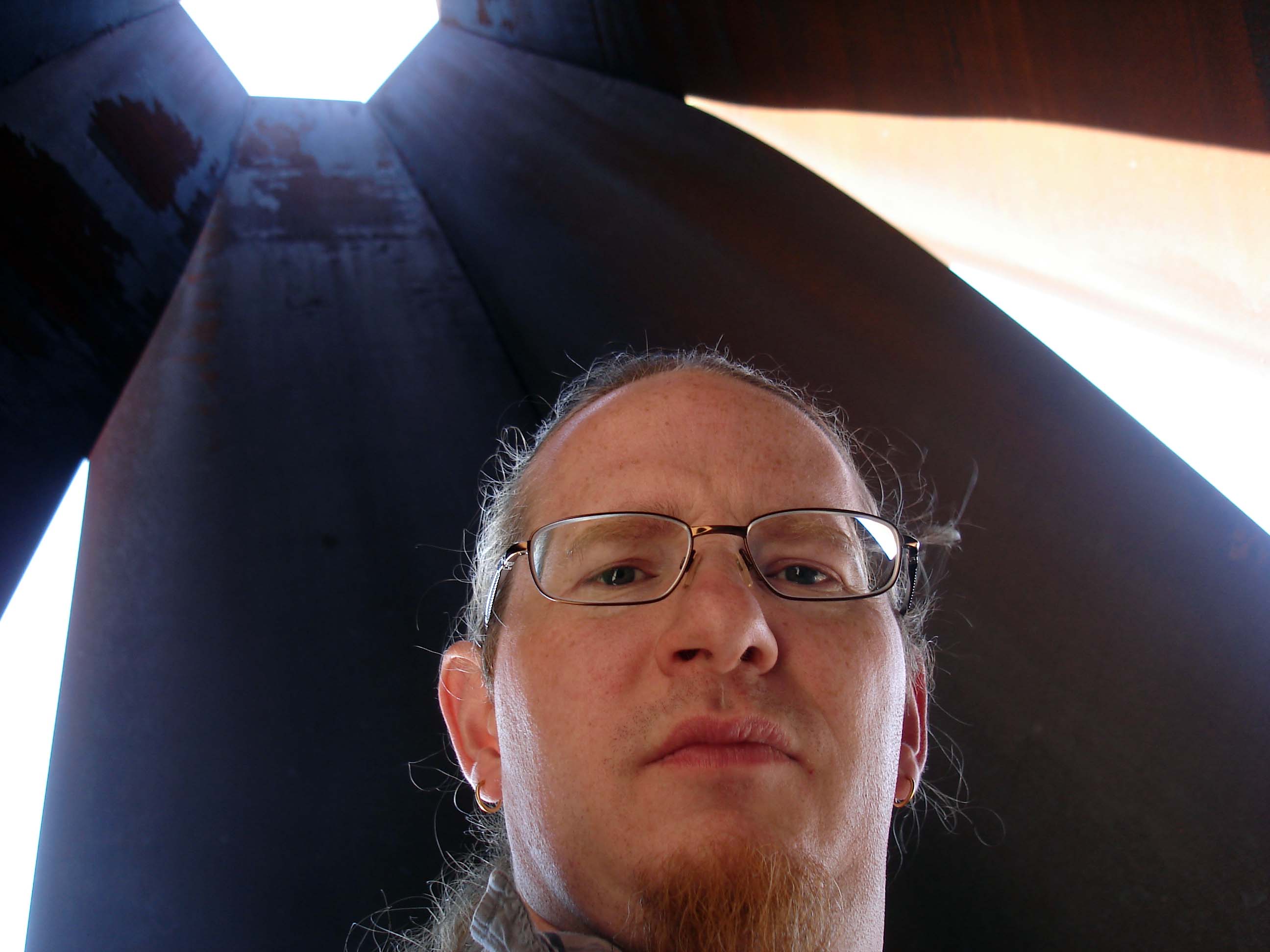
And here I am against the space and light.

Serra’s piece at MMA in Fort Worth is spectacularly aural in its manifestation. There is the quintessential feeling of massive heaviness, the sense of the density of the steel, the way the work shapes the space and the sky and the light within its parameters – but the sense of sound is truly unique. In most of Serra’s semi-enclosed works there is a kind of stillness to the air and the sound, a weightiness similar to the feeling of walking through a forest heavy with new-fallen snow. In this piece, however, the sound is fast and expansive, and every slight movement or sound is magnified and compressed within the interior space. What happens inside is heightened for those within, but people outside have their sense of the interior sound scape dampened. This inside and outside duality of sound is integral to the piece and makes the normally ominous quality of Serra’s steel more whimsical and lightly-felt.

Transient Geometries at Antelope Valley College

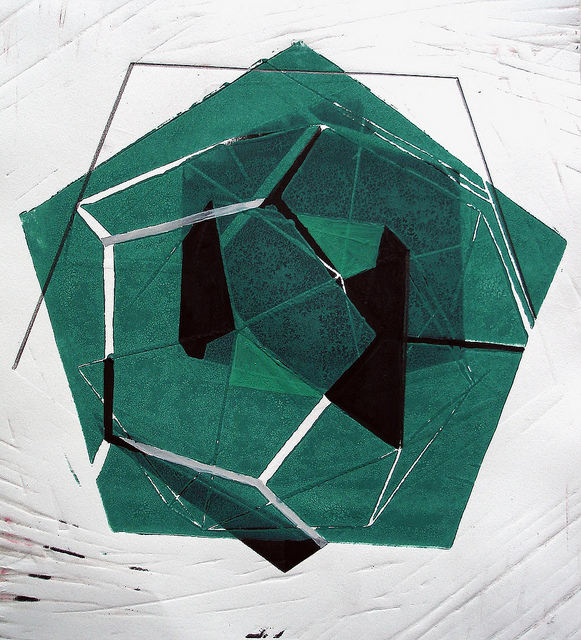
Quintessence #10, multiple monotype and woodblock prints, with acrylic, graphite and gouache on paper, 2009. Click to enlarge.

I’ve been included in a small group show at Antelope Valley College, which was organized and curated by AVC Professor Christine Mugnolo. I’m honored and excited by my fellow exhibitors: J. Jordan Bruns, David Eddington, and Lisa C. Soto. Click here for the AVC Gallery page describing the show!

Full disclosure: I went to grad school with Christine and she was the subject of one of the shows I worked with Gillock Gallery to organize back in 2006. I wrote an essay about Christine’s drawings and Gillock published a small catalog for the exhibition containing the text and a selection of her work. I’m really proud of that entire project and hope you’ll take a look here.

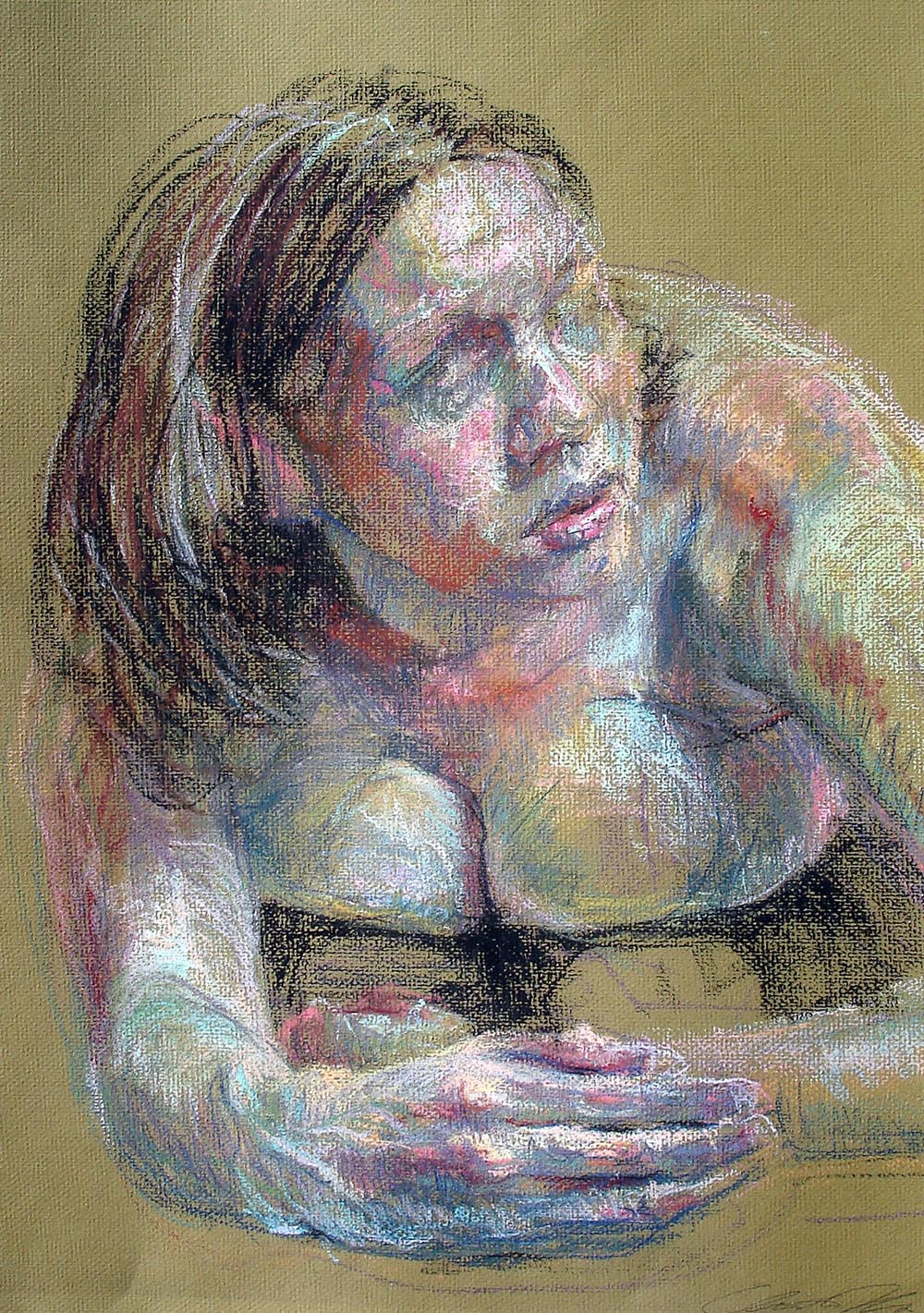
Here’s one of the drawings from the show – Self Portrait on Olive Ground, Pastel on toned paper, 24 by 18 inches. Click to enlarge.

Two New Books

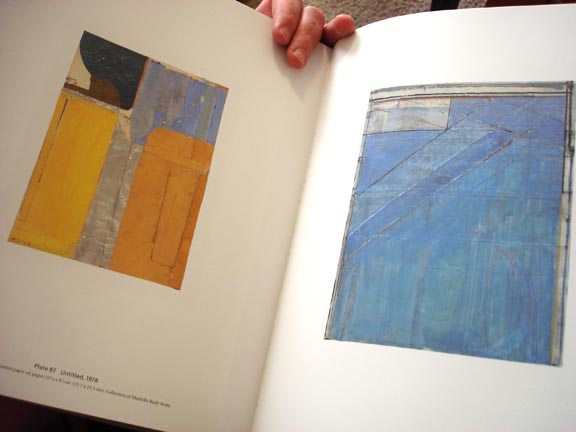
First off, I received my new Diebenkorn book this week. Richard Diebenkorn: The Ocean Park Series is lush (in design), expansive (it contains many reproductions), and – best of all – it’s full of never before seen (in broadly-published form) paintings, prints and drawings. I’m doubly charged up by this book since I (and one of my students, Marcus Miers) are heading down to Fort Worth to see the Diebenkorn show next week!

Also, my own slim tome – 62 pages, 9 essays – just came out, published by Neoteric Art in Chicago.

It’s available in standard paperback version and in an ereader version. It should be up on Amazon in a few weeks as well.

A Submission to Delights

“A constant comfort of that place – apart from the foliage, springing paths, and multitude other charms – was my mug. Handcrafted and ergonomic, it felt then as it does now: a real weight in the hand – substantial, truthful. It declares by its heft the worth of what it holds. It is heat, a vessel security blanket, a confirmation of time. And of course I carry the time with me physically even now as I use the mug emblazoned with the O and the X (hugs and kisses from the past to the future) almost every day. It reminds me of 2am munchie runs and awesome weekend breakfasts, of wind swept evenings and overcast middays. Its circle pleases me and my mouth conforms to it easily – a submission to delights.” – from A Mnemonic of Longing, an unpublished essay, 2002-2009.

On nights like these – remembering Ox-Bow and my mug of that time – I think also of drinking port with Lex up the slope behind the Inn. One late afternoon, both of us moving toward that state of mellow so frequently found that summer, we debated art and ideas. I had my prized Odd Nerdrum book with me and, in a sequence of events not without mystery and malevolence, the tome found itself flipped off the deck and down the hillside. I keep the book broken away from its cover to this day in remembrance of my time with Alex.

Photo: My second Ox-Bow mug today. I got this mug at the same time as the one I speak about in the text above, but that first mug – my primary mug, the one that I had used every day for two years – was stolen from my workplace in 2003. Now I keep the second mug as a commemoration and never drink from it. Both mugs were made by Becky Wehmer, long time Ox-Bow-luminary and an artist/educator at Waterstreet Glassworks.

Inspiration – Oscar Wilde

“The public make use of the classics of a country as a means of checking the progress of Art. They degrade the classics into authorities. They use them as bludgeons for preventing the free expression of Beauty in new forms. They are always asking a writer why he does not write like somebody else, or a painter why he does not paint like somebody else, quite oblivious of the fact that if either of them did anything of the kind he would cease to be an artist. A fresh mode of Beauty is absolutely distasteful to them, and whenever it appears they get so angry and bewildered that they always use two stupid expressions—one is that the work of art is grossly unintelligible; the other, that the work of art is grossly immoral. What they mean by these words seems to me to be this. When they say a work is grossly unintelligible, they mean that the artist has said or made a beautiful thing that is new; when they describe a work as grossly immoral, they mean that the artist has said or made a beautiful thing that is true.” – Oscar Wilde, (from this New Yorker article)

Though I don’t believe in “newness” or “originality” I resonate with what Wilde is saying here. What we consider new or original is really just a recombination of the elements and assumptions that underlie our experience and expression of being into a form that is somewhat removed from our well-worn paths of knowing. We are uncomfortable with this reconfiguration, this reconstitution, and so we react by calling it unintelligible or immoral, as Wilde observed. I think Wilde’s greatest contribution is in his knowing and deft agitation of our assumptions about what we know, his precise jostling of our convictions of certainty. He is one of the few artists whose work I seamlessly love.

One of my fondest memories of experiencing Wilde is related to seeing the Tom Stoppard play “The Invention of Love” at the Court Theater of the University of Chicago with my wife and father in law several years ago. In it Wilde makes a striking appearance with the main character of the play A.E. Housman, on the shore of the river Styx. His teeth blackened, condemned by law and society, Wilde is an exuberant yet melancholic figure in death. Still dapper and spouting axioms, dressed in lilac and reading from his own work as Housman comes upon him in the afterlife, Stoppard’s Wilde is a revelation. The scene catalyzed my appreciation for Wilde, so I guess I have Stoppard to thank for that. Here’s a review of the play if you’re interested.