LEGO Sculptures on display

Thirty-four of my LEGO sculptures, created 2010-2017, are on display at the George Caleb Bingham Gallery at the University of Missouri right now. These include five bronze pieces as well.

Since I was a child, LEGOs have been a staple in my creative habits. Often, when I am met with some creative block, when I am disillusioned, or when I simply need a change, LEGOs are my go-to outlet. They offer a kind of open-ended opportunity to make things without any conceits or justifications. Usually, at least for me, this kind of building amounts to a formal exercise within certain boundaries. After all, LEGOs are a finite tool. They have limited application and range. In spite of this, however, they allow for many hours of engagement and a diversity of resolution. LEGOs really are a creative partner in my life.


Over the last 10 years or so I’ve been interested in a number of practitioners of contemporary sculpture and their work has influenced how I have played with my LEGOs. First and foremost is Vincent Fecteau, who crafts strange, small sculptures that exhibit a wonderful sense of hidden interior space. Additionally, Barry Le Va’s dark and geometric wall and floor installations (and the awesome drawings for those installations) are also important to me. Didier Vermeiren’s solemn, dense sculptural works manifest a kind of austerity and clarity that challenges me. These artists (among many others) inspire me to play with associations of form and color, as well as with the implications of scale. Fecteau in particular has strongly influenced all of my work over the last 6 or 8 years. 

The sculptures collected here, both those made of standard LEGOs and those crafted in bronze, are meant to function like poems of form: slight, strange, awkward, yet solid in a sense. In them I have gone through an iterative process of placement and association. In my mind, it’s all shape dynamics and formal play. These miniatures have stimulated my paintings, drawings, and prints for a long time. At this point I see them as part of my overall work, though definitely a part that’s still in development.

What I’ve been musing on recently

I’ve been thinking about overtly shifting the direction of my work for a while now – perhaps a year. I don’t know that this shift would be easily discernible from the outside, but it represents a significant change of focus for me. As I look back over the last year of my practice and then cross-reference what I’m seeing there with some of the artists and artworks I’ve been looking at during that time, I can really see some connections forming.

For instance, check out these recent pieces:

The Teachers, Mandala for the Murky History of Beginnings and Endings #1, Portrait of Miranda at Thirteen Months, Two Bells, and The Seedbed #1.

Then compare their compositional formatting with aspects of the works of artists I’m looking at here:

Richard Diebenkorn, Miyoko Ito, Barry Le Va, Nicholas Byrne, David Rabinowitch, Julian Stanczak, Bernd and Hilla Becher, Marcelo Bonevardi, Frank Nitsche, Sharon Butler, and Vincent Fecteau.

It seems to me that my previous forays into more formal explorations – such as with the Locus Series (book here), and the conceptually interconnected Quintessence Series and Dodecahedron Series – are becoming more and more deeply apparent in my main body of work. In some ways I’m finding myself less drawn to the figure as a necessity and more drawn to the composition itself. I’m deeply interested in the perception of formal dynamics and the sense of haptic maneuvering that can take place within two-dimensional forces.

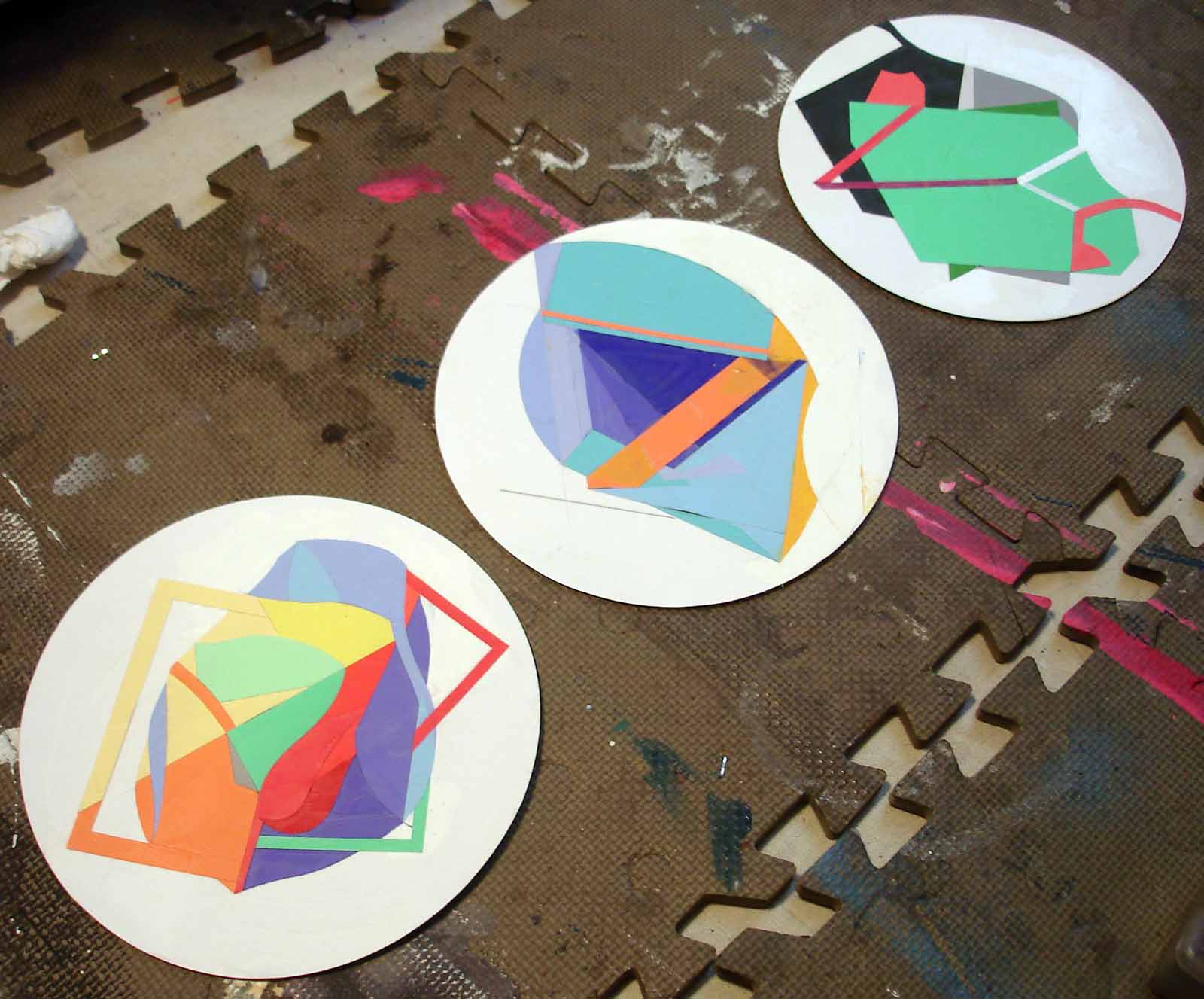
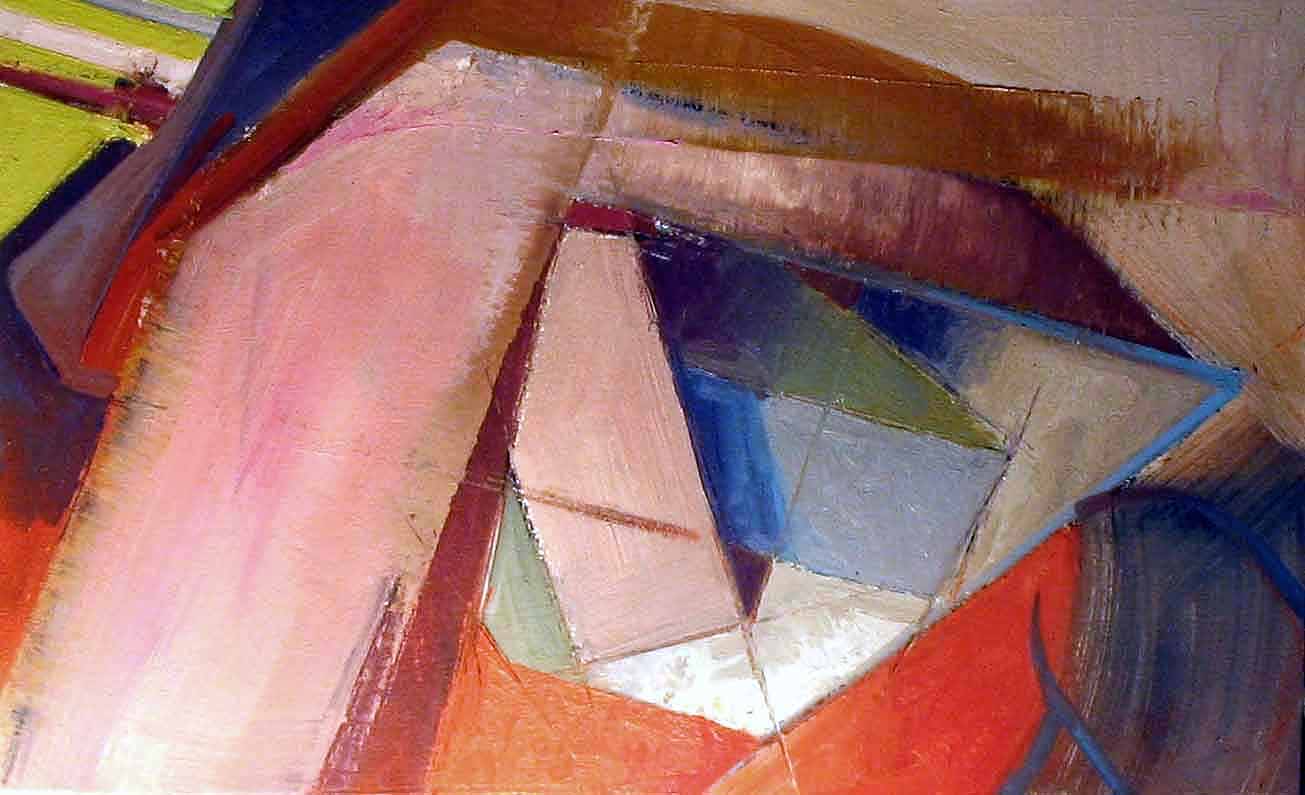
So it is that my recent miniseries, three of which are shown above in progress (9 inches in diameter, collage, gouache, acrylic and graphite on paper), have come about. They call back to previous works, such as this one from 2005, which was part of a side project I did while finishing up grad school (I needed a break from my thesis paintings):

First Bend, Oil on Canvas on Panel, 14 by 23 inches, 2005. Destroyed. Click to enlarge.

Anyway, who knows? We’re all moved and pressed and pushed, often by things we don’t entirely recognize. That’s why painting is so much more like getting lost in the woods than it is like jumping in a car and driving to the store for milk. It’s not meant to be that simple.

If it were that way there would be no discovery, no evocation beyond what we already know… and what good would that be?

Some Interesting Sculpture

Michael Johansson

Vincent Fecteau

Didier Vermeiren and here…

Barry Le Va

I think this (and some other stuff) has been influencing me in various ways…

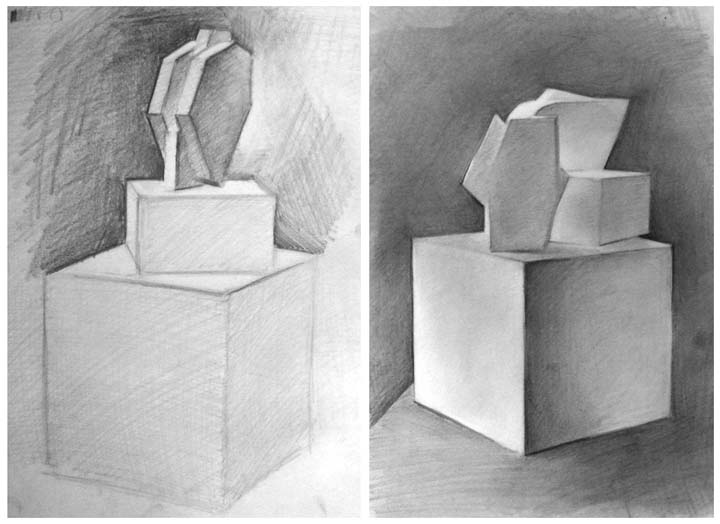
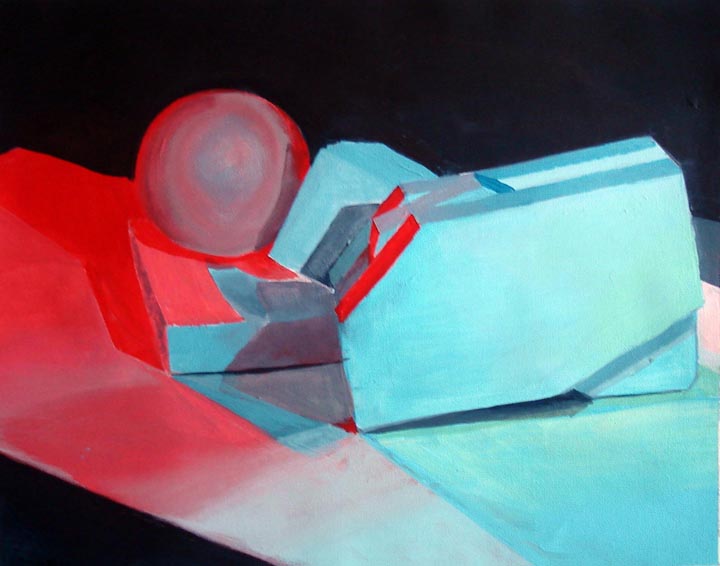
In the forms I make for students to work from (drawing above, painting below)…

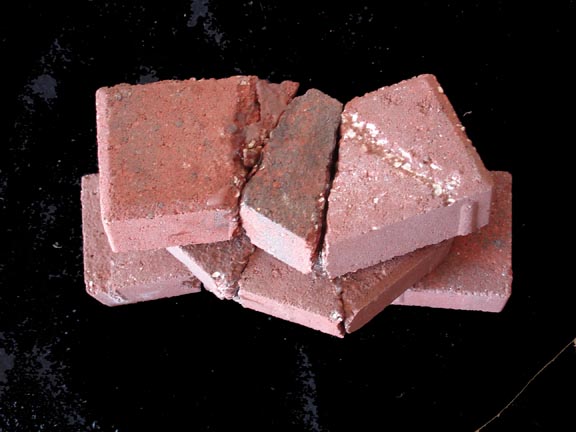
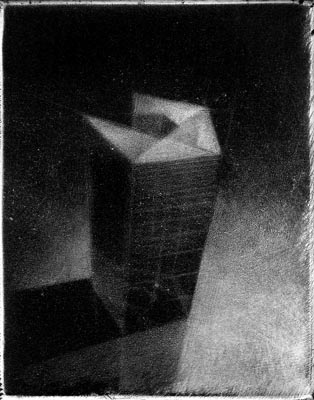
…and in the forms that make their way into my own work. Below, an experimental brick-based sculpture and a mezzotint featuring an invented pentagonally-based structure.