“At the time that I made The Devils, I was a devout Catholic, and secure in my faith. I knew I wasn’t making a pornographic film. Far from it. In fact, the movie had the blessing of the Jesuits. Even to this day it is still taught at Loyola University in Chicago as a good Catholic movie. For myself, although I am not a political creature, I always viewed The Devils as my one political film. To me, it was about brainwashing, about the state taking over. It is based entirely upon John Whiting’s play The Devils, and upon the writings of Aldous Huxley. Huxley was by no means a sensationalist – he was a historian of some note.
According to Huxley’s The Devils of Loudun, in 17th-century France there was a crisis caused by the desire of Cardinal Richelieu, the king, and their cohorts to pull down the walls of the city of Loudun. This would render Loudun defenseless, so it wouldn’t be a threat to the crown or the church. The same had already happened to other cities, with the result that they subsequently had to concede to every indignity and injustice imposed upon them. The people of the town felt that as long as the walls of Loudun were standing, then they could defend themselves.”
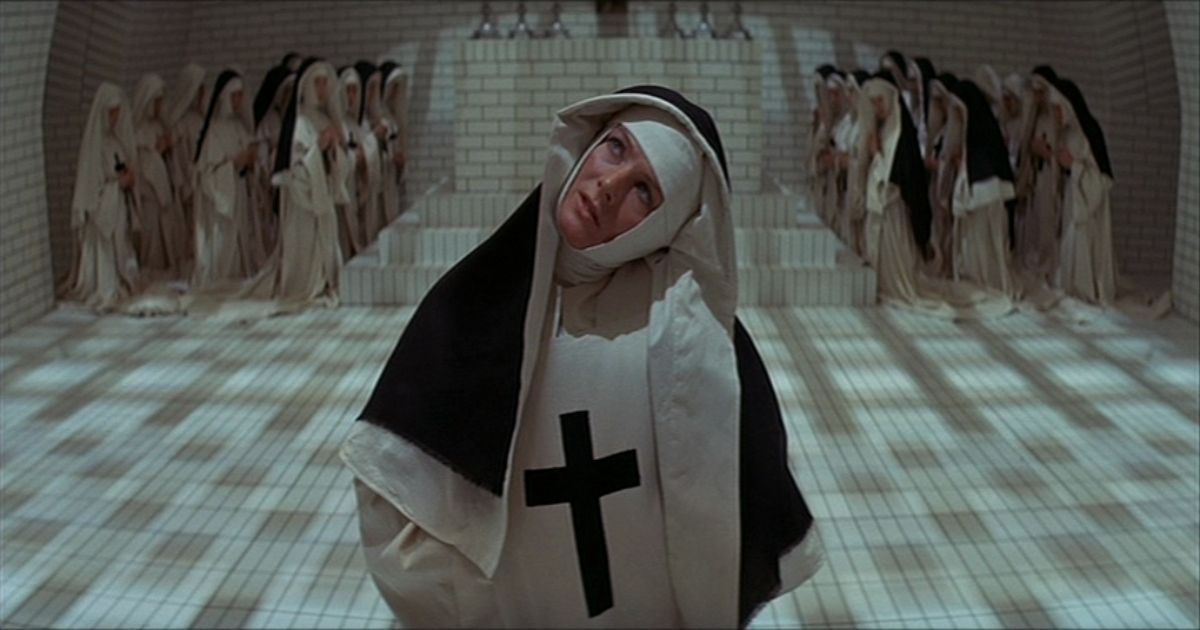
The Devils, a controversial film that came out in 1971, is an expression now 55 years old, yet it is perfectly tuned for the moment in which we find ourselves today.
The movie details a period beginning around 1629 and culminating in 1634 when a religious insanity overtook a group of nuns – and eventually the entire French town of Loudun. Not only an amazing document of dramatic creativity, technical nuance, and not a little bit of performative “chewing the scenery,” the film is also perfect for America right now. It speaks to the exact trends and issues going on in the West generally, but in America specifically.
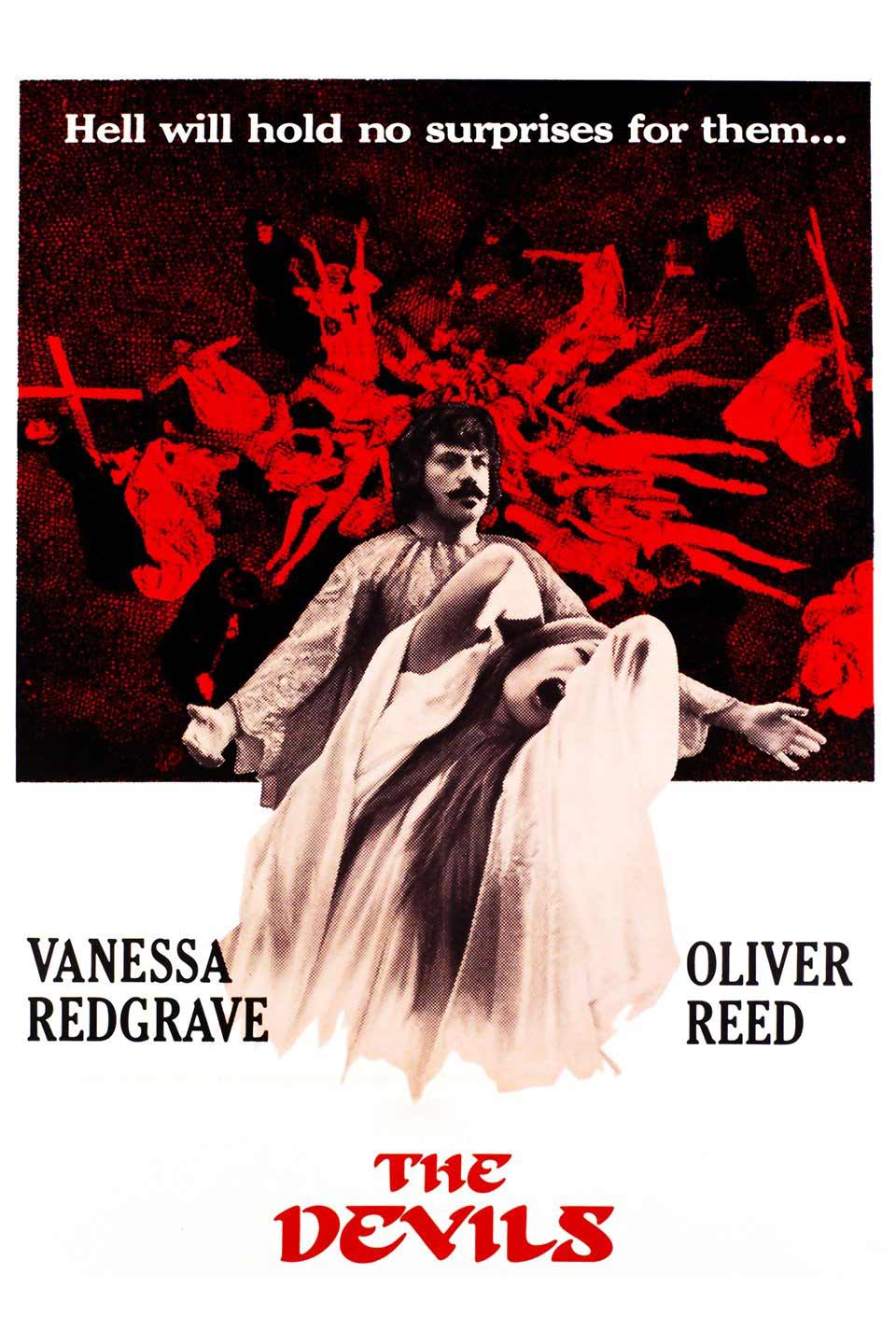
Anchored by incredible performances from Vanessa Redgrave and Oliver Reed (as well as a wonderful cast of supporting characters), the film explores religious insanity and the ways in which the lust for power and political expedience can often be couched in the language of faith. It also demonstrates the ways in which religious thinking is magical thinking, as well as how the imaginary world of “devils” and “evil” can displace (and even destroy) practical systems of governance and social fabric.
With symmetry and visually visceral themes that must have inspired Alejandro Jodorowsky‘s The Holy Mountain (1973) and Santa Sangre (1989) respectively, The Devils is filled with imagery and language that highlights the tension between social complexity and aesthetic contrast. There’s a sense in which the entire structure of the movie is about the play between a complex and ever-reinterpreted social contract and the black-and-white thinking that dominates the performance of dogma. When politics gets connected to those fraught poles, something has to break. We’ve seen it over and over again… and that’s one of the reasons the Founding Fathers of America tried to forever separate church and state. They knew the lessons of history in ways we don’t seem to recall today. Indeed, at almost the same time as “devils” were found in Loudun they were present on our own continent, to just as bitter ends. Some instincts die hard.
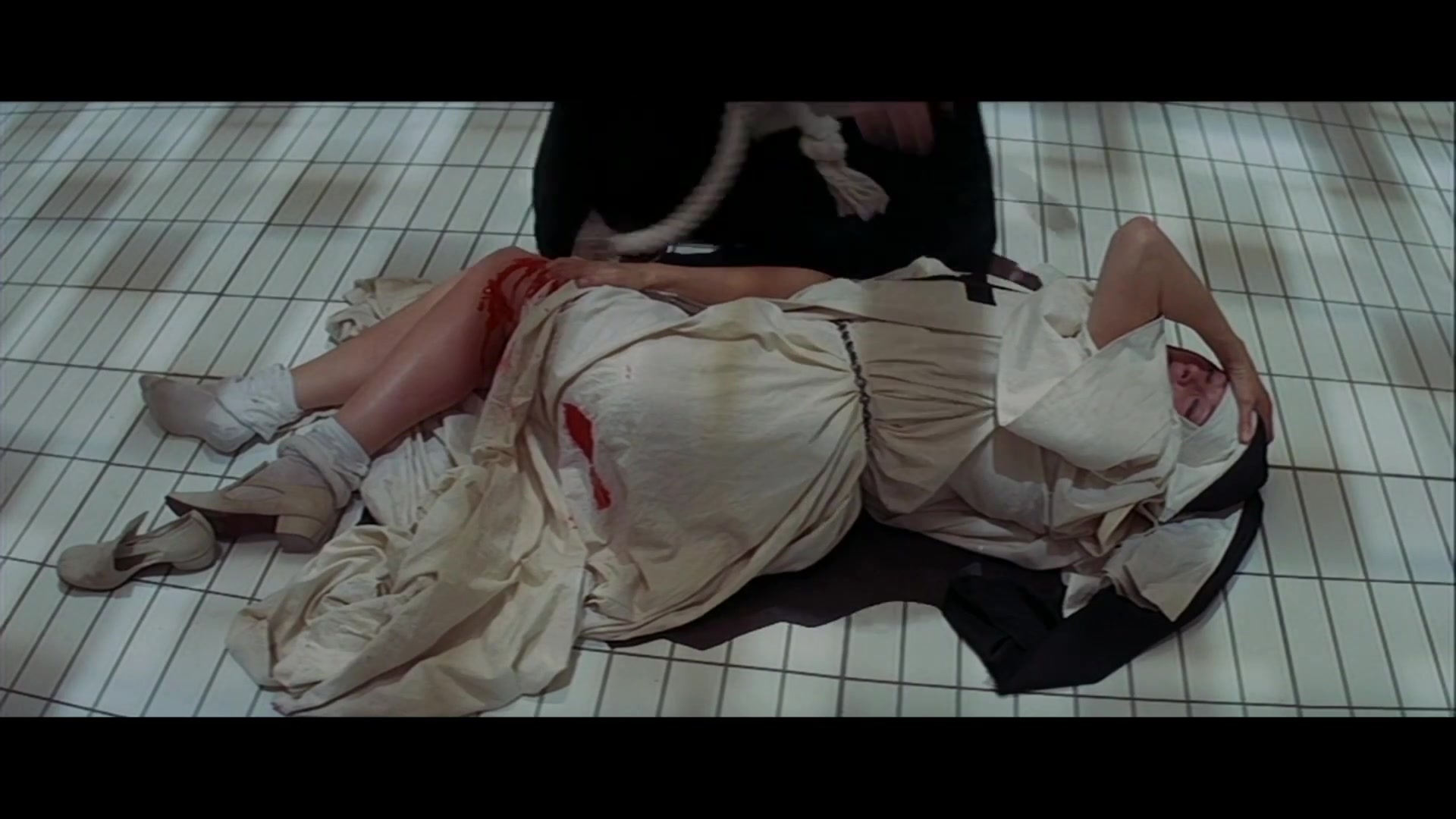
This movie is not for the faint of heart. People who have experienced violence – sexual or otherwise – or any kind of physical trauma, should probably steer clear or view the visuals available online (such as fancaps.net) to see if they want to subject themselves to the movie itself. Interestingly, in spite of its intense imagery, perhaps the most violent events are kept off screen or slightly hidden by a hand, fabric, or structure.
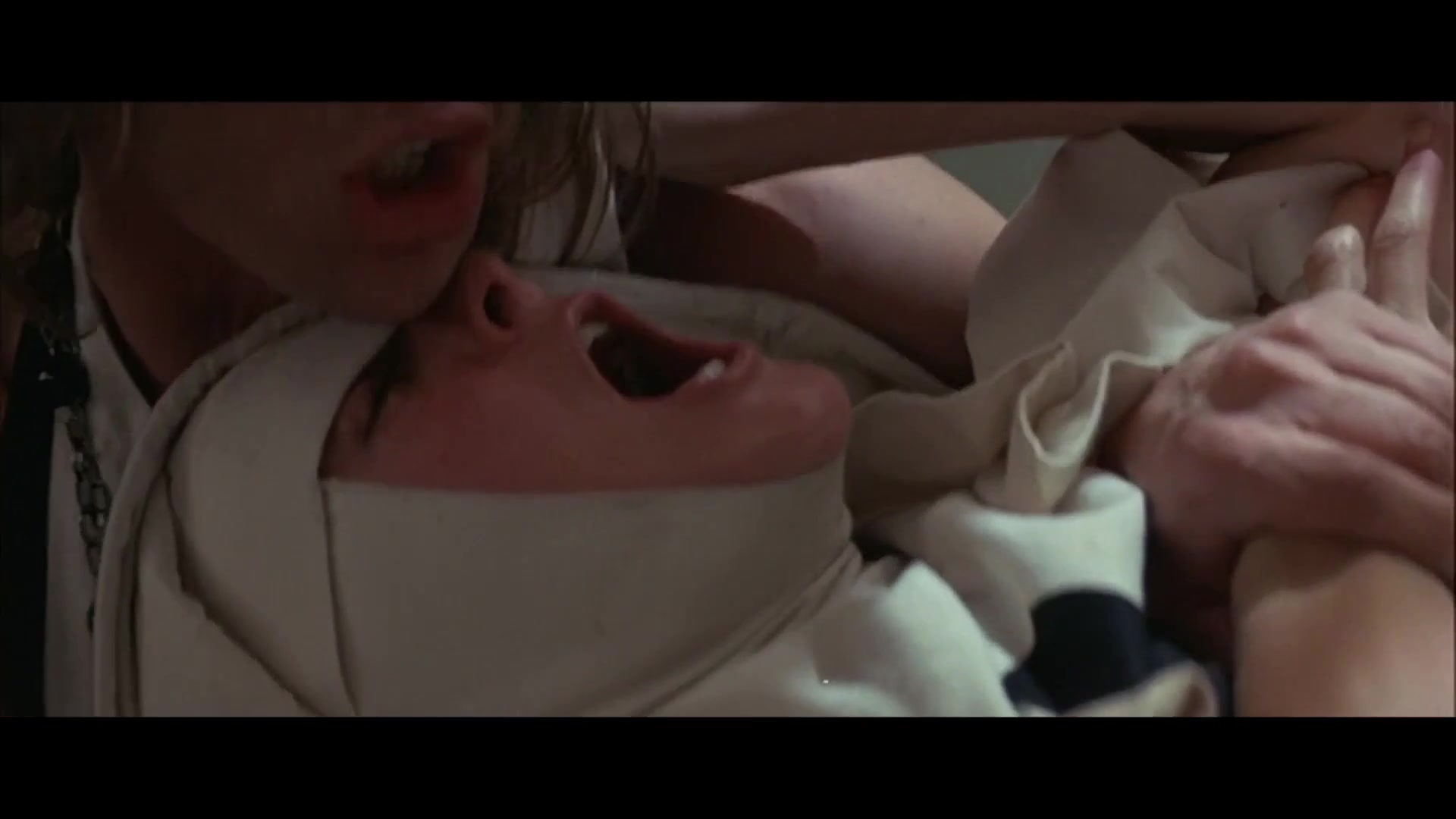
Oliver Reed’s performance as Father Urbain Grandier is, in part, a reputational rehabilitation. In the same way that Mel Gibson valorized William Wallace, stylizing him as primarily an inspiration for “FREEDOM!!” Ken Russell does something similar for Grandier in his film. Certainly, Urbain Grandier was a complex and flawed individual. In the movie we go from despising him, to almost respecting him, to practically cheering for him at the end. In this narrative arc, there’s an inversion taking place between the two main characters of Urbain and Mother Superior Jeanne des Anges. On the one hand is the sensual, secularized priest who is motivated by his own sexual and political power. On the other hand is a nun who has devoted herself to the service to God but who is hounded by her own sexuality and by the deformity of her own body. These two characters form the crux of the narrative. The film creates a connection between her deformity and malformed lust for Grandier and his transformation from womanizer to dedicated husband.
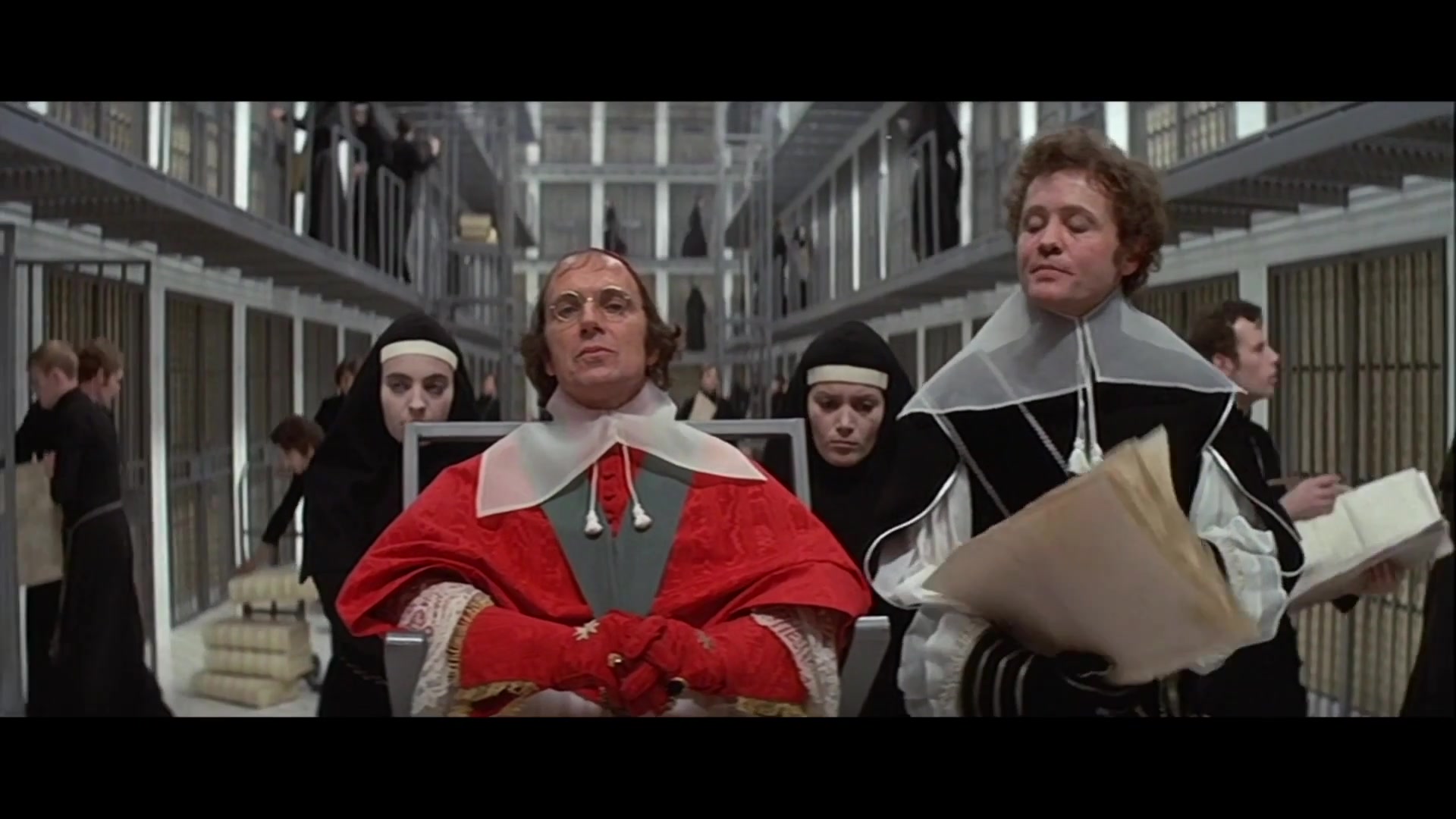
The monumental quality of the filmmaking here calls to mind the grand epics of Hollywood past and future. One might see how Nolan wishes he could craft a work of historical referent of similar power. Or, conversely, how Spielberg answered the challenge with his own takes on history, psycho-drama, and technical wizardry.
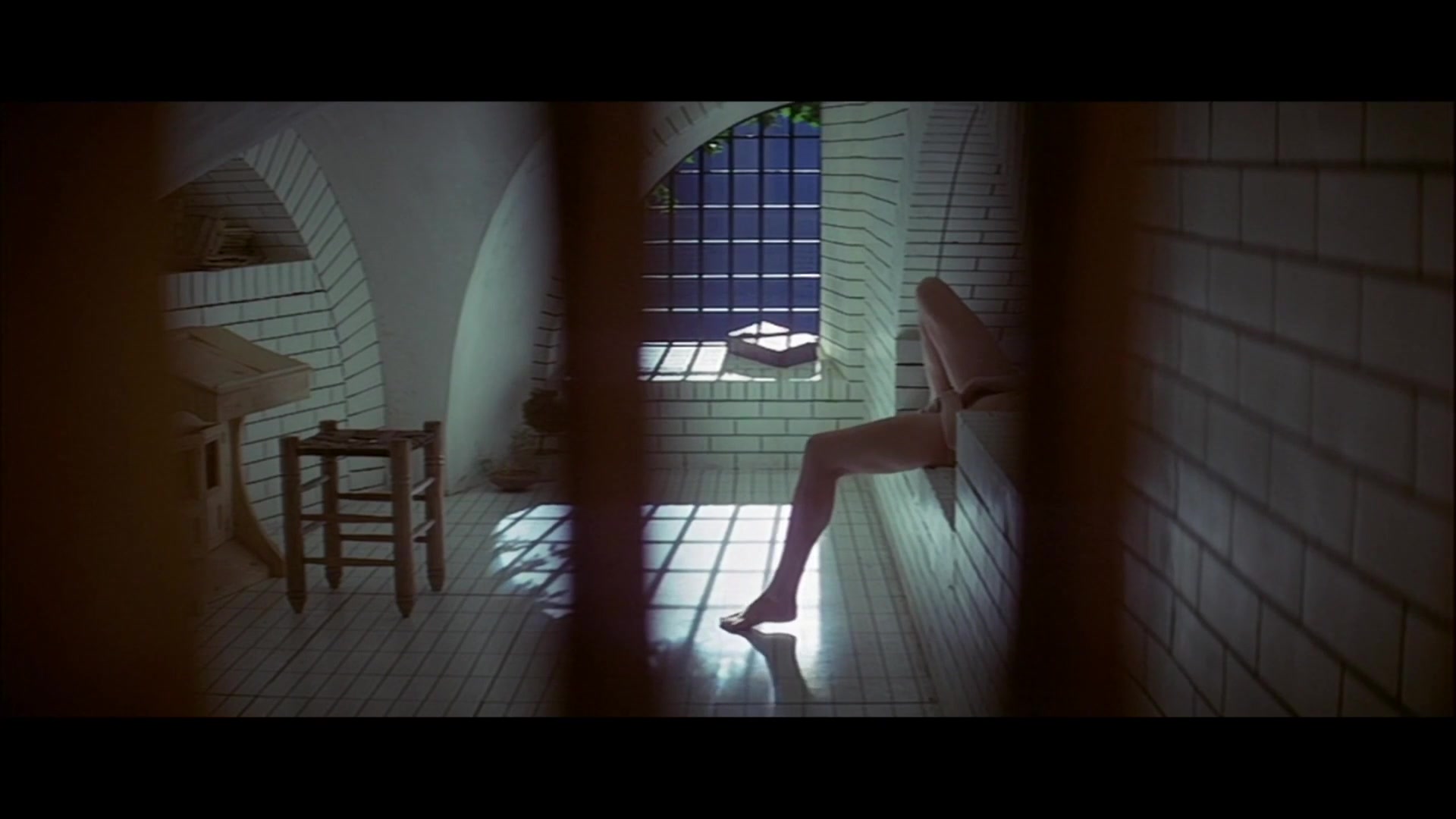
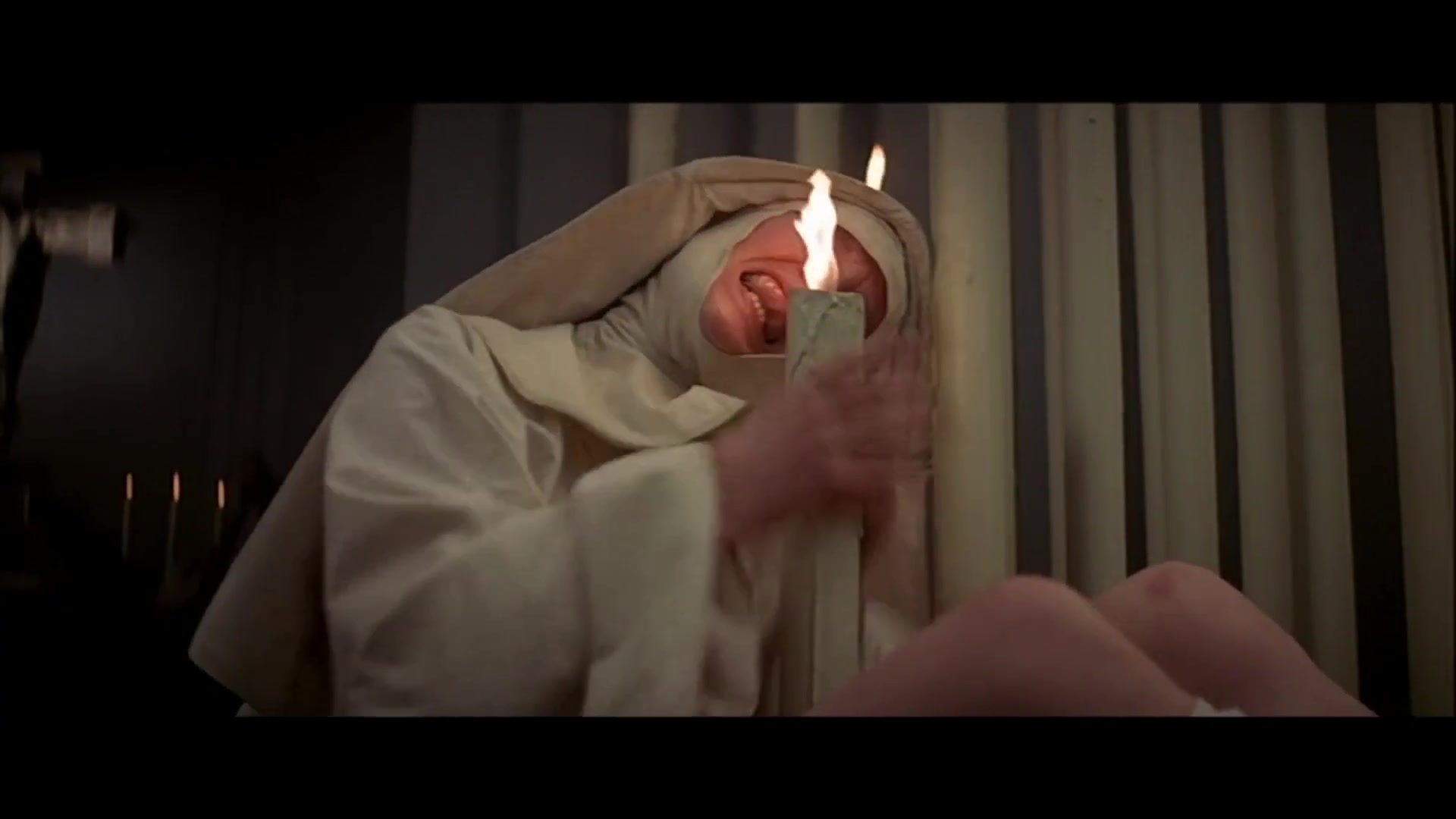
For me, the aesthetic choices – the whiteness, the blackness, the curvilinear and angular choices – are what sets Russell’s attempt apart. The sheer massiveness of the Loudun walls contrasts with the cramped interiority of some of the nunnery cells. There’s a strange geometry at play – in the cathedral and Grandier’s chambers as well as in the structure of the nuns cloister.
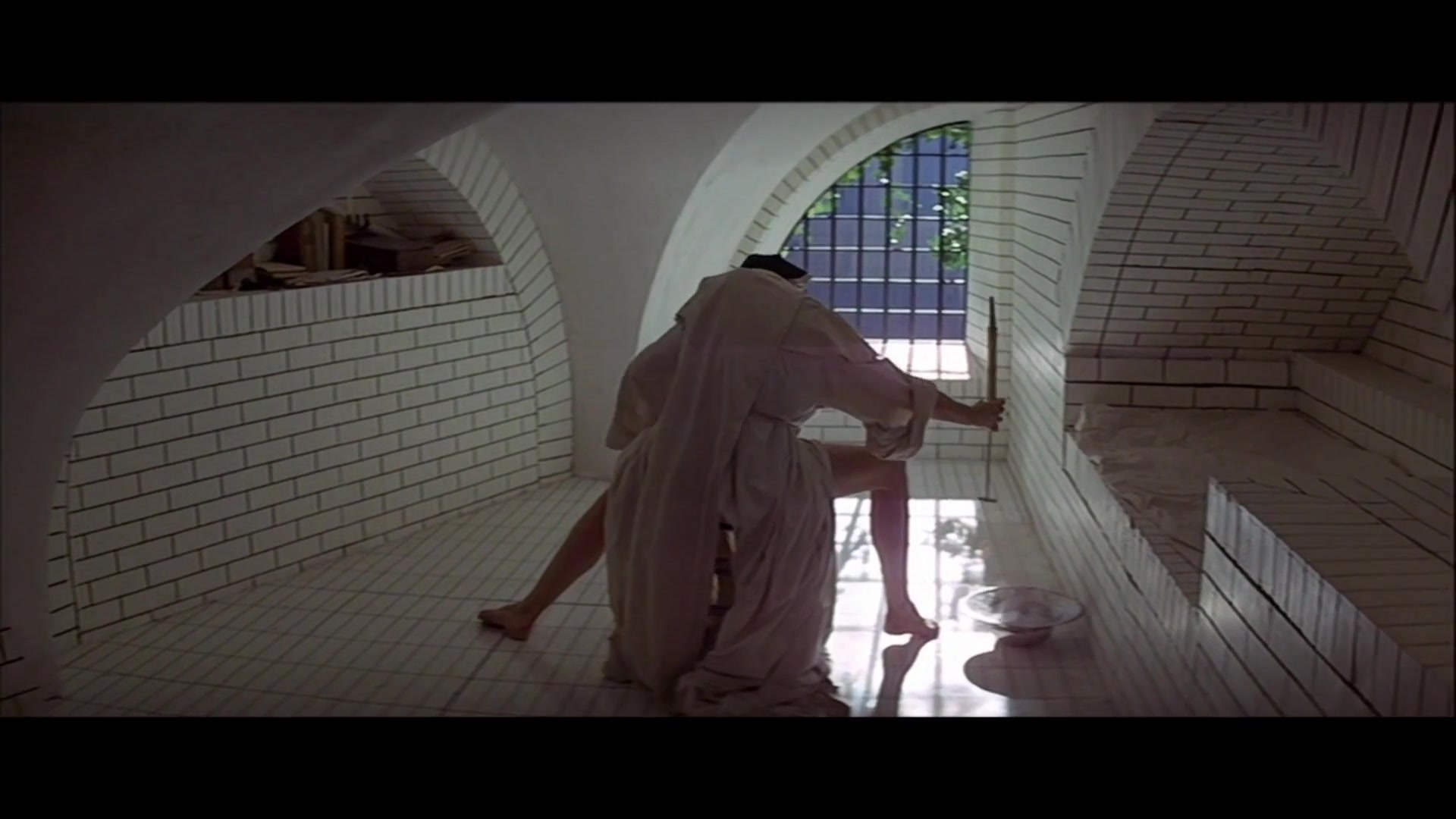
I won’t spoil the story for you. It would be easy to post images of the debauchery, the church-and-state-sanctioned torture, or the epically-scaled destruction. But you have to choose to see it yourself. It’s beautiful, strange, challenging, and hard… but it is also deeply human. This is a film about who we are. It is intimately connected to how we’ve tried to understand ourselves. And it’s a critique and an indictment. Even today we allow ourselves to be divided over assumption, over dogma, over instinct and blind lust. Even though we know better, and have created systems to help us know better, we fail to follow the “better angels of our nature.”
One final thought: contemporary consciousness theory has impact here. There are thinkers in this area (pioneered by Julian Jaynes) who believe that people in fairly recent centuries did not consider all of the things they thought, dreamed, or imagined as coming from their own mind. Jaynes in particular thought that before circa 1000 CE, most people “were not conscious of their own thoughts… and that stories about gods speaking to people originated from people hearing their own inner voices and mistaking them for the voices of external deities telling them what to do.”
If we entertain this idea, then allow it to dovetail with the known power of religious thinking – not to mention social and familial pressures – it is easy to see how magical thinking, mental illness, and religious fervor could coalesce into the kinds of events we see in the historical background of The Devils of Loudun or The Salem Witch Trials. In so many ways we are captive to the adaptive biological constraints that both gave us the modern world and trap us in tribal and fearful thinking.
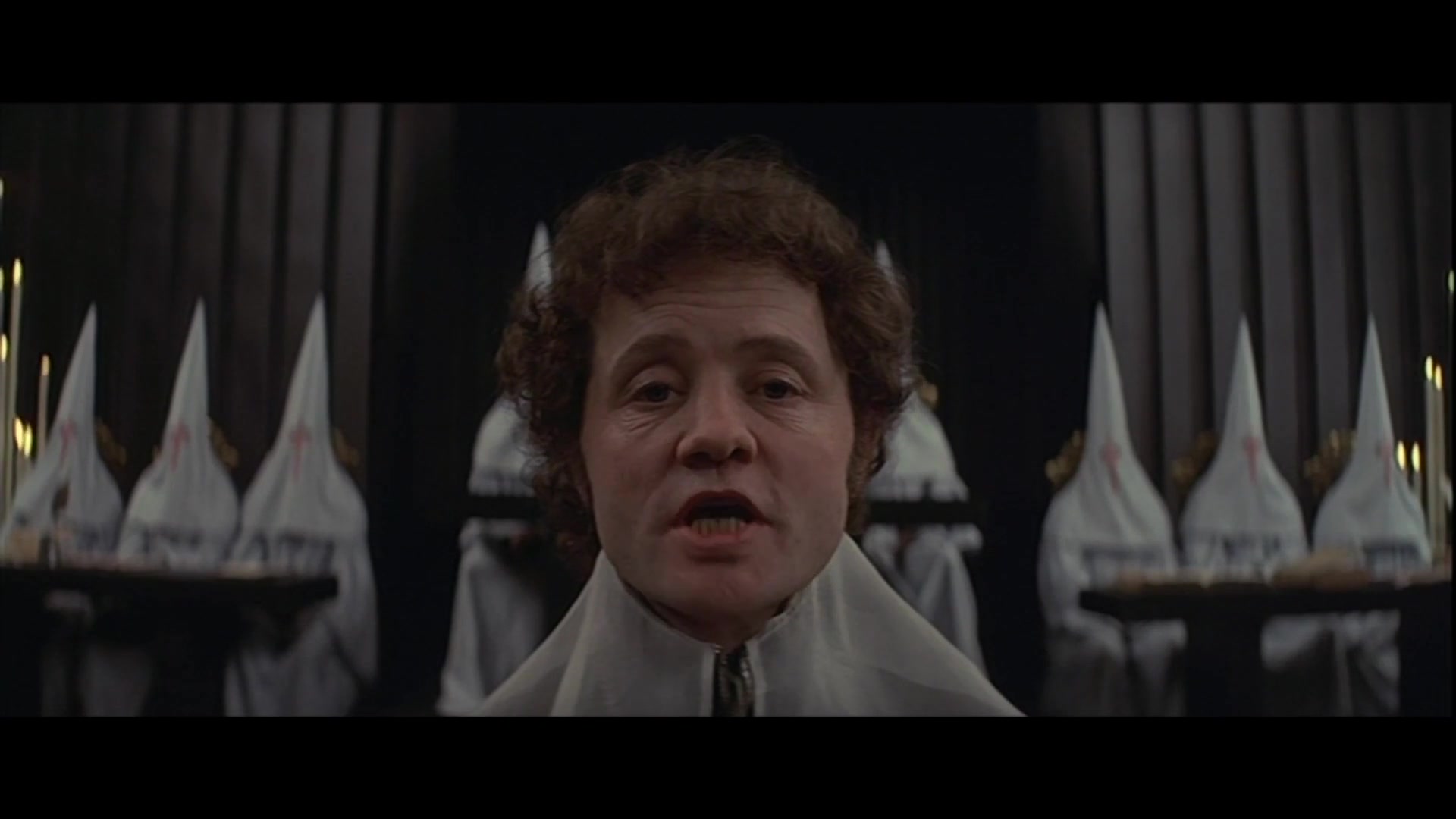
Ken Russell’s The Devils gives us a vision of that. I encourage you to watch it and read more about the situation that inspired it. We are living through the exact same kind of thing right now. People are allowing magical dream-logic to determine how they will conduct their lives. People are imagining fantasies about other humans rather than thinking through the implications of their social, political, and relational choices.
It’s time for us to grow up as a species. There are no devils, only our own flawed assumptions speaking to us. Can we coordinate with each other to triangulate truth or will we continue to silo ourselves, breaking off good will and the joy we could share?