Maintaining Momentum For Change At Mizzou

One of the big issues that has come up in the days following the protests is what can be done to keep the momentum going. The protests and interventions that took place this semester are intertwined with a huge number of categories, among which are:

  • Race and gender.
  • The rights of all students and the proper remuneration for graduate students in particular.
  • The failures of a business mindset in a university setting.
  • The responsibilities of administrators to deal with racial and gender-based discrimination.
  • The necessity of recruiting, mentoring, and retaining students and faculty of color.
  • The proactive development of the University of Missouri as a place where students and faculty of every kind can feel safe, heard, and valued.

We’ve got a long way to go. The national media certainly pigeonholed the protests and reduced the reality of what is, and has been, happening at Mizzou down to overly simplified binaries. They wanted to pitch free speech against racial tension. They wanted to make it seem as if the grievances that were being aired amounted only to vapid temper tantrums of spoiled millennials. They cast the reality of racially-based aggression as fantasy. They collapsed over two years of issues into a couple scattered spats about imagined racism. All of that was wrong.

So in the wake of all of this, how are we to be clear about the problems we face, the progress we’ve already made, and stay the course on the work yet to be done? These were the sorts of questions Dr. Maya Gibson had in mind a couple days ago when she posted on her Facebook wall. I met Maya at the Wakonse Conference in May of 2015, and that was one of the most compelling aspects of the event. Getting to hear from her then, and having the pleasure of a few interactions with her since then, made me want to add my voice to the others who were posting their answers on Dr. Gibson’s Facebook wall. I decided to post the questions Maya asked and my answers here to get a chance to express these thoughts out beyond Facebook.

Maya Gibson: Dear white MU friends and allies: what do you think MU could do to make it a more welcoming place for black people (students, faculty, and the COMO community)?

Matt Ballou: One of the main things I have been doing is curating the canon of art history and art-making techniques. Rather than defaulting to 12 or 15 dead white males, I strive to show the work of artists in ways that empower my students. That means showing artists of color, artists of underrepresented genders and gender-expressions, and artists of different abilities and disabilities. That means talking about these examples as Artists and Thinkers, not as some label or hyphenation that could be used to disqualify their contribution. Students need to see themselves in the classroom, in the examples that are presented in the classroom. They need to know the possibilities for THEM.

I don’t view this as fulfilling some quota – I see it as part of the central aims of my work as an educator: to provide and advocate for ACCESS. Most of my students are female; they deserve to see the true breadth of approach to art-making that’s out there and know the significant contributions of women throughout time.

I could keep going… I think this is what I’m trying to do in the classroom to keep the movement going. When they see the institution respecting people they relate to and who look like them, they can believe that the institution – or at least ME – is on their side.

MG: Thanks, Matt. If you can keep your list going, I would encourage you to do so. I am learning and I hope others are too. What are specific things you do to make Mizzou a welcoming and safe place for black students, faculty, and the greater-MU community? I love that you are proactive in the ways in which you shape and recreate the canon for your students. You’re actively resisting the model of euro- and ethnocentrism that comprises so much (western) art pedagogy. We have that problem in music, too. I also have to say that I greatly appreciate the way in which you’ve advanced a notion of diversity writ large. Do you encounter resistance, and if so, how do you handle it?

MB: In terms of specific things, here is one big thing:

I always try to engage with others in such a way that they – and anyone observing the interaction – believe I think they are real. One of the biggest issues I have with most discussions in the public sphere and in the media is that they can so easily dilute the REAL lives, REAL experiences, and REAL perspectives of REAL people. So whether it’s informal – walking past an acquaintance on the sidewalk – or more formal – in a critique session in class – I want to concretely show that I believe in the truth of others’ existence. This means, for example, thoughtfully building on the comments of my colleagues of color during a graduate review. That may seem small, but it shows my white students that I affirm the things my colleague is saying and it demonstrates for my black/minority/female students that I listen when an African American woman speaks. They can see clearly that I hear that voice. It may seem little, but this sort of courtesy does, I think, make a difference.

Obviously it’s complex, but I think the idea I shared above about curating the canon and then following that up with visible positive engagement with my colleagues and students helps create an environment where welcoming other voices and actually hearing them can build a safe space and a more legitimate learning space.

In general I don’t personally get resistance. I think that’s a reflection of my privilege. I’m a pudgy white dude who looks semi-homeless half the time; no one questions the legitimacy of what I say or how I look. But I have heard about a number of situations where the appearance and ability to communicate of my female and minority colleagues have come under question. And that’s bullshit right there. When I talk about black artists, no one questions. But I have known of situations where black colleagues of mine have been accused of being shrill or having an ax to grind when they bring up the exact same artists in the exact same sort of situation. That’s bullshit. So my job is to recognize that difference between my experience and their experience and state my support for them. They didn’t do anything wrong, yet students felt it appropriate for them to give these educators a hard time. That’s bullshit. So, yes, there is resistance… We need to be vigilant.

Another thing I’ve tried to do is speak to my students – the majority of which are female and many of which are minorities of various sorts – as if they know what they are doing. They are used to professors talking down to them. I don’t do that. Some times they really don’t know what they are doing but they need someone to look at them with respect and ask them questions and make observations like they ARE already accomplished. And THAT will go a long way toward them actually becoming accomplished. This is exactly what happened to me. My main professors treated me like an artist and thinker long before I was actually there. And that’s why I have had some success. So I pay attention to my students in such a way that they hear the message that their lives are important and they can do this thing I’ve set before them.

MG: Thank you for seeing, acknowledging, and recognizing me, which is what I want more than anything. I have grown weary of being negated, silenced, and rejected by the majority, some of whom are so-called, supposed-to-be colleagues. Thank you for modeling for students how to treat people. Thank you for slapping the mess out of my hand when I raise it (at least it’s grounding). In short, thank you for being you.

~

I realize that this is just one conversation among all of the ones that have happened in and around Mizzou over the last semester. I hope that in some small way my clarification of my own attempts to be an educator who advocates for his students can help. God knows we don’t need more white dudes mansplaining, but I wanted to honor what I saw as Dr. Gibson’s serious and heartfelt request to her white colleagues. The primary thing I have learned throughout all of this is that LISTENING is one of the primary ways I can be an ally. Over and over I’ve seen Maya and other African American friends say “LISTEN” when the cacophony of viewpoints swirled up, when weird racist stuff crowded in and fostered disunity. Listen. Hear.

Listen. For me, part of listening well and preparing myself to hear well is having a strategy. What I wrote in response to Maya’s questions above amounts to my strategy as an educator to create a space for listening to my students and hearing their perspectives. LISTEN.

Let’s start now, and listen to Nina Simone…


EVOKE at Imago Gallery and Cultural Center

I’ve had the great pleasure to curate a little exhibition currently on view at Imago Gallery and Cultural Center, a space that I’ve been consulting for and have really enjoyed working with over the last year and a half or so. On Tuesday, September 1st, the gallery will host a reception for the show.

image

I hope you can join us for this event. The works I’ve selected were created by a few young artists that really highlight the diversity of perspective that is present in our community. All three of these individuals were or are students at the University of Missouri where I have taught since 2007.

image

Detail of a work by Sumire Taniai.

image

Detail of a painting by Kelsey Westhoff.

image

Detail of a drawing by Simon Tatum.

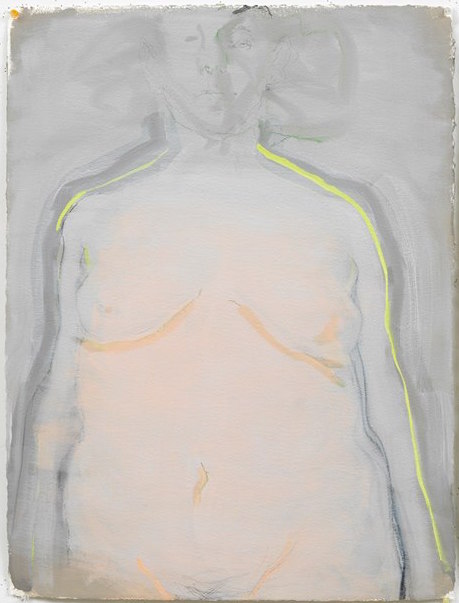
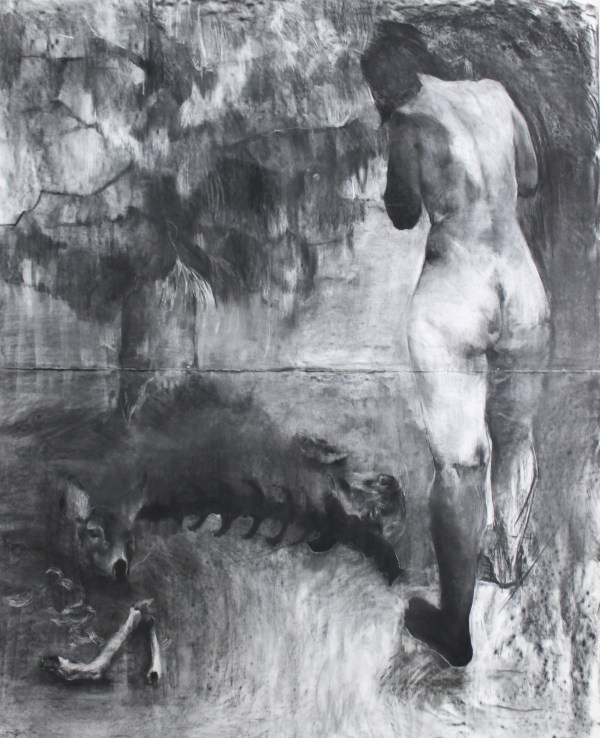
I chose these artists not only for the ways their work stirs up interesting moods and thoughts, but also because they represent the different places, directions, and sources that artists use. Taniai is Japanese-American, a strong woman who uses her paintings and drawing to delve into the complex relationships between fathers and daughters. Tatum uses his Cayman Island heritage to explore how colonialism and sublimated history may be brought to the surface in singular, distinctive ways. Westhoff’s paintings deploy the aesthetics of apps and filters familiar to anyone who uses a smartphone, and in them she treads the line between affectation and sincerity. All in all these young artists show the vigor of painting and drawing in the 21st century, providing viewers with avenues that illuminate history, identity, relationships, and meaning.


Marcus Miers: Halation at Imago Gallery and Cultural Center

My friend and former student Marcus Miers is returning to Columbia, Missouri to have a solo exhibition at Imago Gallery and Cultural Center.

11377385_10105779097284579_5594138020242232269_n

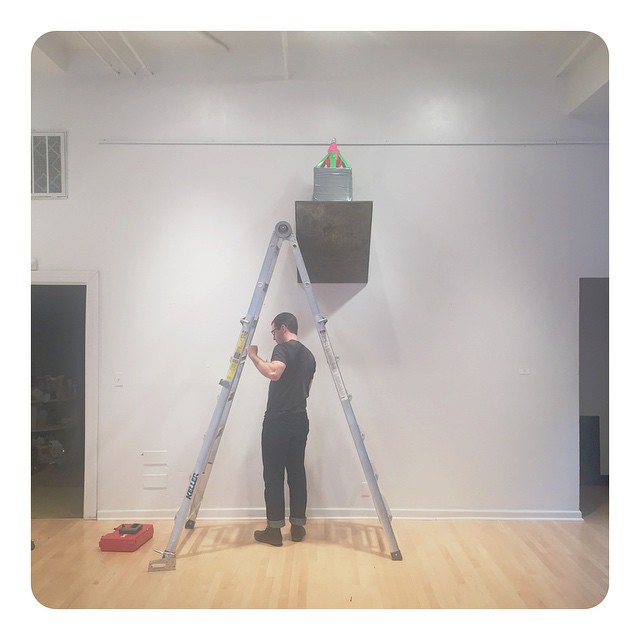
Marcus, installing Come To Nothing (The Minimalists Ascension) at Imago.

This exhibition is, in some ways, a second iteration of Marcus’s MFA thesis show that took place this past April at the University of Wisconsin – Madison. In addition to several of his thesis works, Marcus will be creating site-specific pieces that play off the unique interior quirks of the Imago gallery space. Also on display are two drawings from Marcus’s undergraduate time at Mizzou. These drawings show the beginning of his interest in the phenomenology of color and the relationship between color, space, and anxious or awkward forms.

imageOne of Miers’s recent works (left) alongside an older drawing.

image

Another one of Marcus’s undergraduate works.

The two undergraduate drawings will be for sale to support The Eric Sweet Memorial Scholarship. If you want to know more about these two pieces, visit Imago or shoot me an email.

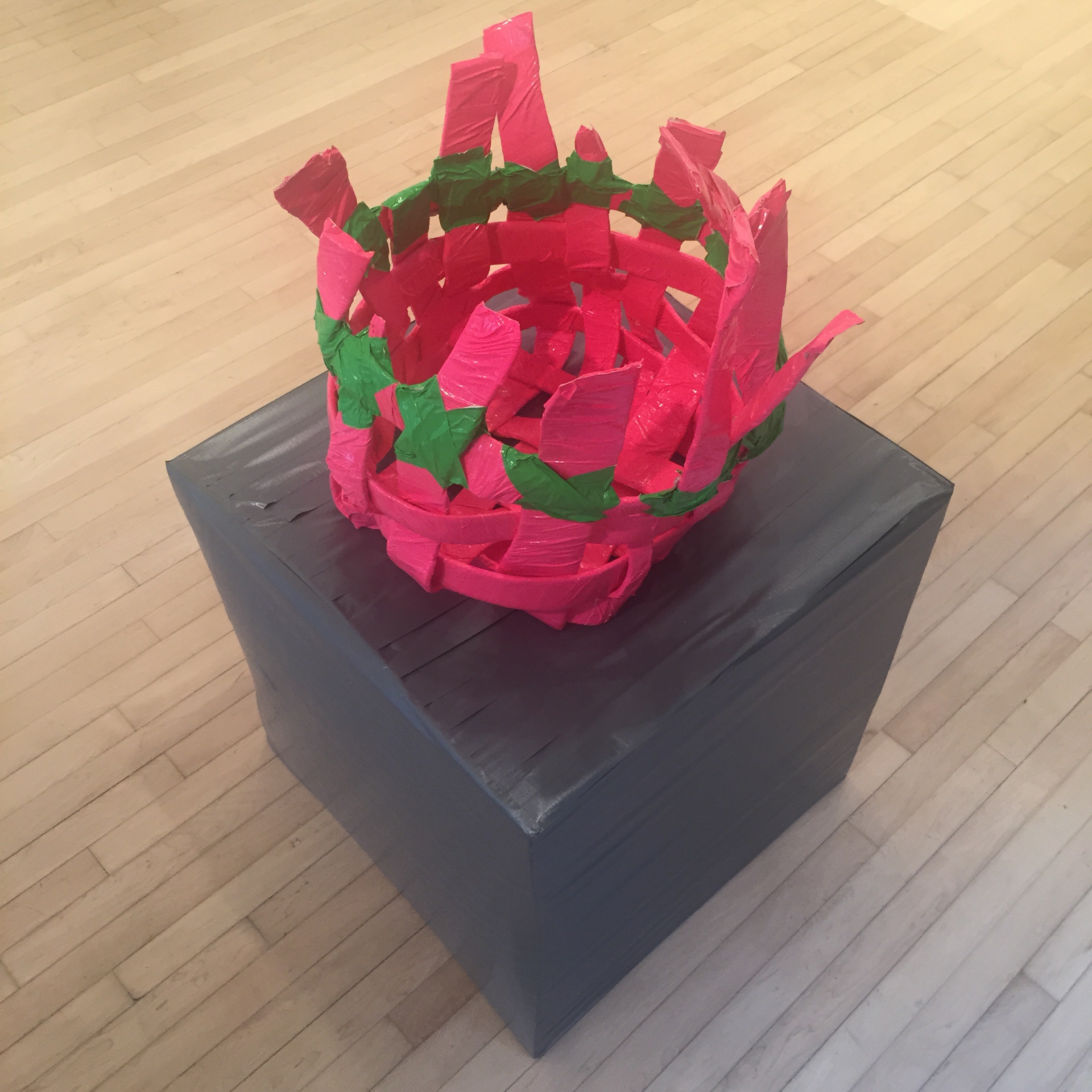
imageAn evocative basket-like sculpture entitled A Soft Tongue Breaks the Bone.

image

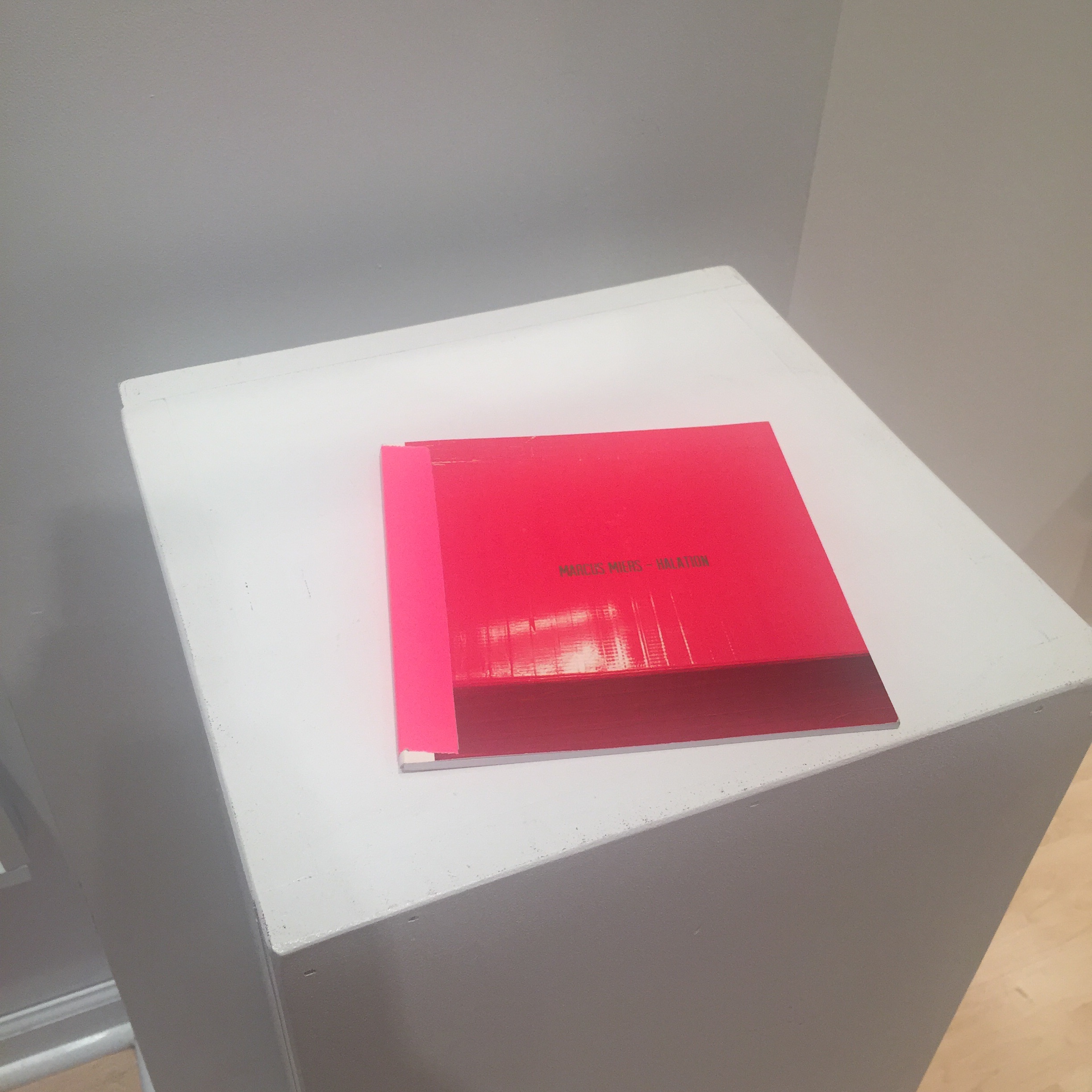
Marcus Miers – Halation, a catalog of recent work, is also displayed in the gallery.

imageKeep Them Close on view at Imago.

image

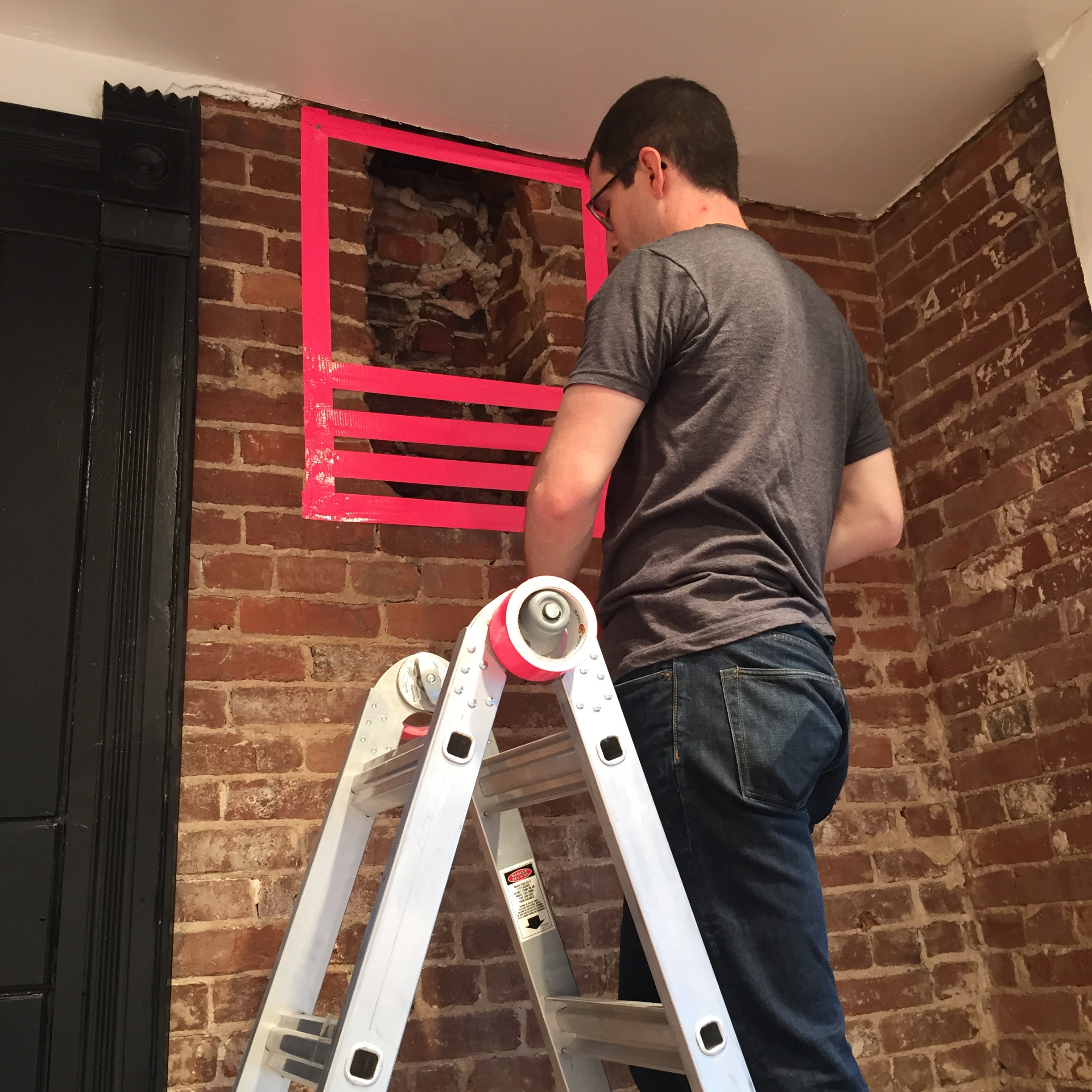
Marcus beginning to install a site-specific woven piece in the strange brick niche at Imago.

I hope you’ll come see this exhibition if you’re in the area. Marcus will give a talk on June 2nd at 7pm. I’ll have the privilege to introduce him before he speaks. Always strange, sometimes awkward, and often mystifying, experiencing Marcus’s work is just like meeting him for the first time. Ultimately, both are rich and rewarding, so be there and start the journey.

First of 15

2015 is already shaping up to be a year full of potential for Art Stuff!

~ I was part of the jury for the True/False Film Fest exhibition that will take place this month at Imago. Titled The Long Now this exhibition follows the theme of True/False this year. Click the image for more info.

Postcard

~ After the The Long Now exhibition comes down, I’ll be in a show at Imago with Jennifer Ann Wiggs and Chris Fletcher, two local artists I admire and respect. It should be fun – I’ll be exhibiting some of my digitally-based work for the first time!

harris-f_gdetailAnne Harris – figure/ground (detail)

~ A show I’m organizing and curating at Anne Arnudel’s John A. Cade Center for the Arts Gallery in Maryland opens on the 26th. I’ll be giving a talk there on the 28th concerning the topic of “Subject and Subjectivity” in regards to contemporary representational painting. I am pleased to note that two of my artistic heroines – Anne Harris and Catherine Kehoe – have agreed to be in the exhibition. It’s blowing me away to think I’ll be sharing space with these two great painters, not to mention the likes of David Campbell, Erin Raedeke, and the others I’ve invited to this exhibition.

Campbell-Death_TransmissionDavid Campbell – Death Transmission

Exhibition Information:

Title: Subject and subjectivity: a selection of perceptual paintings
Curated by Matt Ballou (University of Missouri). Organized by Matt Ballou and Matt Klos (Anne Arnudel)

Dates:

January 26-February 26, 2015
John A. Cade Gallery at Anne Arundel Community College

January 16-February 27, 2016
WIU Gallery – Western Illinois University

Other venues are also considering this exhibition.

1-img_0774Kat Arft – Mourning the Death

~ In May Kat Arft and I have a show together at the Craft Studio Gallery at the University of Missouri. Entitled Four Large Drawings, the exhibition will feature some pretty massive drawings; heights and widths 6 or 7 or 8 feet. Should be awesome.

~ Finally, my first foray into online teaching took place this past semester, and now work is being done to quantify what really happened. There was some mixed success – and my class has been approved to run again next fall – but I have been collaborating with a PhD candidate, Catherine Friel, who is an Academic Technology Liaison at ET@Mizzou to get some hard data about how the online course worked in comparison to my standard face-to-face classes. Some have wondered – myself included – whether students can learn drawing in an online environment. At some point soon I’ll go over some of what we’ve learned and I’ll share my perspective on delivering fundamental drawing concepts over ye olde interwebz.

videoclassMe, “delivering fundamental drawing concepts over ye olde interwebz” in 2014.

Anyway, here’s to 2015!

Becoming The Student #17: Mike Seat

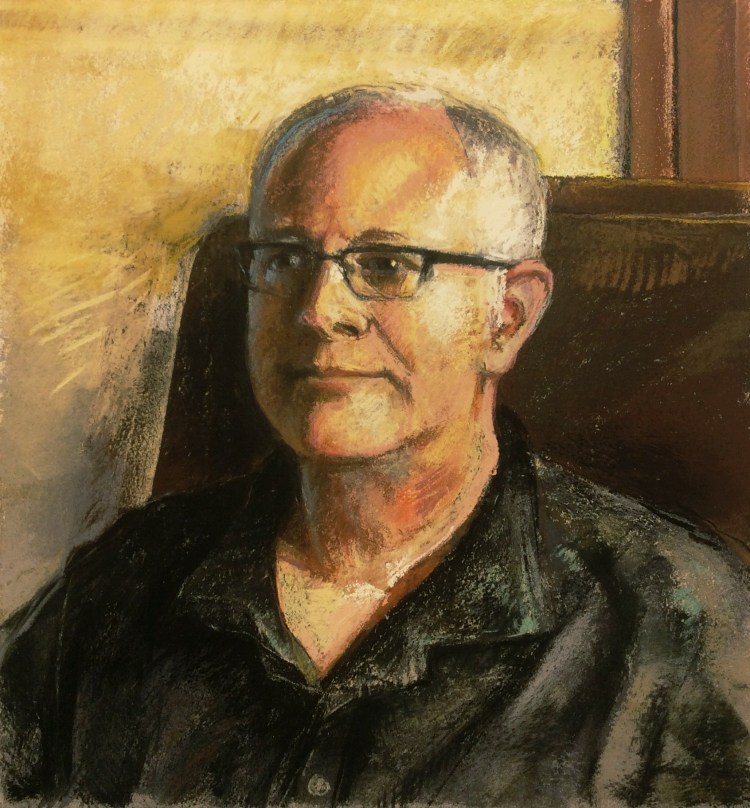
photoMike, Pastel on Paper. 14 by 13 inches, 2014.

Mike Seat is a pillar of the community here in Columbia, MO. He’s deeply embedded in the art world here, and has a gentle and calming presence. I’m lucky enough to get to hang out with Mike on the Board of the Columbia Art League where we both serve. He is really a wonderful man who is generous with his time. I always feel recharged after a few minutes with him. When beginning my Becoming the Student series, I knew I’d get Mike in there. Our conversation while he sat for me was so pleasant – and he always feeds me well when I visit! If you’re in central Missouri, get to know this guy.

On What Made Him Come To Art

“As a kid growing up, my dad was a painter and a photographer. I think I picked up a lot of respect for art through him. Then in high school I made art and thought about going to Art School but that didn’t work out. After that I went out into the world, started making a living… and art seemed like just a luxury for me. I didn’t have time to do it. But it was always something that was working within me. I loved aviation and went into air traffic controlling; that was the main thing for me for a long time. In the back of my mind was always a deep respect for painters and sculptors – artists in general – and that stuck with me. After retiring and moving here to Columbia – and one reason we moved here was the art culture here –  I just threw myself into the art community here. One thing I never thought I’d learn to do was wheel throwing pots, but I got to do that right away at Access Arts. That reignited it all for me. I got to sense again that great experience of making art. So after a couple years, especially while volunteering at the Columbia Art League, I started making my own work more seriously. At the At League I got to see really fine artists’ work along side amateurs aspiring to that higher level. That inspired me.”

On The Power of Art

“Making work is always a great experience. That alone is worth it. But having the piece left over as a record is important, too. The icing on the cake is getting to talk to people about it. What moved them. Getting their feedback. And it really is about expression, capturing a moment, sharing the moment, and trying to display the significance of the moment so that when a person walks away from a piece of art they have really experienced something.”

On The Feeling He Looks For In Art

“I really rely on the past. Art is a tradition. I often think about the artists who have made art over the thousands of years of recent history and know that a lot of them are unknown to us… (In terms of specific artists) I do tie in to the Impressionists. I identify with them a lot. They were painting quickly, capturing suggestions, capturing feeling, and opening new territory. I aspire to carry on there. That’s one thing about connecting with other artists; we’re all sort of doing the same thing. We’re all somewhat aware of this other plane of experience. So it’s hard for me to pin it down in words… but for me, sometimes, a single brushstroke can feel make me like I’m so much in the zone – like hitting a tennis ball in the sweet spot – and that immediate emotional feedback you can get from yourself can be so addicting. And what a great joy it is to savor what you see, to savor shapes and colors as they come together to manifest some beauty you’re experiencing. It is, in some ways, like having a very good meal; I could eat up that paint it’s so good sometimes.”

On What Makes A Good Portrait

“When a genuine, honest moment of humanity has been shared.”

You can see Mike’s photographic work beginning at the end of September at Imago Gallery and Cultural Center. Mike will be showing with the ceramist Yukari Kashihara and the show will be on display September 30 – November 7, 2014.  reception for the show will take place on Friday, October 10 from 6-9 PM.

Two Shows Going Up Soon!

I’m involved with two really great group shows based on the landscape right now. One is at the Deines Cultural Center in Russell, KS and the other is at IMAGO in Columbia, MO. The IMAGO show – Landscape: Idea and Ideal – is the inaugural exhibition for this new downtown gallery space. It’s really beautiful and I’m honored to show with a group of friends and former students Eric Norby, Matt Rahner, Megan Schaffer, and David Spear.

imagoimageA panorama of the Imago interior – it’s a beaut! Click for enlargement.

The group show at the Deines – called Finding Balance – is also about landscape. Curated by Joel T Dugan, the show features 15 artists from around the country and the catalog for the show looks really sweet. Norby and Schaffer are also in this exhibition, as is my good friend and former student Jacob Maurice Crook, who just recently earned his MFA from Syracuse University. Glory all around!

findingbalanceNice to see Norby’s work on the cover of the catalog – Click to download it!

Sea of Red

Sterling W. Wyatt, a native of Columbia, Missouri, died in Afgahnistan on July 11th. The Westboro “Baptist” “Church” people decided that they would continue their crusade of hate and idiocy by picketing his funeral. They sent out a press release to that effect on the 17th. Within hours, people all over Columbia were mobilizing against the horrific, destructive weirdness that the Phelps clan stands for. Today, July 21st, Columbia showed up en masse in red clothing to stand with Wyatt’s family. This is some of what it looked like.

Click the panorama for a wide view of just part of the crowd.

The mass of people in front of the church. The crowd lined the streets for miles between the church and cemetary.

I was proud to attend this event, stand in the heat for four hours with my brother-in-law, and witness the unity and care of this town that is now my home. What was amazing and truly special is that this show of solidarity crossed all ideological boundaries. There were Christians and agnostics and atheists there. There were Republicans and Democrats and Libertarians there. There were blacks and whites and asians there. There were artists and teachers and politicians there. There were babies and teenagers and old people there. There were gay and straight and questioning people there. There were rich and poor and homeless people there. There were veterans and conscientious objectors and peaceniks there.

All standing together.

All standing together in 100+ degree heat. All calm and quiet and respectful. All recognizing the complexities of the situation. All willing to stop their day for 2 or 4 or 6 or 8 hours to honor a man who died along some dirty road in Kandahar. All willing to step out and deny twisted fools any chance to spread pain and misinformation. I was pretty proud to be there to see it.

There was a moment when Sterling’s mother was making her way toward the church, and the crowd parted for her. As she moved through a wave of clapping began to take shape. Wave after wave built into an ovation that lasted for minutes on end. It was a whole community of support – not making it any easier, not pretending it was all ok – but recognizing her sacrifice. We’ve been in these damn wars for so long now and most of us don’t have to count the cost so we needed to see her face. We needed to be near her and respect her. She’s paying. Her son paid. They paid in real blood and real tears and real years gone. If the only thing Columbia could give this woman was an ovation of encouragement, if all we could do was let her memory of this day be filtered through our good wishes and red shirts, if our best job was to keep her from seeing the blasphemy that the Westboro picketers brought… then we did well. We couldn’t make it better, but we kept them from making it worse.

I’m a Christian. I’ve spent the last two decades intensely studying the bible and Christian thought. I’ve heard it. I’ve read it. I’ve preached it. I’ve encountered it in history and in individual lives. I’ve seen it in Pontormo and Dostoevesky, in U2 and NASA. I’ve witnessed it through the chance and paradox and uncertainty of real life. It’s a part of who I am. And it offends me at a level that I can’t even begin to describe to see it distorted by the Westboro “Baptist” “Church” (or pedofile priests or opportunitistic politicians). Their actions are so pestilential, so putrifyingly wrong… yet they have become a picture of what Christianity is, who Jesus is, to so many in this country.

In the face of this absolute distortion all I can do is try to be a good man, a good husband, a good dad, a good teacher, a good artist. The only real way for me to show people that Westboro Hate Mongers (or abusive clergy or rightwing pseudo-Christian politicians) don’t represent MY Jesus is by acting out what I believe He’s all about in my own life. I know I can’t do it in my own strength, but that’s part of what I was trying to do today. It’s what I try to do as a teacher. It’s what I try to do as a dad and a husband. I can’t make any big difference. I can’t change anyone’s heart. None of that is my job. But I can try to be a peacemaker and promote justice, try to express reconcilliation, and work to function in a humble, gentle way with everyone.

“He has shown you what is good and what is required of you: do justice, love kindness, and walk humbly with God.” – Micah 6:8

While thinking about all of the distortion and hate and foolishness is frustrating, it was tremendously encouraging to see my community rise up in a positive way today. I’ll say it again: I’m really proud to live here. I hope our efforts today had some impact – at least on ourselves.

RIP Specialist Sterling W. Wyatt

Of Pots and Beards

Two people I greatly respect were in the local paper recently.

First, Ian Shelly, a grad student in ceramics here at the University of Missouri who has been a student of mine in the past (and whose studio I often stop into  to see new work and chat with [or head out to Klik’s for a beer or two of an occasional evening]), was featured in the Niche column of the Columbia Tribune. Check it out here.

The author of the piece, Aarik Danielsen, is also a friend of mine. Aarik is a great writer (and music aficionado) and has crafted pieces for PopMatters, Ethics Daily, among others, and is a zealous advocate for beards. Good stuff.

I’m enjoying this synergy of people I like doing things that I like. Best line by Ian from Aarik’s piece:

“The pots I like are brown,” Shelly said. “Nobody likes brown pots.”

ian

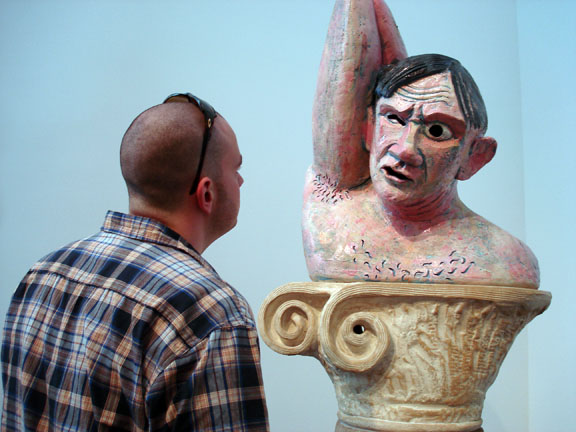
Ian enjoying a famous ceramic work, Spring 2009