The Glory of Ken Russell’s “The Devils” – a Film For Our Time

“At the time that I made The Devils, I was a devout Catholic, and secure in my faith. I knew I wasn’t making a pornographic film. Far from it. In fact, the movie had the blessing of the Jesuits. Even to this day it is still taught at Loyola University in Chicago as a good Catholic movie. For myself, although I am not a political creature, I always viewed The Devils as my one political film. To me, it was about brainwashing, about the state taking over. It is based entirely upon John Whiting’s play The Devils, and upon the writings of Aldous Huxley. Huxley was by no means a sensationalist – he was a historian of some note.

According to Huxley’s The Devils of Loudun, in 17th-century France there was a crisis caused by the desire of Cardinal Richelieu, the king, and their cohorts to pull down the walls of the city of Loudun. This would render Loudun defenseless, so it wouldn’t be a threat to the crown or the church. The same had already happened to other cities, with the result that they subsequently had to concede to every indignity and injustice imposed upon them. The people of the town felt that as long as the walls of Loudun were standing, then they could defend themselves.”
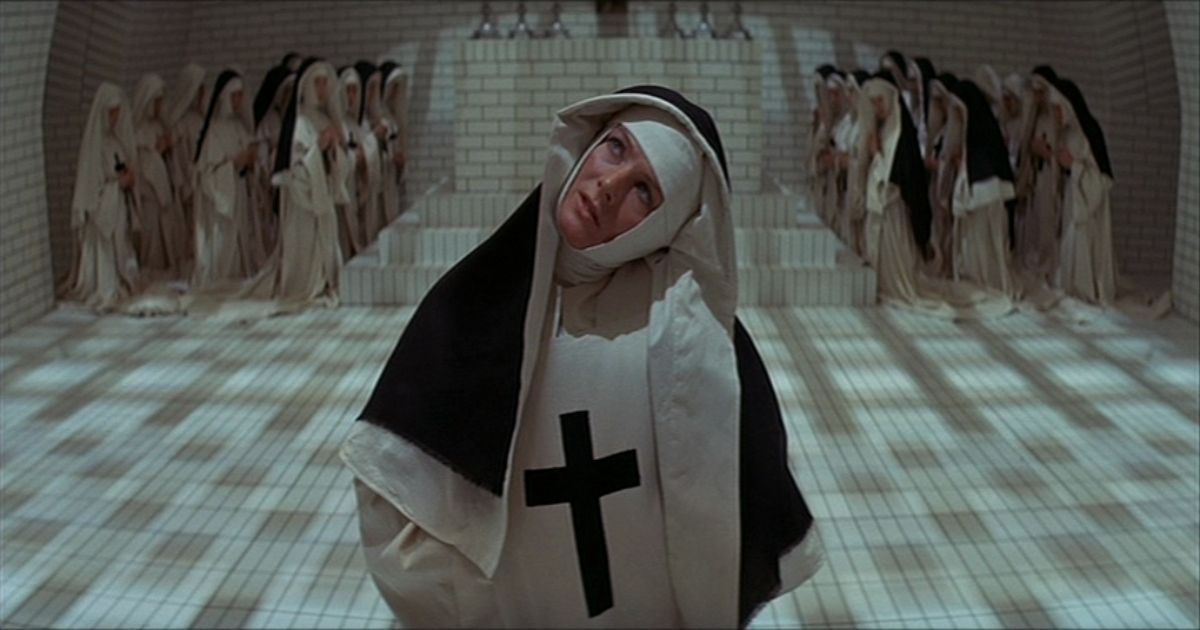
–Ken Russell, 1995.

All stills are screenshots from The Devils provided by fancaps.net.

The Devils, a controversial film that came out in 1971, is an expression now 55 years old, yet it is perfectly tuned for the moment in which we find ourselves today.

The movie details a period beginning around 1629 and culminating in 1634 when a religious insanity overtook a group of nuns – and eventually the entire French town of Loudun. Not only an amazing document of dramatic creativity, technical nuance, and not a little bit of performative “chewing the scenery,” the film is also perfect for America right now. It speaks to the exact trends and issues going on in the West generally, but in America specifically.
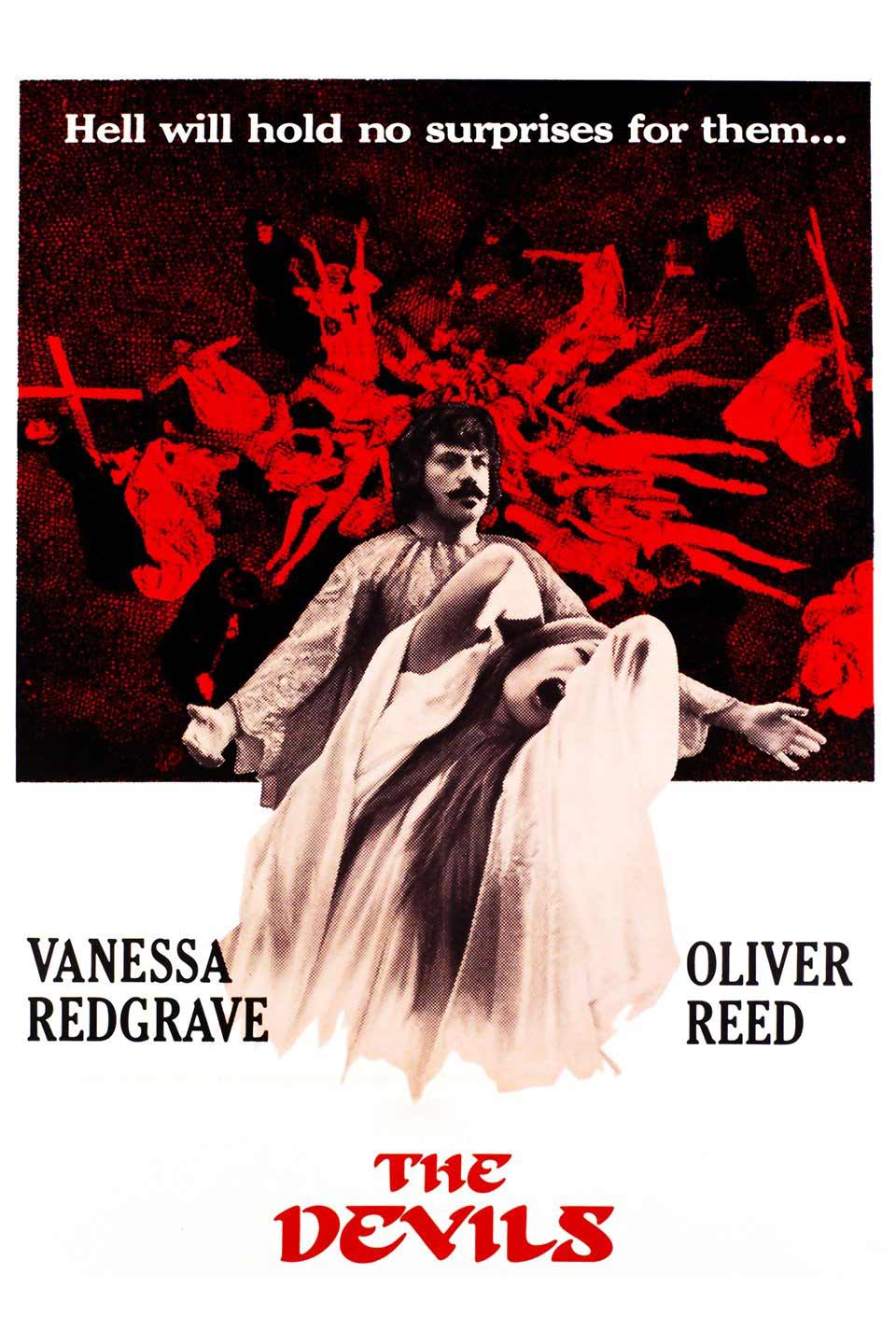
Anchored by incredible performances from Vanessa Redgrave and Oliver Reed (as well as a wonderful cast of supporting characters), the film explores religious insanity and the ways in which the lust for power and political expedience can often be couched in the language of faith. It also demonstrates the ways in which religious thinking is magical thinking, as well as how the imaginary world of “devils” and “evil” can displace (and even destroy) practical systems of governance and social fabric.

With symmetry and visually visceral themes that must have inspired Alejandro Jodorowsky‘s The Holy Mountain (1973) and Santa Sangre (1989) respectively, The Devils is filled with imagery and language that highlights the tension between social complexity and aesthetic contrast. There’s a sense in which the entire structure of the movie is about the play between a complex and ever-reinterpreted social contract and the black-and-white thinking that dominates the performance of dogma. When politics gets connected to those fraught poles, something has to break. We’ve seen it over and over again… and that’s one of the reasons the Founding Fathers of America tried to forever separate church and state. They knew the lessons of history in ways we don’t seem to recall today. Indeed, at almost the same time as “devils” were found in Loudun they were present on our own continent, to just as bitter ends. Some instincts die hard.
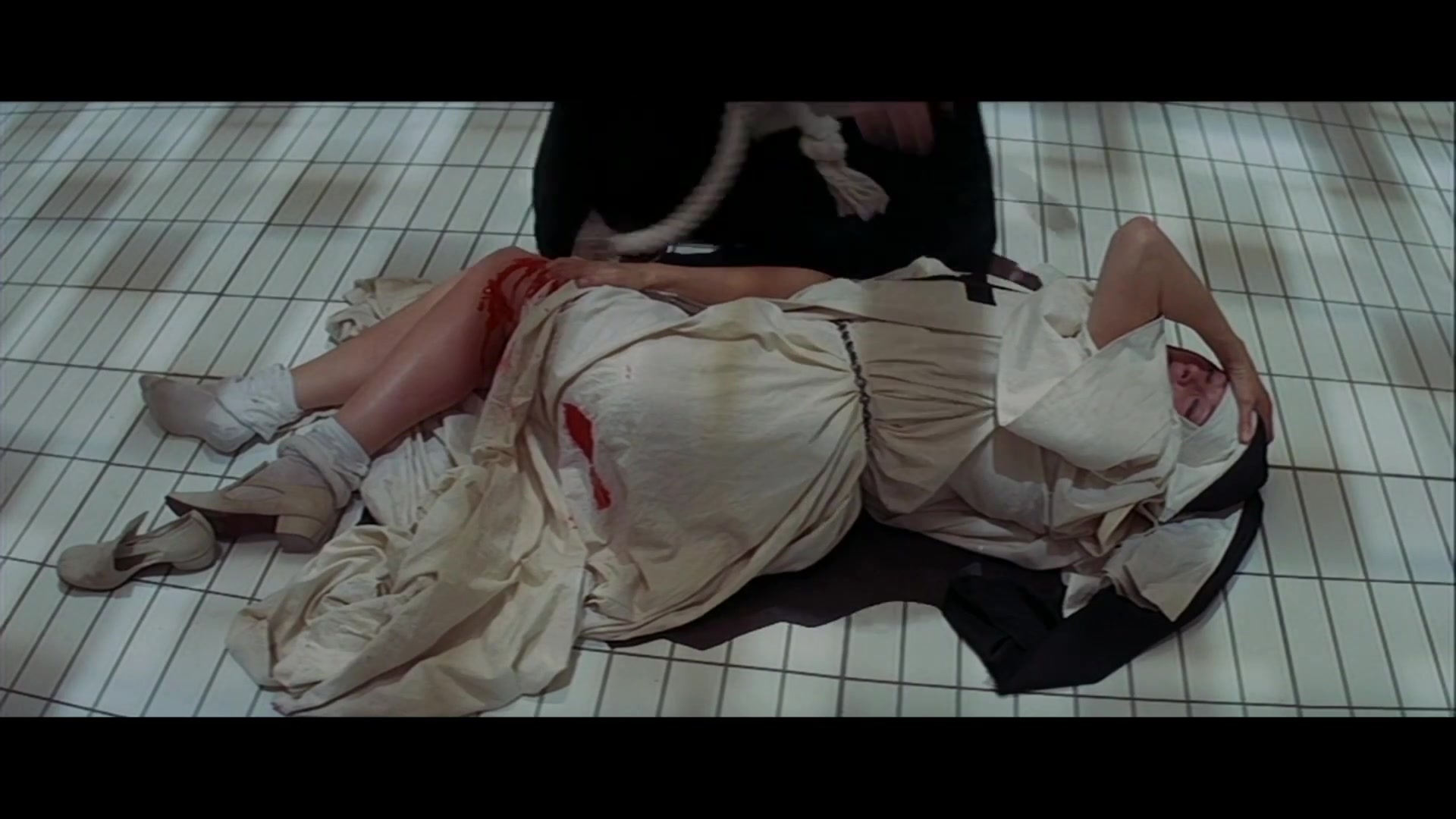
This movie is not for the faint of heart. People who have experienced violence – sexual or otherwise – or any kind of physical trauma, should probably steer clear or view the visuals available online (such as fancaps.net) to see if they want to subject themselves to the movie itself. Interestingly, in spite of its intense imagery, perhaps the most violent events are kept off screen or slightly hidden by a hand, fabric, or structure.
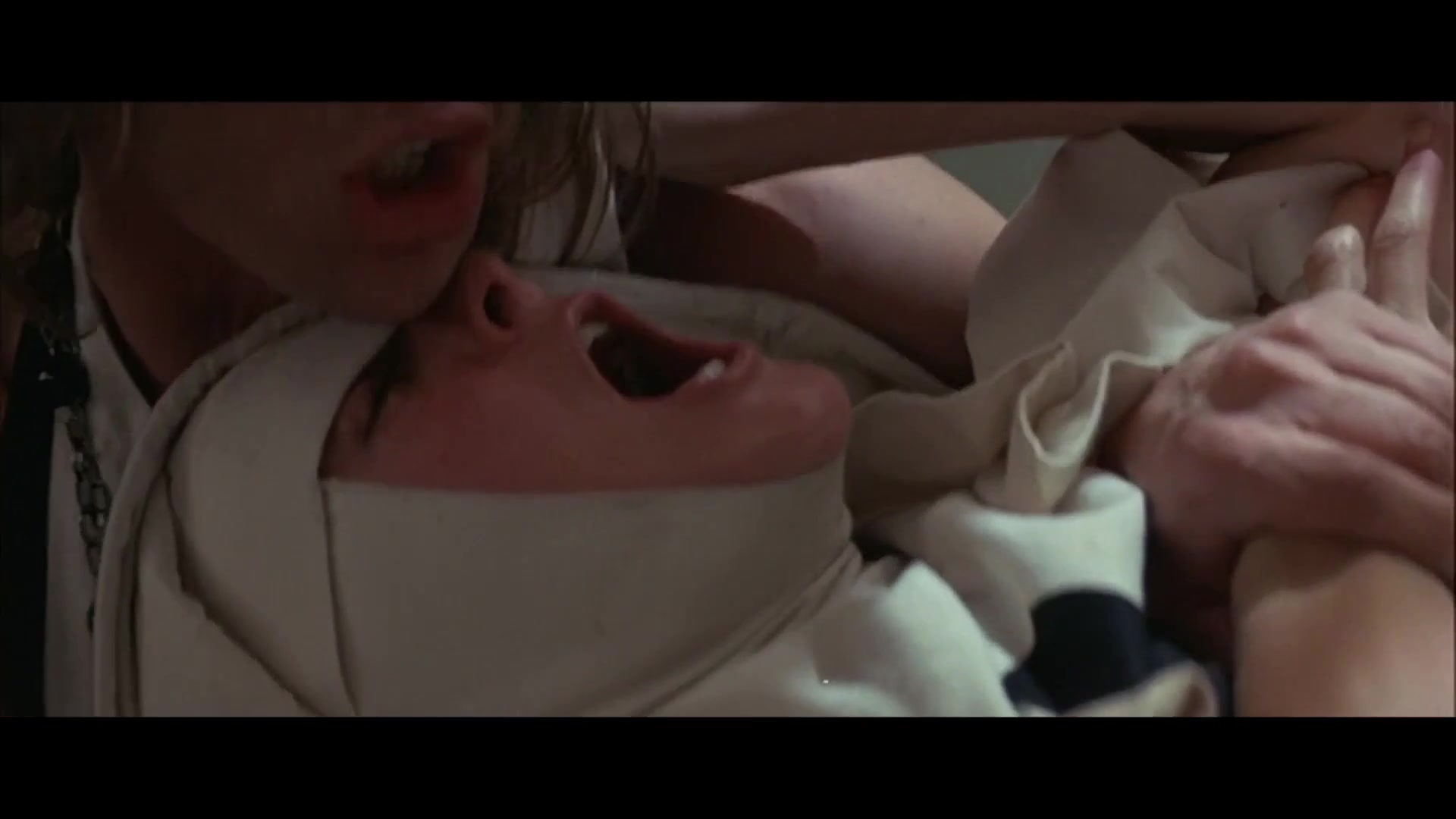
Oliver Reed’s performance as Father Urbain Grandier is, in part, a reputational rehabilitation. In the same way that Mel Gibson valorized William Wallace, stylizing him as primarily an inspiration for “FREEDOM!!” Ken Russell does something similar for Grandier in his film. Certainly, Urbain Grandier was a complex and flawed individual. In the movie we go from despising him, to almost respecting him, to practically cheering for him at the end. In this narrative arc, there’s an inversion taking place between the two main characters of Urbain and Mother Superior Jeanne des Anges. On the one hand is the sensual, secularized priest who is motivated by his own sexual and political power. On the other hand is a nun who has devoted herself to the service to God but who is hounded by her own sexuality and by the deformity of her own body. These two characters form the crux of the narrative. The film creates a connection between her deformity and malformed lust for Grandier and his transformation from womanizer to dedicated husband.
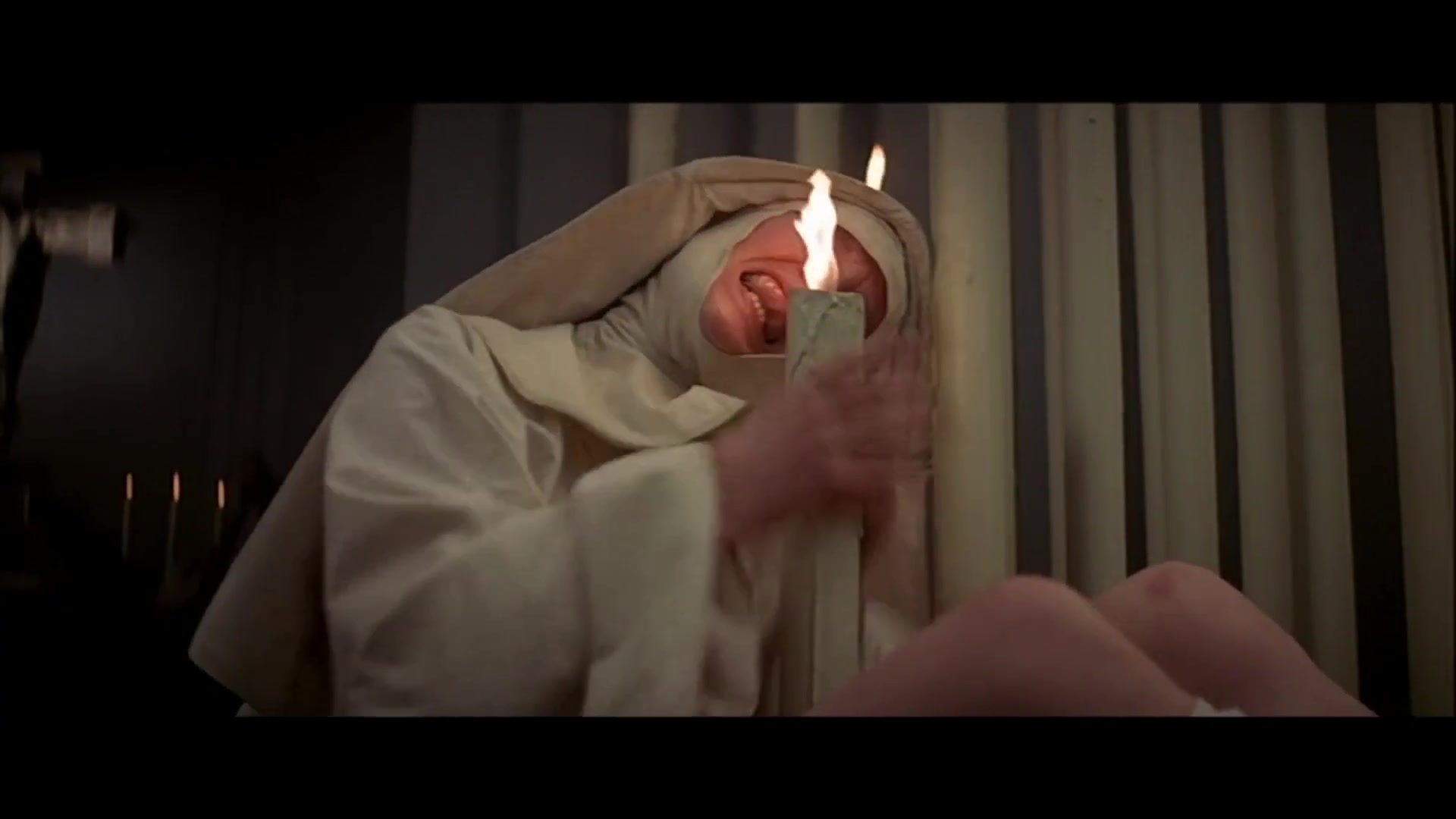
The monumental quality of the filmmaking here calls to mind the grand epics of Hollywood past and future. One might see how Nolan wishes he could craft a work of historical referent of similar power. Or, conversely, how Spielberg answered the challenge with his own takes on history, psycho-drama, and technical wizardry.

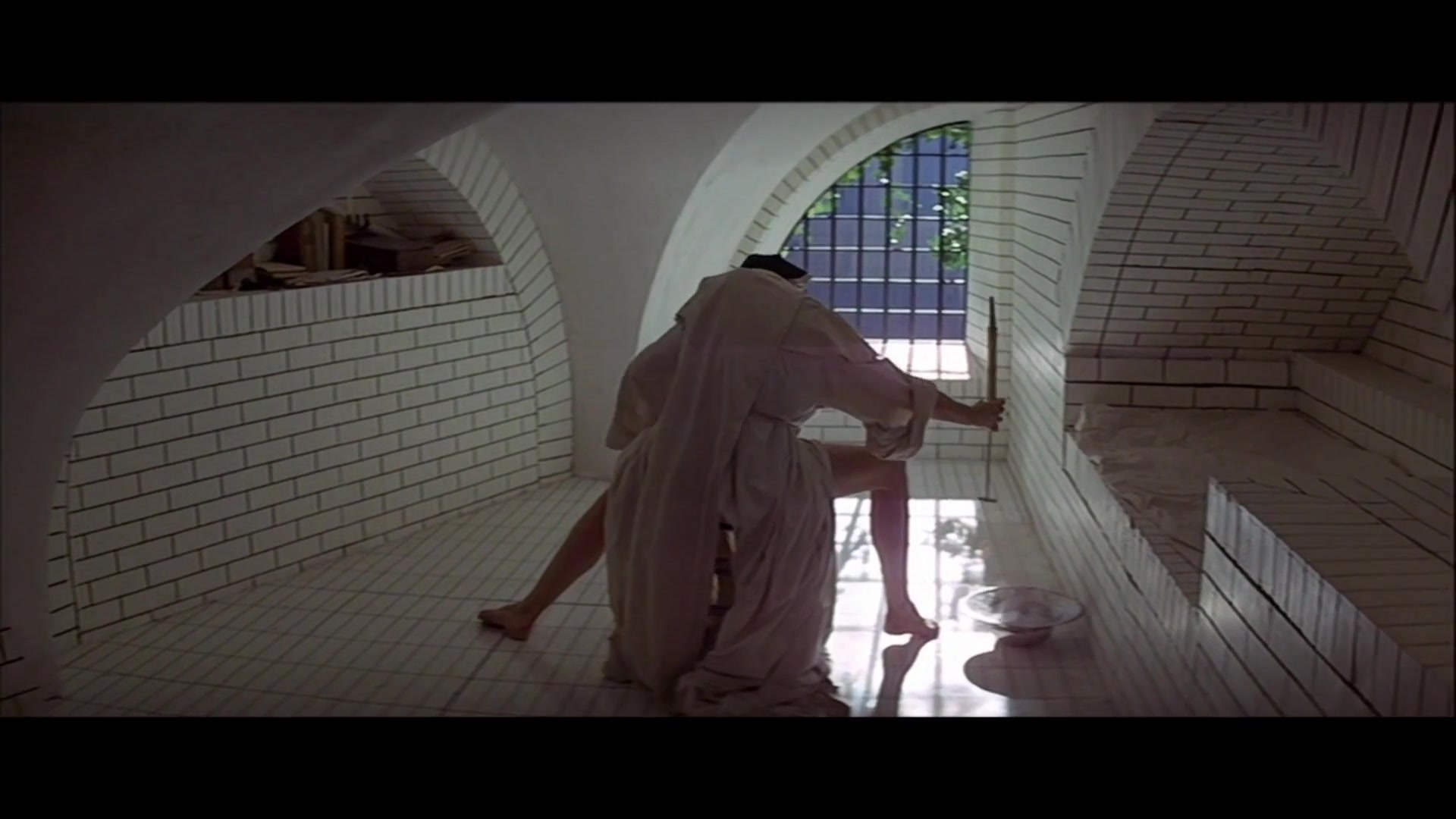
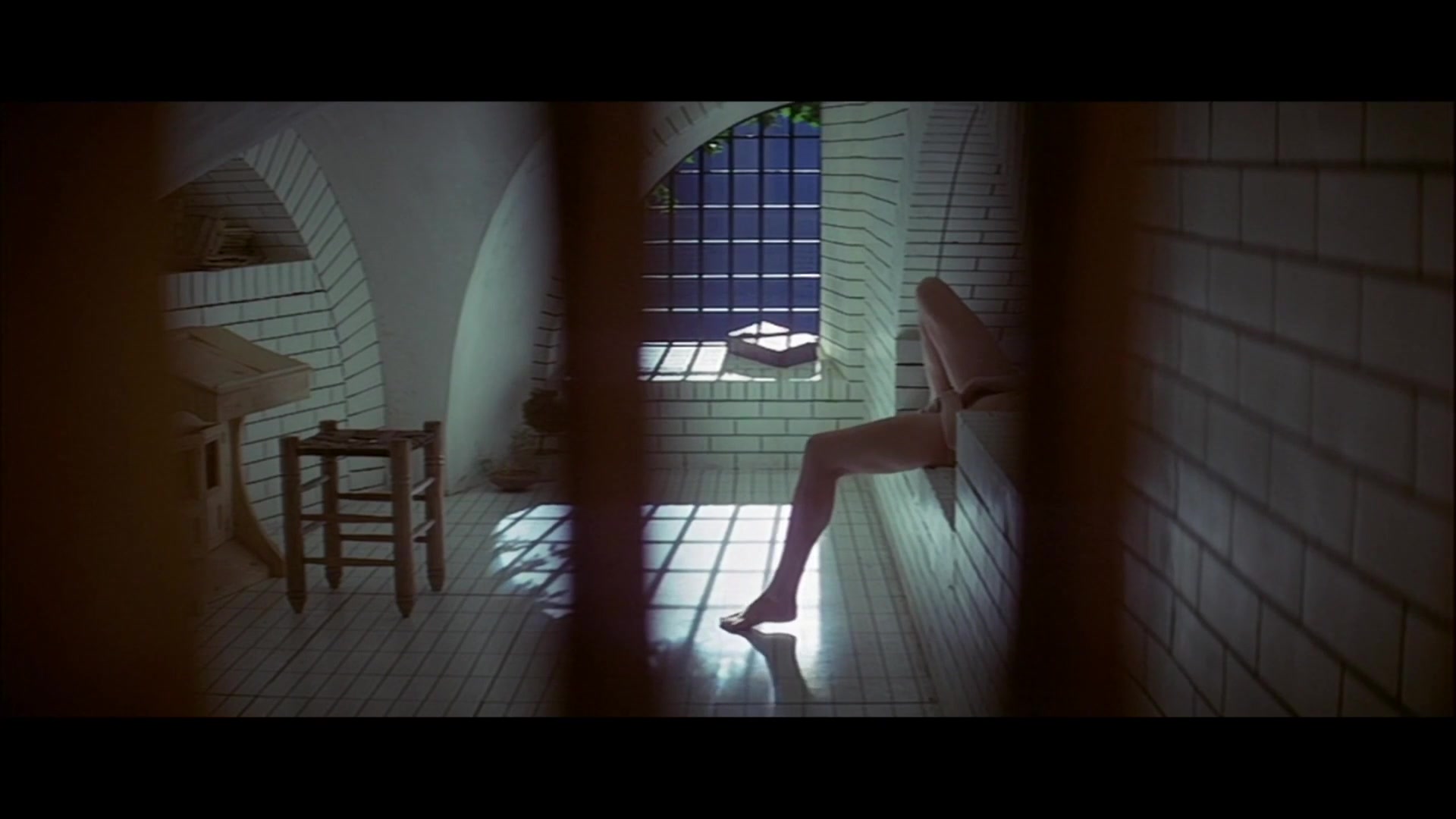
For me, the aesthetic choices – the whiteness, the blackness, the curvilinear and angular choices – are what sets Russell’s attempt apart. The sheer massiveness of the Loudun walls contrasts with the cramped interiority of some of the nunnery cells. There’s a strange geometry at play – in the cathedral and Grandier’s chambers as well as in the structure of the nuns cloister.
I won’t spoil the story for you. It would be easy to post images of the debauchery, the church-and-state-sanctioned torture, or the epically-scaled destruction. But you have to choose to see it yourself. It’s beautiful, strange, challenging, and hard… but it is also deeply human. This is a film about who we are. It is intimately connected to how we’ve tried to understand ourselves. And it’s a critique and an indictment. Even today we allow ourselves to be divided over assumption, over dogma, over instinct and blind lust. Even though we know better, and have created systems to help us know better, we fail to follow the “better angels of our nature.”
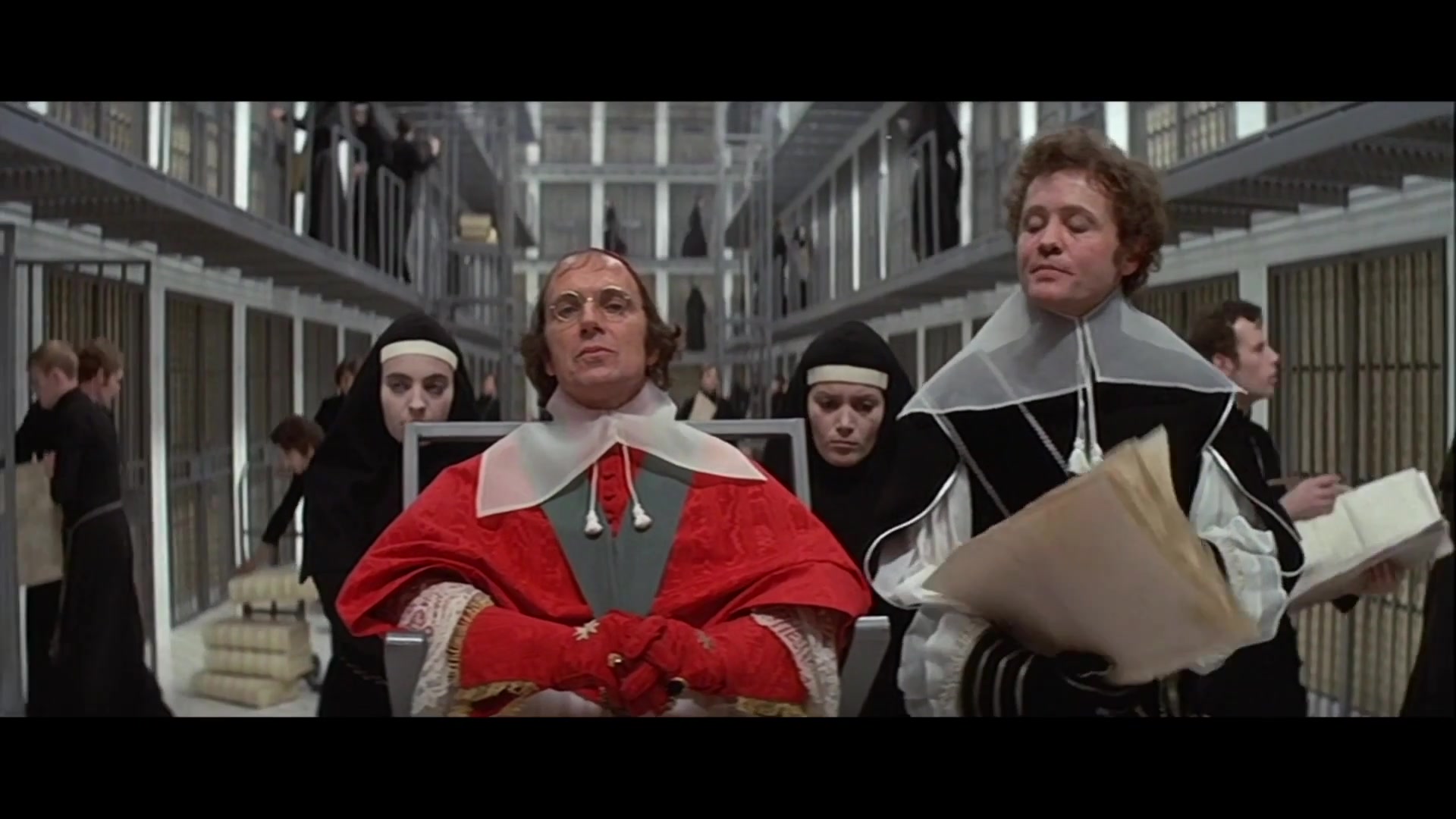
One of my favorite scenes was Cardinal Richelieu being wheeled through the church archives by attendants lol

One final thought: contemporary consciousness theory has impact here. There are thinkers in this area (pioneered by Julian Jaynes) who believe that people in fairly recent centuries did not consider all of the things they thought, dreamed, or imagined as coming from their own mind. Jaynes in particular thought that before circa 1000 CE, most people “were not conscious of their own thoughts… and that stories about gods speaking to people originated from people hearing their own inner voices and mistaking them for the voices of external deities telling them what to do.”

If we entertain this idea, then allow it to dovetail with the known power of religious thinking – not to mention social and familial pressures – it is easy to see how magical thinking, mental illness, and religious fervor could coalesce into the kinds of events we see in the historical background of The Devils of Loudun or The Salem Witch Trials. In so many ways we are captive to the adaptive biological constraints that both gave us the modern world and trap us in tribal and fearful thinking.
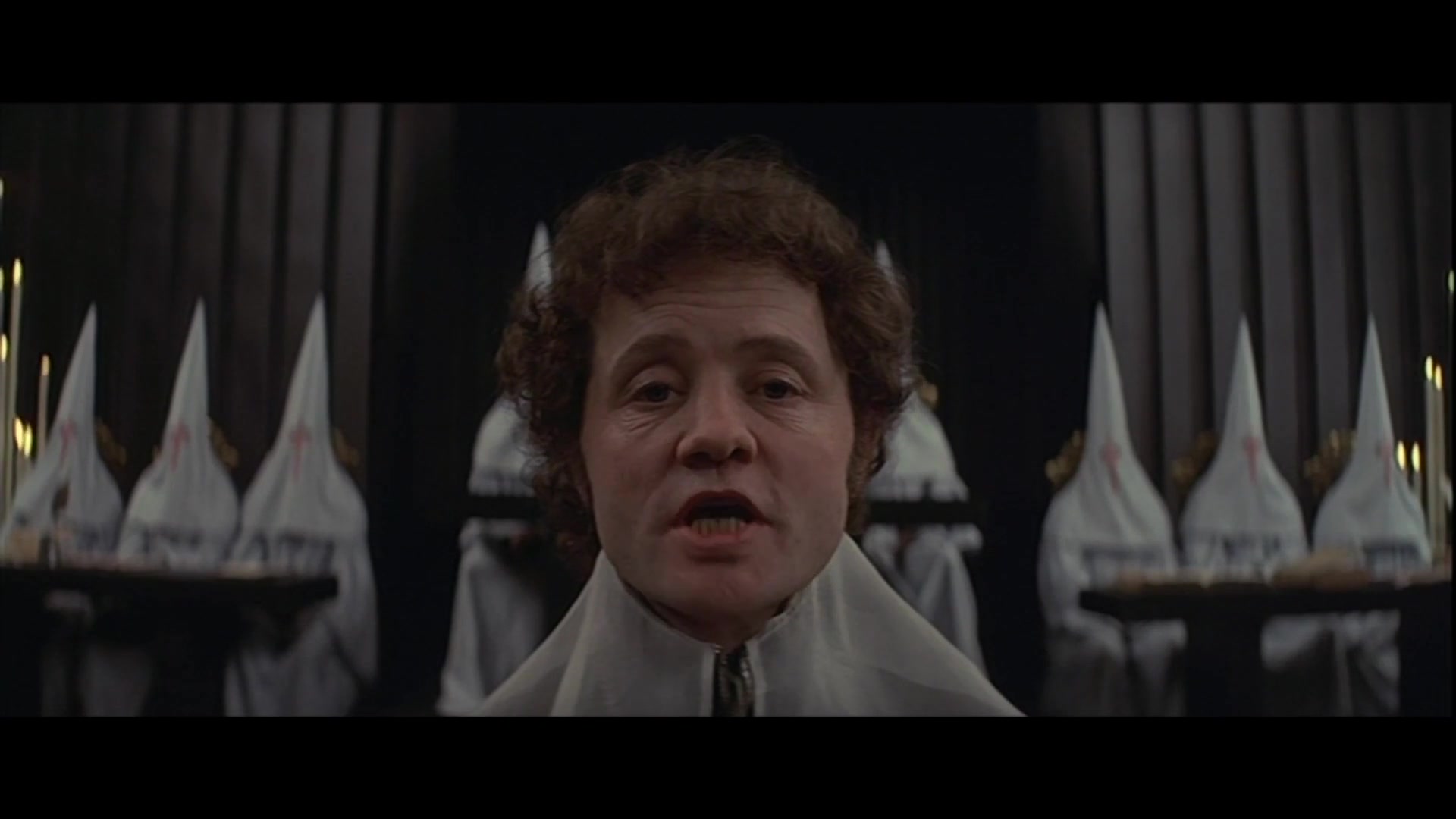
Ken Russell’s The Devils gives us a vision of that. I encourage you to watch it and read more about the situation that inspired it. We are living through the exact same kind of thing right now. People are allowing magical dream-logic to determine how they will conduct their lives. People are imagining fantasies about other humans rather than thinking through the implications of their social, political, and relational choices.

It’s time for us to grow up as a species. There are no devils, only our own flawed assumptions speaking to us. Can we coordinate with each other to triangulate truth or will we continue to silo ourselves, breaking off good will and the joy we could share?
A Review of “Pastor’s Kid”

Pastor’s Kid, a film by Benjamin I. Koppin, must be a labor of love. Billed as being based on a true story, the movie does indeed function with a strong sense of authenticity, at least to my eyes. Viewers follow Riley (Courtney Bandeko), a disaffected and conflicted young woman, in the hours and days after being roofied at a bar. Our perspective trails Riley in moments of reflection and realization that attend her dismay, not only at what happened at the bar, but at the experiences she’s had her whole life. In some sense the entire film is comprised of vignettes of those reflective moments, and we pop back and forth between the present moment and key situations from Riley’s past.

Anchoring the past is young Riley, played with grace and unique presence by Marisol Miranda. The filmmakers struck gold with this actor, who mirrors the pensive inner life that Bandeko gives to older Riley. Both act well with their eyes, and the interiority suggested by their performances allows them truly own their scenes. In many ways, the world of the film orbits them. They become a still point in the midst of the tumultuous realms that surround them.

This is a film that lives in the tension between active seeking and accidental finding, between finding yourself lost and being surprised that you’ve been found. Coming as it does in the midst of a potent moment of spiritual deconstruction among younger Americans, the film is situated to strike a particular chord. It could easily have come off as preachy, or too easy, or – indeed, in one of the strongest lines from the movie – as “a cliché.” I think the filmmakers and actors managed take it beyond those kinds of trite, pedantic resolutions.

Without giving anything away, I think Pastor’s Kid is able to highlight the potential for redemption in the midst of what simply can’t be undone in our lives. We do things that can’t be taken back. Things are done to us that we alone can’t repair. Riley understands that she’s lost something of herself in the attack; that loss is disconcerting and painful. But the event is also a catalyst causing her revaluate her relationship with her estranged mother and – maybe – with her equally-estranged faith. Riley is both a protagonist and an antagonist. Will she return to numbing herself or will she allow herself to open up to past experiences and emotions? Whichever route she chooses will hurt.

Healing wounds requires touching them, and that’s the painful part; sometimes running away is the only response that seems valid. We’re all traumatized, and we all live in various states of fight, flight, or freeze. It makes sense, then, when Riley’s mother, the voice of God, and even Riley herself are left asking, “Are you done yet?” Done with anger, done with fear, done with running, done with dissipation; the viewer is left to parse the potential of that question and any answers that might follow.

Pastor’s Kid is a unique movie with intriguing pacing, strong performances, and solid, memorable characters. It feels like a distant cousin to Rian Johnson’s classic neo-noir film, Brick. Though less stylized than that movie, Pastor’s Kid is a film with a similarly confident perspective. To me, it succeeds most strongly in moments of subtlety and ambivalence. It’s a film worth your time.

On a personal note, I’ve known a lot of PKs. I’ve seen their struggles up close. It feels honorable to provide a particular view into their world in a way that feels honest and heartfelt. Kudos to Koppin and the whole writing and production team for that.

For more information, see https://pastorskidthemovie.com/

All imagery here copyright Ironside Films.


Full disclosure: the featured actor in Pastor’s Kid, Courtney Bandeko, was a model for many of my Drawing classes in the Art Program at The University of Missouri. I’m glad to know she’s gone on to do creative work she loves.

Quarantined With Nicholas Cage

What did you do during the pandemic?

A lot of people picked up a new skills and or hobbies during our collective quarantine. Some people got going with a sourdough starter. Some people began learning a new language. Others just worked on their alcoholism.

What I did was decide to watch as many Nicolas Cage movies as I could.

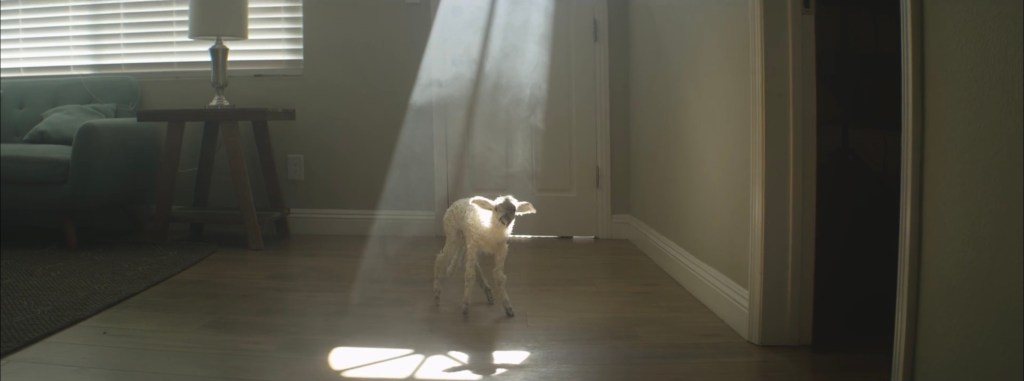
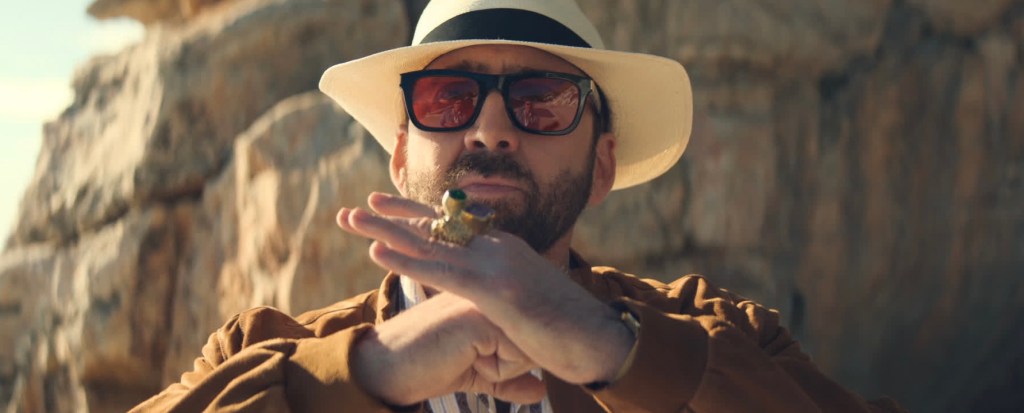
Nicolas Cage in “The Unbearable Weight of Massive Talent” 2022.

While I didn’t make it through his entire oeuvre, what I did do was see a good mix of older and newer movies, both good and not so good. From that exploration I’ve collected five below that I think demonstrate the recent best of Nicolas Cage. I’ll also rank them from #5 to #1.

Nicholas Cage in “Vampire’s Kiss” 1988.

I’ve got a lot to say about each of these films but I will constrain myself to just a few sentences, a few tasty bits of weirdness, to get you in the door. Why try to convince you? Because I really think that these are high-quality Nicolas Cage movies. You may have a sense that Nicolas Cage is not the greatest actor of his generation and, sure, there are some reasons why one might think that. He is a polarizing figure. Whether you love him or hate him, you can’t say he’s boring. I think that if you look at specific moments in the Oscar-winning actor’s career, you will see that he has moments of pure transcendence.

Given that, I’m always down for a foray into cinematic ridiculousness with him.

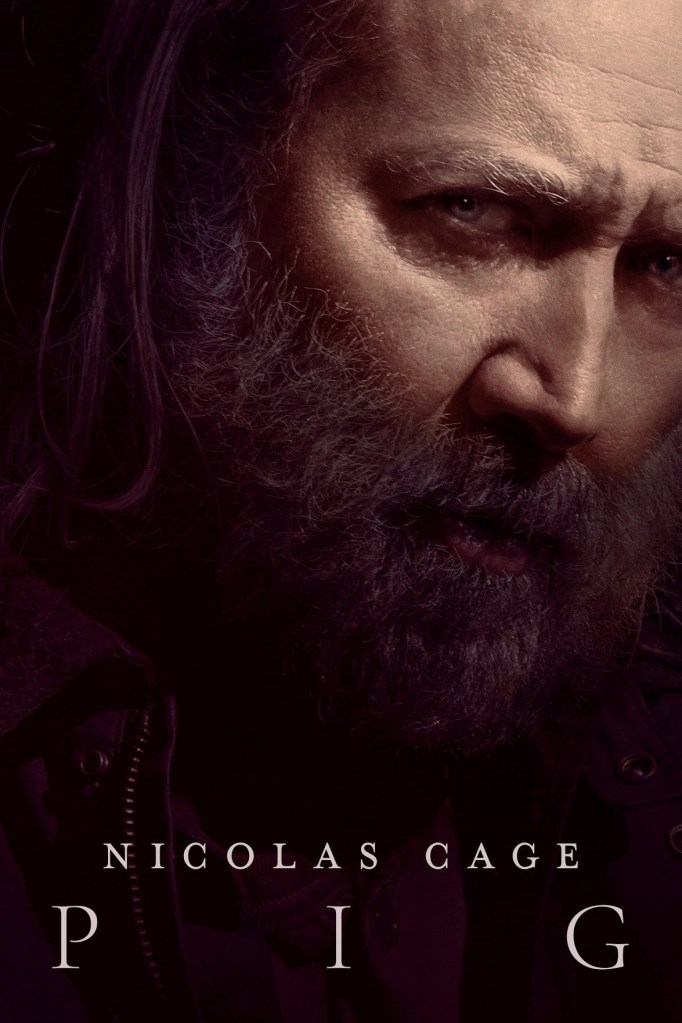
5) Pig (2021)

Nicholas Cage as a grimy, crazy, disaffected former-chief who goes all Fight Club in an attempt to recover his stolen truffle-sniffing pig. What more do you need? Best part: When our pig hunter shames the hell out of the hoity-toity world of fine dining.

“Pig” movie poster

4) Mom and Dad (2017)

This genre-bender reverses a lot of what you might expect from where you think it is headed, and that’s good. There are classic one-liners, great Cage rage sequences, and some fun camera work and editing. Best part: Selma Blair (i.e. Mom) in a great match up with Cage in a role that plays off his crazy with some crazy of her own.

“Mom And Dad” movie poster

3) Between Worlds (2018)

Ok, listen. This is one weird movie. It’s got an interesting sci-fi premise and would have been a much worse movie in less confident hands. Cage and veteran Franka Potente (Run Lola Run, The Borne Identity) anchor the film with seriousness and earnestness, in spite of how ridiculous parts of it are. And parts are really ridiculous. The scene where Cage’s character is being hosed down while dancing is just next level. And then there’s the scene where the character is having sex while READING A BOOK OF POETRY BY NICHOLAS CAGE. Ok? We’re getting meta here. It’s worth the watch just for the water hose thing.

Nicholas Cage and Penelope Mitchell in “Between Worlds”

“Between Worlds” movie poster

2) Willy’s Wonderland (2021)

Imagine walking into an abandoned, decrepit Chuck-E-Cheese’s and being attacked by animatronic characters that have been possessed by evil forces. That’s the basic idea here. Ok, now imagine you’re Nicholas Cage AND YOU HAVE NO DIALOGUE AT ALL. No words are spoken by the star and top-billed actor in the movie. None. This movie is mostly just campy fun, but half of the tension it carries is found in waiting for and expecting words to come out of Cage’s mouth. This full-on indie project must have been someone’s labor of love that just happened to get Cage behind it. It’s so odd and off-tone in ways, yet it works. Come for the epic death blows to possessed animatronics, stay for Cage’s wordlessness.

“Willy’s Wonderland” movie poster

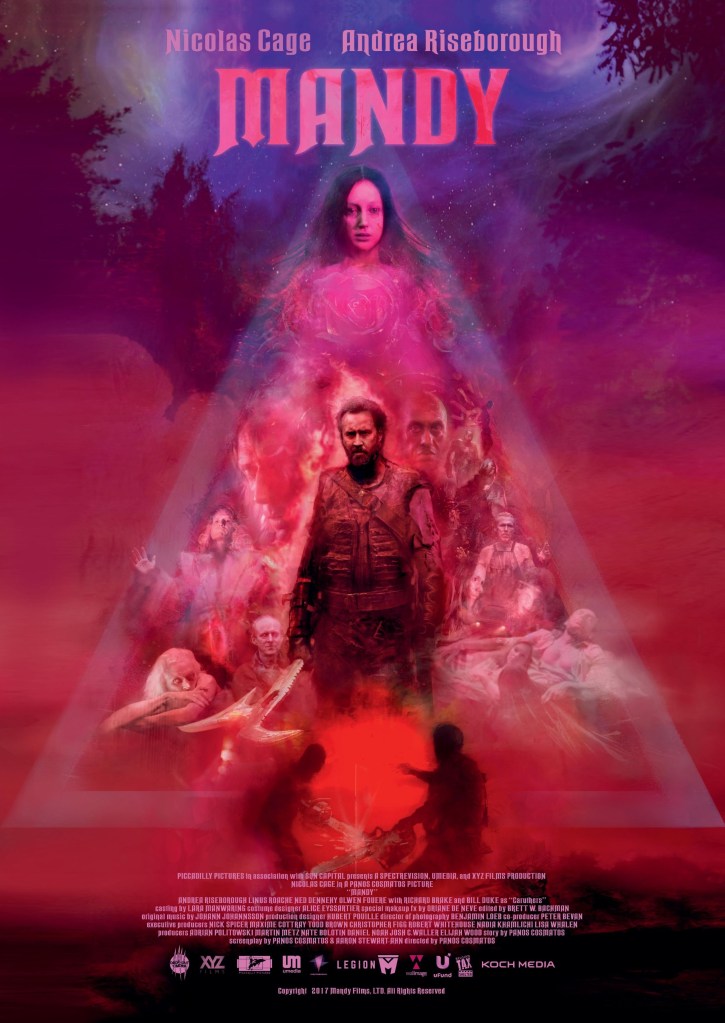
1) Mandy (2018)

Mandy is a work of art. Italian-Canadian Director Panos Cosmatos continues in Mandy the qualities that made his epic Beyond the Black Rainbow so strange and powerful. Atmospheric space and light. Intense color. Aural compositions that influence the space and visuals. The use of chiaroscuro to force viewers to complete the dynamics of action and scenic structure. Absolutely one of the best movies I’ve seen a decade, Mandy embraces its heavy-handed narrative and unanswered questions. Yet the emotion that comes through is palpable and so important to how it remains re-watchable. Andrea Riseborough’s subtle and keenly-felt performance is a wonderful foil to the insanity mounting in Cage’s character. If you see only one movie here, see this one.

“Mandy” movie poster

To conclude, I have to say that the movies Nicholas Cage has made in his mid to late 50s are bending toward a quirky and chaotic quality that can’t be easily dismissed. Yes, there are duds, and perhaps Cage himself is a dolt of a dude. But with roles like the ones I’ve listed above, he’s continuing to show himself to be a capable, if odd, actor more often than not.

Becoming the Student #6: 2nd Corporal, 3rd Missouri Infantry, CSA

Jeremy Grove is a man who loves family and history. Through some interactions with friends a few years ago he ended up witnessing a Civil War reenactment event. In conversation with the participants he found that he wanted to participate as well. Soon thereafter he joined a Confederate reenactment unit. I asked him if he was a secret Rebel, but he had ancestors who fought on both sides in the war. Jeremy had a great, great, great grandfather who marched for the Confederate States of America with General Shelby’s Iron Brigade, while another was among the first Union soldiers to be buried at Arlington National Cemetery.

IMG_84942nd Corporal, 3rd Missouri Infantry, CSA (Jeremy Grove), Acrylic on paper, 27 by 22 inches. 2014.

Jeremy on Reenacting for the Confederate Army:

“A good thing to come from my participation in reenactments is that we highlight a time when slavery was an issue. The reality is that human trafficking is still an issue; slavery is still an issue. And if, through my portraying a Confederate soldier, I can have conversations and engage with people – and ultimately raise awareness of the reality that human trafficking is perhaps worse now than it has ever been in history – then I feel that it’s a good way to use history to learn from our past and make a change.”

On the History of War:

“Sobering and horrifying. All wars are wars about resources, nothing more.”

As we dialogued through the evening, our topics ranged from specific events during the Civil War to the idea of state sovereignty, from public history to personal history. Jeremy’s discursive narratives on the battles and movements of governments and armies as they impacted Missouri was amazing. Later on we moved into eastern European folklore, film appreciation, the Large Hadron Collider, faith trajectories, China, Japan, and hardcore table-top gaming. We rounded things out sharing our experiences of the adventure of marriage and the glory of parenting.

Each moment of our talk was charged with intensity and meaning; there were so many quotable, memorable moments. Jeremy’s energy, passion, and desire to live with awareness and thoughtfulness is inspirational. He’s a good man. Thanks for sharing so many grand histories, ideas, and laughs with me, sir!

Sci-Fi Film Worth Seeing Again (and Again [and Again])

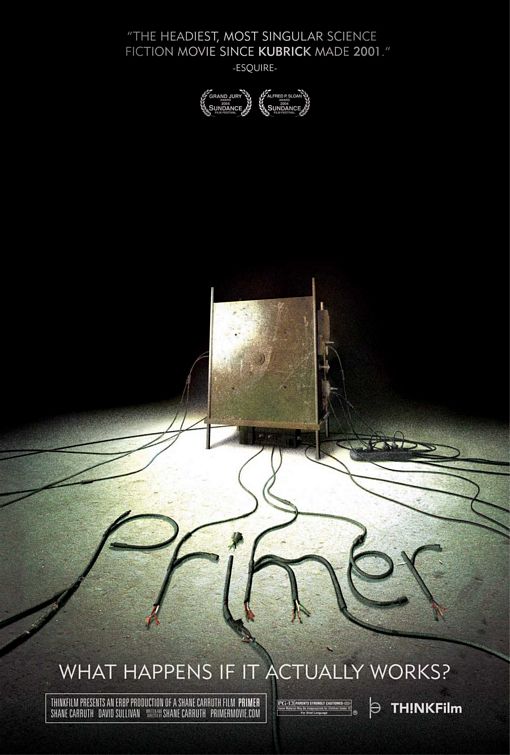
It’s been nearly a decade since Shane Carruth’s Primer came out. The movie is an unconventional time-travel* film and extremely low-budget ($7,000) project that delivers on every level. On a whim, I watched it again yesterday and was pleasantly surprised at how well it holds up. In some sense, it’s even better now.

primer

One of the things that makes it feel better to me in 2013 is that it is clearly from a time before social media really took off – the computers are as big as Buicks, the pace of life and modes of interpersonal exchange are still face-to-face, and the technology is less ubiquitous, more alchemical. The film plays on ethos of now-tech giants having started around the kitchen tables and in the garages of 70s, 80s, and 90s suburbia. The film also succeeds in bringing the human equation – the brokenness of human nature and the contingencies of our perceptions of reality – to the fore, never cramming the sci-fi down viewers’ throats. Even the technical jargon, which actually seems to bear some relationship to real science, is presented as asides rather than lame attempts at pseudo-explanation (I’m talking about you, Prometheus).

The filmmaker also presents compelling and simple camera work. Nothing flashy. Useful cuts. Good pacing. Subtlety. Nice compositional balance. All the basics of fundamental visual dynamics where the audience doesn’t need to be firebombed to understand what’s happening. We never focus on the technology, we focus on people.

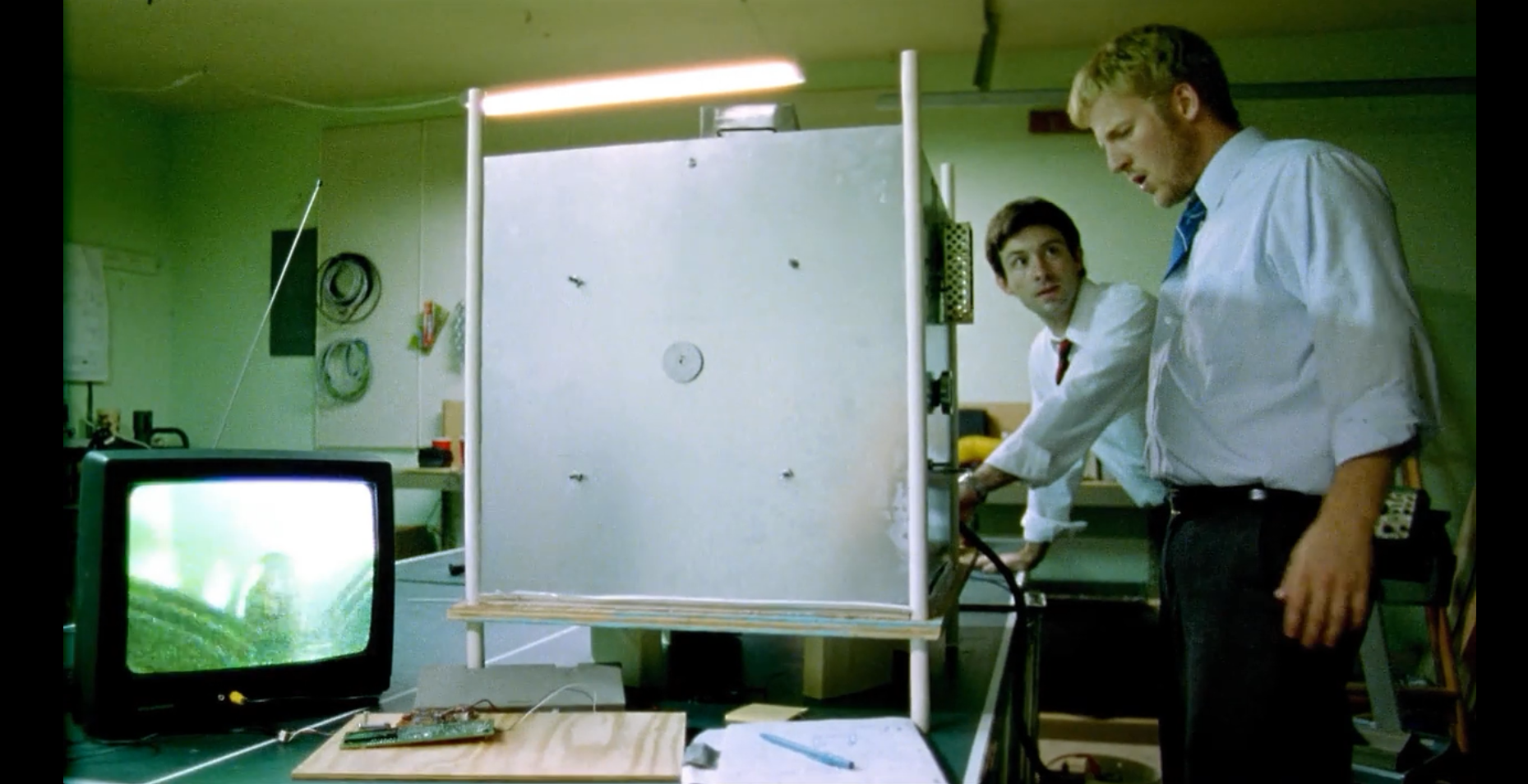
Screen shot 2013-06-21 at 11.20.40 AMAaron and Abe realize something unique is going on inside The Box.

In an era where lame reboots and aimless, mindless sci-fi films are a dime a dozen, it’s gratifying that a well-executed, thoughtful movie can be made in the genre and stand the test of time. To me, Primer holds a position similar to films like Donnie Darko or Brick (both of which also happened to be made in the first half of the 2000s). These are noir-ish, psychological films that ask big questions and mix realism and surrealism in such a way that they feel like lived experiences. The dislocations, paradoxes, neurotic turns, and seemingly inconsequential points of aesthetic and conceptual concern upon which these films pivot put the big-budget/shoot-em-up/blow-everything-up/summer-block-busters to shame. What Shane Carruth did with seven grand makes Michael Bay (with his hundreds of millions) look like a chump.

That Primer won the Grand Jury Prize at Sundance in 2004 makes complete sense. If you haven’t seen the film, do it now. It’s streaming on Netflix.

*People who know me know that, in general, I HATE time-travel movies – they’re usually bogus and annoying plot devices that offer little in terms of real narrative, conceptual, or emotional meaning. But when it works, it works.