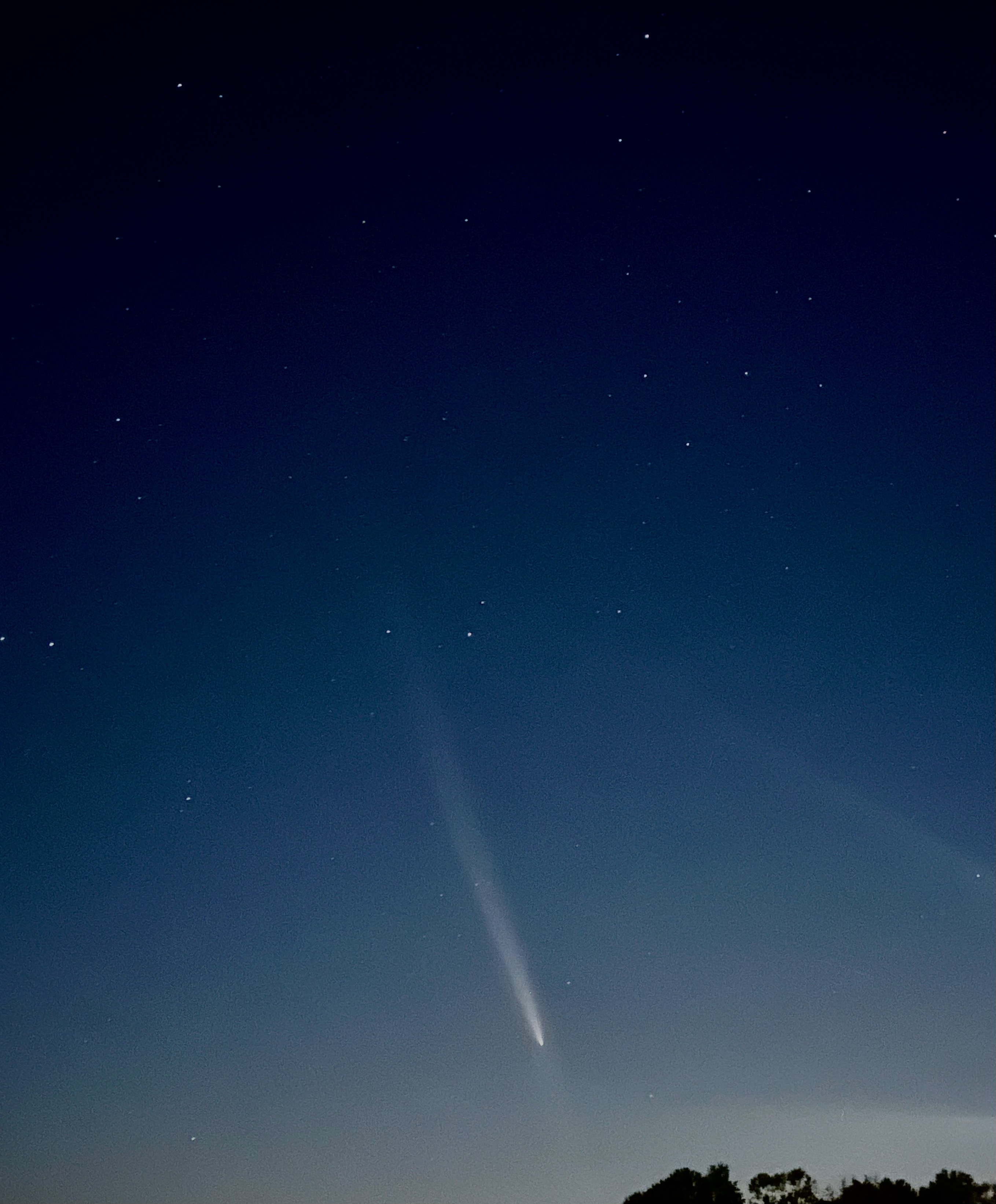
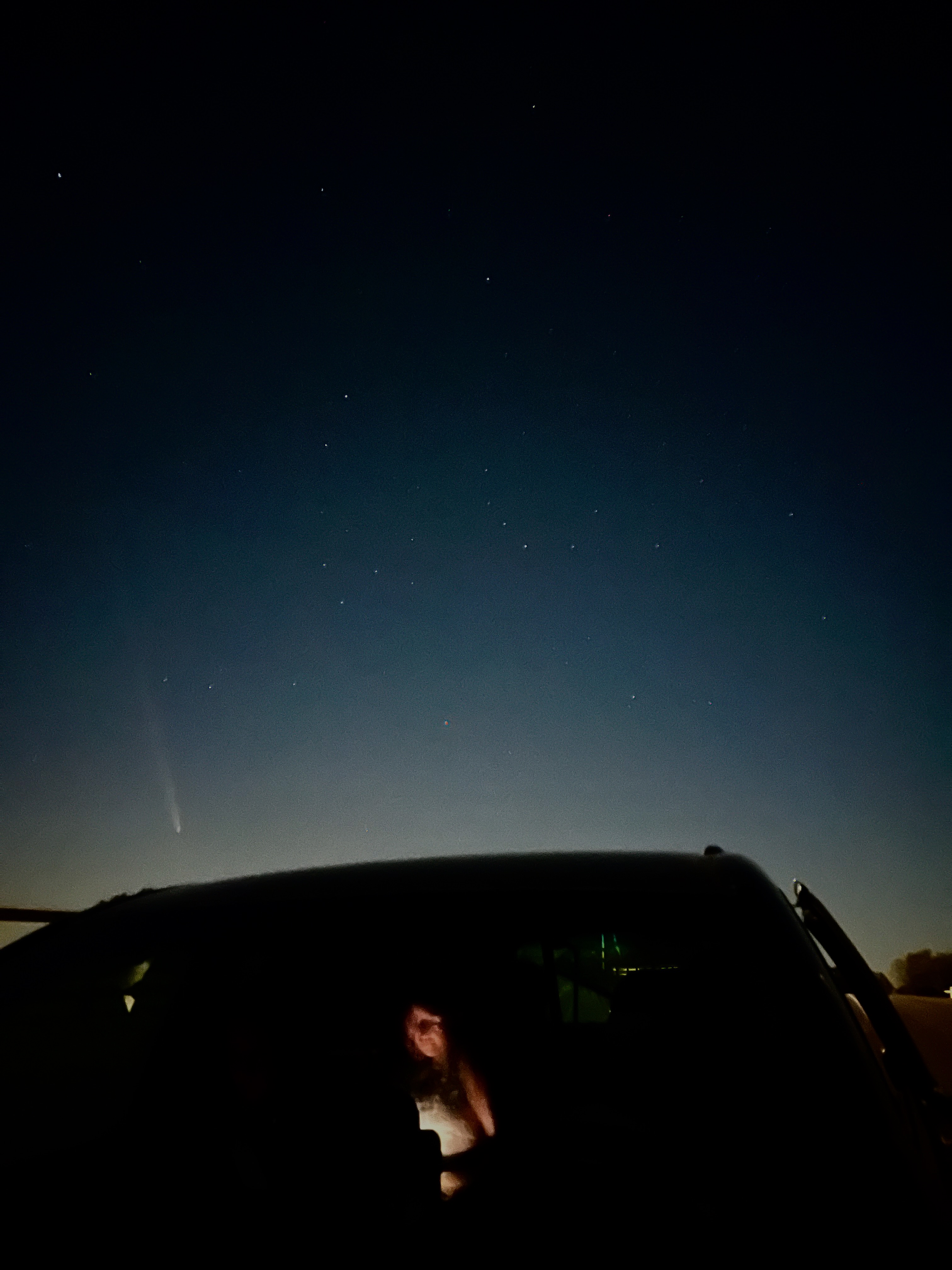
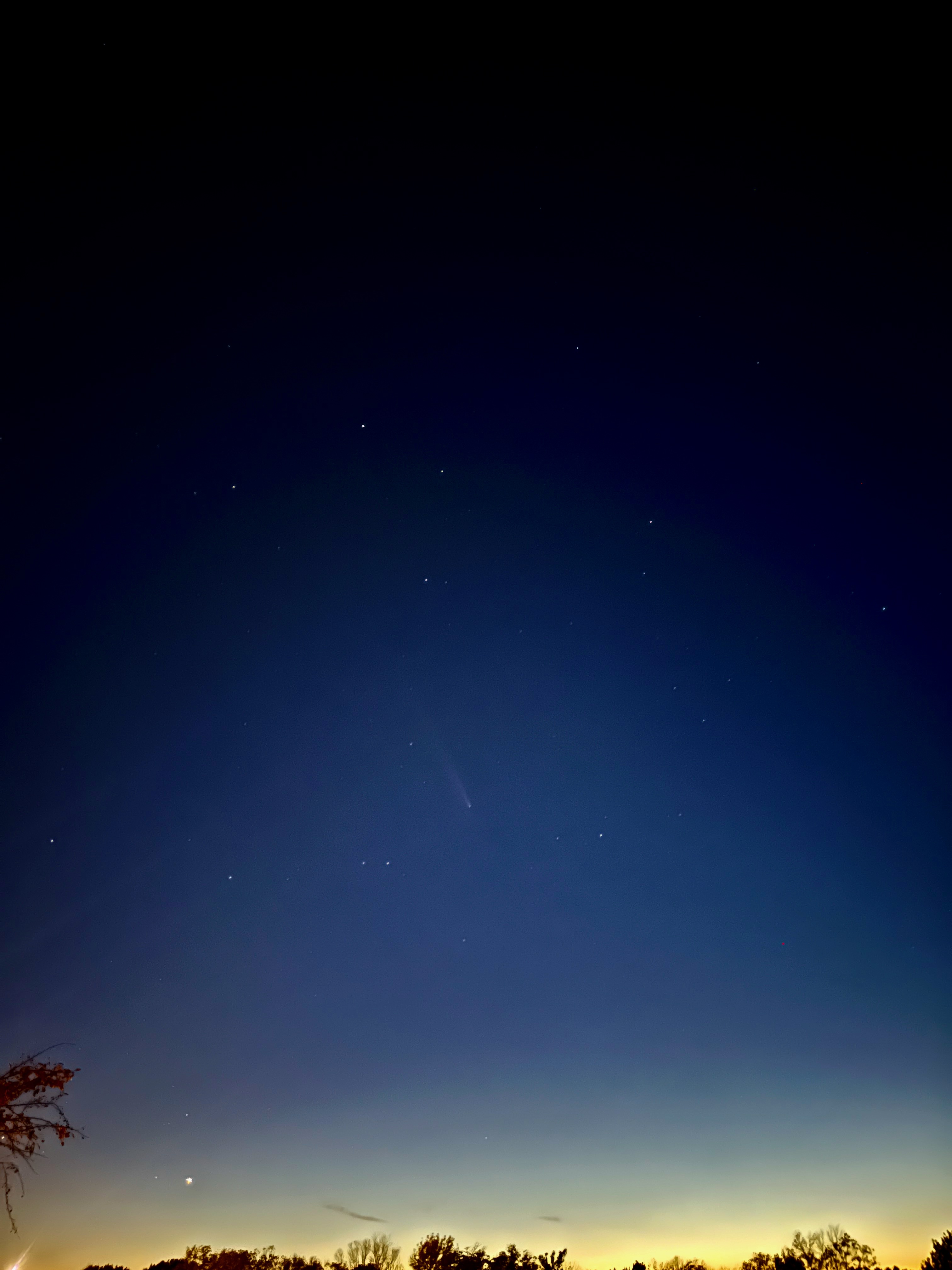
The beginning of the third week of the month was best, with some striking observations made possible with a short exposure time. Each night the viewing has been a little more difficult, and the tail a little shorter, so it may be beyond easy spotting very soon. It’s worth it, though. Once in a lifetime event here, folx.
I’ve gone out each night just to put my eyes on this ancient thing. Perspective is a quality that exhorts and propels the human heart. Seeing our conflicts and passions in the light of cosmic time and distance offers us the chance for true reflection.
Since 2019 I’ve worked as a portrait painter celebrating Mizzou student athletes. This last year was a high mark for Mizzou Football, with four of the squad being named All-American.
The University has a posh facility located in the south end zone area of the stadium where they hang all of the All-American portraits, stretching back into the 1930s. The great illustrator Ted Watts (1942-2015) created most of the portraits over the course of more than three decades, so I’ve got a big act to follow.
The All-American portrait wall at Mizzou Football’s South End Zone facility.
The display is pretty cool, and it’s cool to have my work extend that tradition. Portraits of Kentrell Brothers and Harrison Mevis are two of my works currently on display, and four new ones will appear soon (Fall 2024).
When I began to create my paintings, I went on a tour to see the previous works up close and to evaluate the aesthetic through-lines (format of names, dates, poses, backgrounds, etc), as well as the techniques prior artists used.
I take a central role in the design process, creating digital mockups which are approved at Mizzou Football before I begin the paintings. I generally work with ink on paper, which is mounted on panel and sealed, then painted over with layers of acrylic. I try to maintain a painterly quality, with texture and dynamic brushwork on display. I also attempt to bring the digital effects which naturally appear in the preliminary studies into a physical realm with semi-transparent washes of paint.
Working on the portrait of Cody Schrader.
As the projects have developed I’ve found my own approach to the portraits. I want them to have kinship with the portraits of Watts and other previous artists, but I make sure to give the works my own unique inflection.
I’m excited for the new crop to go on display. Kris Abrams-Draine, Luther Burden III, Javon Foster, and Cody Schrader are the 2023 All-Americans for Mizzou Football. See images of the works below, but also be sure to stop by the All-American wall if you ever get into the South End Zone building!
MF DOOM (keep caps on that name!) was a highly skilled and influential British rapper. Throughout the years, fans have been drawn to creating various artistic interpretations of his famous mask, behind which the artist almost always appeared/performed.
My good friend Jesse Slade, proprietor of KING THEODORE RECORDS, got me more interested in MF DOOM years ago. I’ve created representations of the mask in the past for illustrations/artworks using in Jesse’s record shop, but I wanted to make a move into a Lego version (or two) after I saw some folx creating them online.
Shout out to The Canvas Don and u/vonaudy for their versions of a building block/Lego MF DOOM mask. Both are awesome. I also like the “blockheadz” versions here and here. These examples served as inspirations, but mostly I just played around with what I’ve got in the old Lego vault.
I created the two versions below in standard light blue-gray, dark gray, and white, but then spray painted them with a chrome silver for proper effect. Take a look and enjoy. The smaller one is 4x5x2 inches and the larger is 5x6x2.5 inches.
Smaller MF DOOM Lego Mask. Click to see larger versions.
Larger MF DOOM Lego Mask. Click to see larger versions.
This past week I gave a talk for The Honors College at The University of Missouri. The theme this fall was The Art and Science of Living, and they asked me to give a guest lecture about the nature of the body in the context of my work. I chose to focus on a number of artists who have shaped my ideas about the meaning of the body. – from Anne Harris and Robin F. Williams to Kathe Kollwitz and Charles White.
To hear the talk and see all of the artists and images I explore in the presentation, click the link here.
I had the opportunity to sit on a panel at The Columbia Art League on October 12, 2023. Moderated by Diana Moxon and including CAL Executive Director Kelsey Hammond, the wide-ranging talk engaged with a lot of what artists are thinking about in the age of AI. Watch the video below to see a visual presentation of our research, examples, opinions (and humorous asides) as you follow along with the discussion.
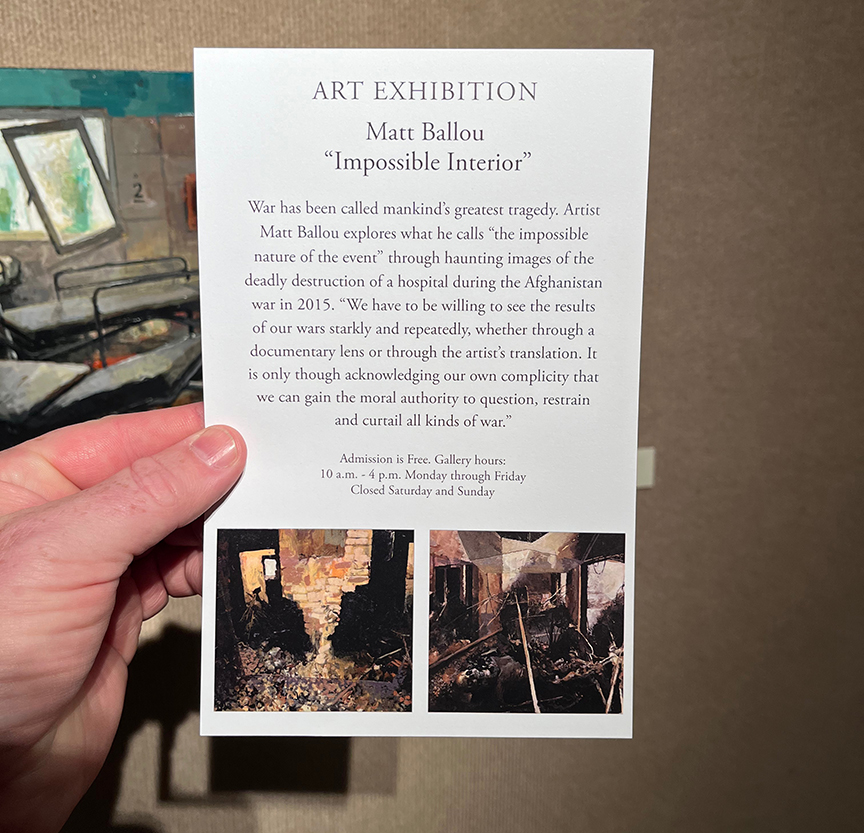
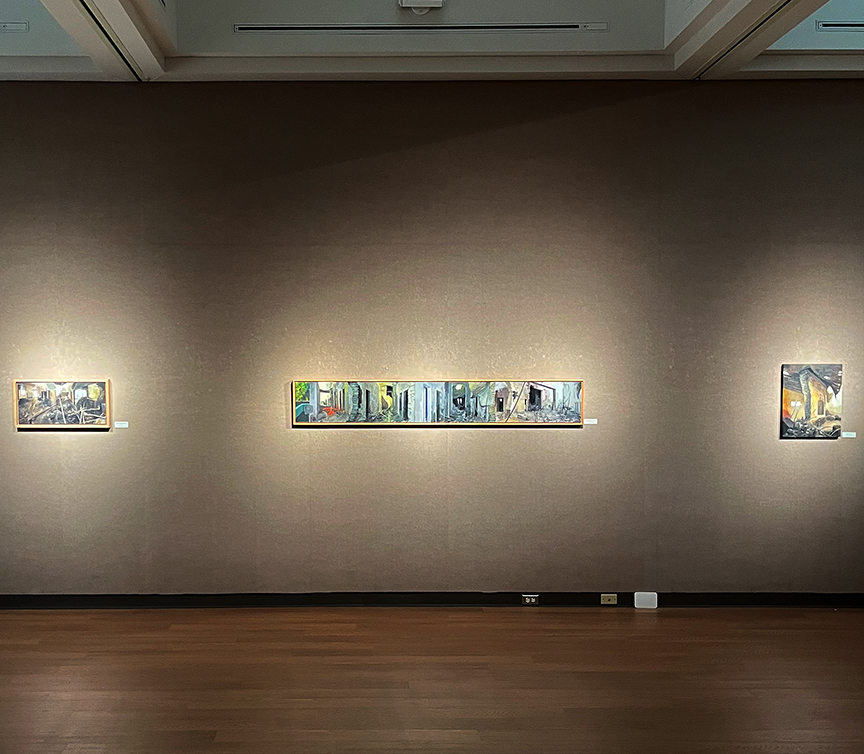
I’ve got a group of works on display at William Woods University in Fulton, Missouri. The show runs through October 6th, and I’ll be giving a talk that evening. For a preview, look below.
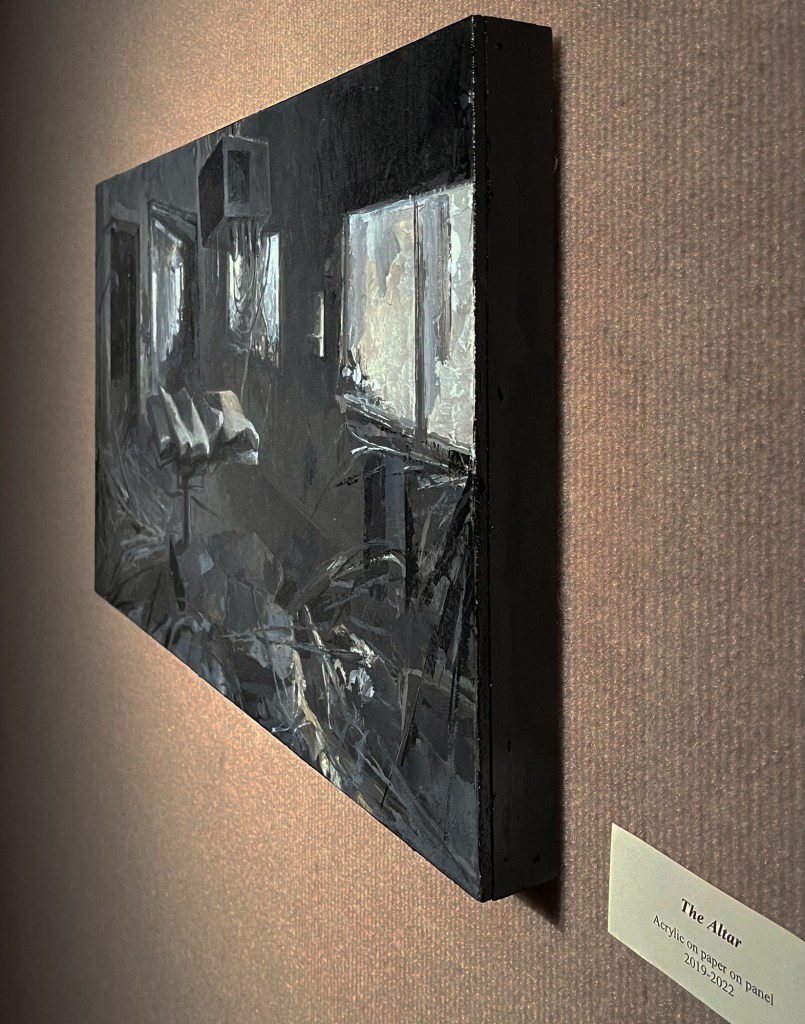
This is the third time I’ve shown this body of work, and I’d like to get the chance to show it again. The subject of the work – a “friendly-fire” bombing of a Doctors Without Borders hospital in Kunduz, Afghanistan. If you’d like to see more about this situation, check out my writing about it here.
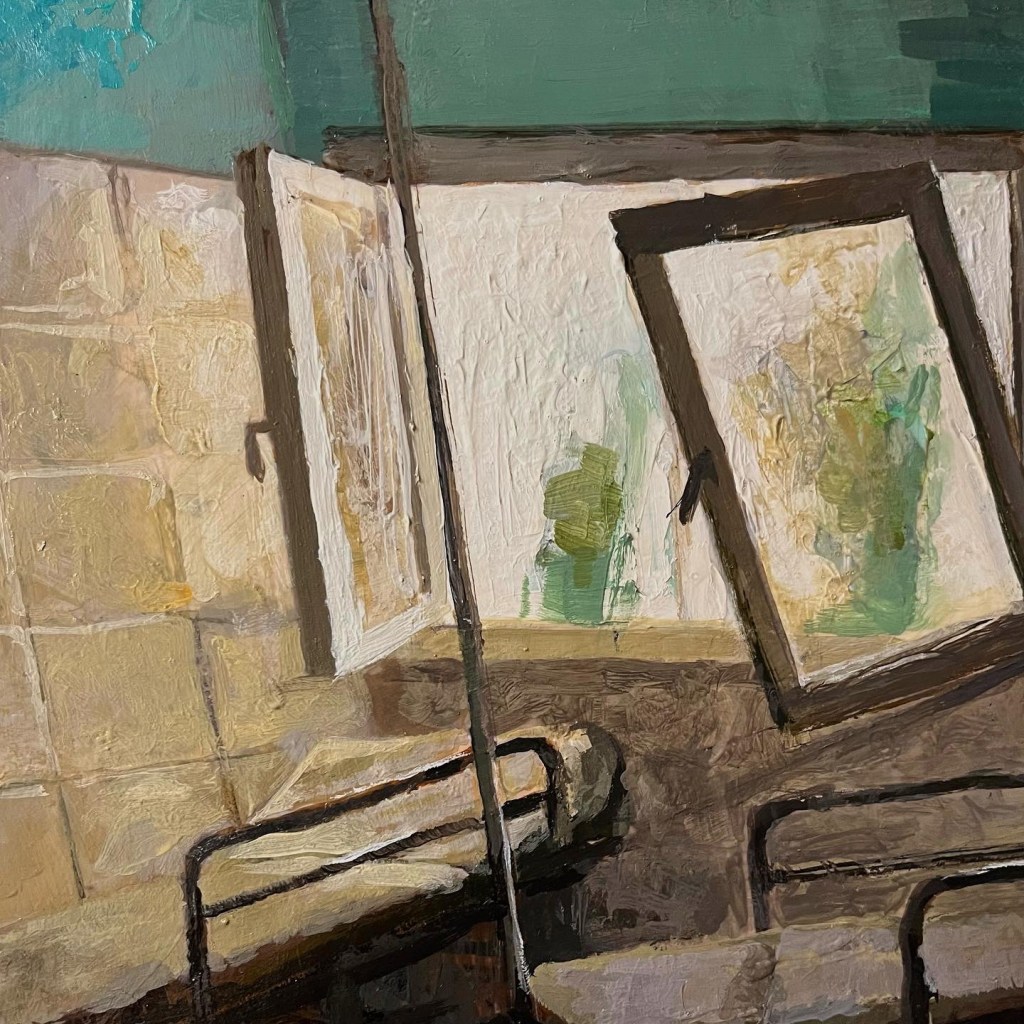
The card for the exhibition.Back of the card with description of the show.Here are just a few of the works on display, along with some details. There’s a lot to see, so come on by!
I’m also pleased to have a small group of my collaborations with Joel T Dugan also on display at the gallery. These Phoneme works are some of my favorites, and there are a number of just finished works included.
Eric L. Sweet left us suddenly on April 6, 2015, at age 44. Sweet was a beloved member of the MU Art faculty, having worked at MU since 2012 as an Adjunct Assistant Professor, teaching Printmaking, Drawing and 2-D Design courses. He was an alumnus of the Art program, having earned both his BFA (1997) and MFA (2011) from the University of Missouri. In 2008, he received an MA in Printmaking from the University of Missouri-Kansas City. Sweet was an active member of the Southern Graphics Council International and the College Art Association.
The “Running Devil” icon that was embroidered on one of Eric’s shirts.
To celebrate Eric’s life and positive role as an educator, Sweet’s wife, Catherine Armbrust, established The Eric Sweet Exhibition & Speaker Series to continue passing on his gift. I have created a series of work celebrating Eric almost every Seize the Sixth, and this year is no different. I will be donating 100% of the sales of these pieces to the Fund. This program was created because he strongly believed in the importance of community accessibility to art and encouraged meaningful conversations about the state of contemporary art. Funding this annual exhibition and speaker series for the gallery is the perfect way to make contemporary work accessible to the MU and Columbia communities, and to honor this special man who made an impact on so many lives. In fact, the initial funding goal was met in 2021 and the very first iteration of The Eric Sweet Exhibition & Speaker Series took place on December 6, 2021. See the exhibition poster here.
Look over my limited series of CNC relief cuts, posted below. If you’d like one, contact me. You’ll get an icon of Eric’s life and students and community members will get to see art because of the donation I make from the sale. As Eric (and his 4th grade teacher) might say, “You don’t HAVE to, you GET to.”
The Artwork
I’ve made eight artworks for Seize The Sixth this year. There is one group of five CNC relief cuts that feature the classic “running devil” icon that Eric had embroidered on one of his work shirts. Below the devil is featured part of Eric’s axiom, “YOU GET TO.” It’s a proclamation of hopefulness and gratefulness. Here’s a detail of the Running Devil carving if you want to see a close up view.
There are three of these – just the Running Devil without the text.
How to get one?
I can take PayPal, CashApp, and Venmo (click each for a link to my info). If you’re local you can give me cash. The cost $50 each for these. Ones with text are 5.25×5.75 inches and those without text are 4.5×5.5 inches. Each piece is made on a PVC sheet and painted in gold spray paint. Each is signed and numbered. The ones with text are numbered 1 through 5 and the ones without text are numbered 1 through 3. First come, first serve. Feel free to email me if you have any questions – balloum (at) missouri (dot) edu.
Why no Sweet Audio this year?
Most of the time I’ve been able to put together a compilation of classic Sweet audio clips. Unfortunately, I couldn’t find any more usable clips this year. There’s a chance I still have some in the depths of my files, but I just couldn’t locate anything for this year. In lieu of that, please head over to SoundCloud and check out the previous years’ offerings!
On February 25, 2022, I had the privilege to meet with students and give a talk over at Missouri Valley College. It’s about an hour away from Columbia where I teach, and the talk was in support of my exhibition at the college, Digital Art: Exploration and Education. I gave a brief overview of my use of digital tools, from nearly 25 years ago through today. If you’d like to watch the talk, I’ve added in all of the visuals I used, but I also worked in supplemental videos and other support information to bring more background to the talk. Many thanks to Mary Linda Pepper Lane, Sarah Fletcher, and Mike McJilton for their hospitality and conversation during my visit.
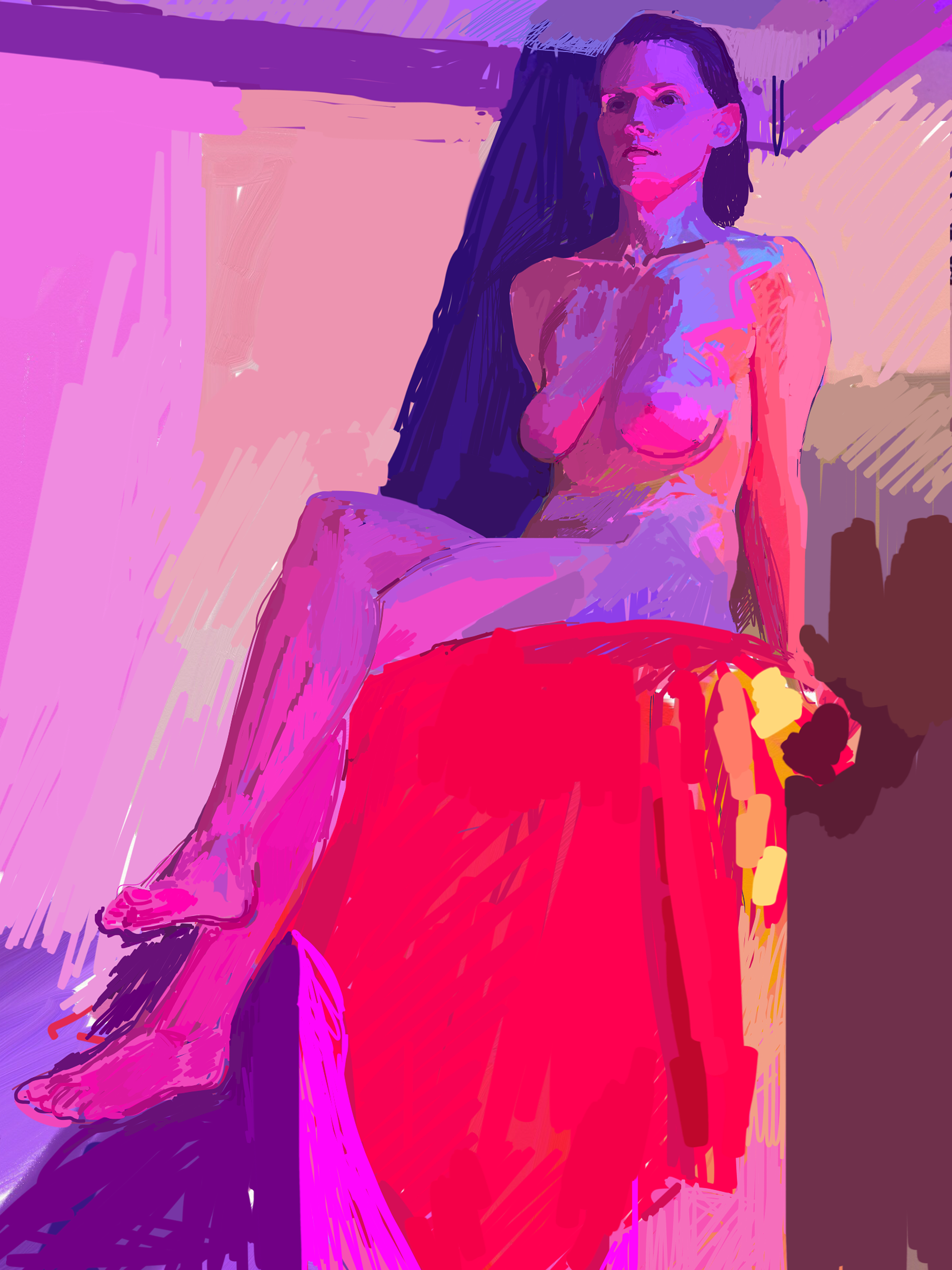
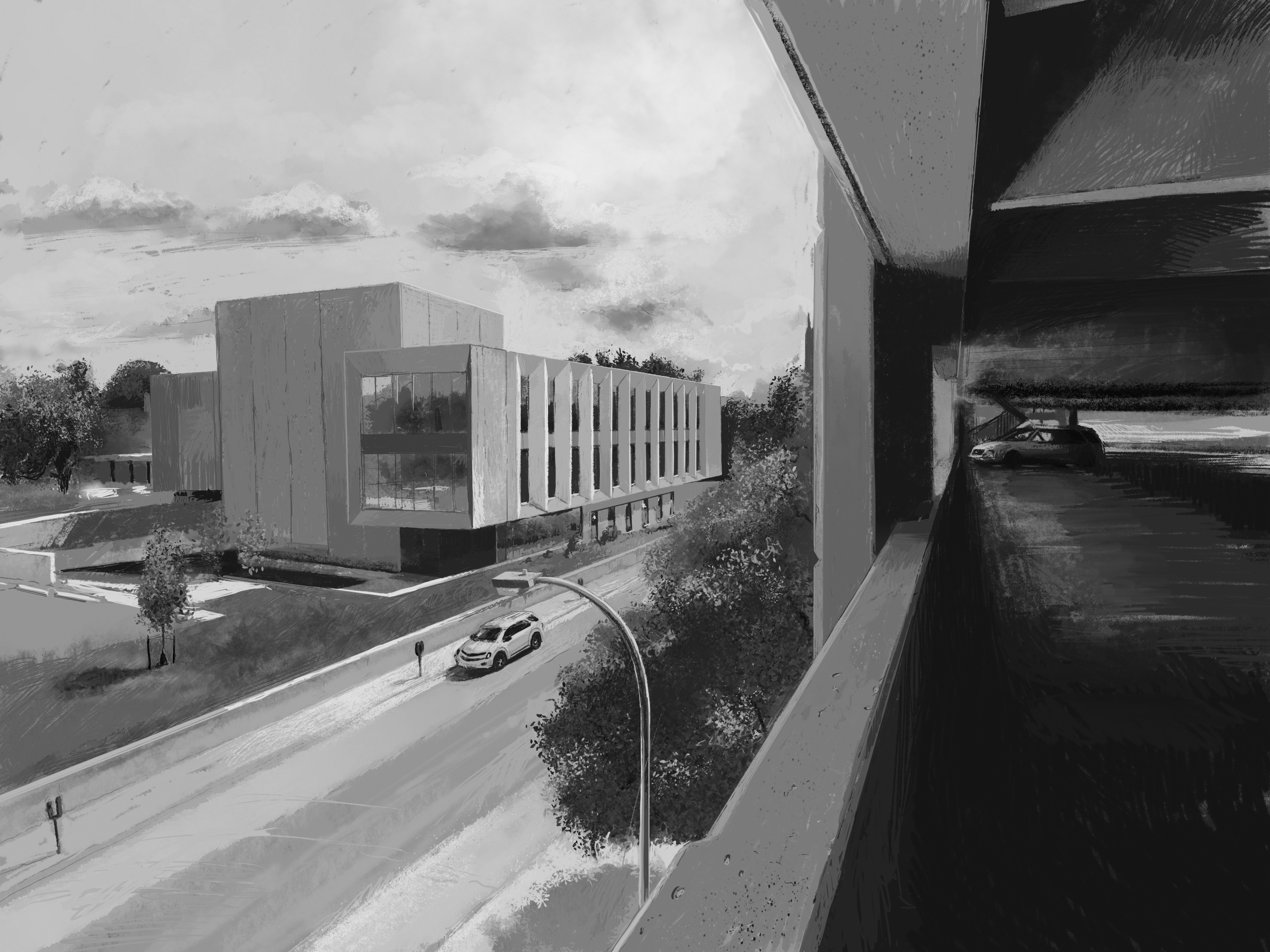
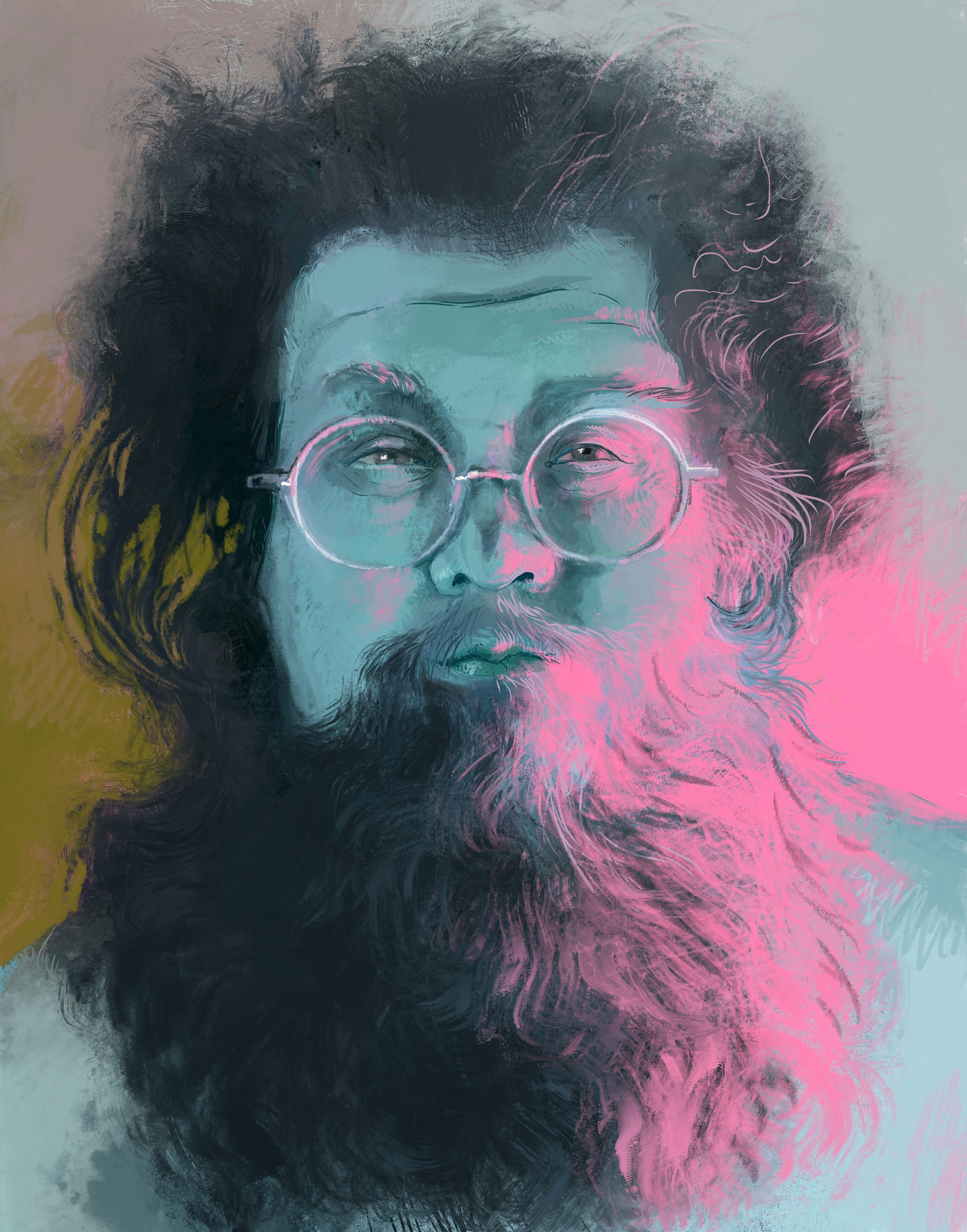
Below are a number of the works I showed in that exhibition. Left to Right, Top to Bottom: “Young Joe,” “Cardiac ICU,” “Touched Pelvis,” “Color Figure Study,” “Hitt Street Parking Garage,” “Jesse,” “Self Portrait With Neck Girth.”
Last month marked ten years of writing posts and posting pictures here. In most ways this site has become my de facto artist website rather than a space to post observations and non-art stuff. Kind of lame, I know. But I’ve had a personal website (and domain) for almost 22 years and I have administered it in a lot of different ways. But at some point – particularly after getting deep into full time teaching – I decided to lay aside HTML and CSS and private hosting.
I still have all of those older versions of my websites. Sometimes I browse them from their resting places inside my hard drives. I think about the effort and consideration that went into them. Thankfully I never committed the Geocities and Angelfire design atrocities… maybe WordPress is just the more contemporary version of those gaudy old things, I don’t know.
I have not written much in 2019. It has been a hard, strange year – emotionally, professionally, physically.
Physically, I have been sick and run down a lot this year. The medications I take to manage my heart disease are rough, and they constrain my metabolism and energy level; I have fallen asleep without wanting to a number of times this year. Though I work out every single day, my endurance seems to be sliding lower and lower. Normally I teach a course or two over the summer, but the reality is that I know I couldn’t keep up with that at this point. There’s more to say… but I won’t.
Professionally, while I’m not sure exactly where my artwork is going, I have a good body of work underway and am getting it out for people to see. I was recently promoted to Full Teaching Professor, which is the terminal rank in the Teaching Line. It took nine years to achieve. I feel secure and thankful for Mizzou, but there are a lot of pressures that rest on the shoulders of professors in a time when Universities are trying to do more with less. As someone who understands the importance of mental and physical health, well, those pressures can be life-threatening. I know that being an educator is not just time spent with students. If it were, I think I’d generally feel much better. God knows that I am still encouraged by being in the classroom – each and every time.
Emotionally, I don’t think I am the same after the heart attack. My general affect, emotional intelligence, and responses were dulled significantly. After two years it seemed that I had returned to normal. But have I? In 2012 I had a pretty major crisis of faith – one that corresponded with the onset of depression. There were other factors during the period of time between 2012 and 2015… then 2016 came with the death of my sister and my cardiac arrest mere days later. There have been a number of other things in the 3 and half years since then that have made impacts as well. Perhaps I am being changed by the medications and the inertia of routines… At least I am getting joy from working on LEGOs with my kids.