The Wreck of the ELLA Fitzgerald??

When I was young – perhaps five years old – I caught on to the notion that you could call in to the radio station and request songs. I enjoyed listening to the oldies stations and wondering what song might come up next. This was in the era of Casey Kasem and the power of the Billboard Top 100, and music was a little more of a communal cultural situation.

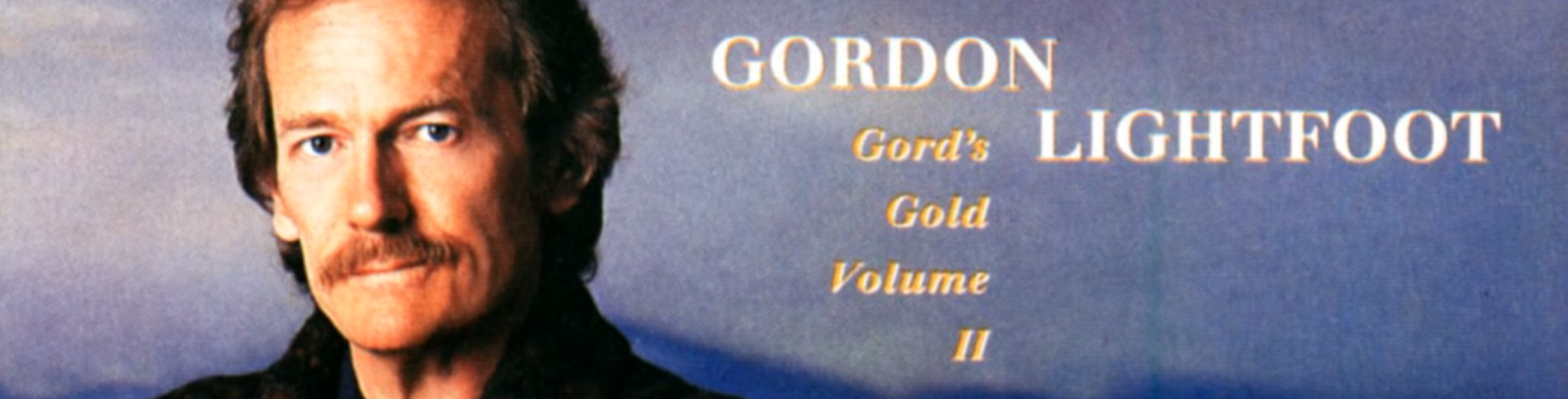
In any case, I was a radio person back then and I liked the idea that you could influence what was going to be played. One day at the age of 8 or so I decided that I wanted to call in to request the Gordon Lightfoot song The Wreck of the Edmund Fitzgerald. I got the number. I (kind of) worked out what I was going to say. But when I got on the air to make the request, I made a fundamental mistake.

You have to understand that my father had a large record collection, and I knew about a lot of different music from my older siblings, so I had heard a lot of names. It was an easy mistake for a kid to make, damn it! When the DJ asked me what I wanted to hear, I was a little flustered and blurted out:

“Can you please play The Wreck of the Ella Fitzgerald by Gordon Lightfoot?!”

This faux-pas got quite a laugh, and not only from the DJ, but also from my family. In the aftermath of this flub I can state I have known the difference between the Edmund Fitzgerald and the great singer Ella Fitzgerald since that very day.

In all seriousness, though, given that I was so interested in the song it was only natural that not so many years later I would start reading books and articles about the events surrounding this notorious loss of the Edmund Fitzgerald. Gordon Lightfoot was one of the first singer-songwriters who captured and fired my imagination. He (among some others) caused me to think about time and experience in a different way; as something within me and happening alongside me, not just random stuff apart from my life. Perhaps it’s a testament to the very idea of songwriting and musicianship as artforms. For me, Lightfoot embodied that troubadour tradition. These artists sing the tales of history, document it in personal ways, and help shape a democratic view of history itself.

Of course, everyone knows most famously Bob Dylan as one of these history-singers. But there were many others. I would include people like Sister Rosetta Tharpe, Billie Holiday, Utah Phillips, and Natalie Merchant amongst that group. So many… From Woodie Guthrie and Townes Van Zandt to Tracy Chapman and Ani DiFranco and P.J. Harvey. It’s such a rich – and necessary – tradition.

I find it fitting that my interest in the event of the wreck of the Edmund Fitzgerald and learning about the history surrounding it – not to mention becoming curious about the whole Great Lakes region – is all connected to the art of singing out moments of collective experience. This, like so many other things, I owe to art and artists. This is the richness of life: Not in things, but in awareness. Not in owning, but in being.

The SS Edmund Fitzgerald as seen from the Ambassador Bridge in 1965.
Detroit Historical Society

Today is the 50th anniversary of that ship sinking on Lake Superior. There are many interesting articles currently available from the days and weeks leading up to today (including this one from the Smithsonian and this one from Popular Science). So read about the ship. Read about the song, and listen to it (here’s the first version, but I’ve always been partial to the 1988 re-recording Lightfoot made – it’s a tad longer and has a slight mood adjustment that feels symbolic and mystical to me).

Then take at least 29 seconds – one “for each man on the Edmund Fitzgerald” – and may those moments of silent remembrance of them cause you to consider what human commerce, ingenuity, and hubris can do in the face of Nature’s power.

Mix CD Era Glory

I make playlists every semester for my classes. These collections of songs are largely built from the ice-breaker/introduction discussion assignment I give to my students on the first day. I want to know what they listen to, what moves them, inspires them, sticks with them. And then I want to serve up songs during focused working time. With studio art classes at Mizzou lasting about 2 hours and 20 minutes, there’s plenty of time to get a vibe going. This way they can be both exposed to the things their peers love but also get the excitement of hearing their own personal deep cuts. I love the feeling of sharing some of my favorites with them, as well as discovering what “the youth” like today.

My interests in music are very eclectic, and that’s down to my exposure to so much variety through my students. But it didn’t start there. Below I am featuring a few of the most iconic Mix CDs I’ve been given over the last 25 years. I’m including Spotify playlists for each one. Go! Listen to them! In situations where the original song is not available on that platform I’m linking to YouTube videos.

I also want to shout out the amazing people who shared these four mixes with me. They are creative people and much cooler than I ever could be. I will link to some of their current projects. I’ll also talk about some of the tracks in each section and give some background on how these united groups of songs have stayed with me for a quarter century.

Ox-Bow 2001: DANCE, DANCE, DANCE – Eric May*

Created in 2001. Spotify link to this playlist.

  1. Armand Van Helden – You Don’t Know Me
  2. Folk Implosion – Nothing Gonna Stop The Flow
  3. Outkast – So Fresh And So Clean
  4. Outkast – Ms. Jackson
  5. Stardust – Music Sounds Better With You
  6. Beck – Beercan
  7. Beastie Boys – Sabotage
  8. Deee-lite – Groove Is In The Heart
  9. Daft Punk – Around The World
  10. Fatboy Slim – The Rockafeller Skank
  11. Madonna – Ray Of Light
  12. Groove Armada – I See You, Baby (featuring Gramma Funk) – Fat Boy Slim Edit
  13. Daft Punk – One More Time

I had a fellowship at Ox-Bow for three months in the summer of 2001. It was a very important time for me. A lot changed in me. You can read about my experiences here.

Ox-Bow is a lot more institutionalized now. Back then, it was a true bohemian type situation. What happened at Ox-Bow, stayed at Ox-Bow. The vibe there was a hold over from the 60s and 70s in a lot of ways, and this was before the world was really turned on its head by the US response to 911. The internet was still new and slow, there was practically no social media, and almost no one I knew had a cell phone. It was just a different time. There was room to go a little wild as well as room to explore your own thoughts and perspectives.

One of the best things that we did at Ox-Bow was have intense, blow-out parties every weekend. The cohort of fellowship residents did work during the main part of the week (maintenance, housekeeping, kitchen duties, etc), so when we partied, we went hard. A large meeting tent would be raised in the central field, a few turntables would be installed, and speakers deployed. Then our resident DJ, Eric May (with help from others) would spin records and CDs deep into the Michigan night.

I discovered a lot of great music that summer (The Beta Band, AIR, Massive Attack) and fell more in love with acts I’d always liked (Mazzy Star, Radiohead, PJ Harvey, Cat Stevens). Most of that stuff wasn’t being played at the parties, though, as they’re a bit too contemplative and musically less conducive to drunken dancing and themed costumes. Hence, the mix we all left with was something closer to late-90s college party than artsy hipster fare.

We definitely burned some calories to these songs…

*Eric checked in with me about this mix – he mentioned in the comments that Mikey H. and Reid T. had a larger hand in crafting it than he did! Shout out to Mikey and Reid! Reid has gone on to an amazing career as a scenic designer and has an amazing portfolio of exceptional design work. Go check him out!

FHS’s Mix – Fred Sturkey

Created in 2002. Spotify link to this playlist.

  1. Archers of Loaf – Scenic Pastures
  2. Kitchens of Distinction – Railwayed
  3. Drop Nineteens – Winona
  4. Gang of Four – Cheeseburger
  5. Gang of Four – Paralyzed
  6. Talk Talk – Eden
  7. Television – Marquee Moon
  8. Kitchens of Distinction – Gorgeous Love
  9. Kitchens of Distinction – Drive That Fast
  10. King Crimson – Larks’ Tongues in Aspic, Part 1
  11. Talk Talk – It’s My Life
  12. Butch Walker – Hot Girls in Good Moods
  13. HUM – Green to Me
  14. HUM – The Inuit Promise
  15. Kitchens of Distinction – Polaroids
  16. Drop Nineteens – Kick The Tragedy
  17. Drop Nineteens – My Aquarium
  18. Kitchens of Distinction – Under the Sea, Inside the Sky

Fred Sturkey worked with me at Good’s of Evanston. I started overseeing shipping and receiving for the art and frame store a couple weeks after 911 and about 4 weeks after the end of my Ox-Bow residency. I’ve written about Fred a bit before, and was very sad when he died in 2019. He was a high quality human, and was always happy to hold forth about music or politics, history or philosophy. Just a gentle, sweet guy.

This mix CD is one of the greatest gifts anyone has given me. This introduced me to HUM and Talk Talk and Kitchens of Distinction, three bands that have been in my life ever since. So different from one another, but totally unique and important. KoD is particularly interesting as a group from the late 80s/early 90s that championed the expression of queer relationships and perspectives. They did it in a matter-of-fact way, with a sense of imagery and poetry that draws the listener into shared human experience. I really love the texture of the guitar sound and the soaring vocals.

Structurally, the mix isn’t tracked perfectly, but it stands out for me purely because of the music it introduced me to. I’ll be forever grateful, Fred. RIP, sir.

The Art is Hard Mix – by Nikki Maloof

Created in 2004. Spotify link to this playlist.

  1. The Starlight Mints – Submarine #3
  2. Wilco – She’s A Jar
  3. Appleseed Cast – Fishing The Sky
  4. The Shins – They’ll Soon Discover
  5. Mike Doughty – The Rising Sign
  6. Rilo Kiley – It’s A Hit
  7. Nick Drake – Northern Sky
  8. Spoon – Anything You Want
  9. The Long Winters – Scent Of Lime
  10. Phoenix – Run, Run, Run
  11. Owen – The Ghost Of What Should Have Been
  12. The Smiths – Cemetery Gates
  13. Badly Drawn Boy – Once Around The Block
  14. Clem Snide – Better
  15. Modest Mouse – Paper Thin Walls
  16. Paul Simon – Mother and Child Reunion

Nikki is a successful artist who was also in the first drawing class I taught while in graduate school at Indiana University. She was dedicated, confident, and effortlessly cool. Those qualities have stayed with her as she built her career, had kids, and mounted major international shows of her work. She gave me this CD after we compared notes on music in that class, and she really got me hooked on The Shins, Spoon, and Nick Drake. An interesting combination of indie rock and mainstream(-ish) alt-pop, this mix is just a rich, comfortable listen. There are some great gems here, like Soul Coughing’s singer/creative engine Mike Doughty’s solo work in The Rising Sign.

The Close to Totality Mix – Tina Casagrand-Foss

Created in 2008. Spotify link to this playlist.

  1. Yeasayer – 2080
  2. Blitzen Trapper – Black River Killer
  3. Spoon – Bring it on Home to Me
  4. Donovan – Celia of the Seals
  5. Old Crow Medicine Show – Cocaine Habit
  6. McLusky – Day of the Deadringers
  7. The Pixies – Down to the Well (Peel Session)
  8. Queens of the Stone Age – Someone’s in the Wolf
  9. Sigur Ros – Fonklogi
  10. Serge Franklin – KKK
  11. Saul Williams – List of Demands (Reparations)
  12. Blur – Out Of Time
  13. Ugly Casanova – Spilled Milk Factory
  14. Modern Lovers – Pablo Picasso
  15. Ima Robot – Paint the Town Red
  16. Kings of Leon – Pistol of Fire
  17. Johnny Greenwood – Proven Lands
  18. Tom Vek – That Can be Arranged
  19. The Black Keys – Till I Get My Way
  20. Radiohead – Idioteque
  21. Miwa Gemini – Traveling Man
  22. Foo Fighters – Stacked Actors

Tina has an amazing energy. She’s a true go-getter, someone who is actively working to make the world better. As the founder and managing editor of The New Territory, she’s forging a space for the stories of the people and places that make up the Midwest to shine. She was a stand-out in my classes way back when, and she’s always a treat to collaborate with. I have written for The New Territory and made artworks for the magazine, as well as spoken at the Missouri Scholars Academy, which is one of Tina’s favorite annual summer projects.

This mix is highlighted by driving, raging, bloody tracks like the Peel Session version of Down to the Well by The Pixies, Saul Williams’s – List of Demands (Reparations), Ima Robot’s intensely violent Paint the Town Red, and Pistol of Fire by Kings of Leon. There’s definitely some serial killer vibes going on in this mix, but interesting moments of calm are interspersed throughout (Donovan’s Celia of the Seals or Blur’s Out of Time). There’s a variety of attitude in this mix – some of it is very serious, or even anxiety-producing (Greenwood’s Proven Lands or Williams’s List of Demands) – while other songs are tongue-in-cheek or just hilarious (Modern Lovers – Pablo Picasso or Miwa Gemini’s Traveling Man) I like the range of time across the tracks, as well as the tension between related genres/styles.

It’s loaded with bangers, all-time classics, and deeper cuts that stand the test of time. I’ve kept bringing these songs into my classroom since the day Tina handed the CD to me!

For some reason, the track order that was burned onto the CD itself is not the order that Tina wrote on sleeve – I ended up listening to it wrong for all these years…

The best part about these mixes is that they are palpable, physical artifacts made for me. Sure, we can listen to the music without the object, but the object is proof of something. It was there with me, and it was there with the people I mentioned. It shared space and time with us, and it travels along with us. The meaning is not only in the music, it’s in the fact of human interaction and sharing deeply human concerns.

Rush and Nostalgia for the Future

Growing up I found intense comfort in the music and lyrics of the iconic Canadian band Rush. Rush hold a particular place in the history of rock music, as they were both iconoclastic and unapologetically moral and humanist in orientation. Their songs were not the realm of edge lords or shock rockers. They didn’t make songs about sex, drugs, violence, or stupidity. Much to the contrary. They thought deeply, expressed those thoughts intensely, and were able to stand out in completely unique ways because of the quality of their unified talents.

Rush pioneered rock music as an intellectual pursuit. They were compelling because they stood on principles, and communicated deep commitment to human concerns without couching it in schmaltz. You can sense honesty in their dedication to their musical craft and in the meaning embedded in the lyrics Neil Peart wrote.

John Dewey, a central philosopher of the pragmatist movement, established much of the foundation surrounding art as a moral structure in society. Don’t misunderstand me; I don’t mean propaganda or dogma being used within art to influence or instruct. I mean deeply human values translated into actionable expressions of yearning and awareness.

“Anthem of the heart and anthem of the mind
A funeral dirge for eyes gone blind
We marvel after those who sought
Wonders in the world”

Anthem

In Rush we see full expressions of a world where reason, empathy, and the better angels of our nature have had free reign. We find artifacts proving the best human capacities for love, attention, and hope.

When I think back on what inspired me and what stuck with me for all of these years, I think it is the sense of hope and expectation that they created. Actually, maybe hope is the wrong word… I think yearning might be a better way to describe it. Hope, in a sense, lacks agency. It sees life as something that happens to a person rather than what a person chooses, navigates, or constructs for themselves and alongside others.

“They travel on the road to redemption
A highway out of yesterday, that tomorrow will bring
Like lovers and heroes, birds in the last days of spring
We’re only at home when we’re on the wing
On the wing

We are young
Wandering the face of the Earth
Wondering what our dreams might be worth
Learning that we’re only immortal
For a limited time”

Dreamline

Yearning, on the other hand, is motivational and self-actualization in process. It’s visualization. It’s being the change you want to see in the world. The ability to reflect, imagine the world you want to inhabit, and take real steps to make it real in some way… that’s yearning. It’s the combination of instinct and clear-sighted determination.

In some very real ways, Rush was the soundtrack to my own determination to at least TRY to expand my world. To get educated. To travel. To live as an artist. To read, think, and feel deeply. Songs like Middletown Dreams and Subdivisions called me to broaden my horizons. The lyrics of Dreamline and Ghost of a Chance made me dream, and then helped me transform those dreams into practical plans.

“Dreams flow across the heartland and feeding on the fires
Dreams transport desires
Drive you when you’re down
Dreams transport the ones who need to get out of town, out of town”

Middletown Dreams

“Like a million little crossroads
Through the back streets of youth
Each time we turn a new corner
A tiny moment of truth”

Ghost of a Chance

One of the other realms that Rush inspired me to think about and explore more fully was science. As a young person I was exposed to young earth creationism and other forms of science denial. Songs like Natural Science and, later on, Earthshine, prove that transcendent awe and appreciation for the wonders of the universe are not the purview of religious belief. As I read about the science behind everything from evolution to astrophysics, I unlocked a sense of astonishment and pure joy that had not been available to me before. In reading folx with diverse perspectives, from Stephen J Gould and Annie Dillard to Douglas Adams and Ellen Dissanayake, I found that there was a way to be excited about the glories of space, time, and biology without appealing to supernatural explanations. There’s so much that we can see, hear, touch, measure, and practically explore without needing to imagine things outside of the universe to justify them all.

“Wheel within wheels in a spiral array
A pattern so grand and complex
Time after time we lose sight of the way
Our causes can’t see their effects”

Natural Science

In some way, the feeling that I’ve always had while listening to Rush is a kind of nostalgia for a past dream of a future where good truths prevail. Where the right thing is done, and everyone can see it. Where the light of knowledge is appreciated. Where attempting to understand “life, the universe, and everything” is given the highest of accolades, appreciated more than fleeting beauty or physical ability. Where honesty, good faith, and mutual aid are seen as true societal values. I think that future is possible, and I think we are actually closer to it than we’ve ever been as a species. In a time where this country is divided and anxious, it’s easy to think that future is not possible. But it objectively is. This is the best time to be alive for most human beings.

This Thanksgiving week, I’m thankful for the world, for life, for music, and for Rush. Here’s a link to a playlist of some of my favorite songs they’ve made:

Becoming the Student, #13: Kevin Stark

Way back on St Patrick’s Day Kevin Stark and I sat down to share some Guinness and make a portrait. After a long while I’m finally posting it. It’s one of my favorites of the Becoming the Student series, and I am very happy I documented its creation in a video. See that video at the bottom of this post.

2014-03-18 17_17_11Kevin Stark. Digital drawing created with Adonit Jot Touch 4 in Sketchbook Pro on iPad Air, 2014. Click for enlargement.

On Shared Experiences

“I try to be present. I don’t like it when I’m not. That’s why I’ve been doing this game night thing. The games themselves are a blast – I love the strategy and going for the win and all – but I really love the way that games reveal things about people and you get to know them. I’ve always been big on shared experiences. I derive quite a bit of joy from knowing and being with people. Like, I’m not so interested in going to see a movie with someone. But, for instance, going to the True/False festival with someone – doing something you have to journey through together – is something I love. You’re participating in it together, sharing it together, and every connection between you is growing. Those are the kind of things I’m big on.”

On His Rebellious Childhood

“Everything that I’m into now I said I hated as a kid, like Star Wars, the Red Socks, and The Beatles. My dad tried to introduce me to each one of them and I was like, ‘NOO!’ I’m glad I grew out of that ‘cause they’re pretty awesome.”

On Mellowing Out

“I’m more OK with people mellowing out. I used to be annoyed that this concept of a ‘restless youth’ thing was just a youth thing. The idea that people sometimes become confortable with things… I guess I’m mellowing out about mellowing out.”

On Music

“I’m really into discovering new music right now. There’s too much. Too much. I really like Daytrotter. It’s a download website where a bunch of bands from around the world share four song sets and they get posted.”

“And Destroyer. You ever heard Destroyer? Oh, man – it’s great! Get into Destroyer. He has two albums that have affected me greatly.”

“I’m annoyed at how much I’m a sucker for long songs.”

On His Portrait

“Thanks for not making me make a stanky face for two hours.”

Digital painting of my friend Kevin Stark. Two hours.

Becoming the Student, #3: Bobby Schembre

Bobby Schembre is a pastor, musician, questioner, lover of fine bourbons, and grill-master. In many ways we are different, but in many ways we are very similar… from the deepest hopes we harbor to the sorts of challenging questions we explore. Last week Bobby agreed to be a part of my “Becoming the Student” project. I greatly looked forward to our conversation. We moved through some intense existential territory over the course of our 2+ hour session. Some topics we touched on were: Pink Floyd and spiritual awakenings, how to understand the taste of bourbon and scotch, the nature of musical liturgy in contemporary Christianity, the glory and grace of our wives, and our experience of scientific awe.

Here is the resulting portrait:

IMG_8350Portrait of a Man (Bobby Schembre, 2/24/2014). Pastel on Stonehenge Paper, 22 x 24 inches, 2014. (Click for enlargement)

Bobby on musical liturgy and storytelling:

“I love the fact that we talk about how God is holy and untouchable and yet He’s here and gracious. It doesn’t make any sense really. Or that He’s indescribable and infinite and then we turn around and spend the rest of the service describing Him.”

“Part of the reality for me is that I can’t believe the bible or have a real experience of Christianity without being OK with deep tension. Everywhere, everything has a balance to it. Everything has a paradox involved in it. Nothing is just something you could put in a box and tie it up neatly and say, ‘I’ve got this.’ When we explore something about God there’s something else that makes us think, ‘well, what about this?’ And so one of the things I’m always thinking about in creating a musical liturgy is how can we expand the way we think about God, uphold the paradox, and marvel at the paradox of God.”

“I’ve been pondering my job as a ‘worship leader’ – which is just something we’ve made up – you know, what is this? I think part of the answer is that I’m a storyteller. I’m helping people think the story and sing the story of the gospel. It’s practicing a pattern.”

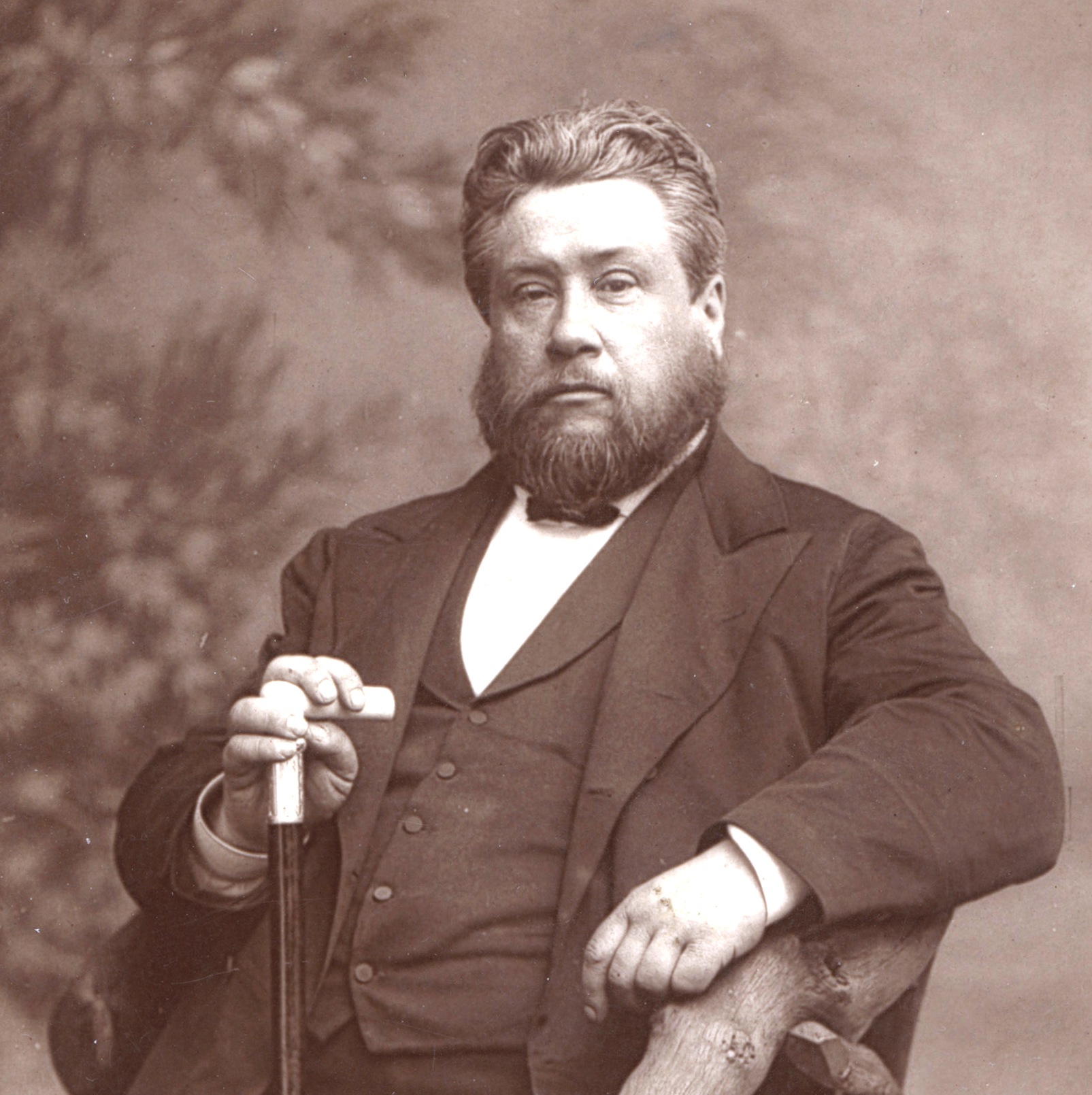
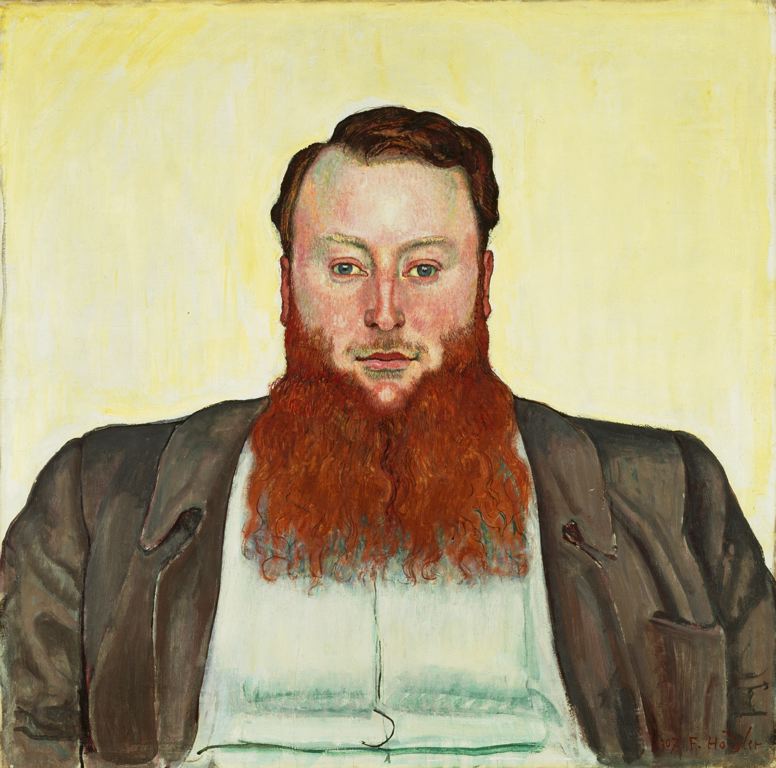
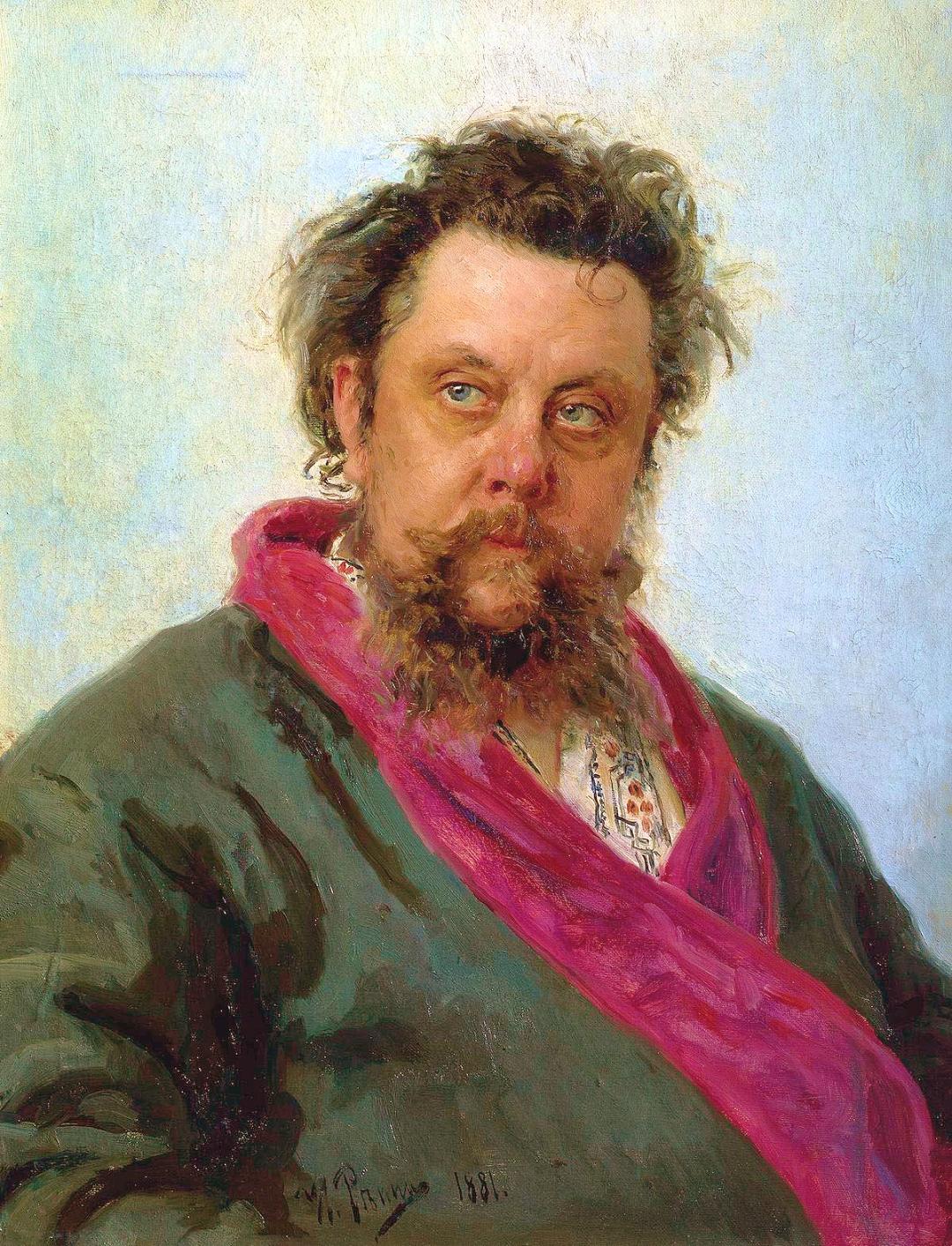
Bobby, with his manly beard and barrel chest reminds me of a few other bearded big men of history…

spurgeon_chair1Famed Christian pastor and author, C.H. Spurgeon

portrait-of-sculptor-james-vibertSculptor James Vibert by Ferdinand Hodler

Repin-portrait-of-the-composer-modest-mussorgsky-1881Russian Composer Mussorgsky by Ilya Repin

Also, there’s this great Portrait of a Man from the collection of the Art Institute of Chicago. Click to check it out.

~

Thanks for being a part of this portrait series, Bobby!

A Question of Balance

Dedicated to George, who introduced me to A Question of Balance in the mid-80s.

~

It is interesting what stays with us from the early years of life. Seemingly banal or incidental elements can mysteriously transmogrify into certain means of grace. And grace is always strange.

It follows then that these grace-laden elements might be loaded with weirdness or saturated with some slow-acting agent of unforeseen change. Of course, that’s part of why the grace that has touched my life is different from the grace that’s touched yours. So often what is tremendously meaningful to one heart seems trivial, shallow, or just plain boring to others. Sometimes what changes me forever would do nothing to the person right next to me.

Nowhere is that fact more apparent than in the music with which we fill our lives. The bands we become attached to, what songs move us, or which albums are soundtracks to our personal transformations are usually radically different for everyone. Everyone seems to have a different constellation of sounds, a different set of aural landmarks. When we do find someone who shares our deep connection to a piece of music there’s instant rapport. When we encounter those who seem unable to grasp the importance of our historical tracklist we can find ourselves incensed.

With that preface let me say that A Question of Balance is one of the major musical touchstones of my life. Released in 1970 by The Moody Blues, Question is, for me, one of the most significant works of art to which I’ve been exposed. It is strange. It is bombastic. It is epic. It is philosophical. It risks existential engagement. It tries to take on everything. It is critical of our default positions. It asks us if this world we’ve made is really what we want. Before I knew much of anything about the wider world, I was connecting with the introspective spiritual and societal quandaries the band was dealing with in this classic concept album.

url

If you are aren’t familiar with the record and want to experience it you can listen to the whole thing here.

Hearing Question as a child was one of the things that would, by the time I was 13 or 14 years old, initiate in me a long-term investigation into the nature of meaning and experience. The sorts of questions the record poses set me off on what has been a lifetime of learning and intellectual exploration. It was a means of grace to me simply because it stimulated me to contemplate those bigger existential concerns that so often get drowned in the machinations of everyday life. Question, along with a number of other factors, created an ongoing state of contemplation in me that helped me avoid many of the pitfalls of adolescence.

There are a thousand things I could say about this record. Like how those jangling guitars at the opening of the album can instantly return me to George’s old golden/mustard/brown Dodge and the smell of propane. Like how the album’s assertions went with Chris and me on our adventures northward so many times. Like how its words were a reminder of the feeling of home as I ventured out across the country in my twenties. The sounds and questions and arguments of A Question of Balance accompanied me on many late nights in the studio, on the road, in contemplation, in worry, in joy.

I could spend time exploring any of those avenues, but there’s one aspect of Question that has really reverberated within me over the years. A major theme of the record amounts to acknowledging the relational consciousness that transcends obsessive, hyper-individualism. This one thread, running throughout the entire record but focused in one particular track, was definitely a seed that found good soil in me.

Below you can read the major content of that single track. Called The Balance (click here to listen to it), it is the last song on the album and is comprised mostly of Mike Pinder’s spoken word recitation of a poem co-written by Graeme Edge and Ray Thomas.

After he had journeyed,

And his feet were sore,

And he was tired…

He came upon an orange grove.


And he rested.


And he lay in the cool.

And while he rested

He took to himself an orange, and tasted it.


And it was good.


And he felt the earth to his spine

And he asked…


And he saw the tree above him…

And the stars… and the veins in the leaf… and the light… and the balance


And he saw

Magnificent Perfection.

Whereon, he thought of himself in balance –

And he knew he was.

~

And he thought of those he angered, for he was not a violent man.

And he thought of those he hurt, for he was not a cruel man.

And he thought of those he frightened, for he was not an evil man.


And he understood…

He understood himself.


Upon this, he saw

That when he was of anger

Or knew hurt

Or felt fear

It was because he was not understanding


And he learned Compassion.

And with his eye of Compassion,

He saw his enemies like unto himself.

And he learned Love.

Then, he was answered.

The tired wayfarer of the poem gains perspective from the Common Grace embedded in the world around him. He relishes the coolness of the orange grove, the simple pleasure of tasting the orange, and – suddenly – the glorious awareness of the Great Order that is before him and beyond him, yet is also permeating him. As he pays attention to the tree, the stars, the leaf, and the light his growing perspective and awareness coalesce into a unifying understanding. The traveler experiences what could be seen as the state of consciousness called Savikalpa Samadhi (something which has more recently been termed The Overview Effect) and he is fundamentally changed in his relationship to other human beings.

Suddenly he’s not obsessing about his rugged individualism any more; he’s thinking of others:

And he thought of those he angered…

And he thought of those he hurt…

And he thought of those he frightened…

Thinking of others – believing that they actually exist and are valuable. Considering others – imagining how your words, actions, or attitudes impact them. Revolutionary ideas, right? But it doesn’t stop there. The journeyman turns his new-found perspective on himself and starts to see that being enslaved to anger and hurt and fear displayed his lack of understanding. In fact, it showed his inability to understand at all apart from a revelation from beyond himself. Realizing this, and sensing his necessary reciprocity with the rest of humanity, our traveler learns compassion. That is, in giving up his self-determined privileged position he can no longer feel superior to or more valuable than those around him. He can, in acknowledging and respecting their value, live out a higher value in himself.

All of this can be passed off as trite, sure. It can be dismissed as sentimental, unrealistic, or melodramatic. It can be ignored as the cheesy platitudes of a bunch of hippies. Sure. But it can also be seen as aligned with the heritage of the great faith and wisdom traditions that have been passed down to us, traditions that certainly inspired the band while creating this album.

I know it’s all more complex than this. I can see how The Balance can come off simplistic and hokey. I know that real change and real meaning require more than a singular experience, more than surge of feeling… but there is something important here, something worth declaring, worth believing. Rejecting sentiments such as those contained in Question seems like such a shallowly postmodern thing to do.  What have cynicism and petty ideological divides gotten us? I guess I’d rather stand in awe with the kitschy hippies than smirk in conceit with those who would disdain words – however sentimental – supporting basic human dignity and value.

~

Post Script:

My experience of A Question of Balance is a demonstration of Joseph Kupfer’s ideas about the inherent moral component of experiencing art. You can read more about this concept here.

The album is certainly worth buying and grappling with. Purchase it at iTunes or Amazon.


We Need Tears

“Tears streamed down Guston’s cheeks as he spoke about the painting.” – David Reed, Soul-Beating

This is where I live, where I want to live, where I wish I was all of the time, where I hope to be when I’m not there, the place I seek when I’m distracted by maintenance and administration and logistics. The place of hopeful devastation. The place of eucaristic, sacramental meaning. The place of alchemical negotiation. When Guston wept over Piero della Francesca’s painting, he knew the work more truly than any of our theories or proliferating words could hope for. Those manifestos and ideologies and conceits so often deaden us to the transformative power of good work, so often distract us from sensing the potency there.

This week I’ve been weeping over Mussorgsky’s Pictures at an Exhibition. In particular, his Great Gate of Kiev is so full and so amazing that it transcends analysis. I could go on and on with words – context, philosophy, history, theory – but the reality is that the wrenching torque created by that string of notes is MORE MORE MORE MORE MORE than any of that! My face is contorted and tears stream because of an intense inner hope/fear/joy/sadness brought to the fore by Mussorgsky’s music.

I don’t know why I’m writing this other than to say that this paradoxical emotional state is why I am an artist. The razor edge between enforced humility and exultant pride, between tragic fear and triumphant happiness, between deep sadness and rich, confident hope – these are the things great art gives us. The paradox is the liminal zone, the threshold between true feeling and mere conjecture.

We need tears in the face of these things, not jokes or theory or attempts at certainty.

Above: Viktor Hartmann’s design for the Great Gate of Kiev. Click the image to listen to a great performance of the piece.

The Greatest Mix Tape/CD/USB/Playlist I’ve Ever Received

Back in 2009 or so one of my students, Tina, gave me a collection of songs. I knew of her audiophile tendencies. I knew she had good taste. I knew she was an artist and a scholar and a writer and a thinker and an all-around quality individual. So it was with great anticipation that I began to play this mix. Little did I know that years later it would still be a staple of my iTunes, a cornerstone of my sonic environment, a touchstone to contemplation and significance.

So here it is, in all of its glory. Where I can find a link to a song, I’ll place a link. If I were you I’d load this beast up and let it play. And when you do, thank Tina’s good taste.

1) “Pistol of Fire” – Kings of Leon

2) “Cocaine Habit” – Old Crow Medicine Show

3) “Down to the Well” – Pixies (Tina actually gave me a rare version of the song that I can’t link to… but this is awesome anyway)

4) “Proven Lands” – Johnny Greenwood

5) “Traveling Man” – Miwa Gemini (this is a live version, different from what Tina gave me, but still awesome)

6) “That Can be Arranged” – Tom Vek

7) “Bring it on Home to Me” – Spoon (A great Sam Cooke cover)

8) “Celia of the Seals” – Donovan (One of my all time favorite songs now…)

9) “KKK” – Serge Franklin

10) “Paint the Town Red” – IMA Robot (Super intense track)

11) “Fonklogi” – Sigur Ros (Sorry, no link…)

12) “Day of the Deadringers” – McLusky

13) “List of Demands” – Saul Williams (CLASSIC)

14) “Till I Get My Way” – The Black Keys

15) “Black River Killer” – Blitzen Trapper (Like listening to a Cormac Mccarthy novel…)

16) “Pablo Picasso” – Modern Lovers (Jonathan Richman deserves rock immortality for this track, especially when you take THIS track [which is one of the greatest songs of all time] into account…)

17) Out Of Time – Blur

18) 2080 – Yeasayer

It’s a strange mix, this mix is. It’s a conflagration of narrative and imagery, of poem and scream, of hysterical missive and crafted mission. I’m thankful to Tina for giving me this particular grouping, this particular constructed meaning.


So in honor and thanks, I present here the first drawing Tina made for me. It was a drawing that told me she had some serious ability. In spite of its humble scope, this drawing really has some serious understanding behind it. Tina went on to make great drawings in subsequent classes, but I know her life path will be much more expansive and contain much more amazing visions. I’m glad I got to witness a bit of it. Here’s to you, Tina! Thanks for the music!

The Best 23 Albums of 2011…

…a completely subjective, personal list that was based entirely on how much I played them and/or was inspired by them, and regardless of when they came out. So here they are – artist, album (conveniently linked for your perusal), and year of release.

m83 – hurry up we’re dreaming (2011) 

battles – gloss drop (2011)

broken bells – broken bells (2010) 

the national – high violet  (2010) 

doves – kingdom of rust (2009) 

tori amos – abnormally attracted to sin (2009)

bat for lashes – two suns (2009) 

beck – modern guilt (2008)

the shins – wincing the night away (2007) 

the national – alligator (2005)

radiohead – OK computer (2003)

the decemberists – castaways and cutouts (2003) 

yeah yeah yeahs – fever to tell (2003)

broken social scene – you forgot it in people (2002)

doves – the last broadcast (2002)

neko case – blacklisted (2002)

cake – comfort eagle (2001)

modest mouse – building something out of nothing (2000)

holly golightly – God don’t like it (2000)

soul coughing – el oso (1998)

alice in chains – dirt (1992)

the pixies – trompe le monde (1991)

tom waits – rain dogs (1985)

Now if I had to pick 3 absolutely essential recordings from this list, I think I’d pick the Tom Waits, the Neko Case, and the latest The National albums. But, then again, it seems to me that the whole “desert island list” thing is played out and – at least now days – ill-conceived. Right now I can carry pretty much every piece of music I’ve ever owned in the cloud… so let’s not say this is a desert island list, no. Let’s say it’s an electro-magnetic-pulse list. An EMP has hit the earth and YOU – you alone – have a way to play a select bit of music in our post-EMP world. What would you play?

Yes, I think I could survive with some Neko, some Waits, and some National. But, man, I’d really need some Shins and Radiohead…

What are your EMP essentials?

Keep rocking in 2012, folks! (image above taken by Jake Johnson)

Ghost Wire Writing?

One of my favorite songs, from one of my all-time favorite albums (Blacklisted) and one of my all-time favorite artists (Neko Case), is called Ghost Wiring. When you listen to the track, I suggest a late night and low light and the tension of strange memories to enhance the experience.

One of the song’s enduring aspects is the short, whispered sentence that precedes the opening bars of music. I had listened to the track dozens of times before I heard it, and now it’s something that I love to bend in close to hear – especially when traveling late at night on empty roads, or ensconced in my dark studio trying to suss out glory from paint. Below is the section in question, pulled out and enhanced. What do you think is going on here?

Ghost Wiring Intro Whisper (mp3 format)