A shot of Certainty (or Pinned; I haven’t decided yet) in progress:

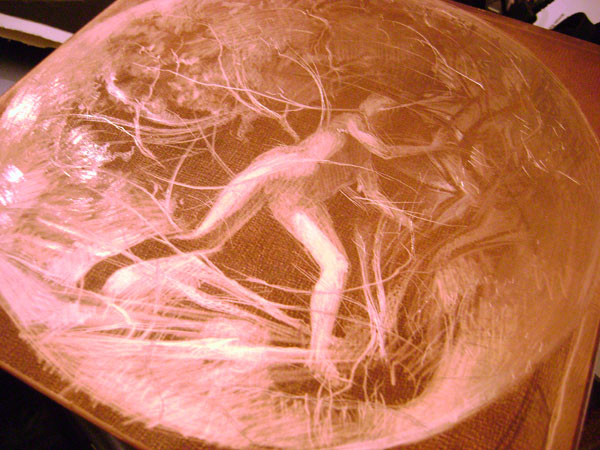
A shot of Know in progress (I’m working on developing the second figure in sketches, but you can see her ghostly frame there in the background):

A shot of Certainty (or Pinned; I haven’t decided yet) in progress:
A shot of Know in progress (I’m working on developing the second figure in sketches, but you can see her ghostly frame there in the background):
In the summer and fall of 1991 my cousin Chris and I constructed a log cabin in the woods outside of Camden, NY. Click here to see the area where the cabin existed.
Chris and I constructed a number of shelters and cabins while growing up. This one was perhaps our most ambitious attempt. The images below trace a path from my childhood home to the cabin. They start at the old homestead on Wolcott Hill Road (a home that no longer exists) where I lived between 1976 and 1995 or so.

…moving on to the Road itself…

…along the hills and ridges (the cabin is in the distance)…

…and right up to the front door.


As you can see, we we didn’t finish the chinking and other weathering materials before the storms of the winter came. Later on in the year the landowner found the cabin and instructed us to remove it.
We did… and built another one a few miles away. But that’s another post.
It was a great thing to be a part of, this cabin construction period of ours. Lots of life lessons learned, brother.
I’m ramping up for a large solo show next year. Have been in the studio working in gouache on paper, inventing and reinventing figures, adjusting colors, fiddling with shapes, etc. Two of the studies are below.

Pivot, 23 inches in diameter

Know, 23 inches in diameter
I’ve also been working on two large works – 48 inches in diameter, oil on canvas on panel. This one is called Certainty.

In 2003 I found a box of photographs strewn across the pavement in an alleyway in Evanston, IL. The box looked as if it had dropped out of a nearby dumpster, so I figured I could look through the photos, see what was interesting, and then place the rest back in the garbage where they’d evidently been put.
But I became intrigued with a series of portraits of a young woman. Always posed in some new dress in various locations – out about town, in the bedroom, outside in the sunshine – she seemed full of life and hope. I found it troubling that these images of her youth were apparently no longer important to anyone. So I kept them.
 As you can see in the example above, the time stamp shows “May . 67” – the rest have similar dates from that year.

Though they are banal and nearly 43 years old, I find them poignant and sweet, a lost record of a person’s experience of their life and time.

I have no idea who the woman was. Since she looks to be in her early 20s here, I expect she’s still living. Here’s hoping she’s had a good life… and continued to model her dresses with pride.
Details from Matthew Ballou’s context


Details from Nathan Sullivan’s context

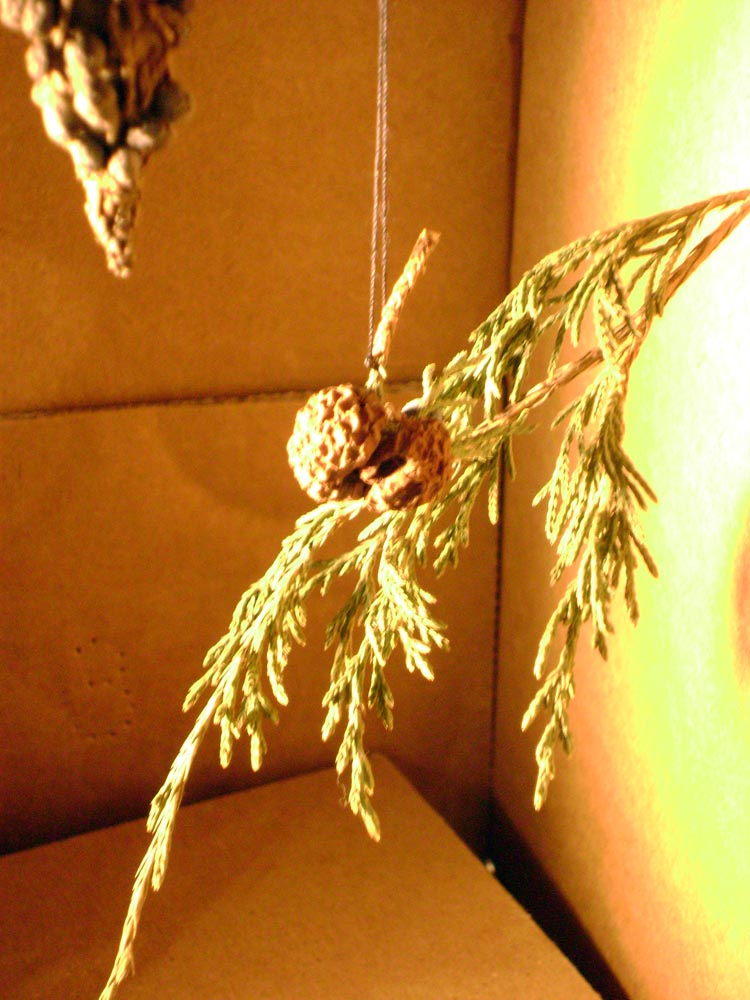
Detail from Catherine Armbrust’s context

Detail from Sloane Snure Paullus’s context

Detail from Derek Frankhouser’s context

Detail from Marcus Miers’s context

I’ve got an installation up at the Craft Studio Gallery of the University of Missouri in Columbia.

I proposed the show and brought in the additional artists and their works. See below for more shots of the installations and to read our group statement. Be sure to click on each artist’s name to see more of their excellent work.
The Reception will take place February 19 at 4pm. Hope you can make it. Check back here soon for some details from the installed contexts.

Work and Installation of Context by Nathan Sullivan.

Work and Installation of Context by Derek Frankhouser.

Work and Installation of Context by Sloane Snure Paullus.

Work and Installation of Context by Catherine Armbrust.

Work and Installation of Context by Marcus Miers.
Presenting Context Group Statement
Artworks are almost always presented to viewers far removed from the circumstances of their creation. The inspirations, research, sources, methods, and background information that form the basis for all artworks are usually unavailable to the audience. This amounts to a veil of mystery surrounding the finished work, masking and focusing it. Artworks appear to have simply sprung fully formed into the world, though we know this to be false. This exhibition proposes to change that – at least in some small way – by displaying singular artworks in tandem with the ephemera that lead to their creation. Alongside completed works, artists will show some background to the art: inspiring data, evocative objects, images historical and pop cultural, as well as the more traditional sketches showing trial and error. Taken together, these artifacts will serve to illuminate the experiences artists go through to process their ideas and actions into finalized pieces of art.
Exhibiting Artists
Visiting Assistant Professors Matthew Ballou and Nathan Sullivan
MU Graduate students Catherine Armbrust and Sloane Snure Paullus
MU Undergraduate students Derek Frankhouser and Marcus Miers
In August of 1997 I began art school at Munson Williams Proctor Institute of Art. At the time the school was transitioning into the upstate extension campus of Pratt Institute. Bright, new facilities (the best I’ve ever had access to, anywhere, any time) were there for us to cut our aesthetic teeth on, and an energetic faculty with a sense of the coming transformation challenged a really great group of students during those transitional years. Recognized artists such as Sam Salisbury and Silas Dilworth, among others, were there in and around the same years I was.

It was during my first weeks there that I was exposed to two images that would define much of the next decade of my artistic life. There, spread out on a table in the large painting room were two books (among many others). Two images – one from each – caught my eye. The first was “Twilight” by Odd Nerdrum, the second was an iconic Ocean Park series piece by Richard Diebenkorn. I clearly remember the paradoxical exclamation that leapt into my mind as I gazed at the two works that seemed separated by a huge gulf: “I want to do THAT!” – meaning both.
I’ve spent the last twelve and a half years working to reconcile them. And though I’ve moved on to deeper and perhaps more legitimate inspirational sources and muses, I find that key moment during one of my first official art classes still hangs with me. I’m grateful for it.

Statement for the upcoming MANIFEST exhibition, “PAINT”
“…in a work of art every element, whether it pertain to perceptual form or to subject matter, […] represents something beyond its particular self.” – Arnheim
The brick is evocative for me because, in my contemplation of its form and metaphoric associations, it transforms. Its prosaic presence becomes a poetic musing on the human state.
A single brick bears a proportional relationship to the structure built from many similar units; one brick contains within itself an image of the whole building. This reflexivity between part and whole has energized the brick with symbolic meaning for millennia in many different cultures. Its presence as a signifier of component importance allows me to use it to refer to the accumulation of human knowledge: what we think we know and our attitudes about that awareness. The conceit that we can contain, format, and cross-reference everything knowable or worth knowing is widespread. Yet true understanding is often not as quantifiable or containable as we might hope. Bricks, as symbols, remind me of the good things we do, the wonderful intentions and desires we aspire to, as well as the negative connotations of the assumptions within which we often operate.
-Ballou, February 2010



 eikonktizo