A Summer of Fishing

2023 has been an amazing time of fishing so far this year. We’ve gotten in some great trips in MI and around Mid-Missouri, but the best part – even more than catching the fish and seeing their beauty – has been being out and in nature with my kids. While they don’t all love angling equally (Atticus and MeiMei are PASSIONATE, while Miranda and FangFang aren’t very interested), they have all had some great successes and days of fun.

Favorite Spot

The kids love fishing in Hinkson Creek. It’s a dynamic spot that changes almost daily. Sometimes there are only minnows and small Bluegills there. Other times it’s got decent-sized Bass, Catfish, and Gar. It’s easy to get to, and even pretty accessible for my daughter who uses a wheelchair.

This summer we got to see Hinkson Creek radically transform in a matter of minutes. There have been a number of flash floods in the area this year, but we happened to be fishing during one warning. We watched the sky and checked weather constantly, but other than a short shower, nothing was amiss where we were. But we knew there were high winds and strong rains just miles away to the north. Hinkson Creek runs southward through Columbia, and gathers water from a lot of land in the area. Eventually the creek deposits into Perche Creek, which itself hits the Missouri River several miles south of town.

That day, the storm surge from the north rolled up to our little spot on Hinkson Creek. We first noticed the water picking up speed, then heard a rush in the forest upstream. We turned to look and saw a wall of debris and muddy water heading our way. Within just a few minutes the river rose six feet. Dirt, rocks, and even entire trees blasted through the area. It was awesome to behold, and such a learning experience.

You can see in the images above just what I mean by the creek rising. The concrete bridge my kids are fishing from in the image above is UNDER the water in these three images.

We stood by, watching the raging waters, for a good long time. It was illustrative of the power of even smaller sections of rivers, and it gave us even more appreciation for our proximity to the Missouri.

GAR

One of our favorite types of fish is Gar. We have Spotted, Longnose, Shortnose, and Alligator Gar varieties. They’re always fun to battle and they come from an ancient lineage of fish that really look almost dinosaur-like. They’ve got serious teeth and definitely don’t want to be caught. Bony and strong, Gar are hard to hold onto and are known for spitting hooks easily because they aren’t very fleshy in the mouth area.
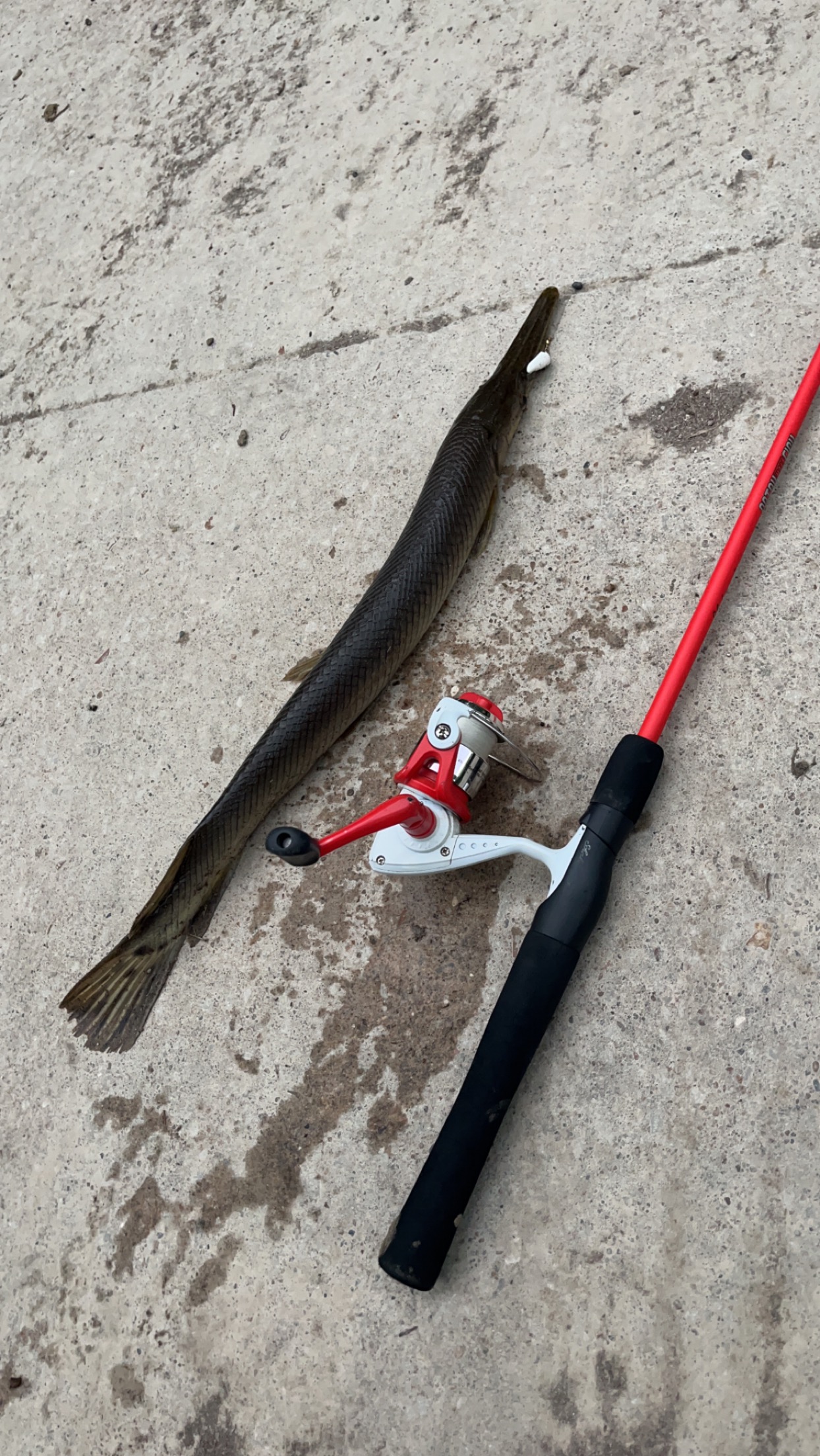
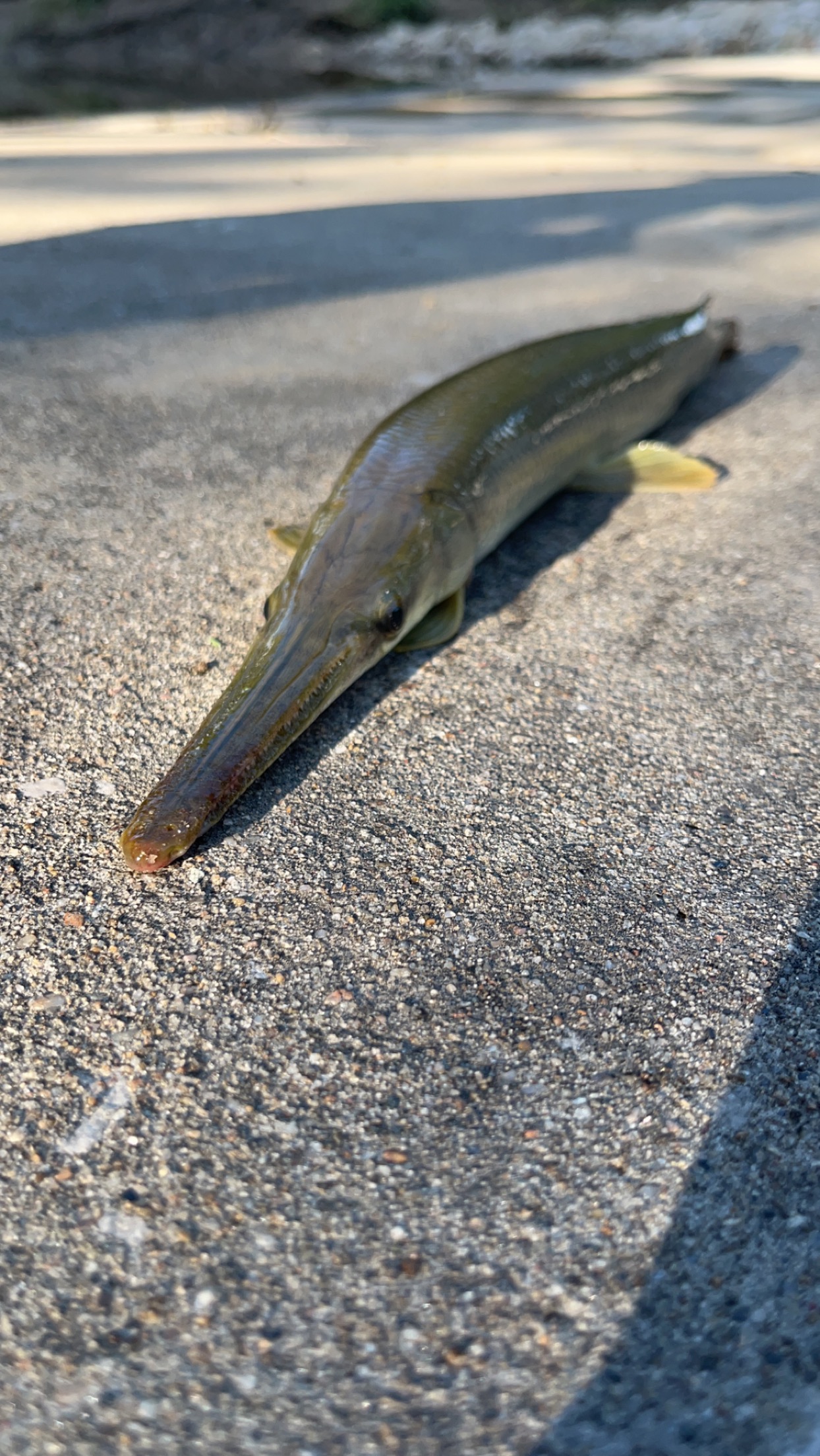
In the creeks and smaller rivers, Gar don’t grow super large, but we do get some that are in the 28-32 inch range at times. We’ve even been able to land them on hook-less rope lures, which is fun.

Beast Bass

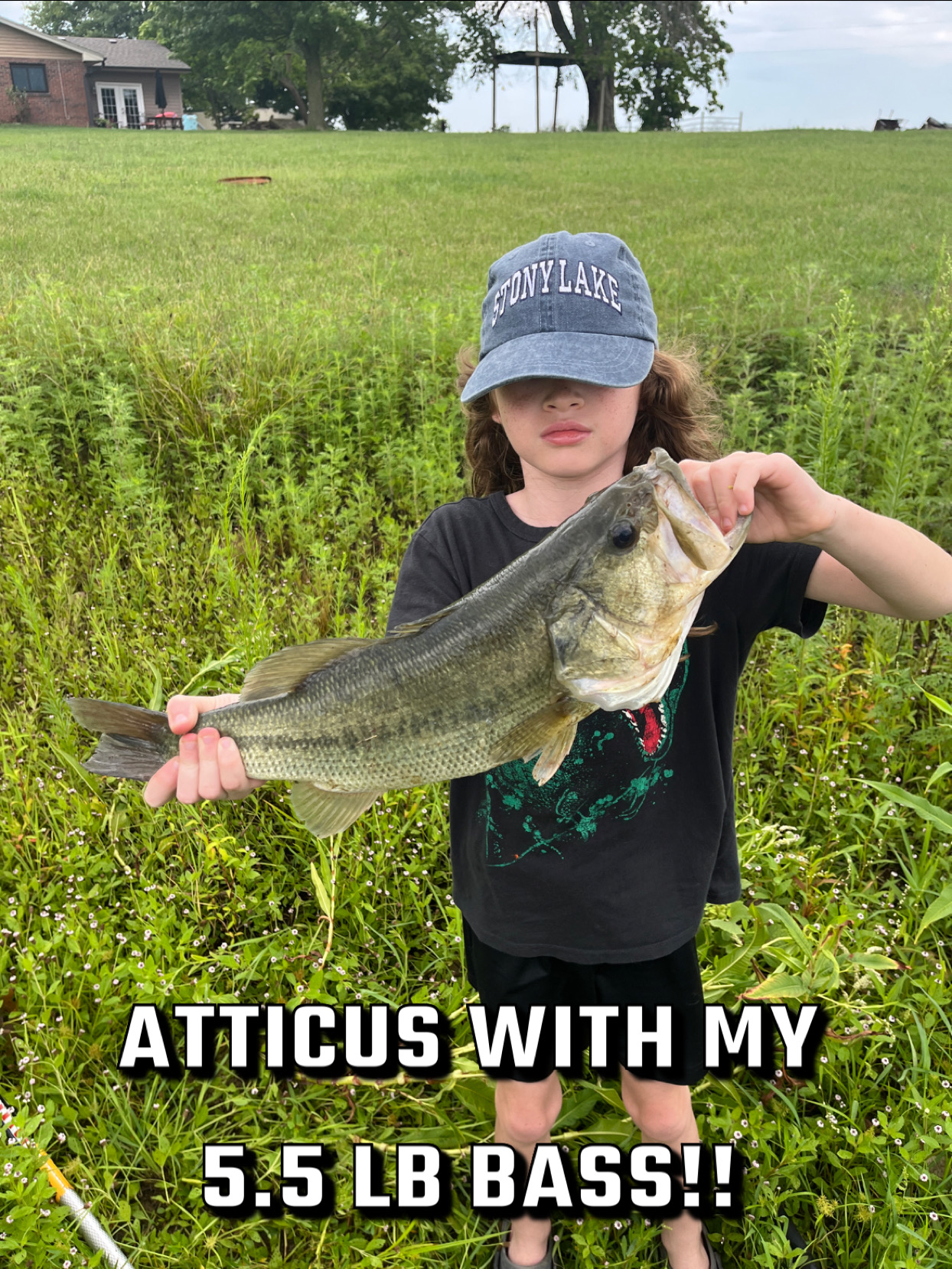
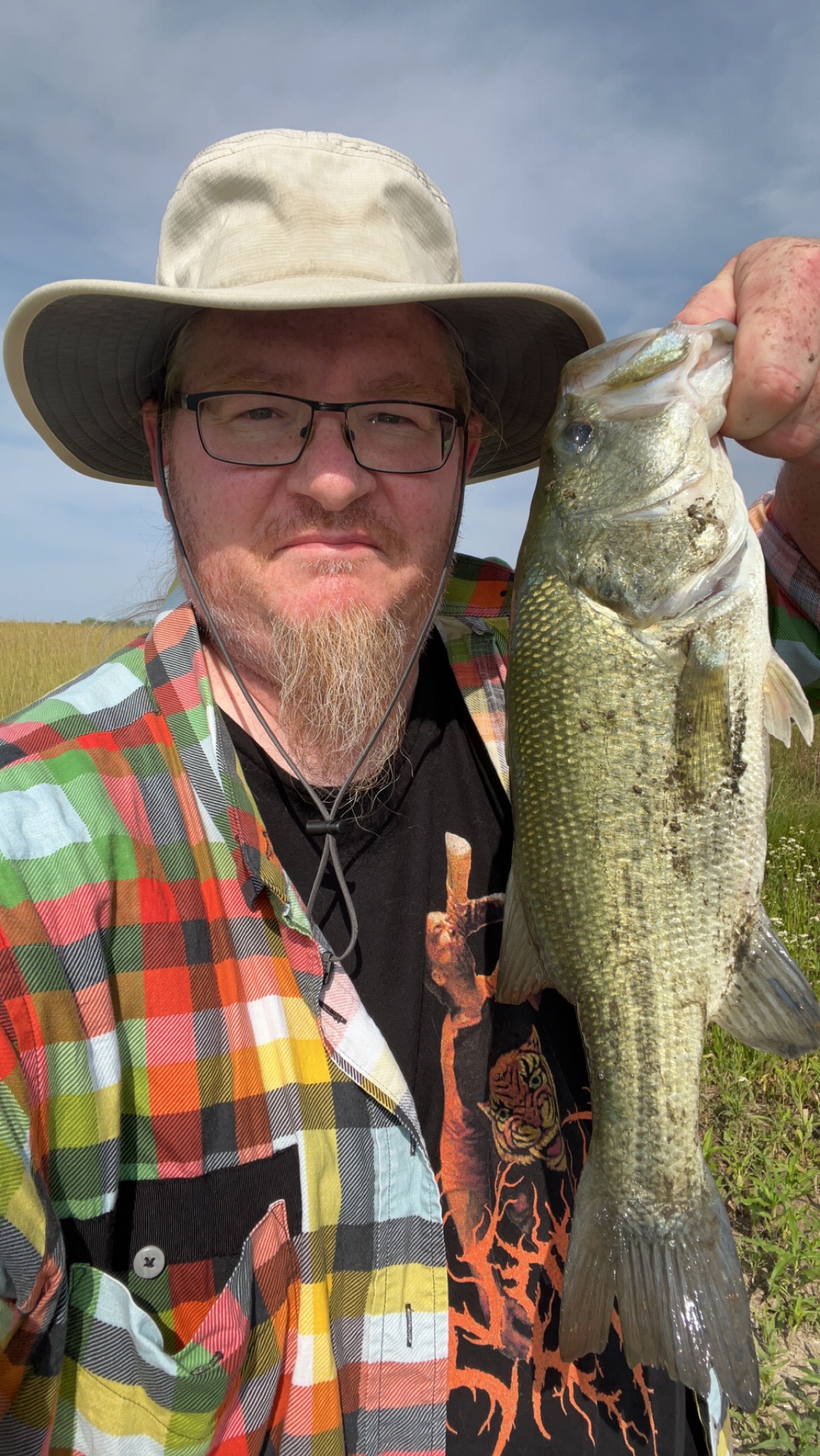
This summer gave us some SERIOUS Bass. The current Smallmouth Bass record in the state of Missouri is 7lbs, 2oz, and two of the fish we caught this summer were pretty close to that size. In May Atticus caught a huge Largemouth coming in over 6lbs (right). Later that month when we went to Michigan he hauled in this beautiful Smallmouth that was 5.8lbs (center). Given that we’d lost so many bigger bass with our lighter line, by June we’d converted over to 15lb test. It wasn’t until late July that I got my 5.5lb Largemouth (right). These personal bests are going to last a while, I think.

Good Lessons

We will continue to fish our favorite spots in the area through the rest of the year, but we’ve also planned to hit one more longer trip before the end of the summer. Meramec Springs, where the state fish hatcheries stock Trout, are not too far away. Though it might be a bit too hot for Trout, we’ll give it a try. I haven’t yet taught the kids how to clean and cook fish; we’ve been catching and releasing everything so far. Given how much they seem to respect the fish, I think they’ll understand and appreciate the circle of life aspect of harvesting some for food. But I think I’ll wait on that until Trout are on the menu.

I’m very proud of the kids in regards to angling. It has been a great way to get them out in nature, yes, but it’s also developed their resilience and patience. They’ve grown in understanding delayed gratification and following through. And they’ve gotten to work on problem-solving, working together toward common goals, and appreciating the efforts and successes that each one reaches. I’m impressed with them.

There’s Always a First Time!
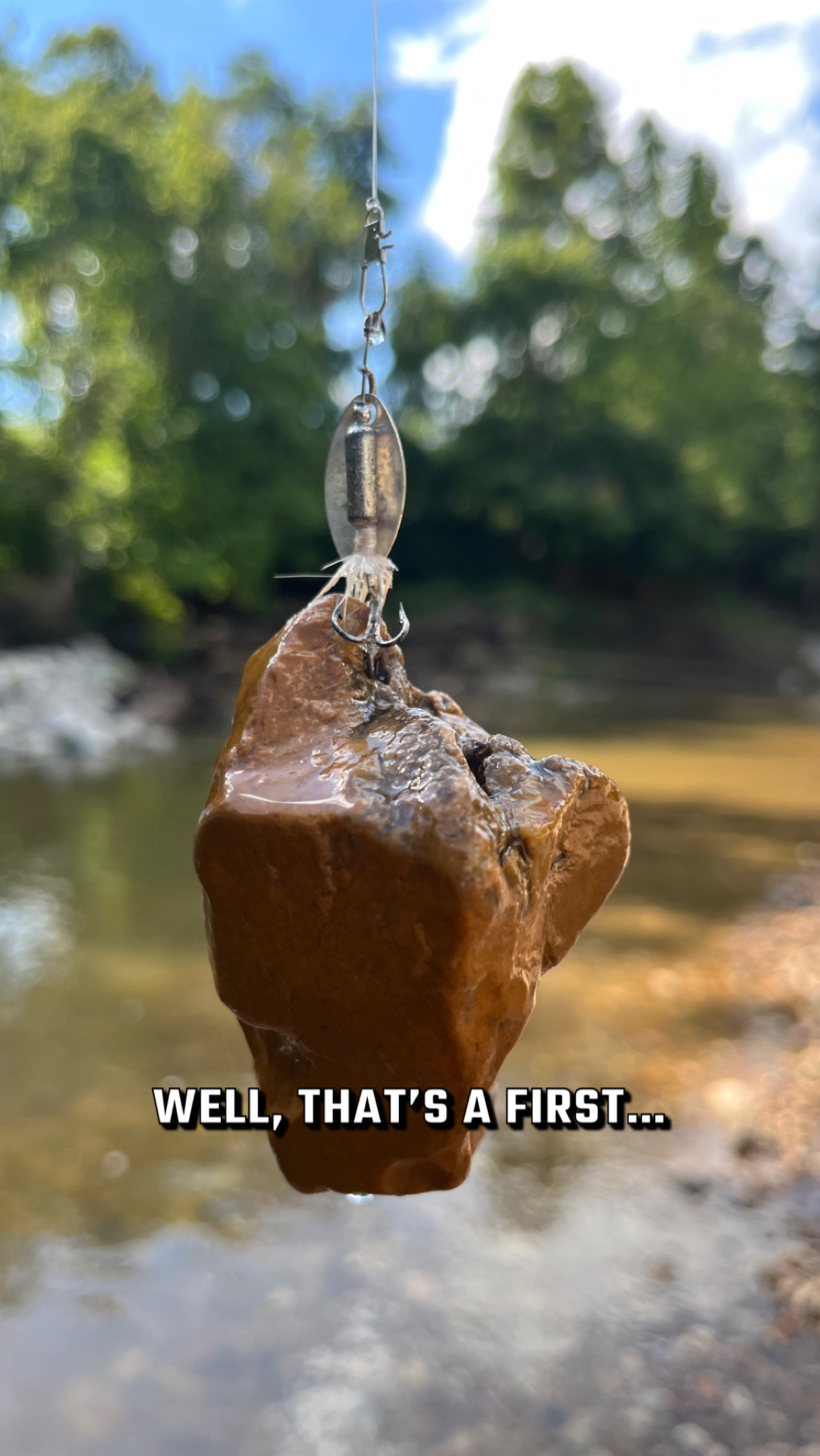
Each trip to the creek or river or lake offers chances to learn new things and experience life together. That makes it all worth it.
Collab Update

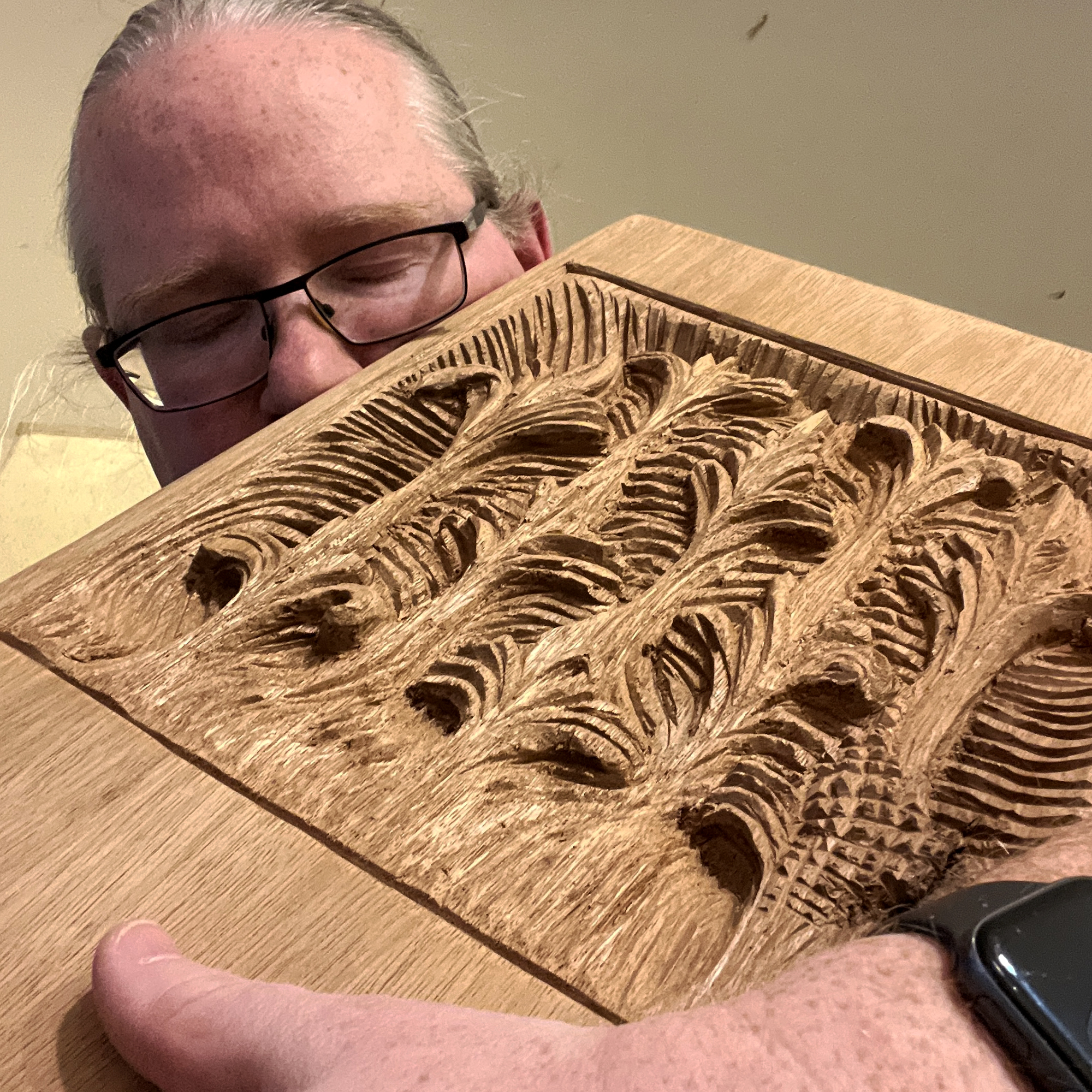
Late last year I talked about how Geo and I were working back and forth with some artwork/carving/A.I./carving/artwork-type collaborative stuff. The process has continued.

I know, I know. You see the initials A.I. and you’re skeptical. As you should be. I’ve been doing a lot of research on A.I. generated images, and while I think the majority of the A.I. space is trashy, there are a few people doing some amazing exploration. Joey Borovicka over in The Timeout Zone is doing quite interesting “synthography” using A.I. models. Wolfe von Lenkiewicz is also making intensive forays into image-making with precision A.I. models.

I have been interested in using image-generation tools in a limited way. Basically, I’ve been incorporating them into the workflow. This means we start with ideas, images that we’ve made ourselves, or carvings that Geo has made. Then, uploading the images as a baseline source for the A.I. generator to use, we add text prompts to encourage various modifications. In this way we use our own images in the A.I. system and calibrate them using the wording we input. Obviously, since the models have been trained on images borrowed from the wider world, we’re viewing this as a limited experiment, but I think it’s worth it.

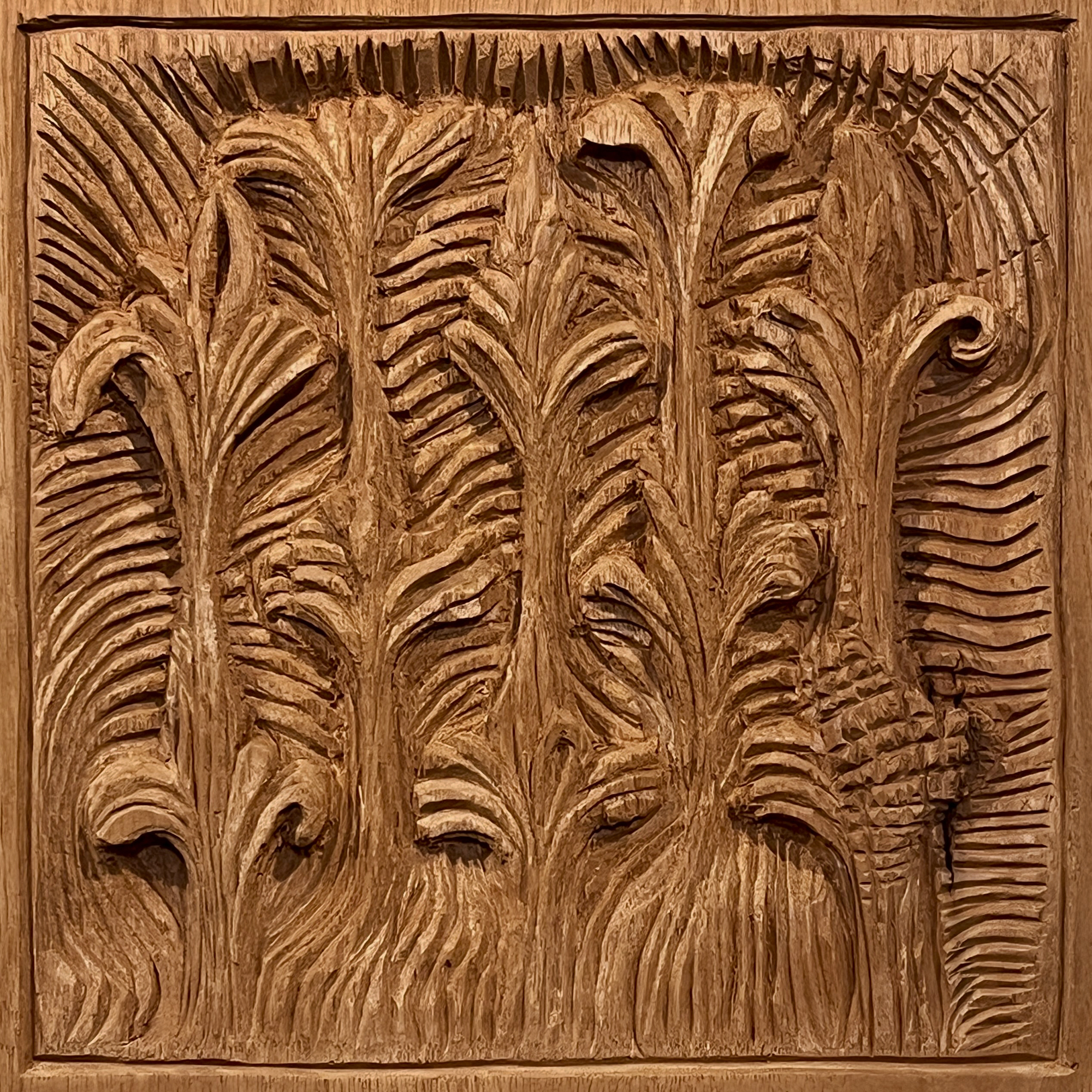
Here’s a sequence of explorations that we’ve done with imagery of the acanthus and my own artwork: first, I used some wording from Geo in the Dream by WOMBO A.I. app, then I loosely drew over the generated images. After making a various edits and selecting one of the versions that I’d drawn, I sent a copy to Geo, who used it as a basis for his carving.

Living Carve. Ballou. 10×10 inches. Ink, colored pencil, gouache on paper mounted on panel. 2023. Private collection.

The image above, Living Carve, was built by using words of Geo Weissler in Midjourney, then modified digitally in Procreate on my iPad. I took that result, printed it on a large format Epson printer using Epson Enhanced Matte paper. I then used colored pencils and gouache to develop the image and enhance the richness of color and depth of surface. Below you can see a shot of the piece framed. You can see some of the surface treatment, the sense of the material accumulating to present the image. I like the chiaroscuro and quality of light. There is a subtle feeling of trompe l’oeil to this piece, which is something I’ve only tried to do a few times before. I may try a composition like this once again. If you’d like to inquire about work like this, visit me on Instagram.

BECOMING THE STUDENT #29: Michelle

I’ve known Michelle for many years now. She’s been a central part of the local art community for all of that time, and a dedicated student of painting as well. Beyond this, Michelle is someone who always has a kind word, and her encouraging, affirming presence is something everyone in our town knows about.

She also used to be my friend Mike, who I drew for this series here. Obviously, I will not try to tell Michelle’s story. It’s not mine to communicate. But I did think it would be appropriate to place a new portrait here in the Becoming the Student group.

Portrait of Michelle R. Seat. Procreate, iPad Pro. 2022.

Since I’m an educator, I’m sure you can imagine that I come into contact with many LGTBQ+ folx. Particularly in the last decade I’ve worked with trans people in a few different contexts, but most often in the graduate program where I teach. Just like anyone else who is human, the trans people I’ve known have exhibited a wide range of personality and affect.

Everyone comes with their own traumas and triumphs, their own unique inflection on life. And the fact is that simply being human is hard. People have to come to an understanding of themselves for themselves, and my primary obligation to those around me is to be kind. While that strategy hasn’t always worked, I think it’s an important guideline. And it’s framed the way I teach and the way I interact with people. It’s not up to me to define anyone else; it’s up to me to be kind and helpful.

DETAIL of Portrait of Michelle R. Seat. Procreate, iPad Pro. 2022.

(That’s central to how I see education. My teaching philosophy includes the concepts of “facilitation, encouragement, and tact.” It’s important for my interactions with people – especially students – to function as opportunities to support and enliven them. I want to aid their ability to understand themselves and help them develop strategies for building creative points of contact. Art – or really any form of communication – is worthless if it doesn’t offer access points for others.)

So, I offer up this new portrait of Michelle in celebration of her humanity and her winsome, joyful presence in our community. I did interview her for this entry in the Becoming the Student series, but I have decided to let that conversation stay just between the two of us. There are as many ways of being human as there are humans experiencing being.

DETAIL of Portrait of Michelle R. Seat. Procreate, iPad Pro. 2022.

…all is transformed, all is sacred,
every room is the center of the world,
it’s still the first night, and the first day,
the world is born when two people kiss,
a drop of light from transparent juices,
the room cracks half-open like a fruit
or explodes in silence like a star,
and the laws chewed away by the rats,
the iron bars of the banks and jails,
the paper bars, the barbed wire,
the rubber stamps, the pricks and goads,
the droning one-note sermon on war (…)

the invisible walls,
the rotten masks that divide one man
from another, one man from himself,
they crumble for one enormous moment and we glimpse
the unity that we lost, the desolation
of being man, and all its glories,
sharing bread and sun and death,
the forgotten astonishment of being alive;

to love is to battle…

From SUNSTONE by Octavio Paz, 1957


A New Collaboration

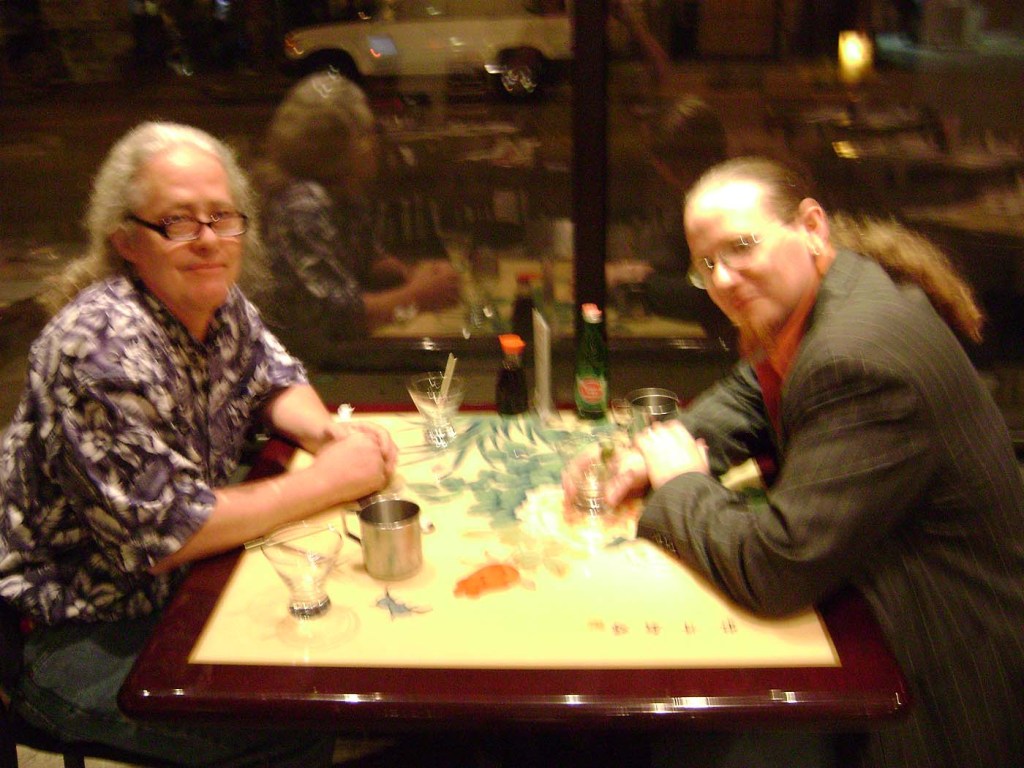
I have known my friend Geo ever since we lived next door to each other in Evanston, Illinois in 2006. Though my adventures took me to Missouri and around the world in subsequent years, Geo made an effort to stay in contact. The man traveled to visit some of my shows, even appearing in Columbia, Missouri for an exhibition in 2009.

Geo surprised me back in 2009. We got Thai food and cocktails.

In more recent times we have taken to writing missives via email and text, sharing books and ideas. Geo has been a woodcarver for many years, and his work has been sought out all over the Chicagoland area since the 80s. I’ve appreciated the friendship Geo has given over the years, and see him as a kind of “future self mentor.” Imagine a version of yourself visiting from some alternative future who gives encouragement? That’s kind of what Geo is for me.

Portrait Demo Sketch (of Geo). Chalk pastel on paper, 24×18 inches, 2013. Created at Evanston Art Center where I gave a portrait workshop.

Through our chats and several visits, we have connected as artists and visual thinkers. Every once in a while Geo would send me small carvings and I started wondering what shared art-making might be for us. Eventually, it seemed natural to start formally collaborating on a group of carved paintings, three of which appear below.

Geo began these works by creating carvings based on some of my own WHENEVERwhen or Ensigns For Miyoko Ito series works. He owns several of them (in fact, Geo has purchased many of my paintings over the years) and was able to observe them closely. Inspired to bring some carved aesthetics to bear on those visual themes, Geo crafted some really interesting surfaces. One (the “Wedge Interpretation” piece above) he actually painted most of as well. I added chromatic exploration to each of the relief carvings, seeking to transform both Geo’s carved environment an my own formal structures.

I’m feeling excited – and thankful! – for this fresh collaboration. Here’s to many more shared works with Geo.

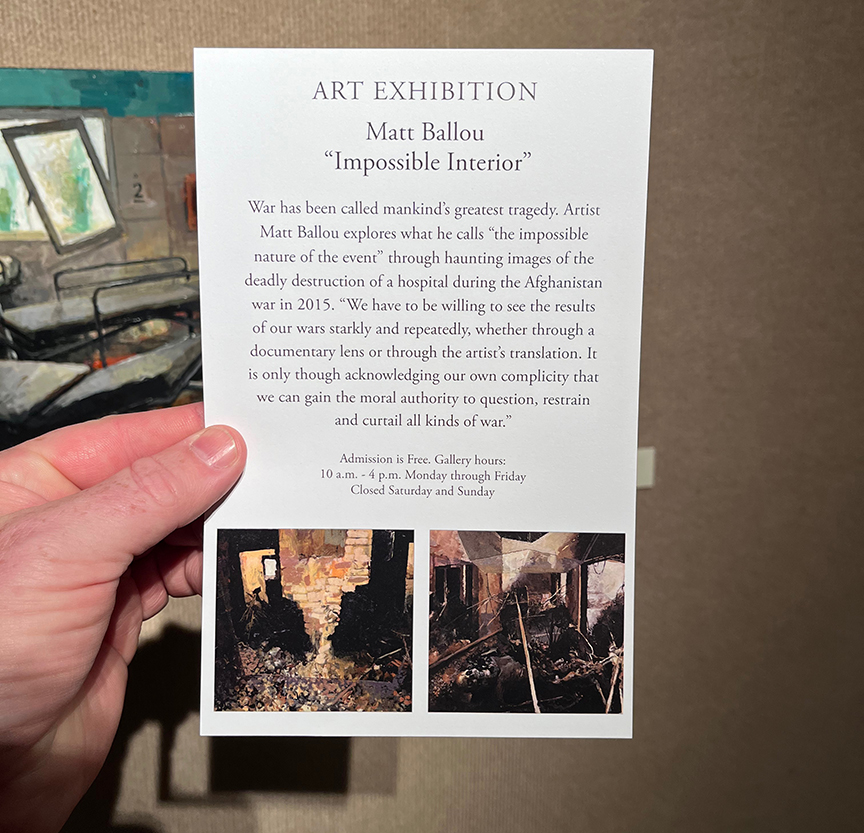
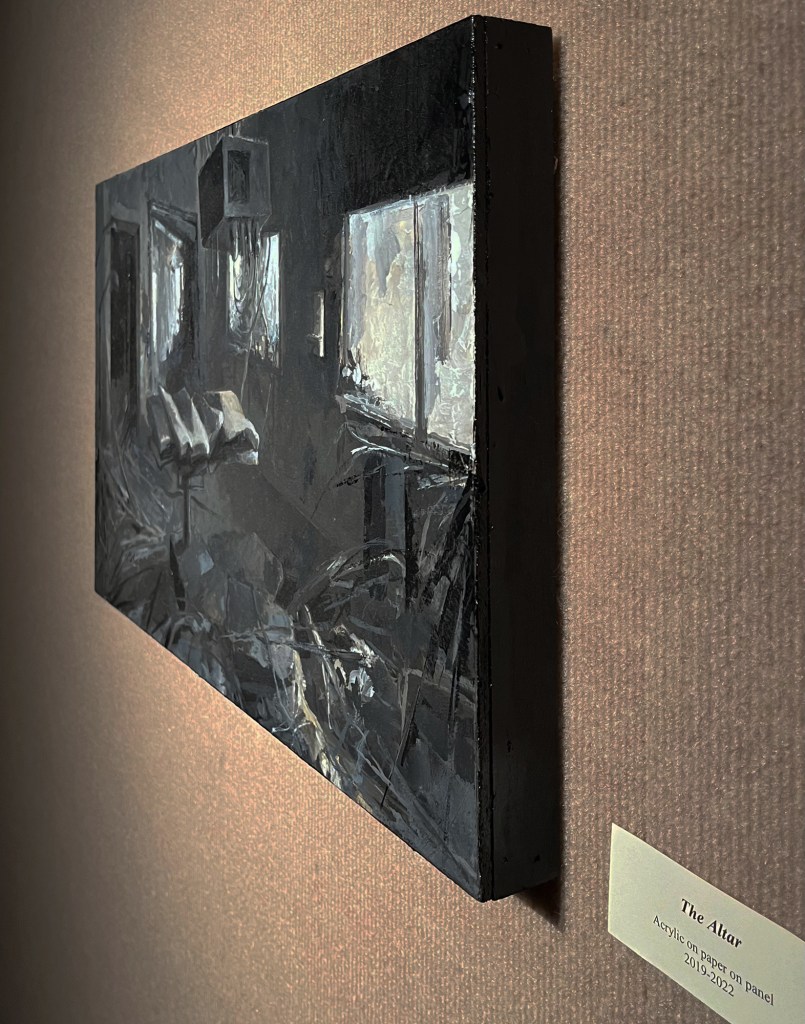
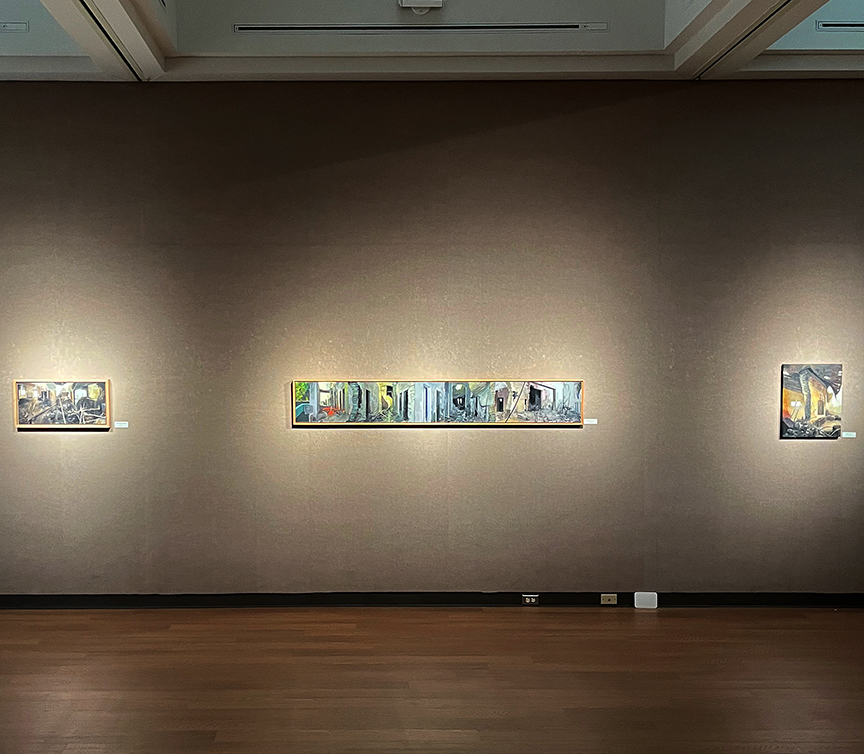
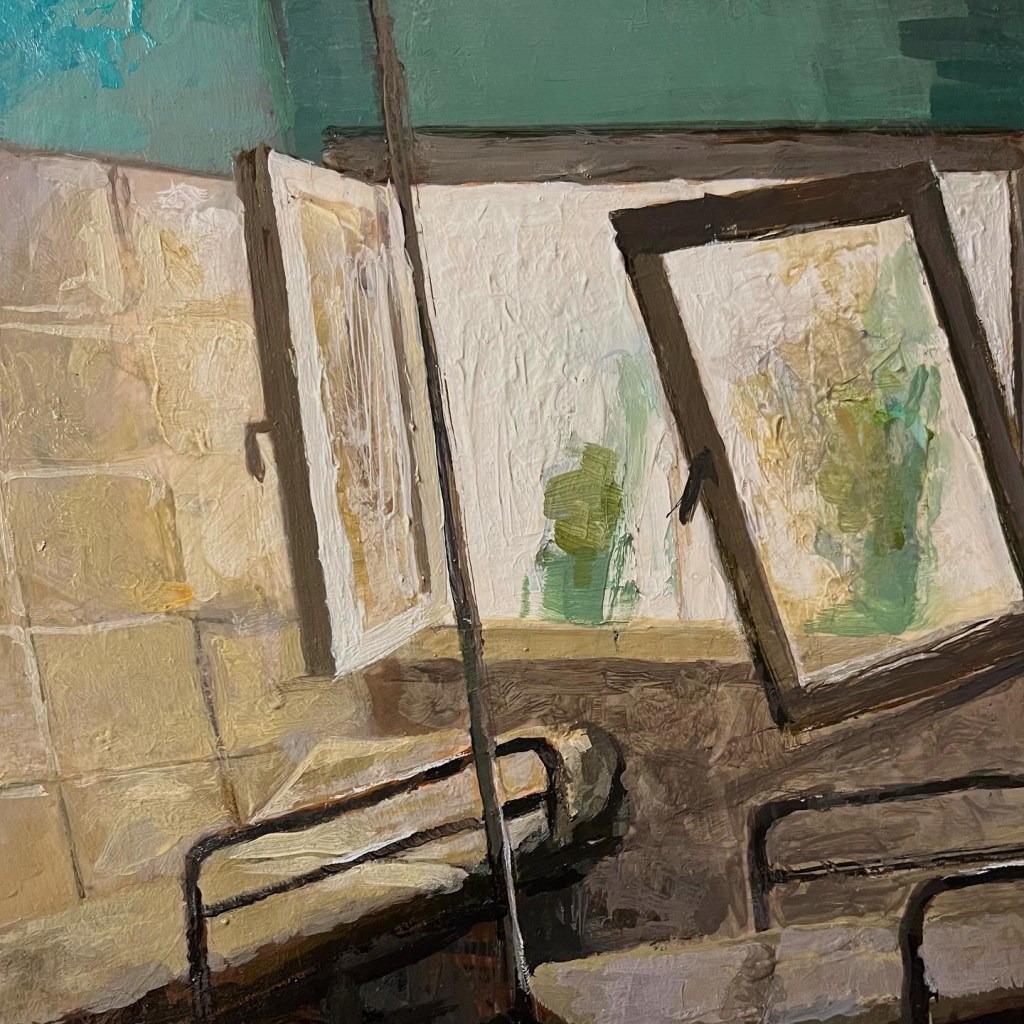
Impossible Interiors at William Woods University

I’ve got a group of works on display at William Woods University in Fulton, Missouri. The show runs through October 6th, and I’ll be giving a talk that evening. For a preview, look below.

This is the third time I’ve shown this body of work, and I’d like to get the chance to show it again. The subject of the work – a “friendly-fire” bombing of a Doctors Without Borders hospital in Kunduz, Afghanistan. If you’d like to see more about this situation, check out my writing about it here.

The card for the exhibition.
Back of the card with description of the show.

I’m also pleased to have a small group of my collaborations with Joel T Dugan also on display at the gallery. These Phoneme works are some of my favorites, and there are a number of just finished works included.

A Little Cartography

Many years ago, my Cousin Chris and I were constant companions in the woods around Camden, NY. In particular, we explored the region between our homes. His place was several miles away to the west if you took the old dirt road that emerged onto the highway 50 yards from the house I grew up. We also did a lot of camping and hiking in the woods east of my own home.

Here’s what that area looks like today (well, a few years ago via Google Earth):

I grew up along Route 70 – Wolcott Hill Road – about two miles from the town of Camden. Wolcott Hill Road runs roughly South to North away from Camden, so this view is oriented with East at the top and West at the bottom. You can see the small lake in the lower half of the image; that is a reservoir, and part of Camden’s waterworks system. If you were to walk due West from the South corner of the reservoir, you’d come out on Wolcott Hill Road right next to my childhood home.

From the ages of 12 to 16 or so, I started making maps of our haunts out in this section of land. When I was 19, I decided to make a larger, more refined version of the map, bringing together all of the various places we used to camp and hunt. The result is below.

Watercolor map of area around my home. 24×22 inches. 1996.

There are some obvious mistakes of guesstimation here, most glaringly in the position of Route 85, which we locals know as Skinner Settlement Road. There is also some distortion of the placement of various fields, and a bit of miscalculation of distances, but I’m pretty pleased with my effort since I did not use any proper map as a source.

There are some great memories here.

At Winter’s Night, we camped in -2° weather. In the morning, we were lying in impressions in the hard snow caused by our heat coming through the tent.

At Cowadunga, we cooked venison in beer and used hard, flat cow poop for fuel – hence the name we gave the place.

The Reservoir Cabin Site was a special spot, and we stayed there quite a few times.

One night, at View, we had amazing, super clear skies all night long. It seemed as if we could see forever.

Though we never camped at Lone Tree Hill, we often climbed the massive maple there.

At Earthview we had one of our strangest camping trips ever, when we were accosted by a large number of Woodland Jumping Mice. What seemed like dozens of them came through our area, but the issue was that this was in the wee hours of the morning, so it was very dark, and the rhythm of their jumps through the underbrush sounded like footsteps. Pretty wild.

I’m glad I made documents like this throughout my teenage years. Though most are in a more rough or not so presentable state, they represent my attention to and interest in my surroundings and experiences. I’m glad to have them.

ARTFORUM One-liner, 2002

“Oh, to have the sycophantic word-love of the curatoriate (à la Jeffrey Weiss) and willing accomplices in the art press.”

—Matthew Ballou, Evanston, IL

Written in response to Jeffery Weiss’s feature on Robert Ryman’s work from ARTFORUM Volume 41, No. 1. See the cover below. Available online here: https://www.artforum.com/print/200207/radiant-dispersion-robert-ryman-s-philadelphia-prototype-2002-3299

Seize The Sixth, Again

Background

Eric L. Sweet left us suddenly on April 6, 2015, at age 44. Sweet was a beloved member of the MU Art faculty, having worked at MU since 2012 as an Adjunct Assistant Professor, teaching Printmaking, Drawing and 2-D Design courses. He was an alumnus of the Art program, having earned both his BFA (1997) and MFA (2011) from the University of Missouri. In 2008, he received an MA in Printmaking from the University of Missouri-Kansas City. Sweet was an active member of the Southern Graphics Council International and the College Art Association.

The “Running Devil” icon that was embroidered on one of Eric’s shirts.

To celebrate Eric’s life and positive role as an educator, Sweet’s wife, Catherine Armbrust, established The Eric Sweet Exhibition & Speaker Series to continue passing on his gift. I have created a series of work celebrating Eric almost every Seize the Sixth, and this year is no different. I will be donating 100% of the sales of these pieces to the Fund. This program was created because he strongly believed in the importance of community accessibility to art and encouraged meaningful conversations about the state of contemporary art. Funding this annual exhibition and speaker series for the gallery is the perfect way to make contemporary work accessible to the MU and Columbia communities, and to honor this special man who made an impact on so many lives. In fact, the initial funding goal was met in 2021 and the very first iteration of The Eric Sweet Exhibition & Speaker Series took place on December 6, 2021. See the exhibition poster here.

Look over my limited series of CNC relief cuts, posted below. If you’d like one, contact me. You’ll get an icon of Eric’s life and students and community members will get to see art because of the donation I make from the sale. As Eric (and his 4th grade teacher) might say, “You don’t HAVE to, you GET to.”


The Artwork

I’ve made eight artworks for Seize The Sixth this year. There is one group of five CNC relief cuts that feature the classic “running devil” icon that Eric had embroidered on one of his work shirts. Below the devil is featured part of Eric’s axiom, “YOU GET TO.” It’s a proclamation of hopefulness and gratefulness. Here’s a detail of the Running Devil carving if you want to see a close up view.


There are three of these – just the Running Devil without the text.

How to get one?

I can take PayPal, CashApp, and Venmo (click each for a link to my info). If you’re local you can give me cash. The cost $50 each for these. Ones with text are 5.25×5.75 inches and those without text are 4.5×5.5 inches. Each piece is made on a PVC sheet and painted in gold spray paint. Each is signed and numbered. The ones with text are numbered 1 through 5 and the ones without text are numbered 1 through 3. First come, first serve. Feel free to email me if you have any questions – balloum (at) missouri (dot) edu.

Why no Sweet Audio this year?

Most of the time I’ve been able to put together a compilation of classic Sweet audio clips. Unfortunately, I couldn’t find any more usable clips this year. There’s a chance I still have some in the depths of my files, but I just couldn’t locate anything for this year. In lieu of that, please head over to SoundCloud and check out the previous years’ offerings!

Ballou SweetTalk collections for 2018, 2019, 2020, and 2021.


Now, go Seize the Sixth! Remember… you don’t HAVE to, you GET to!

Come and See

This past week I watched the most significant film I’ve seen in the last few years: Come and See, a 1985 Soviet-era anti-war film. Taking place in what is now Belarus in 1943, the film traces a few epic, devastating days in the life of a teenager who “joins” the local Soviet resistance to German incursions.

I will not spoil the power of this film by giving too much away. I will say that this film, at its core, shows the radical transformation of a smiling, whimsical, 13 or 14 year old boy into a gray, hollow wreck in a matter of hours. His heart and mind are smashed against the brutality around him. He sees not only death up close but also the horrendous inhumanity that war brings forth in our species. Scenes of almost fairy-tale light and mood give way to instances of the most egregious forms of torture, humiliation, and murder. We witness these acts conducted by carousing, laughing, crazed soldiers, while inhabiting the view of our protagonist, Florya.

Aleksey Krachenko as Florya.

Aleksey Kravchenko’s performance as Florya is beyond incredible. To think he was able to inhabit this character at the age of 14 is amazing, and I can’t imagine that he escaped the production without some trauma. Many sources claim live ammo was used, and he was certainly very close to real incendiary devices, raging fires, and extremely gory depictions of dead people. His performance was beyond things such as honors or awards. Simply legendary.

For a significant portion of the film Florya is thrown together with Glasha, a strange, beautiful young woman who sometimes sees and says what Florya can’t. There are several intense scenes between the two characters. One, where they dance in raindrops after narrowly escaping death is contrasted with a later sequence where they struggle neck-deep in a bog, frantic and animalistic.

Olga Mironova as Glasha.

The film is built using historical accounts as its backbone, but there are threads of magic realism here as well. Certain moments strike me as direct references to iconic moments in film classics, such as the sliced eyeball in Un Chien Andalou (1929) or the screaming nurse in Battleship Potemkin (1925). But the piece is a work entirely singular and unique. There are moments unlike any I’ve seen, and from my cursory exploration online I can see that many of the most important cinematographers and directors of photography in film cite it as an influence.

The cow scene from Come and See is brutal.

The thing about watching Come and See right now – and why it’s essential viewing – is that it highlights the Russian war against Ukraine in stark ways. One reason this film got past the Soviet censorship machine was that it demonstrated the pure barbarity of the German invasion. But it is easy to understand that the filmmaker, Elem Klimov, was making a broader point about what war – both in terms of materiel and the political machinations behind it – does to people. There is an cold, bloody irony in the fact that a Russian film from the late Cold War era shows the illegitimacy of Russian warmongering today. There are young men and women, just like Florya and Glasha, lying dead on the streets and countryside of Ukraine right now, and their deaths are every bit as criminal as those depicted in Come and See.

Florya, held up to pose for a picture with German soldiers.

So, yes. Come and see, and then reject evil of war.


Main website for the film at Criterion Collection.

More info about the film on Wikipedia.

A Talk at Missouri Valley College

On February 25, 2022, I had the privilege to meet with students and give a talk over at Missouri Valley College. It’s about an hour away from Columbia where I teach, and the talk was in support of my exhibition at the college, Digital Art: Exploration and Education. I gave a brief overview of my use of digital tools, from nearly 25 years ago through today. If you’d like to watch the talk, I’ve added in all of the visuals I used, but I also worked in supplemental videos and other support information to bring more background to the talk. Many thanks to Mary Linda Pepper Lane, Sarah Fletcher, and Mike McJilton for their hospitality and conversation during my visit.

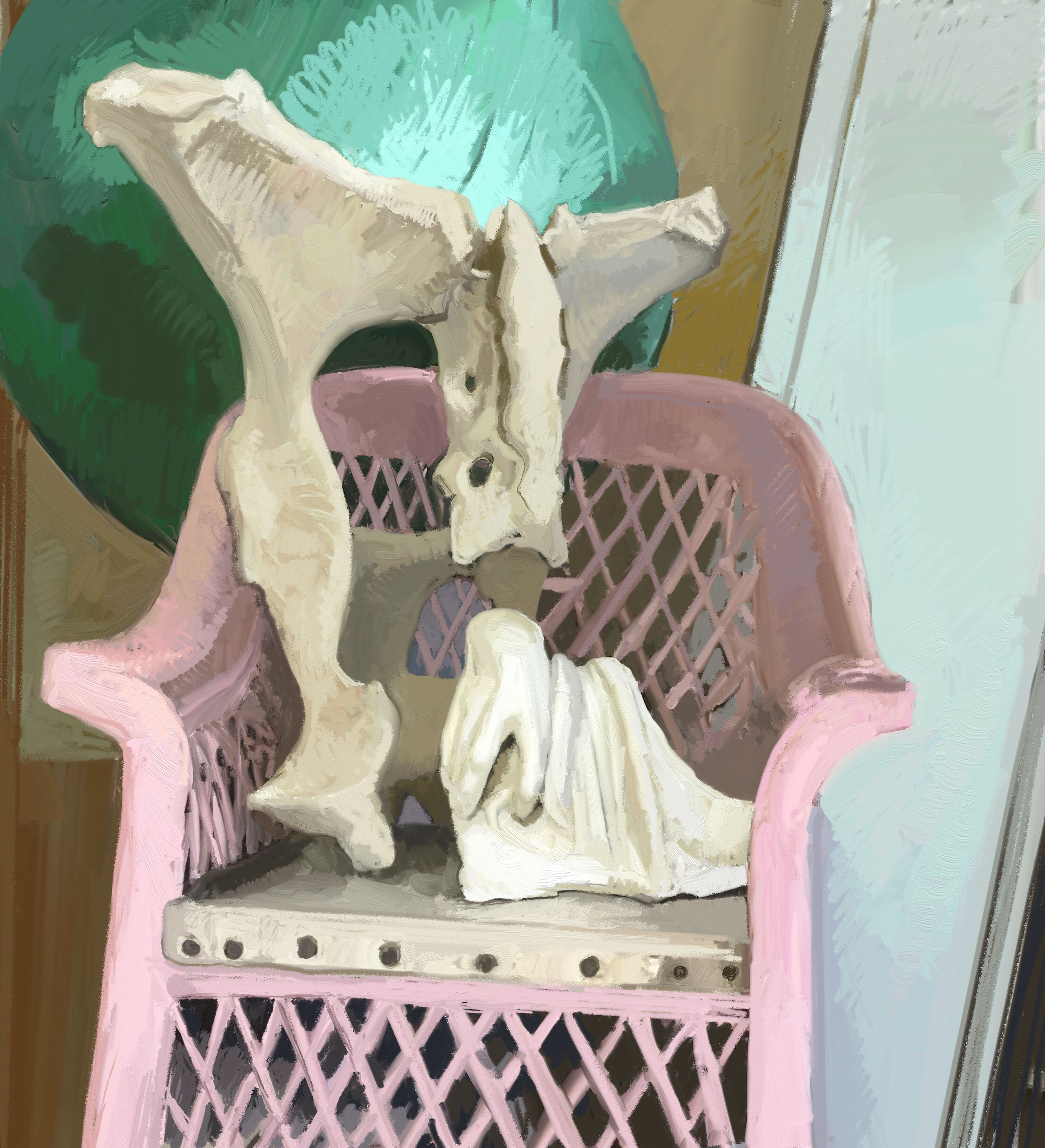
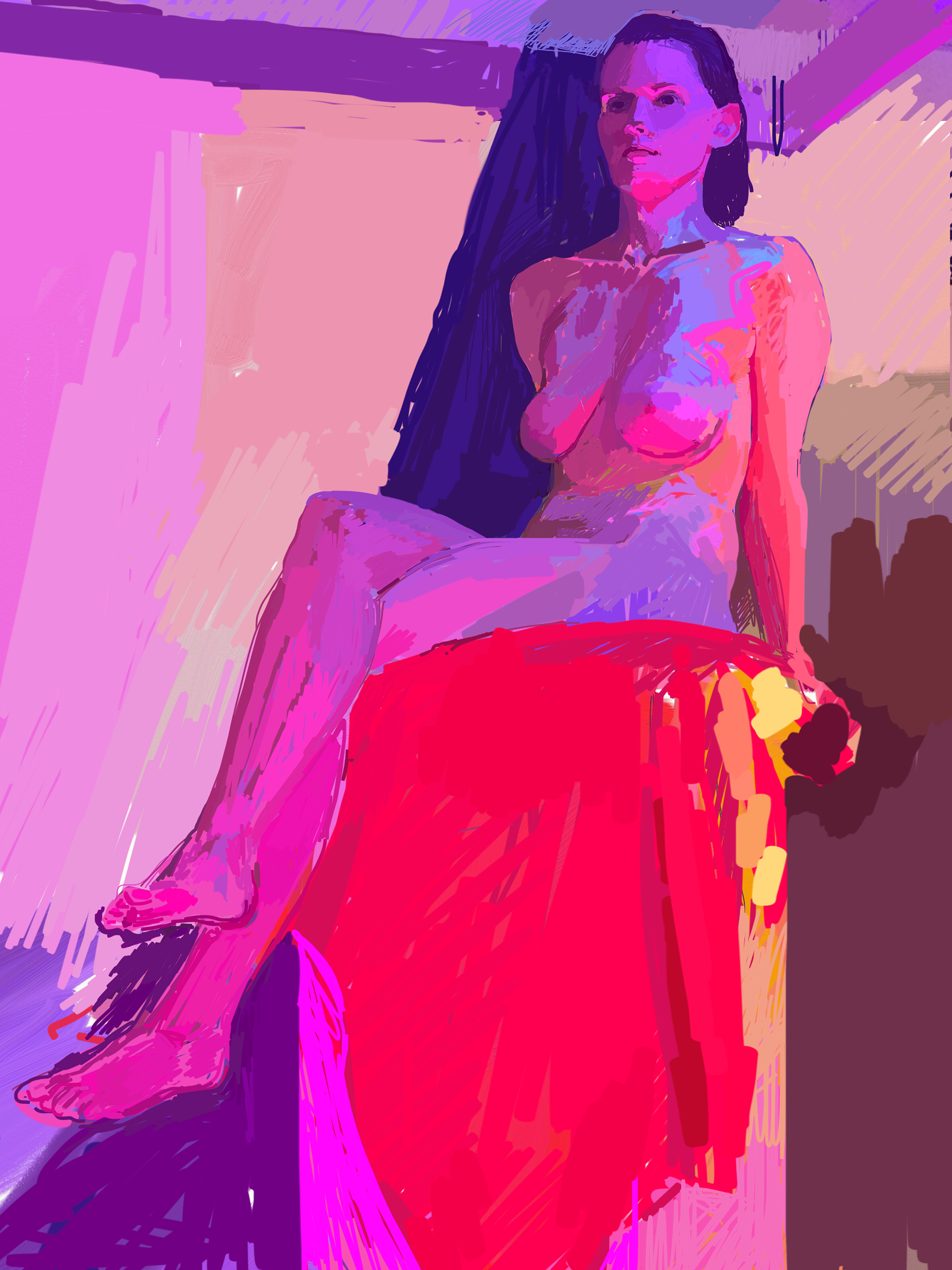
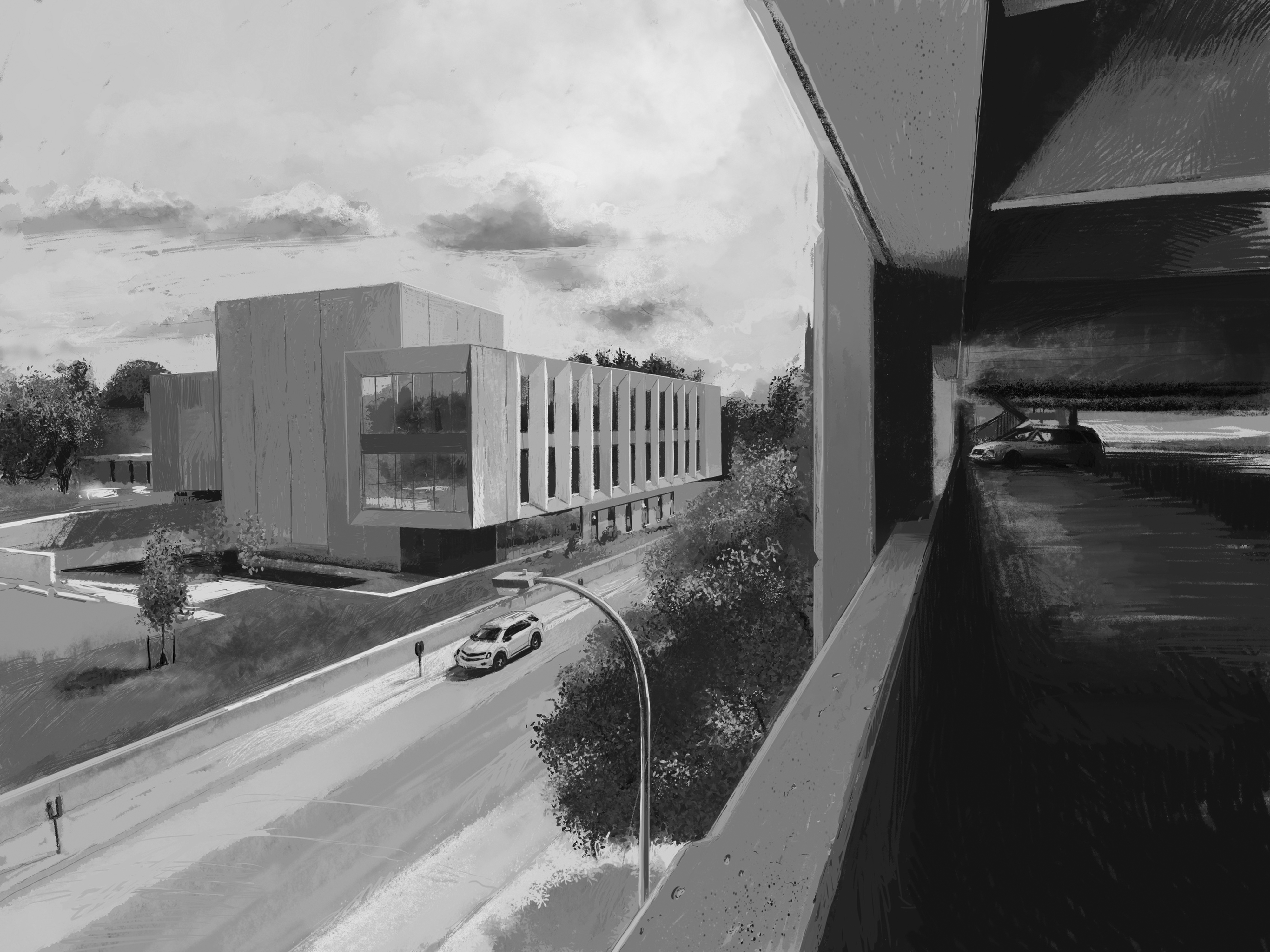
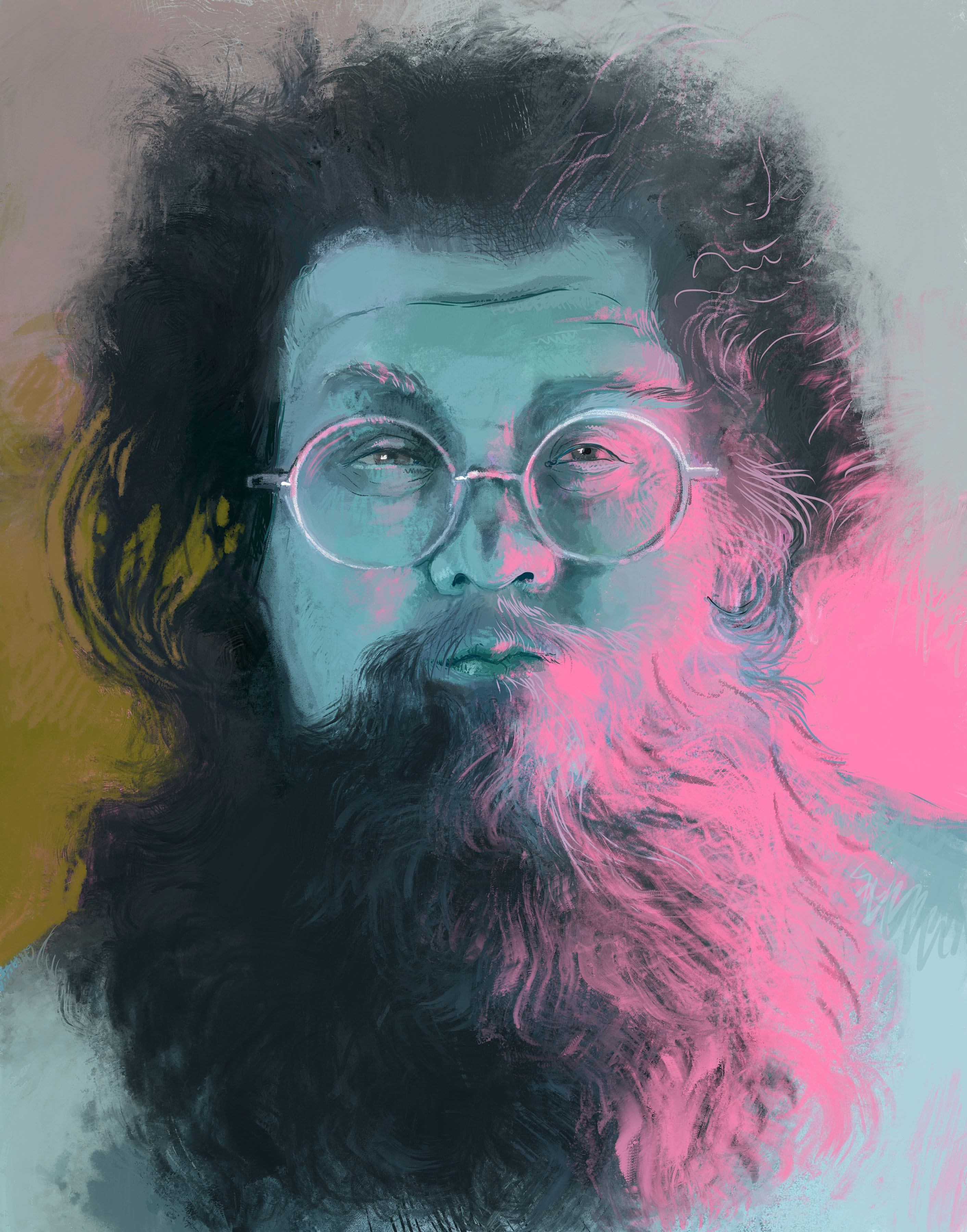
Below are a number of the works I showed in that exhibition. Left to Right, Top to Bottom: “Young Joe,” “Cardiac ICU,” “Touched Pelvis,” “Color Figure Study,” “Hitt Street Parking Garage,” “Jesse,” “Self Portrait With Neck Girth.”