Coyolxauhqui and Me

Above is the awesome stone relief featuring Coyolxauhqui. Check out her story about embarrassment and dismemberment here.

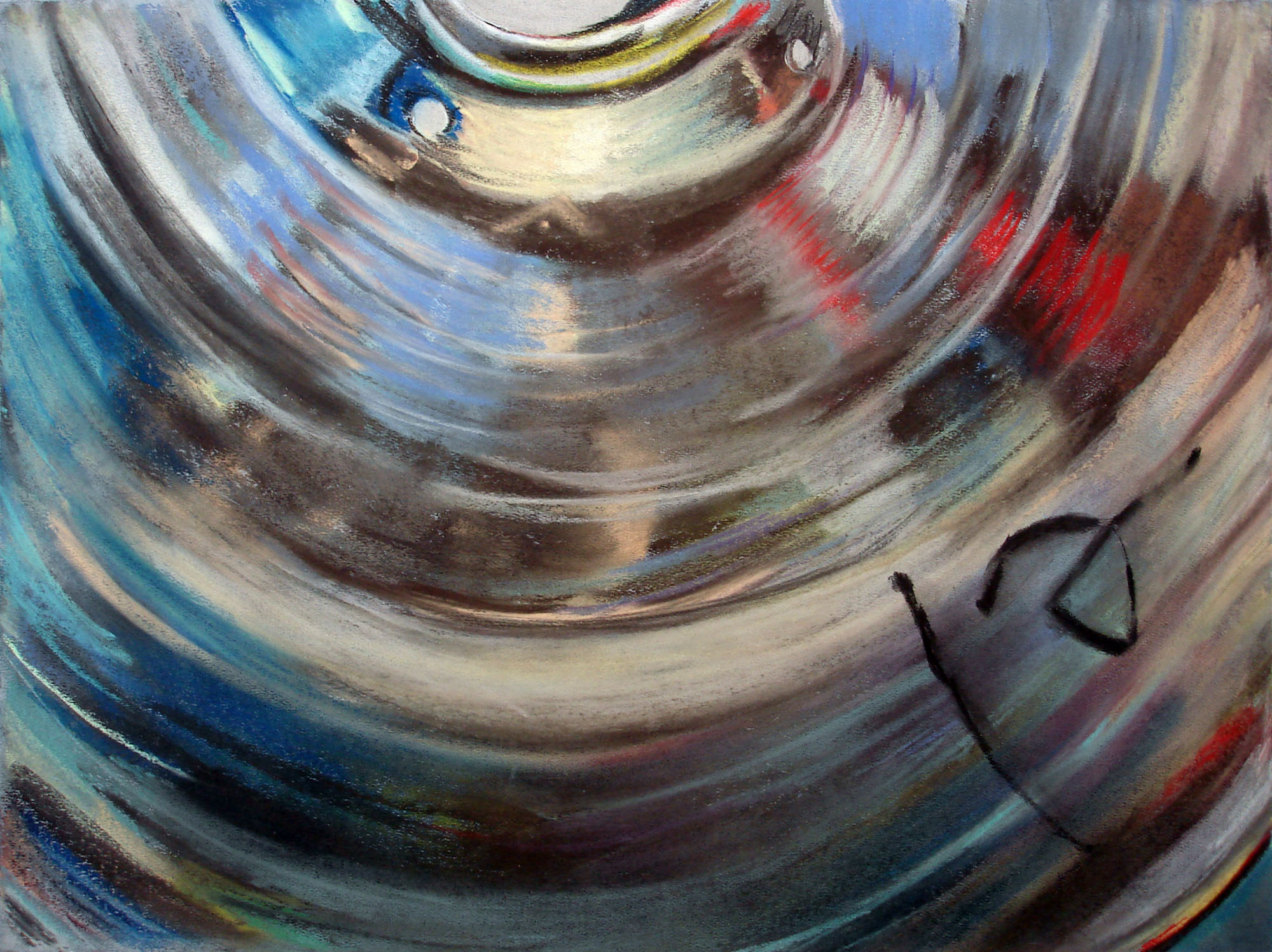
Below is my mezzotint print illustrating Lamentations 3, Verses 10 and 11.

I was inspired by Coyolxauhqui’s stone disk and tried to give my piece some of the energy of that image of the ancient Aztec goddess of the Moon.

This piece and 15 others based on Lamentations 3, Verses 1 through 26 (as well as drawings and paintings of other subjects) will appear in my solo show at Gordon College in Massachusetts this February and March.

On Spirituality: Emerging Visions of the Spiritual

“On Spirituality: Emerging Visions of the Spiritual”

Marshall University, Gallery 842,
842 4th Avenue, Huntington, WV

Jan. 21- Feb 18th.
Opening Reception: January 21st, 8-6pm

Included Artists:

Matthew Ballou
Jared Clark
Jeff Guy
Stacy Isenbarger
Leonor Jurado
Natalie Larsen
Casey Smith
Rusty Wallace
Charles Westfall

My statement for the show:

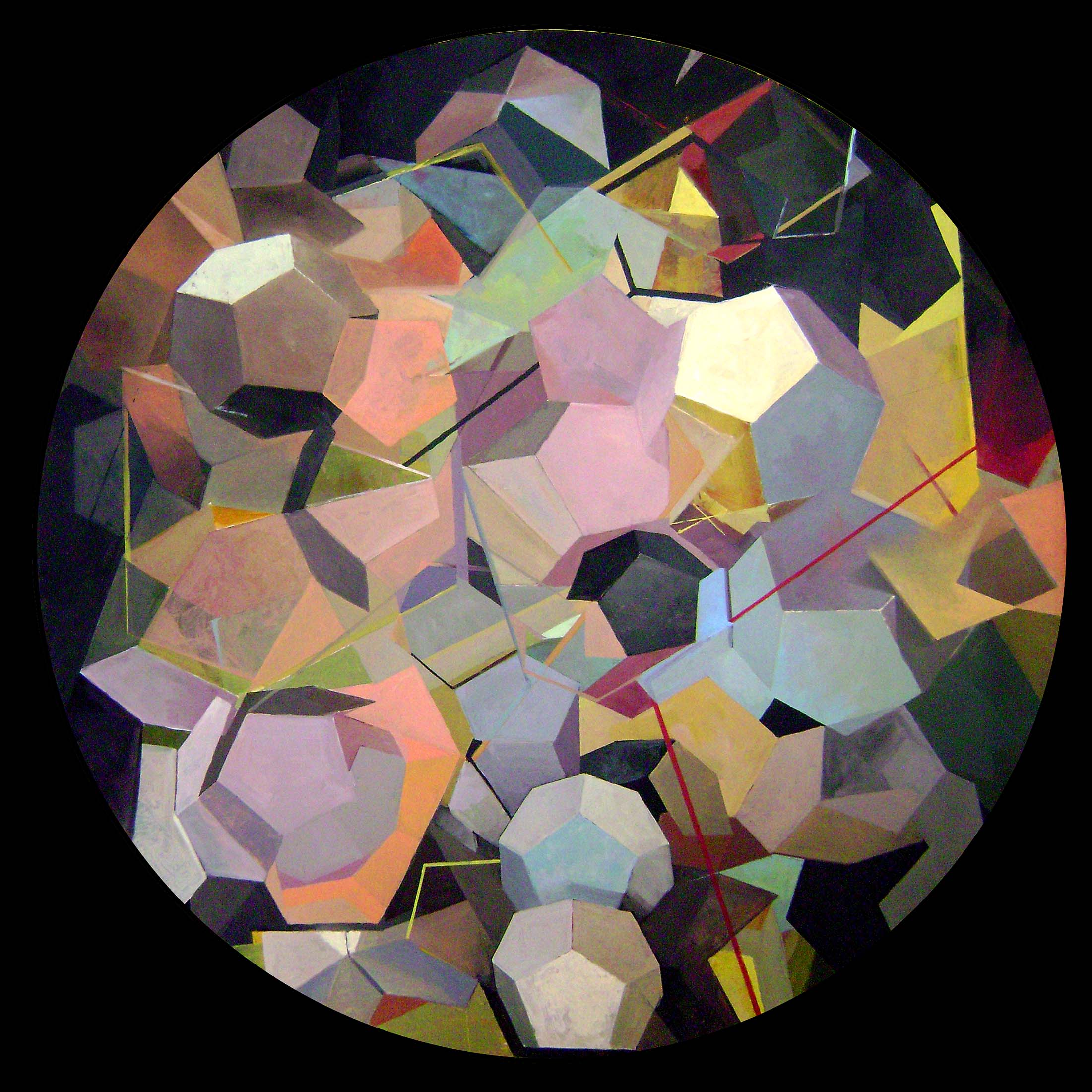
“These works on paper are part of a series exploring the formal elements of an ancient geometric form called the dodecahedron. Made from twelve pentagons, the dodecahedron was thought by Plato to be the physical shape of the universe. It was the fifth – the quintessential – of his famous Five Solids. This Solid carries with it a number of metaphysical meanings, not the least of which is the notion of an amoral stage or arena within which the machinations of reality take place. In my works, the angles, shapes, and semi-tessellation of the layered dodecahedra bridge the distance between the organic and the mathematic, between the known and the unknowable, between physical description and metaphysical intuition. These contemplations re-imagine those of Saint Augustine, who saw spiritual epiphany as inherent in rational inquiry.”

One of my works in the show, Quintessence #4:

Inspiration – Hanneline Røgeberg

Hanneline Røgeberg is a great Norwegian-born painter who teaches at Rutgers. I’ve admired her work for many years, cited it in my graduate thesis for Indiana University, and poured over it in writings and classroom discussions.

Alloy, oil on canvas, 48 x 49 inches.

She really is quite a treasure. I appreciate her serious commitment to painting as a form, her philosophical engagement with that form, and her deep willingness to pursue material and application over the image as such. Below are some links that can introduce her work and words to you:

Form and Story: Narrative in Recent Painting discussion at MW Capacity (guest post text by yours truly)

Hanneline Røgeberg talk at Boston University (this talk is fantastic and I encourage you to watch it a number of times – so full!)

Her personal website

Balzac I, oil on canvas, 24 x 20 inches

Check her out, and seek out more for yourself!

Vacation = Work

This Thanksgiving Break my wife and I decided to stay at our home here in Columbia, MO rather than going to visit family for the holiday. There’s a lot going on for us, and for my work in particular. There’s no time to take a break.

I’ve got three significant shows coming up. The first is a wonderful show at the University of Mary Washington Ridderhof Martin Gallery in Fredericksburg, VA. The exhibition is titled SHADES OF GRAY: Drawings in Graphite and will run from January 21 – February 25, 2011. I’m particularly excited about this exhibition as Joann Moser, Senior Graphics Curator from the Smithsonian Museum of American Art, will be presenting a lecture and placing the work on view in context. Below is one of the four works of mine that will be included in the show.

Anthropology (Conceits of Knowledge #3), graphite on paper, 38 by 42 inches, 2008.

The next show I’m involved in is a solo show at the Barrington Center for the Arts at Gordon College just outside of Boston, MA. The show is titled Redeeming Tensions and will feature approximately 40 paintings, mezzotint prints, and drawings. It’s the largest show I’ve ever attempted. It will run from February 5 through March 19, 2011. Below are two of mezzotint plates I’ve been working this week. The finished works will be printed and appear in the show.

Lamentations Chapter 3 Verse 8, copper mezzotint plate, 2010.

Lamentations Chapter 3 Verse 14, copper mezzotint plate, 2010.

The final major show I’m involved in will be a two-person exhibition at the 930 Art Center in Louisville, KY with Tim Lowly, one of the most amazing representational painters working today. It is an extreme honor to be asked to show with him, and I am super excited about our show of tondos. I’ve got some work for this show underway but since it’s a while until the show opens I want to keep that under wraps – the run should be June 17 – July 31, 2011.

So, as you can see, I don’t have time to take vacations from the things I love, the things I’m passionate about… and I wouldn’t want to. Faith, family, art making, community, teaching; I life for and in and through these things. They may all seem like cliches to some people, but I’ve got a full life and a full plate. I love it and I am thankful for it.

Inspiration – Jusepe Ribera

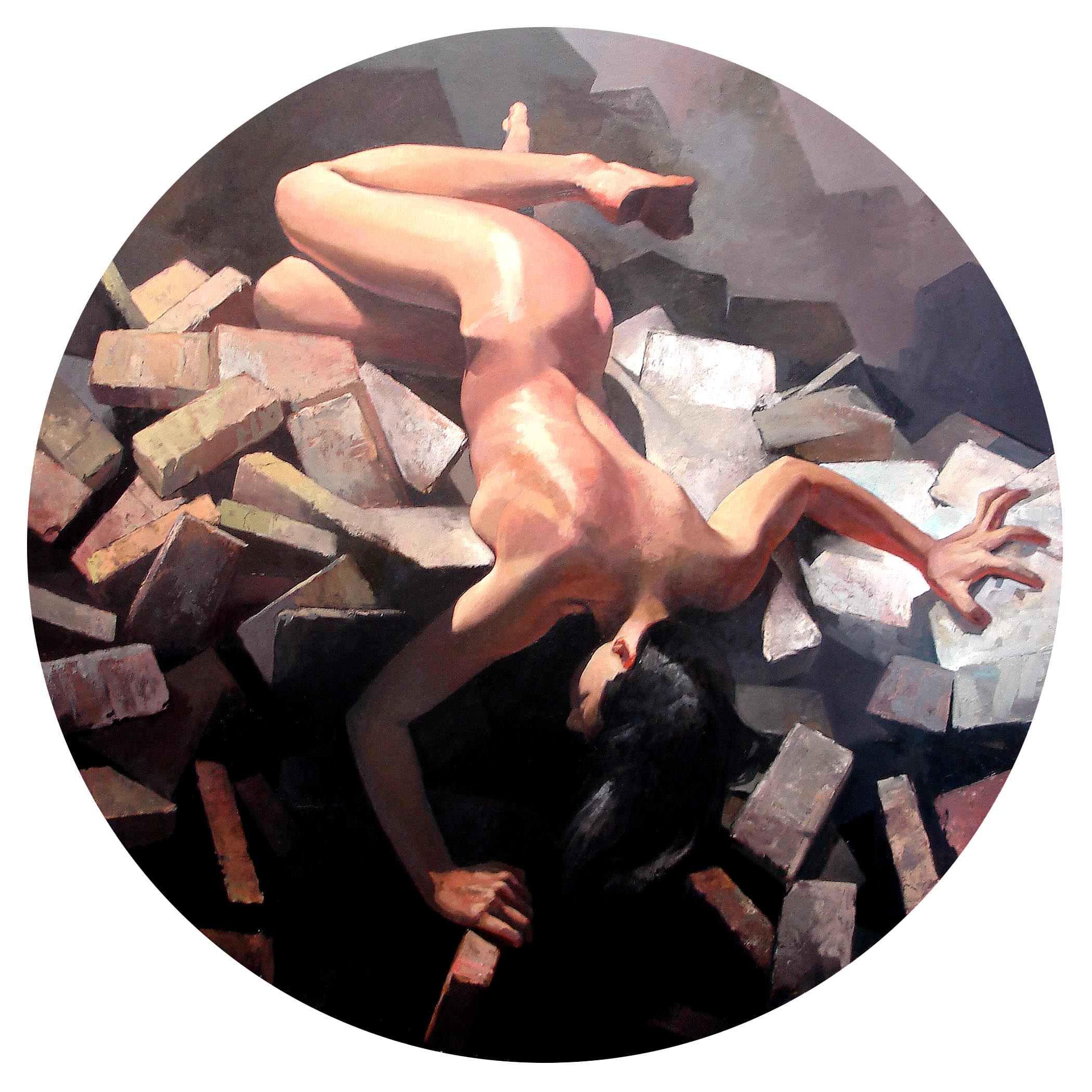
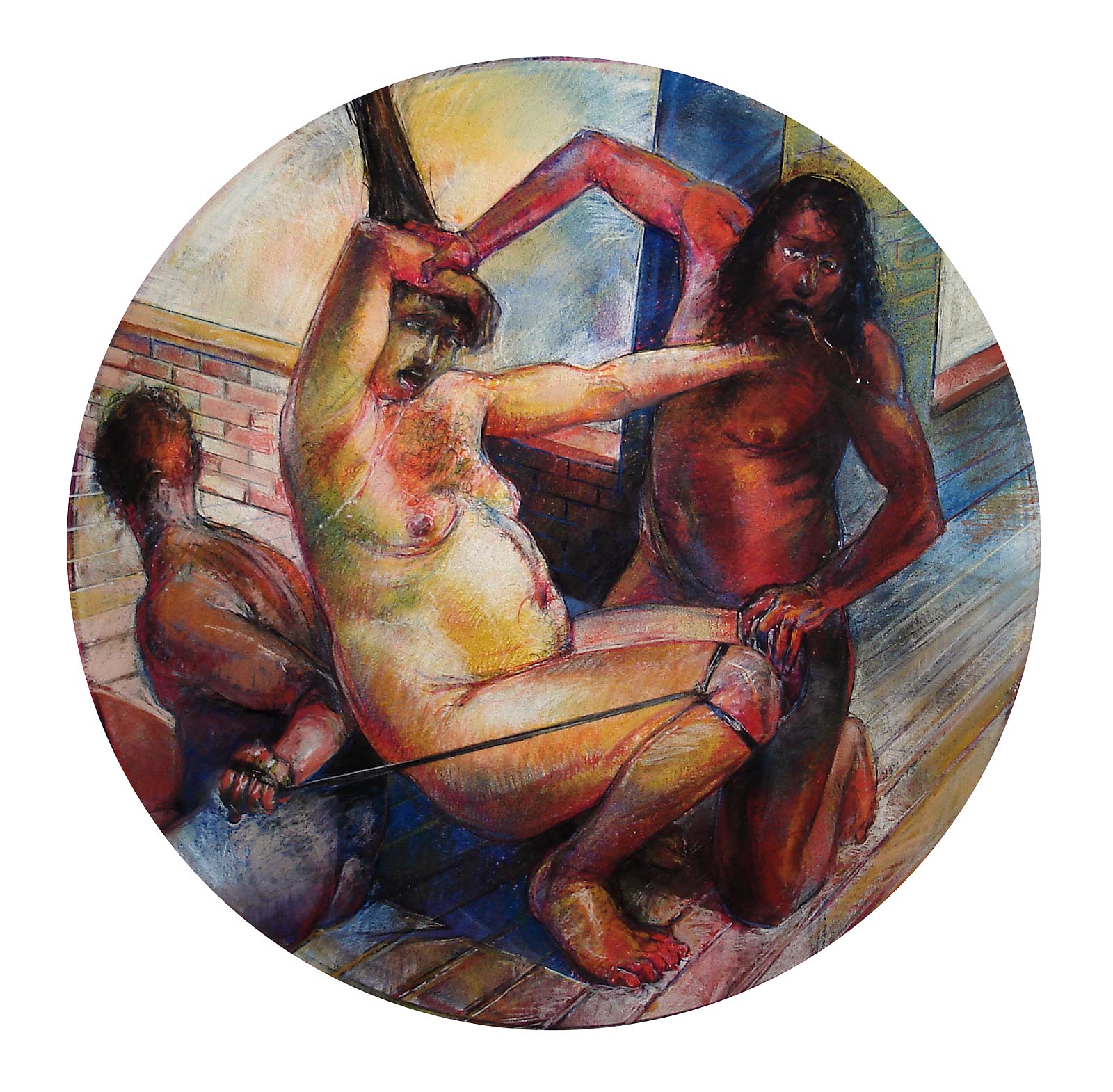
Over the last few years my work has turned on a conception of the natural geometry of the body. You can see how in images like this (“Collapse” oil on canvas on panel, 48 inches in diameter):

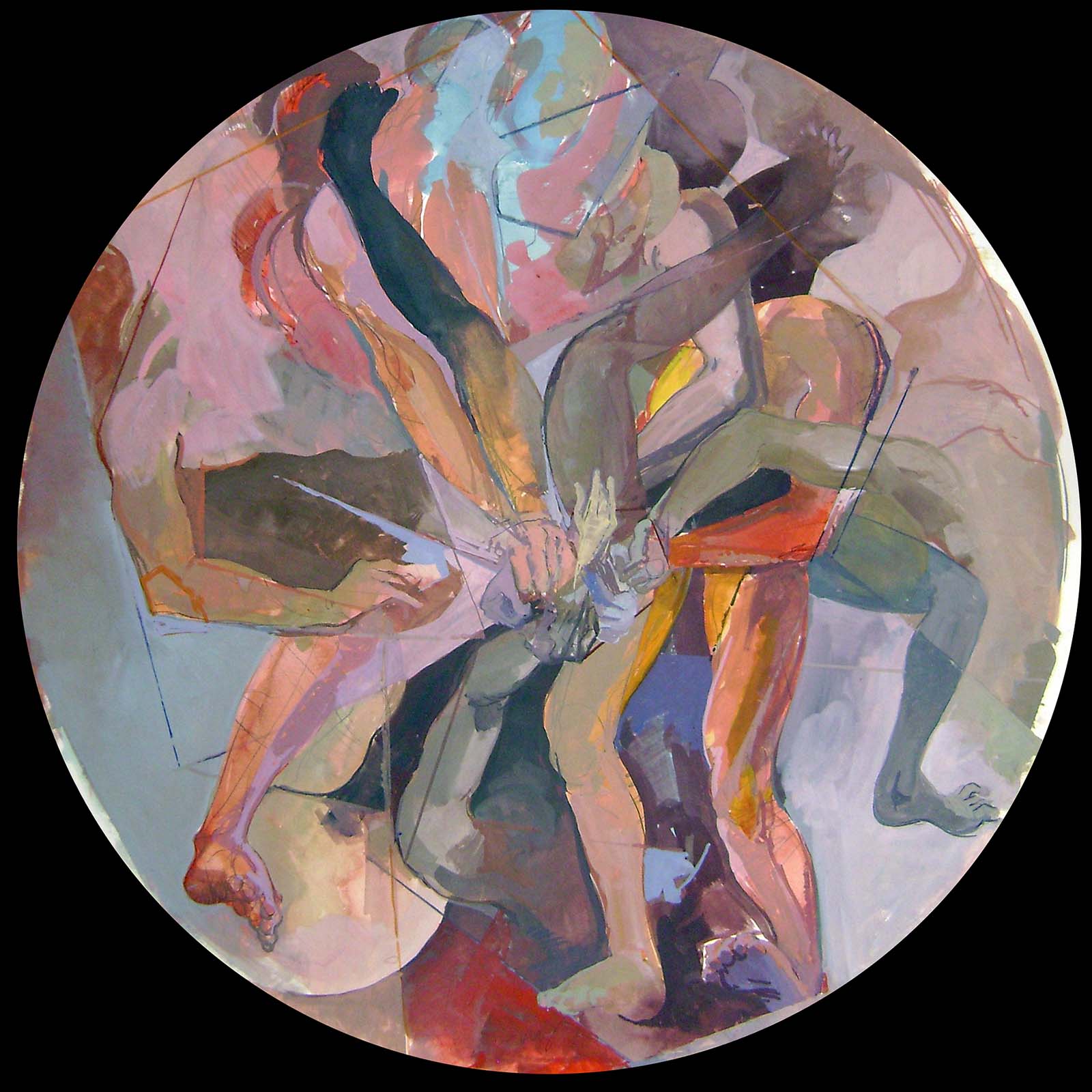
or this (“Revealer, Forced” pastel on paper, 23 inches in diameter):

that I am really focusing on a kind of geometric tension in the positions and movements of the body.

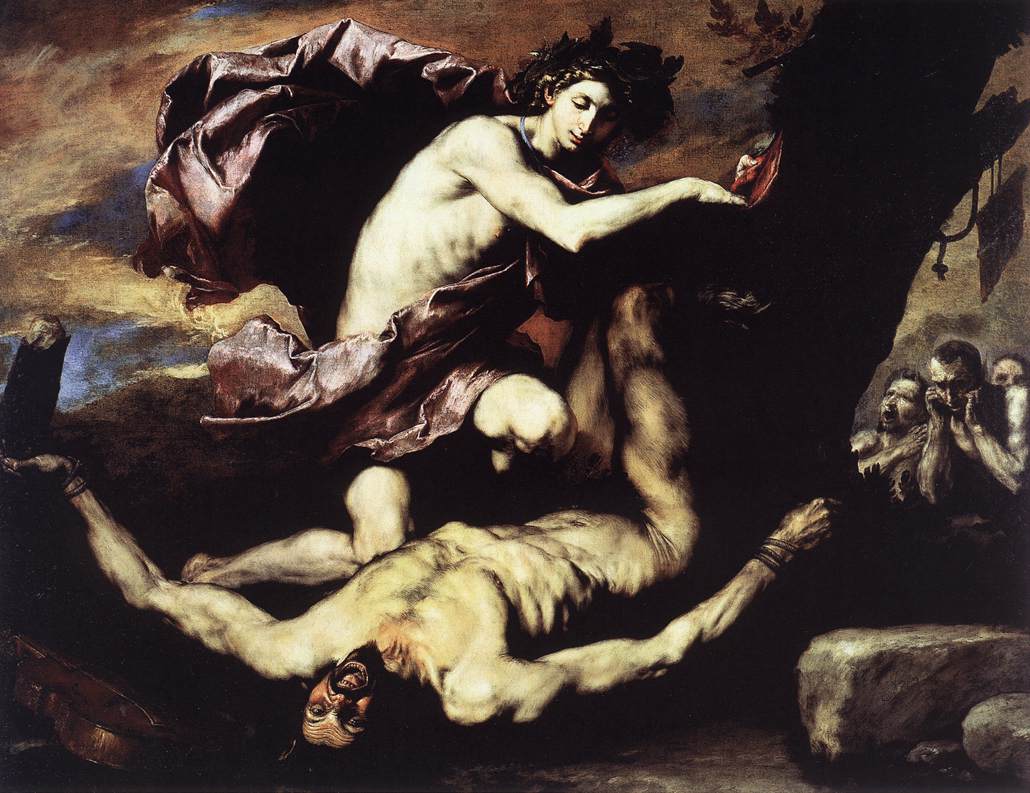
A lot of this has come from my interest in the work of the great Spanish painter Jusepe Ribera. In 1610 he followed the call of Caravaggio (who died that same year) by traveling to Italy to see the master’s work. Here are a couple of my favorites:

“The Flaying of Marsyas”

“The Martyrdom of Saint Phillip”


Color Drawing, Fall 2010

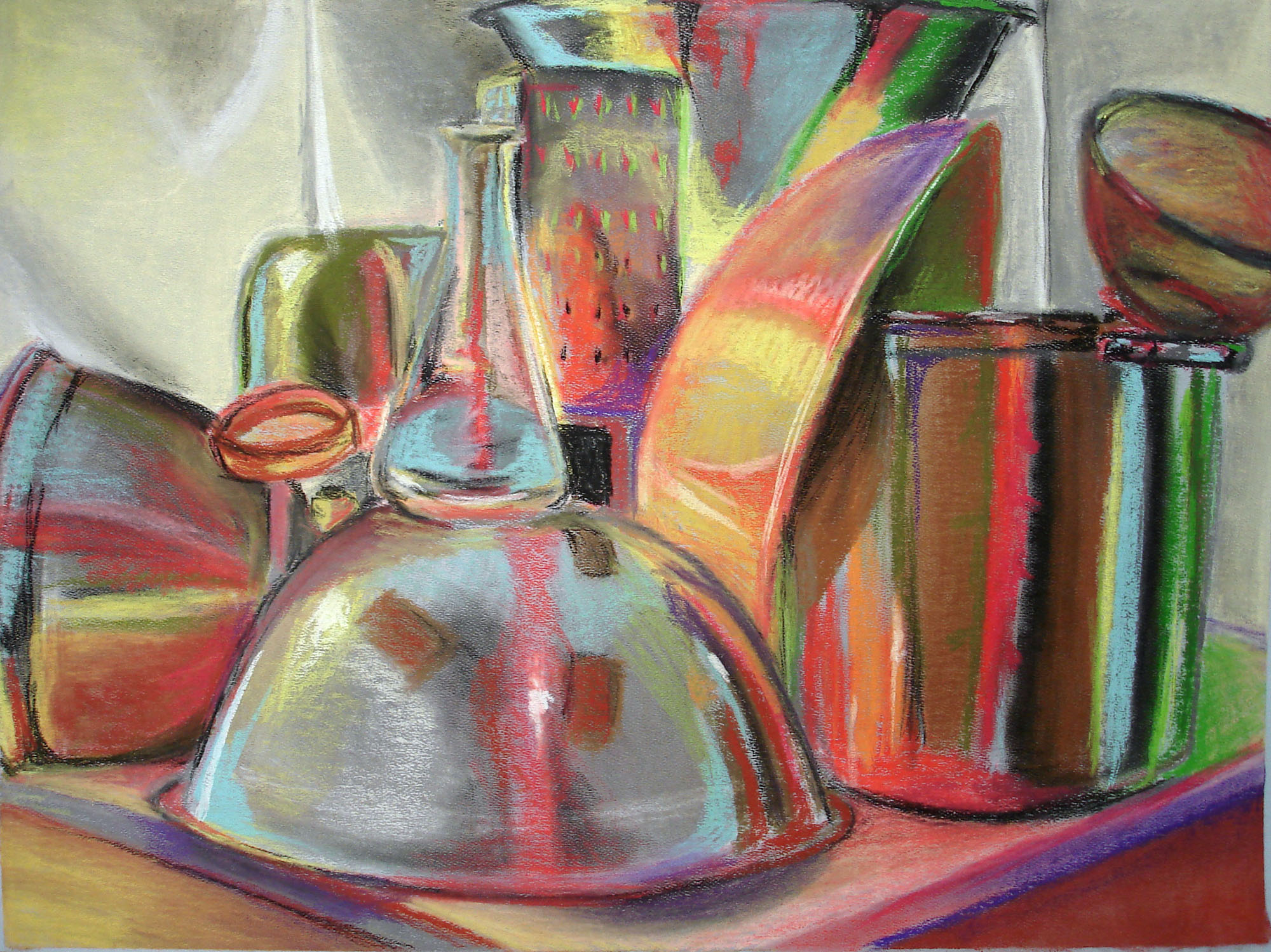
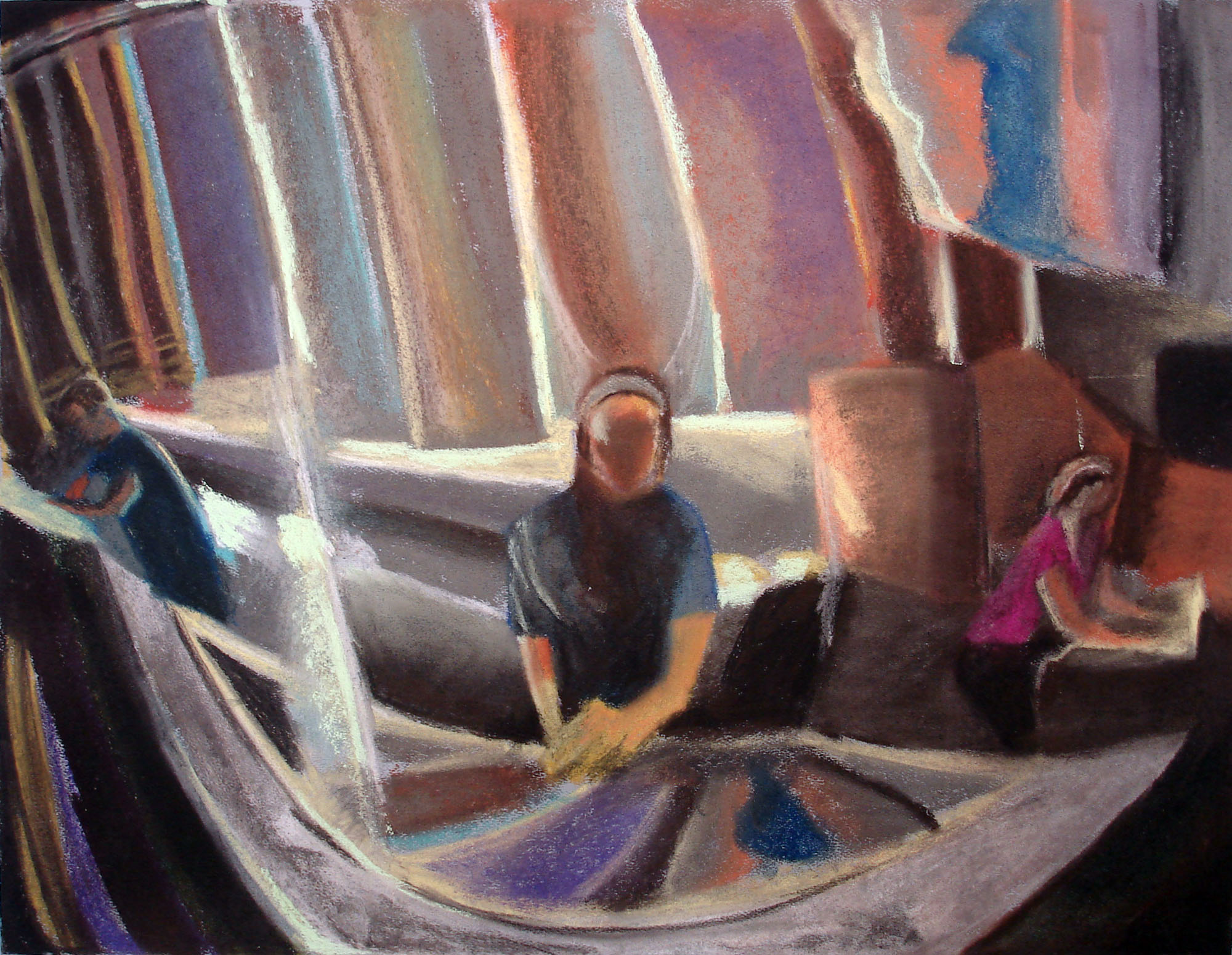
Another semester, another feeling of pride. My beginning color drawing students are pretty awesome.

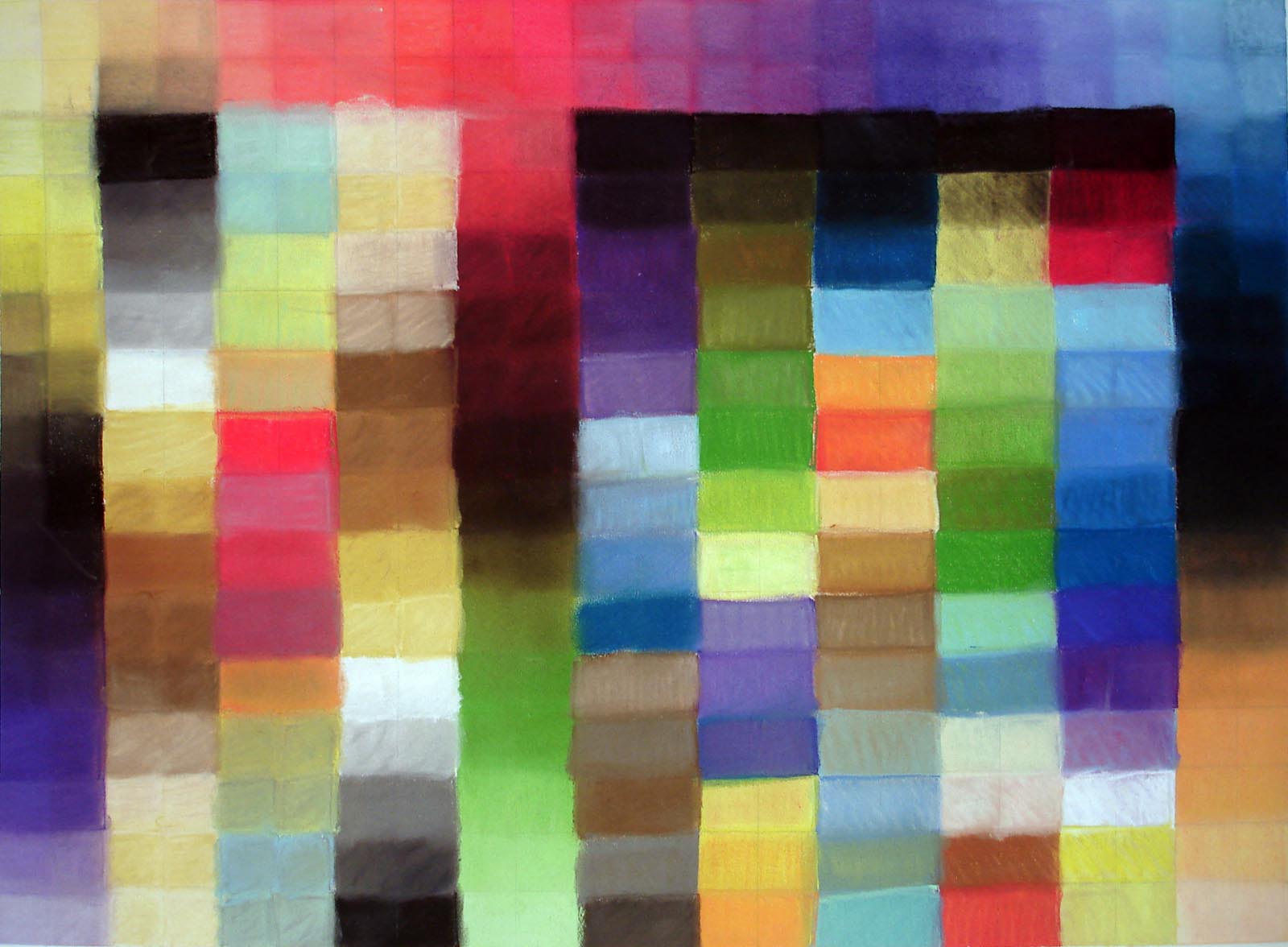
Carrie Casper Reflective Still Life

Dustin Roberts Reflection Self Portrait 1

Alex Forkin Reflection Self Portrait 2

Alex Forkin Reflection Chromatic Environment 2

Katie Kullman – Reflection Self Portrait 1

Nikki Warren – Grid Project 2

Ashley Claussen – Reflective Still Life

Inspiration – John Dubrow

A number of years ago I saw John Dubrow’s painting Rephidim. It inspired – eventually, after some gestation – this painting:

The work is titled Taming the Tongue, Study #2. The Dubrow work inspired this sketch, not the previous or subsequent works. After a while I manifested the idea in this work, but I have always been drawn to this small work and its connection to Rephidim. Learn more about that painting and John Dubrow himself here.

Martha Macleish and the Shadows

I took a group of my students (from the University of Missouri at Columbia) over to Kansas City to see a bit of art this past weekend. The main attraction was the Martha Macleish show at Longview Community College. One of the things I found so interesting about her work is the fact that the shadows they cast – being illuminated by the syncopated lamps of a gallery lighting system – are at least as physically striking and necessary to the experience of the art as the objects themselves are. These shadows seem to extend each work in that they transfer the structure and form of the piece into space and onto the surrounding walls and floor. While this seems obvious – it’s what all shadows do – in this case it’s much more significant. This is because the laminated, layered construction of the work is mirrored in the stratified step gradients of the multi-vectored shadows and the negotiated, sometimes grungy, sometimes glossy finish of the materials is echoed in the distended, bending atmospherics created as light falls over their spaces and shapes. The effect is mesmerizing and stimulating, leading viewers to shift their perspective again and again, bobbing and weaving around each piece to see the secrets they hold in their multi-faceted alignments and angles. The work is very much worth seeing if you get the chance. Martha granted me permission to post some images of the shadows her work created at the Longview show. Click on each to enjoy them larger.

Tondo Jig

I’ve finally gotten to set up my tondo making jig in my new woodshop. Here’s a run down of how it looks and an example of what it can do.

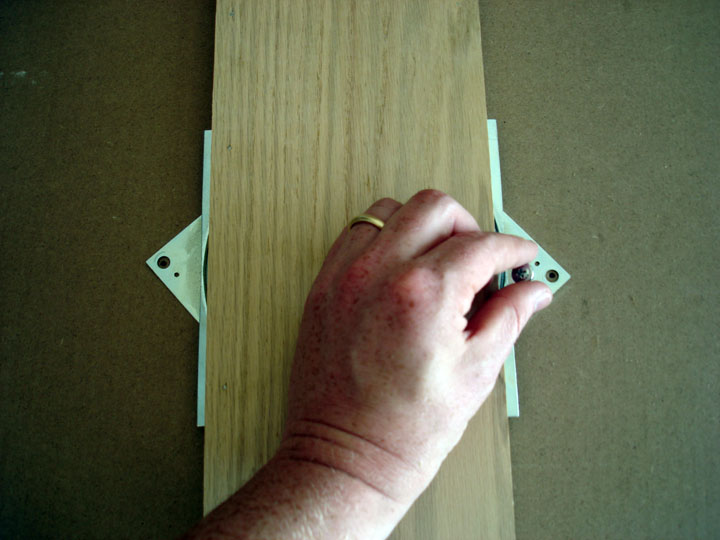
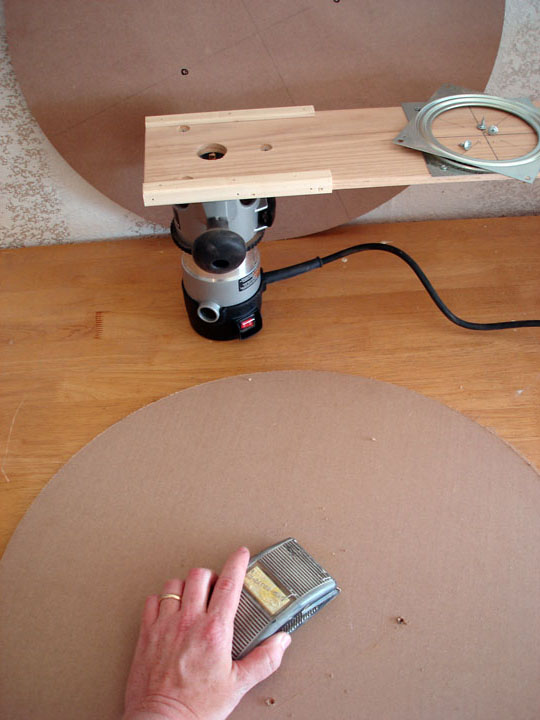
Here you can see the basic layout. I’ve created the body of the jig on a nice piece of half inch by 6 inch by 3 foot oak. Being a hard, strong wood, the oak will hold the mounted router well. The router itself (a nice mid-range Porter Cable model) is attached by removing its base plate and mounting it to the oak board as shown. The screws are recessed to assure good connection to the router.

Then I mounted a small “lazy susan” type ball bearing swivel deck to the other end of the board. I’ve measured and pre-drilled stations for the swivel deck in my standard tondo sizes – 12 inches (to give me a 24 inch tondo), 20 inches (40 inch tondo) and 24 inchs (48 inch tondo). I set it up to move the swivel deck to reduce wear and tear on the router mount area. I don’t want to take the router off at all. You can see how I’ve put some base plates along each edge of the board on the router end so the swivel deck and router approach are level when placed on the board to be cut.

To cut a tondo, I select my size (in this case, I want a 24 inch tondo) and put the swivel deck there (above). Then I screw down the other side of the swivel deck to the board to be cut so things are nice and secure (below).

Then – with the bit still recessed up into the body – I will start the router and slowly plunge the bit about halfway into my wood. I learned in my previous experience with cutting tondos to take it slow and cut in a few passes to ensure a good, smooth cut but also to protect the router. The harder the wood, the more wear on the router – obviously with this piece of MDF the router could have done the entire cut in one pass, but I feel more comfortable taking a few extra minutes to keep the tool nice.

After the first pass – and each subsequent one – I use my compressor to blow out the dust. This increases the ease of the next pass and keeps the risk of charring or actual combustion down. I also make sure to blow out the vents of the router since the sparking within the motor can ignite dust that collects there.

In the above picture you can see the bit being adjusted down for the final pass.

After the final cut I remove the excess wood and blow off the dust (above), then remove the swivel deck and start to sand any burrs (below)

Here’s a look at the edge of the tondo – pretty smooth cut!

And the final products!