On this day ten years ago I had a cardiac arrest. My heart was stopped for 10 minutes. I’ve written about this event every year on the Traumaversary, and I’m glad I have. Ten years. Every day I’ve been thankful. I’ve tried to make my life and my family better. I’ve tried to become a good teacher. Ten grateful years. Hard to believe that’s about 20% of my whole experience… all after that heart attack.
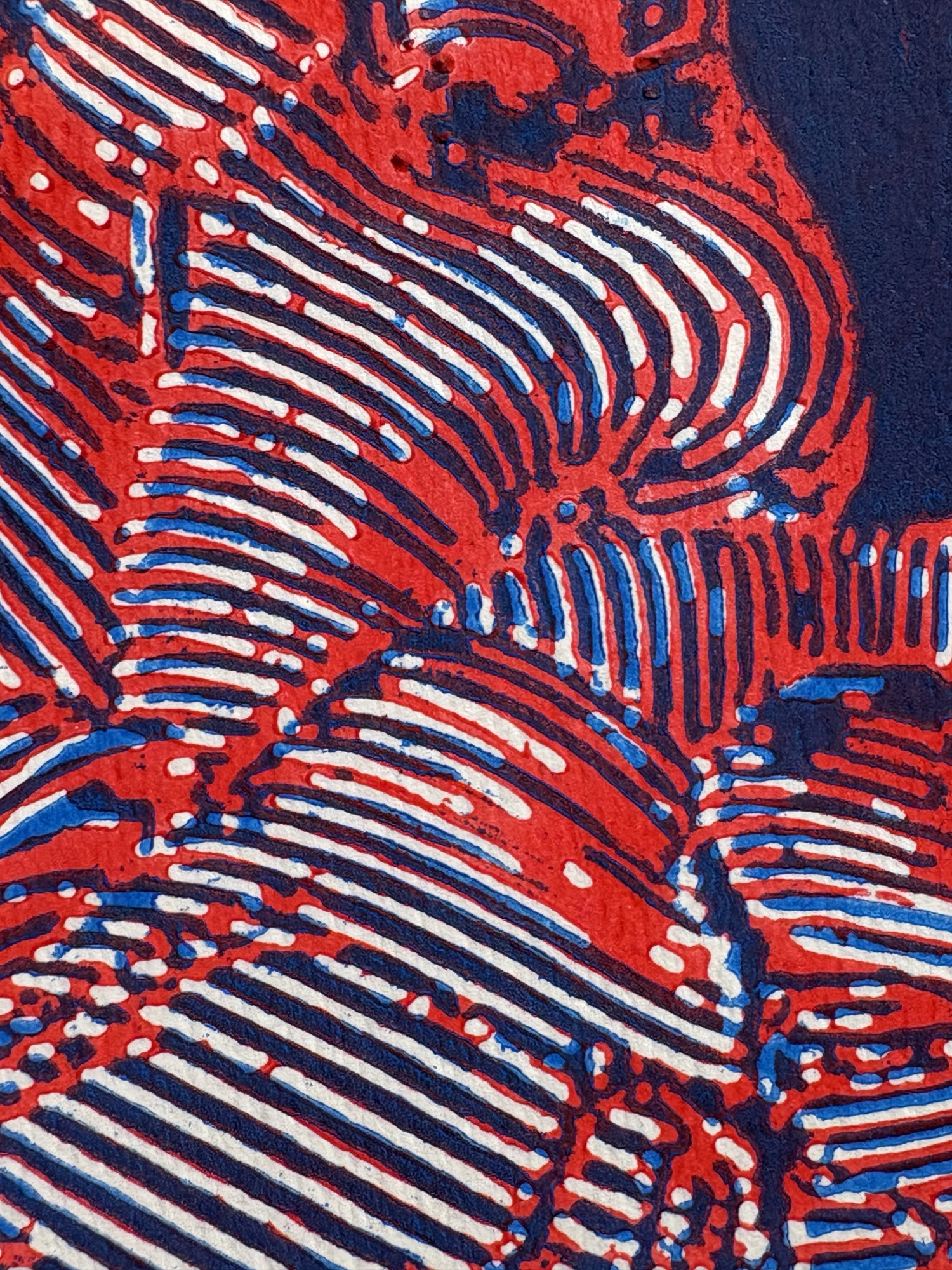
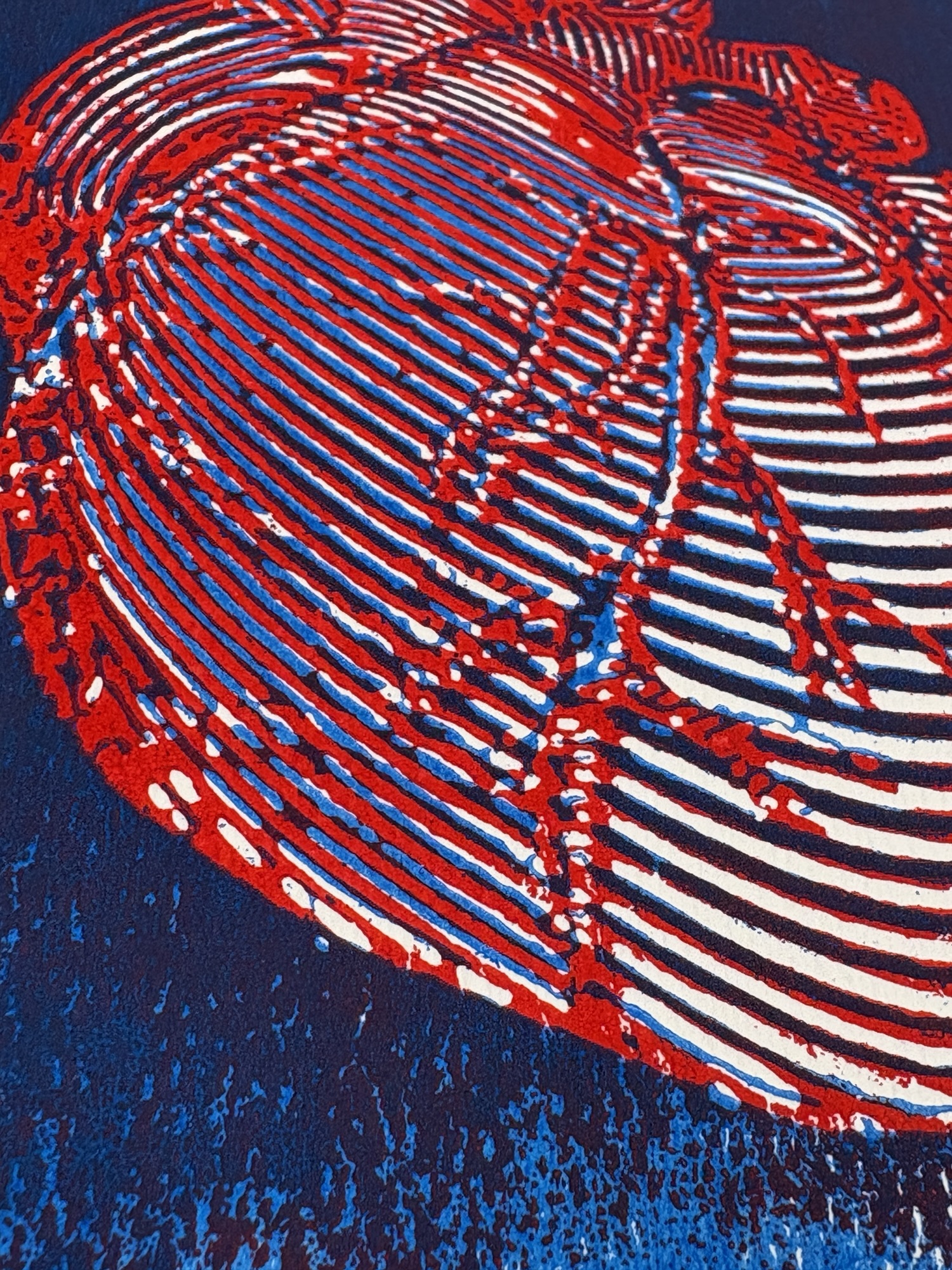
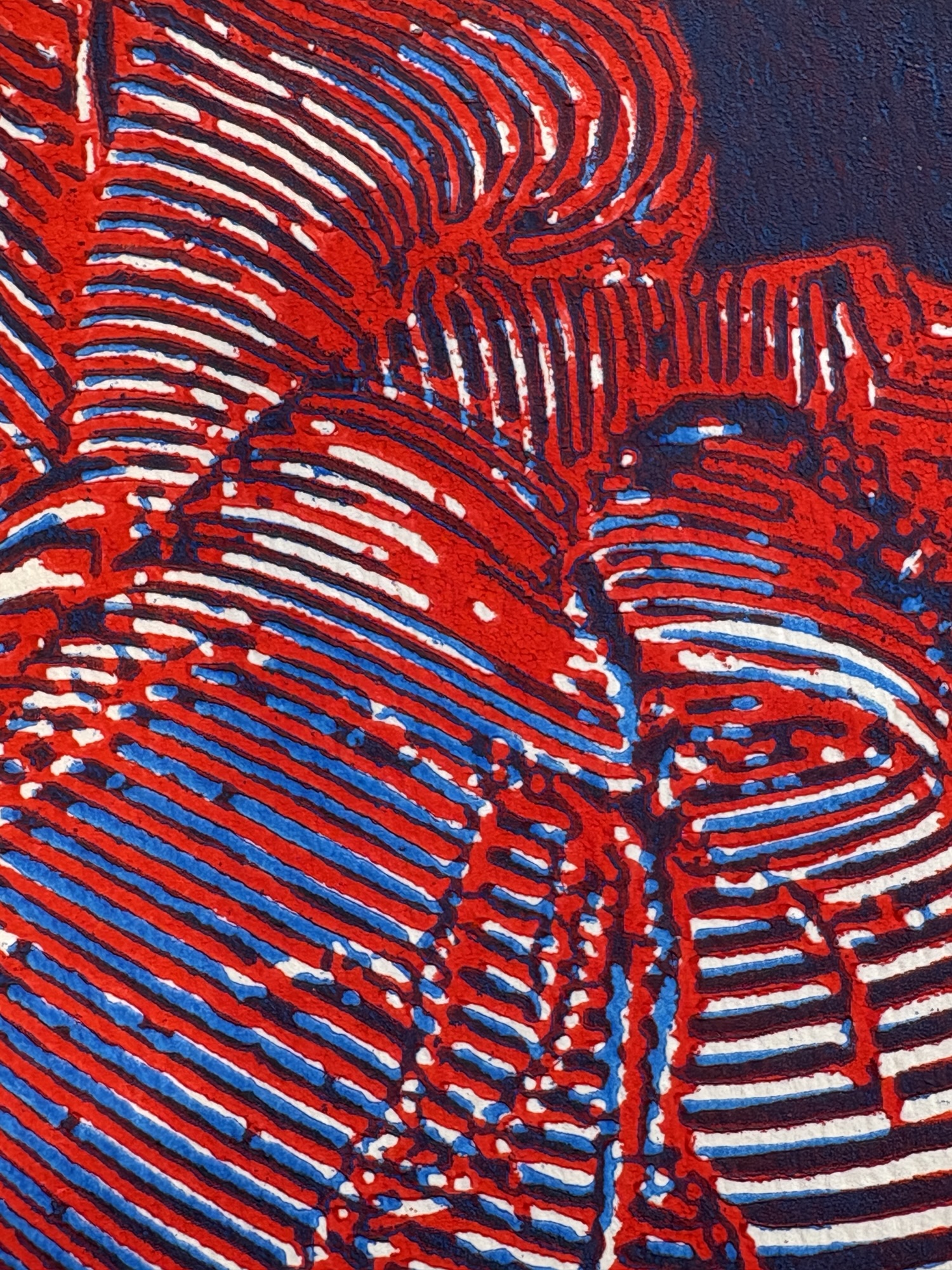
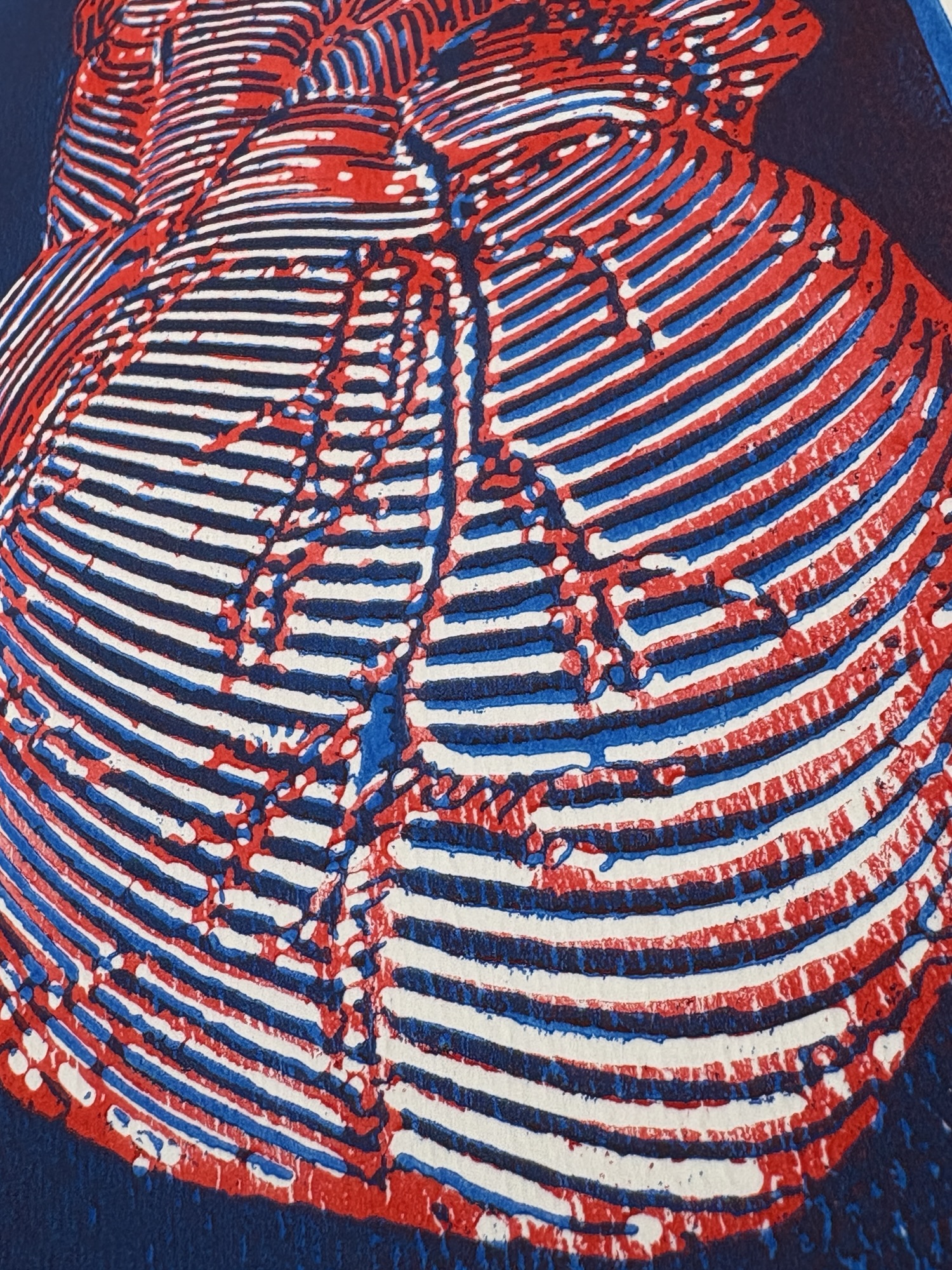
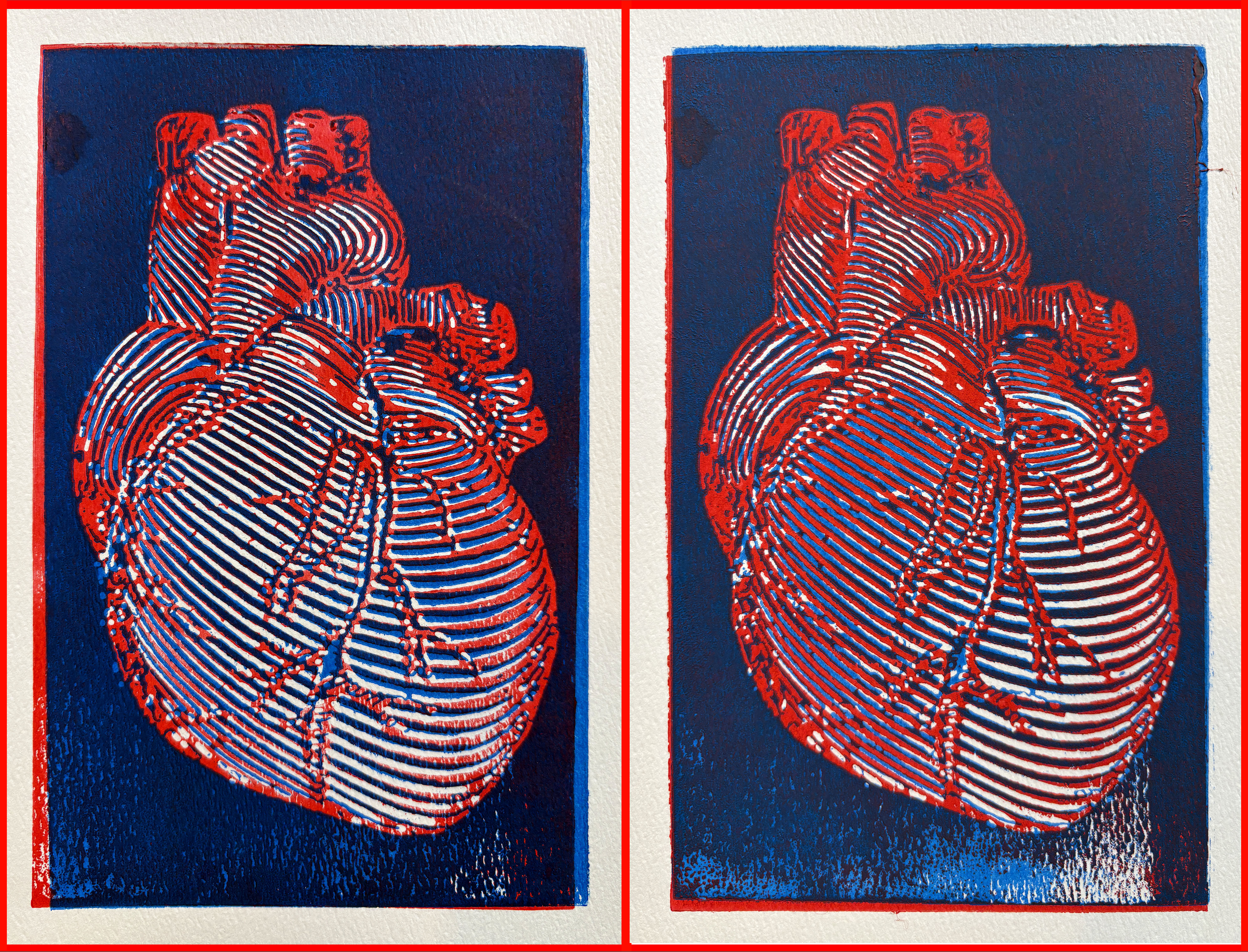
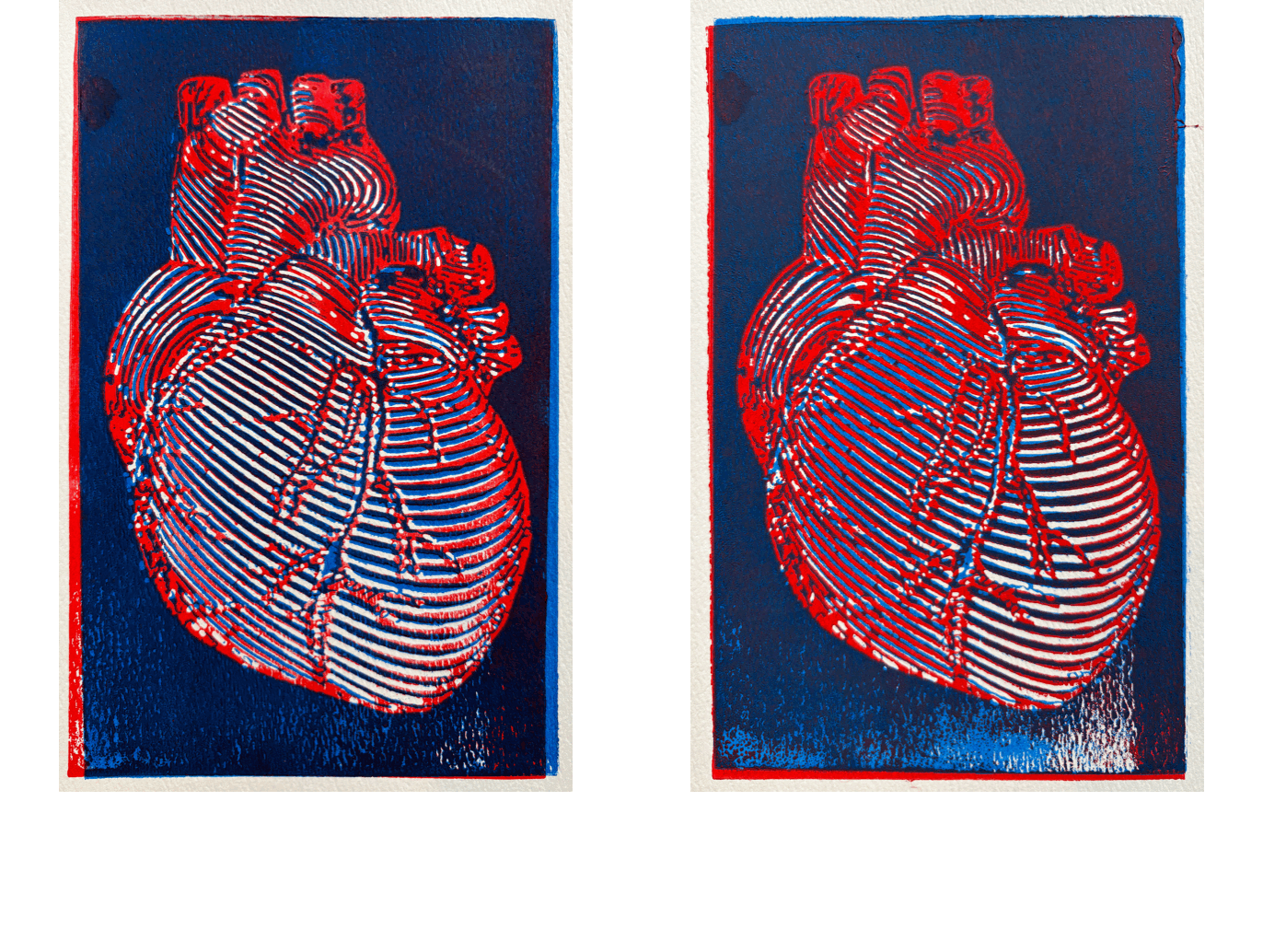
Above are two of my heart prints. These are two-block woodcuts , each printed in two colors (8.25 x 5 inches). The blocks are slightly de-registered so that they overlay and make dynamic line and color action over the heart. When made into a gif, they pulse like a real heart…
I feel extremely blessed to have been able to carry on, but also to have been transformed in many ways over this decade. I want to make the most of my time, convey a spirit of generosity and kindness, to be a good father and encourage my kids, to advocate for my students, to support my friends and colleagues… and to find more about beingness by which to be astounded. In a time when so much has gone wrong in this country and the wider world, I am still hopeful that when I leave this world I will find it to have become better, because I know that I have gotten so. Every day I find something to love, to passionately explore, to laugh with my family about – and that dual outpouring/indwelling experience is the great joy. I have been rewarded by my practice of attention over these years.
Every year is an amalgamation of the years that came before. While there might be touchstones and specific events keyed to one year or another, no year can be entirely of itself. So some of what follows is tied to this past year, but some of it is from outside of that temporal container. Regardless, I wanted to make a few notes about what struck me and what stuck with me this year without a whole lot of thinking about ranking or hard and fast lists. It’s good to take stock and look back so that the turning to look forward can have some context.
At a great party with former students in Rocheport, MO.
100 Pounds Down
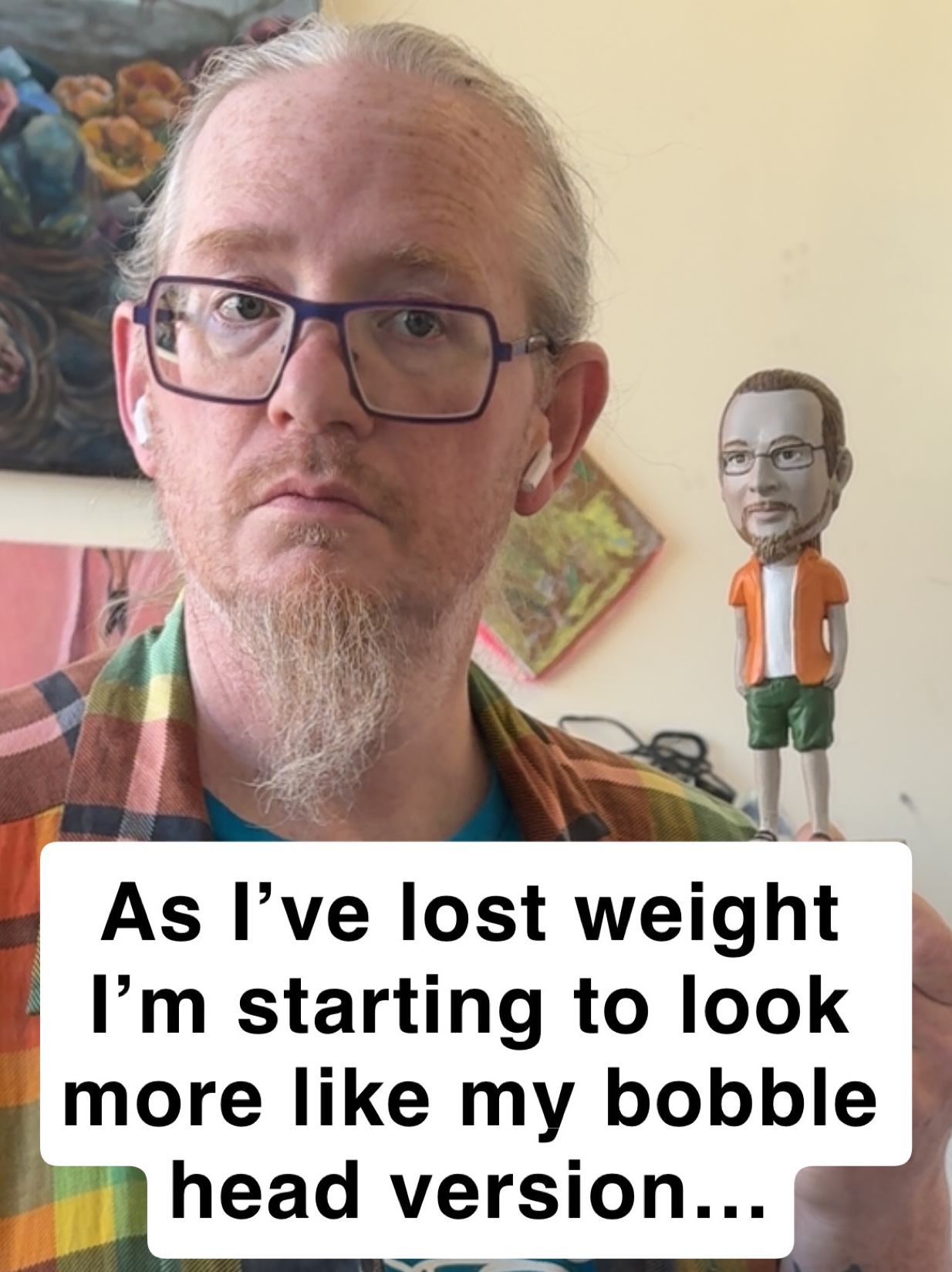
2025 is the year that I lost 100 pounds. On January 18, 2024, I was 291.6 lbs. Today, I’m 186.6lbs. This is a testament to medicine, determination, consistent workouts, and finding ways to manage my own instincts about food and drink and effort. But what changed in January 2024? Why do I think of that as the start of something new? That’s when I began to supplement my daily workouts, efforts to eat and sleep well, and overall stress-reduction with Zepbound.
What it did was take the edge off of my constant feeling of hunger… what many people describe as “food noise” in the mind. Zepbound was the little tweak that enabled me to no longer have an inner insistence that I endlessly had to fight. I felt satiated, FINALLY. My portion sizes went down. My need to just eat everything on the plate – or to have a double or triple portion – disappeared. All of that went away. It became much easier to control my desires in much the same way that antidepressants helped me focus on what was truly important for my family and for my life.
This tirzepatide medication enabled me to turn around years of baggage in my thinking and habitual activity. I was disciplined with working out for nearly a decade, but I still struggled with knowing that it was time to stop eating or drinking. With Zepbound, I was able to do what I needed to do and hear my inner rational voice about what was important. It has definitely been a life changer. My whole world is so much better. Without that extra 100 pounds everything – working out, teaching, playing with my kids – is so much easier and more fulfilling. My knees, ankles, and back feel DECADES younger.
In The Ear and Eye Holes
Another great aspect of 2025 was experiencing (or re-experiencing) some amazing podcasts and movies from a bit of a different perspective. One of the things that I did was watch a bunch of vampire movies with Miranda, my oldest daughter. Seeing those films again (starting back with the original 1922 Murnau Nosferatu and then watching the 1979 Werner Herzog Nosferatu, not to mention a half dozen others) was a unique and dynamic endeavor. It was wonderful to watch those monster and horror movies with Miranda (and sometimes some of her siblings), ask her about her interpretations, and explore how she was understanding all of it. I greatly enjoyed the Robert Eggers 2024 version as well (but I didn’t take my kid to watch that one).
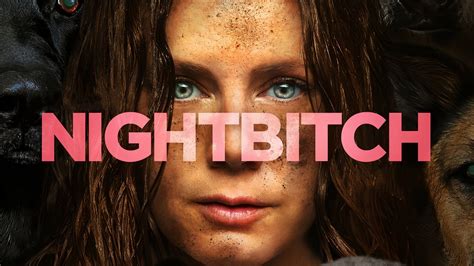
Another powerful experience early in 2025 was when I watched a movie starring Amy Adams called NIGHTBITCH (2024). Based on the novel by Rachel Yoder, it’s “a magical realism-style story of a stay-at-home mom who sometimes transforms into a dog.” I encourage everyone to go watch it. It’s about embodiment, change, parenthood, meaning, self-actualization, and hope. Such a great movie. Amy Adams goes SO HARD in this film… an award-worthy performance.
Amy Adams in NIGHTBITCH
Movie Highlights: Watching The Shining with my kids and seeing Eggers’s Nosferatu in the theater with Jesse. Experiencing NIGHTBITCH on a whim.
In the podcast realm I enjoyed going back through the Futility Closet podcast episodes. This phenomenal podcast is no longer is being produced, but that doesn’t mean they’re out of date or stale. The married team of Sharon and Greg Ross made 365 episodes, then called it quits. The episodes are infinitely re-listenable, there are NO ADS, and the opportunity to be astounded by the world and get inspired to research events is just solid gold. I’m almost done with a full listen-though in 2025, and it was so worth it. Futility Closet really is a cohesive account of global culture and what we try to do as human beings. The writing and the presentation overall are very much accessible. This is not highfalutin fare. It’s not the multi-hour-long episodes of people like Dan Carlin, not a dry lecture about history. Futility Closet gives you tight 30-minute episodes that hit on the main takeaways. They give you the backbone, all the resources so you can look up more, and they’re just really personable, sweet people.
Music in 2025
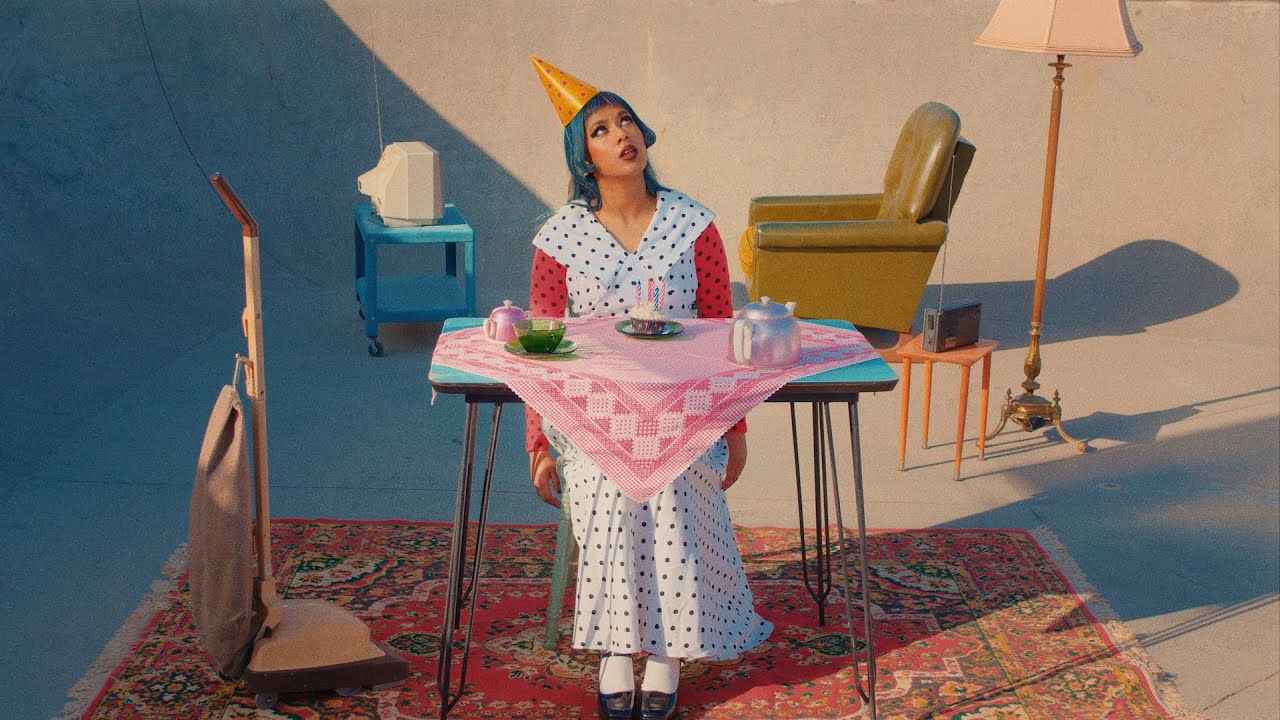
My students get me hooked on so much good music. This year, these are the heavy-hitters that stuck in my studio rotation. I’m not ranking them, just telling you to get on the train and listen.
Ecca Vandal
Key: Band/Artist – My Suggested Description of Genre
One of my great joys is teaching. I love working with my students and seeing what they do when they graduate. In 2025 I saw one of my grads, Andrew Long, graduate with an amazing thesis exhibition and text, then immediately get a great job.
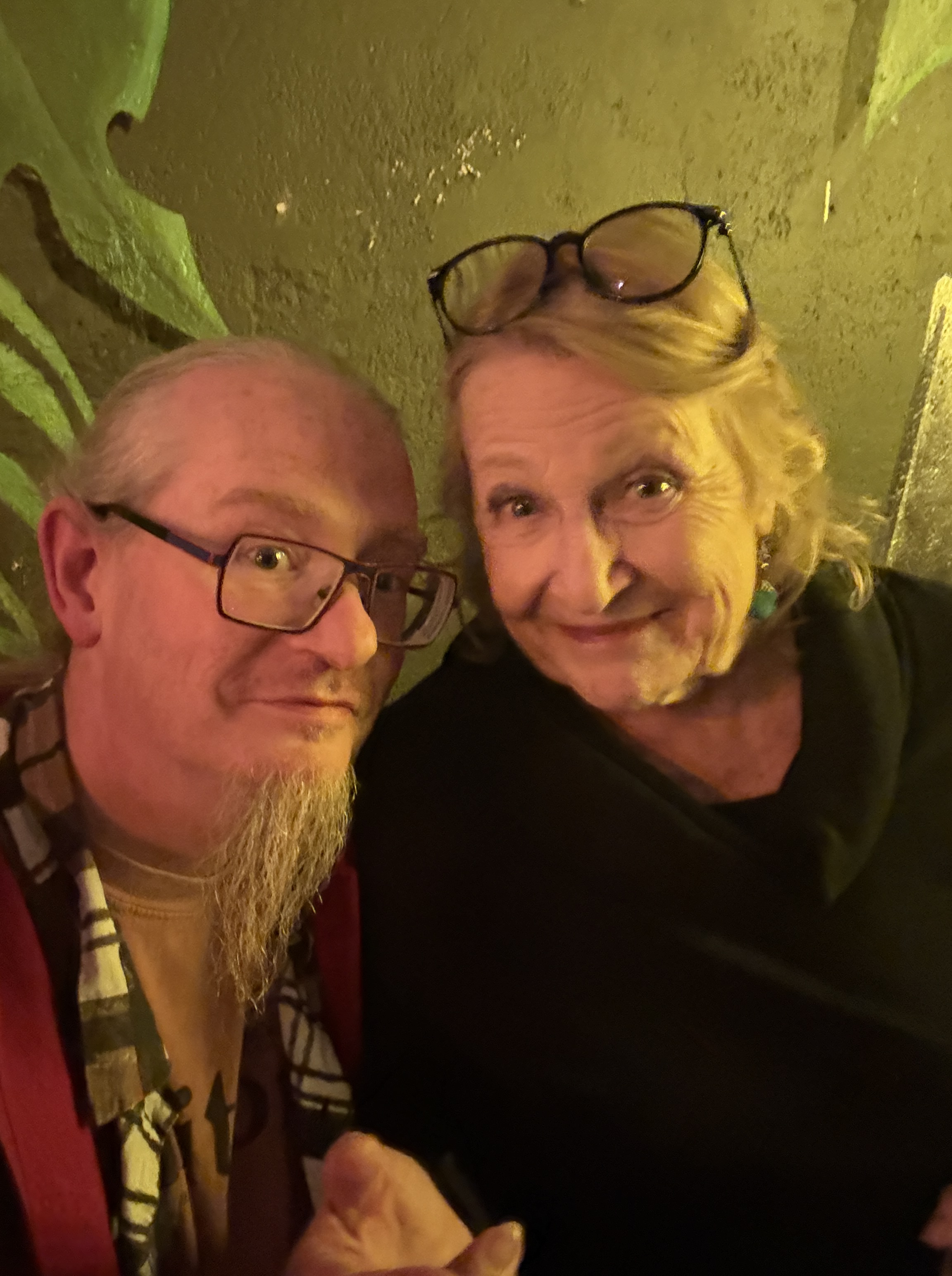
Me and Dr. Kerr at her retirement partyIn deep conversation with Andrew at a conference
Another transition was the amazing Dr. Barb Kerr retiring after nearly 50 years of teaching and scholarship. It was an honor to be at her celebration party. She’s been such a mentor and inspiration to me.
RIP Dad
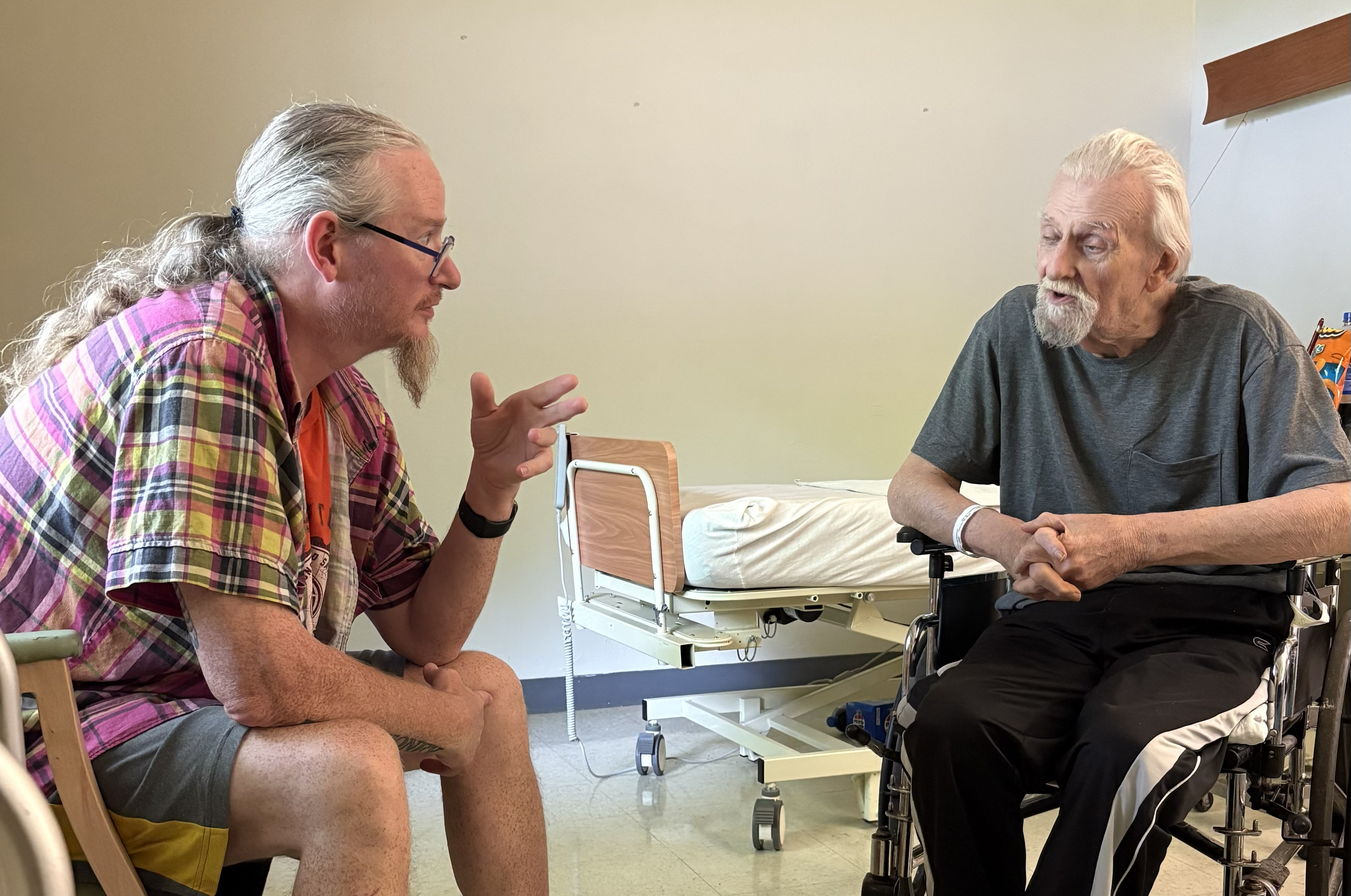
My dad passed this year. He was 83. For years I wrote to him with photos and updates in physical letters… and now at least once a week I think “I should write to Dad” only to remember that he’s gone. I’m glad he lived on his terms and did just about everything he wanted to do and not much that he didn’t. And I’m glad I got to speak at his funeral and give him the send off he wanted.
Speaking at Dad’s burialOne of the final conversations we had
Thankfulness
One thing I’m taking away from 2025 is the understanding that I was able to have positive growth and a grateful mindset in my family, job, and art-making in spite of the horror show going on in the world. Straight up state-sponsored murder and genocidal activity on one hand, and obvious grift and obfuscation of the truth on the other, all wrapped up in nationalism and religion. It’s enough to put anyone into a high stress crash-out. But I’m thankful that I’ve been able to find a balance where I can be informed about that stuff and take steps to counter it in my own small ways (as a parent, educator, and community member) without letting it put me in the ground. In 2026 I want to keep living with hope and joy, not through some abstract pie-in-the-sky platitudes, but though real life with my family, honest interactions with my students and colleagues, and deep exploration of ideas and meaning in the things I read, watch, write, listen to, and make.
Over the last five or six years, I’ve been involved with a project by an artist and collector named Jim Kasper. In January 2026, that project will come to fruition with the publication of a new book featuring the work of many excellent painters and drafts-persons. These artists are drawn from a range of generations, backgrounds, and faith traditions, but they were commissioned by Jim to build a current vision of artworks that take on the complex themes and histories that form the bible.
Two incredible essays – as well as writings by the artists themselves – help contextualize the works and elucidate the ways these artists add their current voices to ancient conversations.
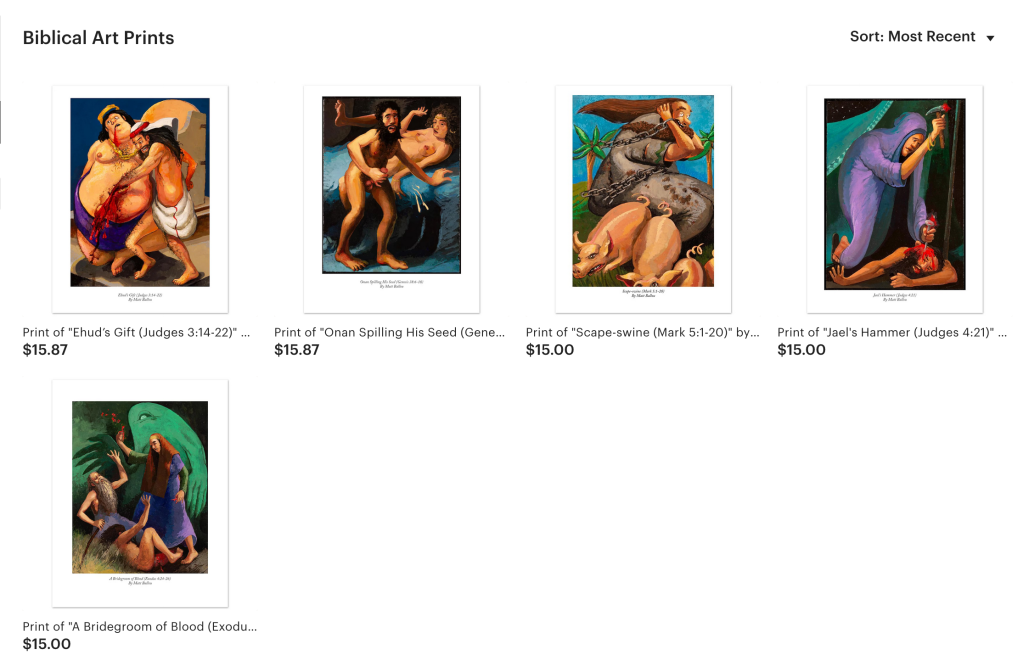
Also, as part of the upcoming initial dual-site exhibition in Columbia, MO (more info on that when it’s ready), I am offering prints of 5 of my works in the Kasper Collection. I hope you’ll click below and check them out – it’s always good to support artists instead of billionaires, especially in times such as the ones in which we’re living.
My contributions to the Collection are varied. I was glad that Jim allowed me to pursue more straightforward “traditional” painting, but also to work in relief carving and enigmatic, abstract imagery. With the five images above, I was inspired by everything from Correggio’s Jupiter and Io to the physical stylization in the mythology-based paintings of Kyle Staver. I wanted the works to embrace their illustrative side, with strong visual dynamics, weird bodies to match weird activities, and intense colors.
When I was young – perhaps five years old – I caught on to the notion that you could call in to the radio station and request songs. I enjoyed listening to the oldies stations and wondering what song might come up next. This was in the era of Casey Kasem and the power of the Billboard Top 100, and music was a little more of a communal cultural situation.
In any case, I was a radio person back then and I liked the idea that you could influence what was going to be played. One day at the age of 8 or so I decided that I wanted to call in to request the Gordon Lightfoot song The Wreck of the Edmund Fitzgerald. I got the number. I (kind of) worked out what I was going to say. But when I got on the air to make the request, I made a fundamental mistake.
You have to understand that my father had a large record collection, and I knew about a lot of different music from my older siblings, so I had heard a lot of names. It was an easy mistake for a kid to make, damn it! When the DJ asked me what I wanted to hear, I was a little flustered and blurted out:
“Can you please play The Wreck of the Ella Fitzgerald by Gordon Lightfoot?!”
This faux-pas got quite a laugh, and not only from the DJ, but also from my family. In the aftermath of this flub I can state I have known the difference between the Edmund Fitzgerald and the great singer Ella Fitzgerald since that very day.
In all seriousness, though, given that I was so interested in the song it was only natural that not so many years later I would start reading books and articles about the events surrounding this notorious loss of the Edmund Fitzgerald. Gordon Lightfoot was one of the first singer-songwriters who captured and fired my imagination. He (among some others) caused me to think about time and experience in a different way; as something within me and happening alongside me, not just random stuff apart from my life. Perhaps it’s a testament to the very idea of songwriting and musicianship as artforms. For me, Lightfoot embodied that troubadour tradition. These artists sing the tales of history, document it in personal ways, and help shape a democratic view of history itself.
Of course, everyone knows most famously Bob Dylan as one of these history-singers. But there were many others. I would include people like Sister Rosetta Tharpe, Billie Holiday, Utah Phillips, and Natalie Merchant amongst that group. So many… From Woodie Guthrie and Townes Van Zandt to Tracy Chapman and Ani DiFranco and P.J. Harvey. It’s such a rich – and necessary – tradition.
I find it fitting that my interest in the event of the wreck of the Edmund Fitzgerald and learning about the history surrounding it – not to mention becoming curious about the whole Great Lakes region – is all connected to the art of singing out moments of collective experience. This, like so many other things, I owe to art and artists. This is the richness of life: Not in things, but in awareness. Not in owning, but in being.
The SS Edmund Fitzgerald as seen from the Ambassador Bridge in 1965. Detroit Historical Society
Today is the 50th anniversary of that ship sinking on Lake Superior. There are many interesting articles currently available from the days and weeks leading up to today (including this one from the Smithsonian and this one from Popular Science). So read about the ship. Read about the song, and listen to it (here’s the first version, but I’ve always been partial to the 1988 re-recording Lightfoot made – it’s a tad longer and has a slight mood adjustment that feels symbolic and mystical to me).
Then take at least 29 seconds – one “for each man on the Edmund Fitzgerald” – and may those moments of silent remembrance of them cause you to consider what human commerce, ingenuity, and hubris can do in the face of Nature’s power.
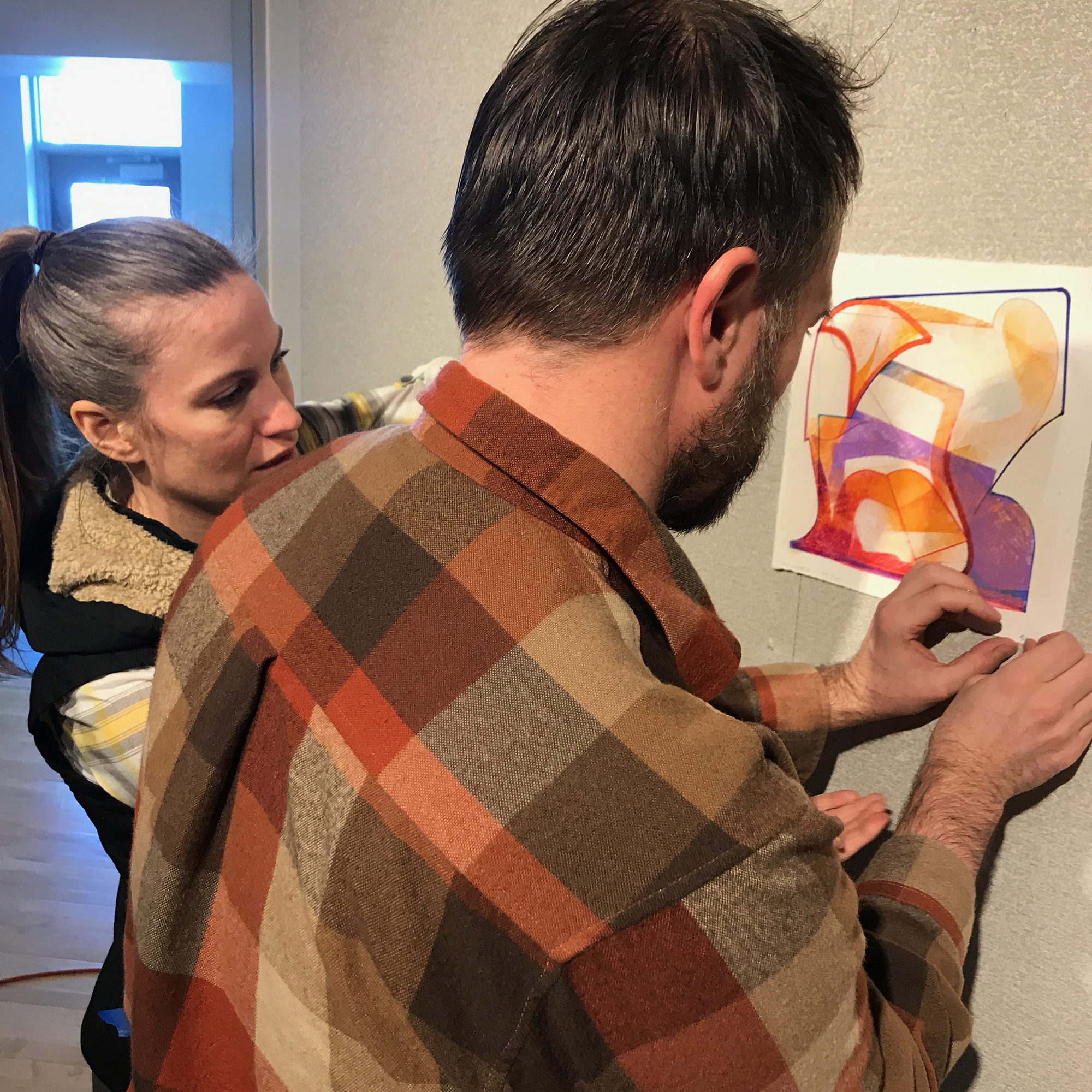
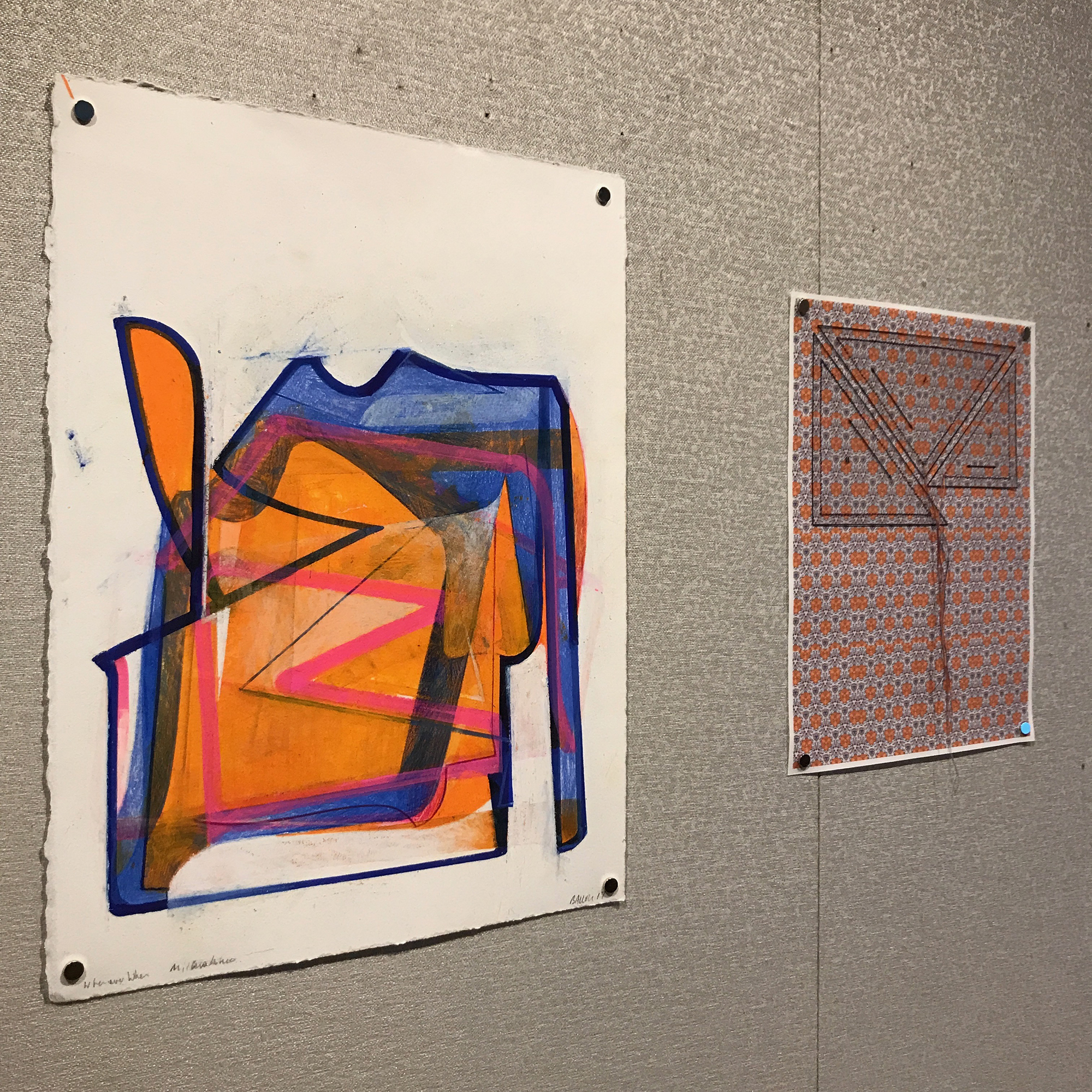
I think back to this show fondly because Jen is awesome and I like having exhibitions with former students (and have done so a number of times, with Jane, Jacob, and most recently with Simon). I took a bunch of images during the installation and recorded some audio of us talking about the work. After listening to it a couple months ago I decided I wanted to celebrate our little show and the work we made there.
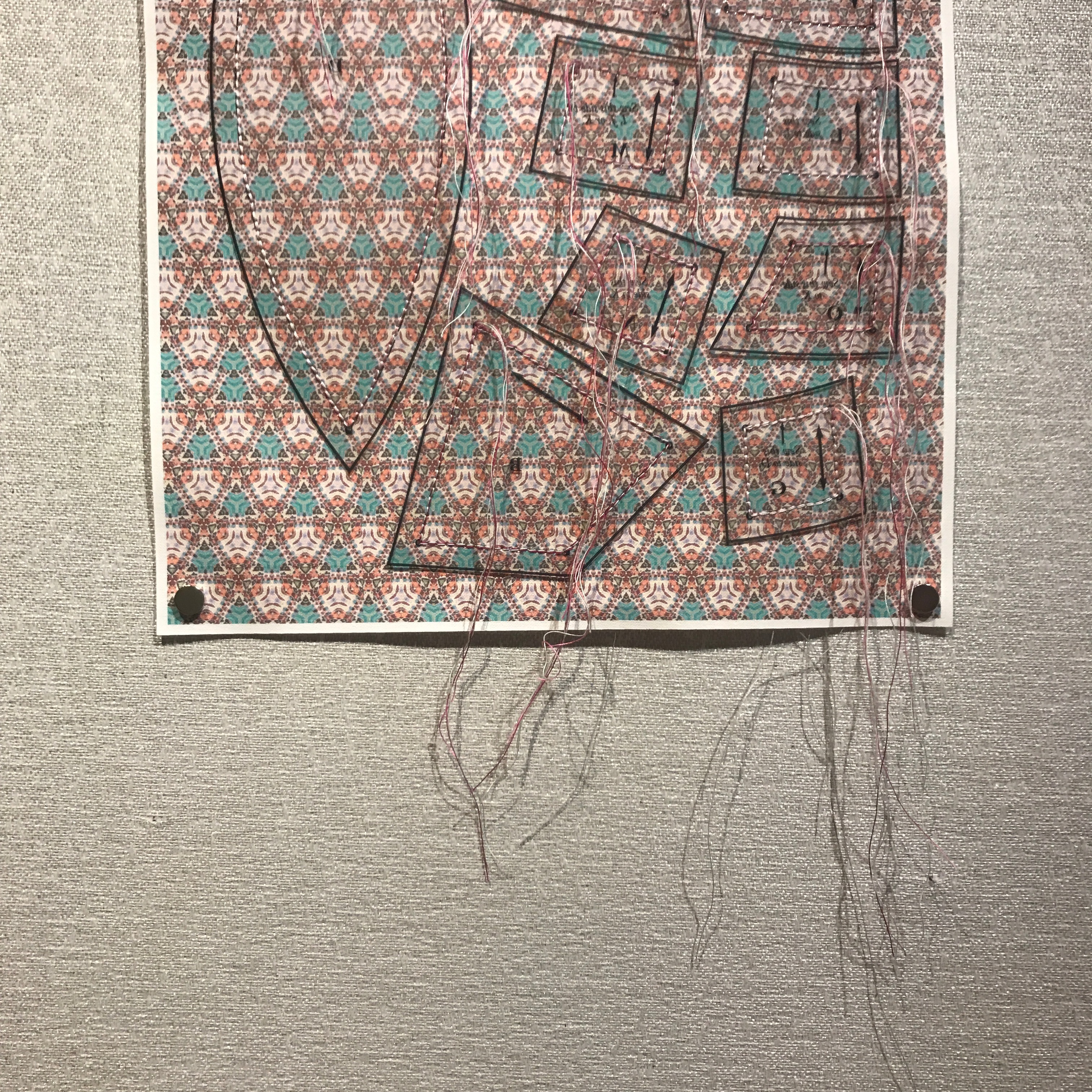
I was making my An Ensign for Miyoko Ito series, and experimenting with drawing robots – at the time very cheap ones that couldn’t make very large pieces. I was taking cues from Ito’s works and, as a response to that, Jen decided to use my artworks as the basis for her pieces. Using my work to create tessellated fields of colorful geometry printed on fabric, she then sewed cutting patterns onto them. The notion of a interference pattern felt particularly resonant to the work we both made for the show. This layering of influences and predilections still feels rich to me, and I wanted to share them with everyone again. Thanks so much for doing this show with me, Jen! Though her MFA was in a Fibers focus, these days she does a lot of dynamic photography, mostly in black and white. Check it out here!
Below you can see some images from our installation session and my statement for the show, as well as see more work and hear us talk about it in the video here:
Statement for BALLOU/BENNETT: INTERFERENCE PATTERN
In my recent body of work, titled An Ensign for Miyoko Ito, I seek out the compacted and the overdrawn; the enclosed and the layered; the transformed and the solidified. I look for shapes, colors, and spaces that go far beyond a simple tension between figuration and abstraction, trying instead to suggest a layered arena of observational and haptic information.
Miyoko Ito (Japanese-American, 1918-1983) – whose work has been a key influence on me over the last 20 years – was able to activate subtle surfaces with the illusion of space and an evocative sense of palpability. This is what I’m investigating: the experience of perception apart from particular, representational depiction. In my exploration, questions arise: Does flat form appear to move away from my angle of view? Will color resolve into both static surface and suggested movement? Can space and color align to reinforce both static structure and an expression of time? Might the poetics of silent, unmoving images actually produce phenomena akin to those found in dreams, memories, ecstatic sensations, and atemporal musings?
By pairing my work with Jen’s extrapolations from that work, I hope to suggest the multiplicity of information that may be gathered from surface, color, and texture. She perceives something of Miyoko Ito through my translations. Beyond this, Jen’s artworks add other layers – of visual logic, of aesthetic influences, and of categories of understanding. In this modest exhibition, Jen and I participate in the ongoing interrogation of received knowledge and sensation.
Receiving anything – taking it into our mind and heart – always changes it. It is what it is and it is what we perceive it to be. We are forever adding our own unique inflection to the language of the world pouring into us. That is why I see my own proclivities in the shapes and patterns that Jen uses… and so I see my heroes, my influences, and my hopes there as well.
Matt Ballou, Portrait of my Father, Marvin G. Smith. Oil on panel, 20×16 inches. 2014.
Marvin Glenn Smith died on Tuesday, August 12, 2025. He was 83 years old. Marv was born on May 24, 1942 in Camden, NY. He loved Studebaker cars, bawdy blues music, and the aircraft of World War 1. In many ways these things framed the contours of his life.
Known for his love of fast cars and racing, Marvin survived a horrible accident at the age of 19, an event that left him with extensive, permanent injuries. He spent the rest of his life going to auto shows, attending and watching races around the country, and collecting manuals and other materials related to cars and the racing world.
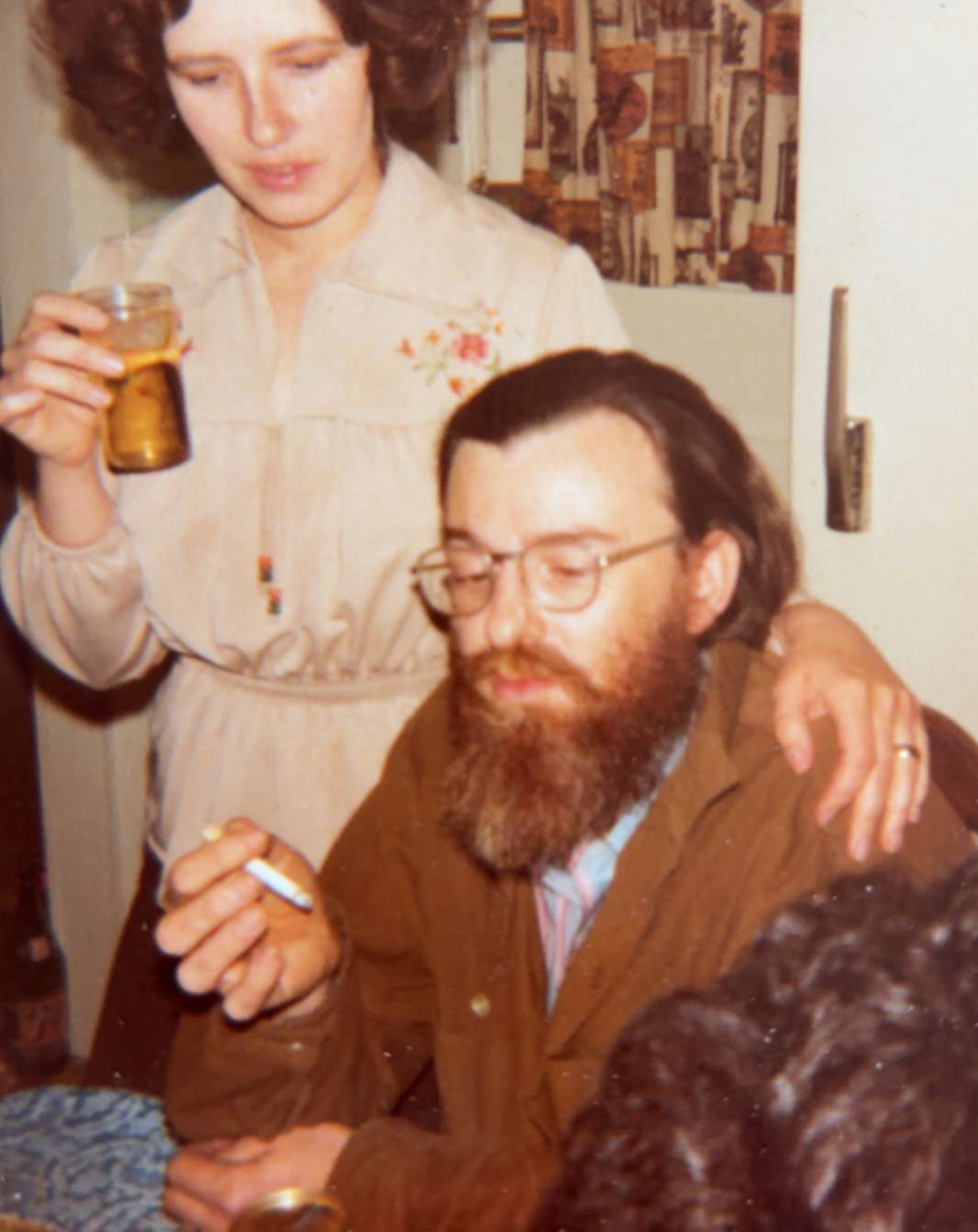
Mom and Dad, mid 1970s.
Marv went on to a long career at Camden Wire, working in the quality assurance area, where he was able to use his sharp skills in analysis and mathematics. He took an early retirement in 1995, eventually settling north of Camden in Empeyville, NY.
It was at this time that his decades long passion for studying World War 1 became a main focus for him. He filled his time with reading and research, amassing a collection of WW1 books, objects, documents, firearms, and art. He traveled extensively to explore military history at museums and trade shows, but perhaps most cherished was his trip to Germany in 1997, where he visited many battle sites first hand.
He had a unique personality – a calm, pleasant demeanor with a touch of nihilism sprinkled in. He would constantly drop catch phrases into conversations: “Nothin’ serious” and “Another day in paradise” came up often. As a “live and let live” Libertarian, Marv often found himself at odds with the dominant, invasive politics of his adult life. Though a quiet, reserved man, he always enjoyed conversation and could hold forth about the blues or history any time. He loved discussing items in his WW1 collection and possessed an exhaustive knowledge of the people and places of that time.
My last chat with my dad, 2025. Photo by my sister.
He is survived by his sisters Linda (Leon) and Martha, his children Walter, Matthew (Alison), and Stacey, and many grand kids. He was preceded in death by his parents and beloved daughter Denya. At Marvin’s request, there will be no funeral service.
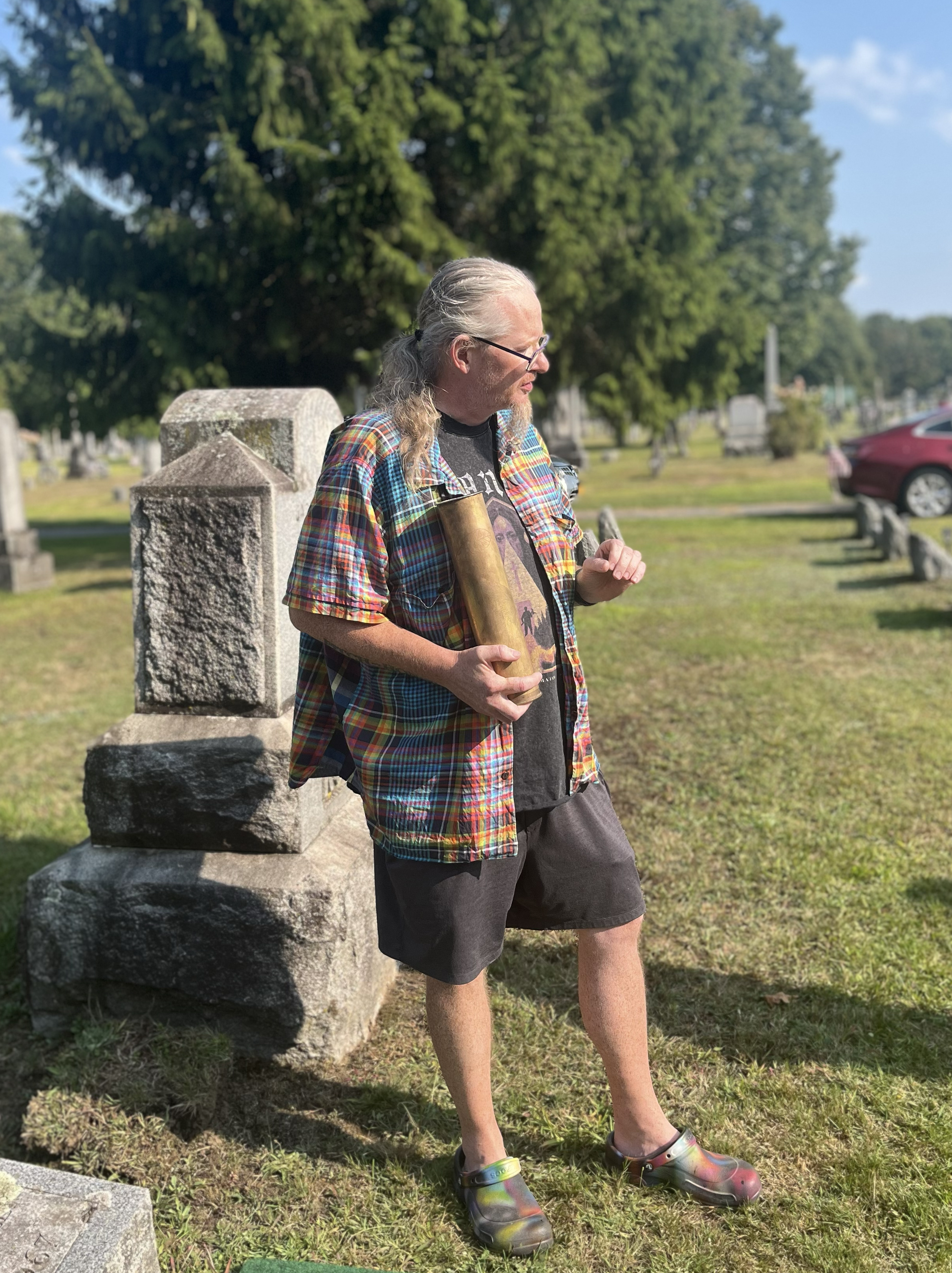
My sister Stacey was able to retrieve a piece of dad’s WW1 trench art, a 50mm artillery shell decorated in a floral motif with an eagle. This will serve as dad’s urn when he is buried in his family plot. It’s wild – and sort of perfectly poetic – that something made by a young man in the tumultuous trenches of a world at war 110 years ago, will now go into the ground in upstate NY with my father. In a way, he got to take one part of the collection he built over a lifetime with him.
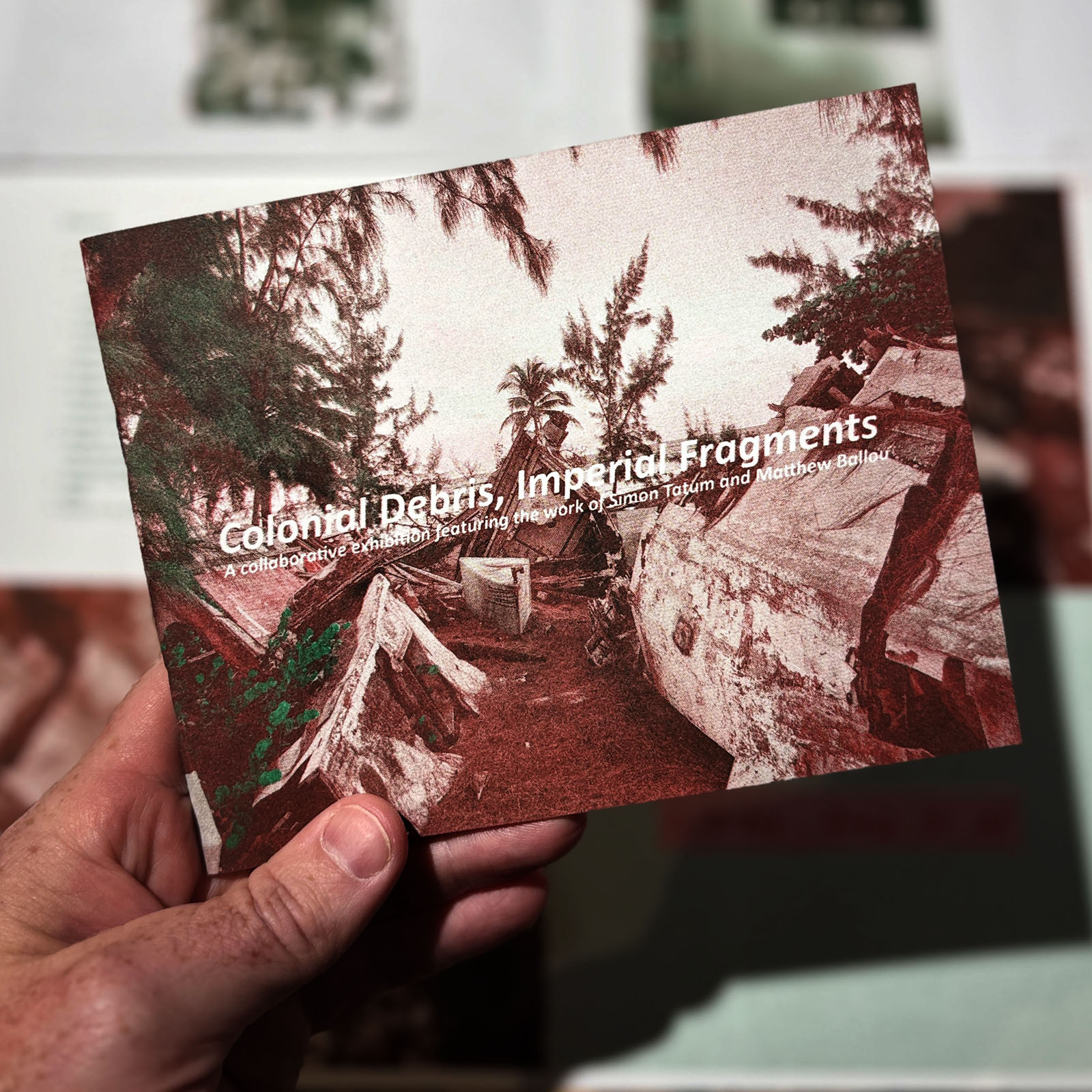
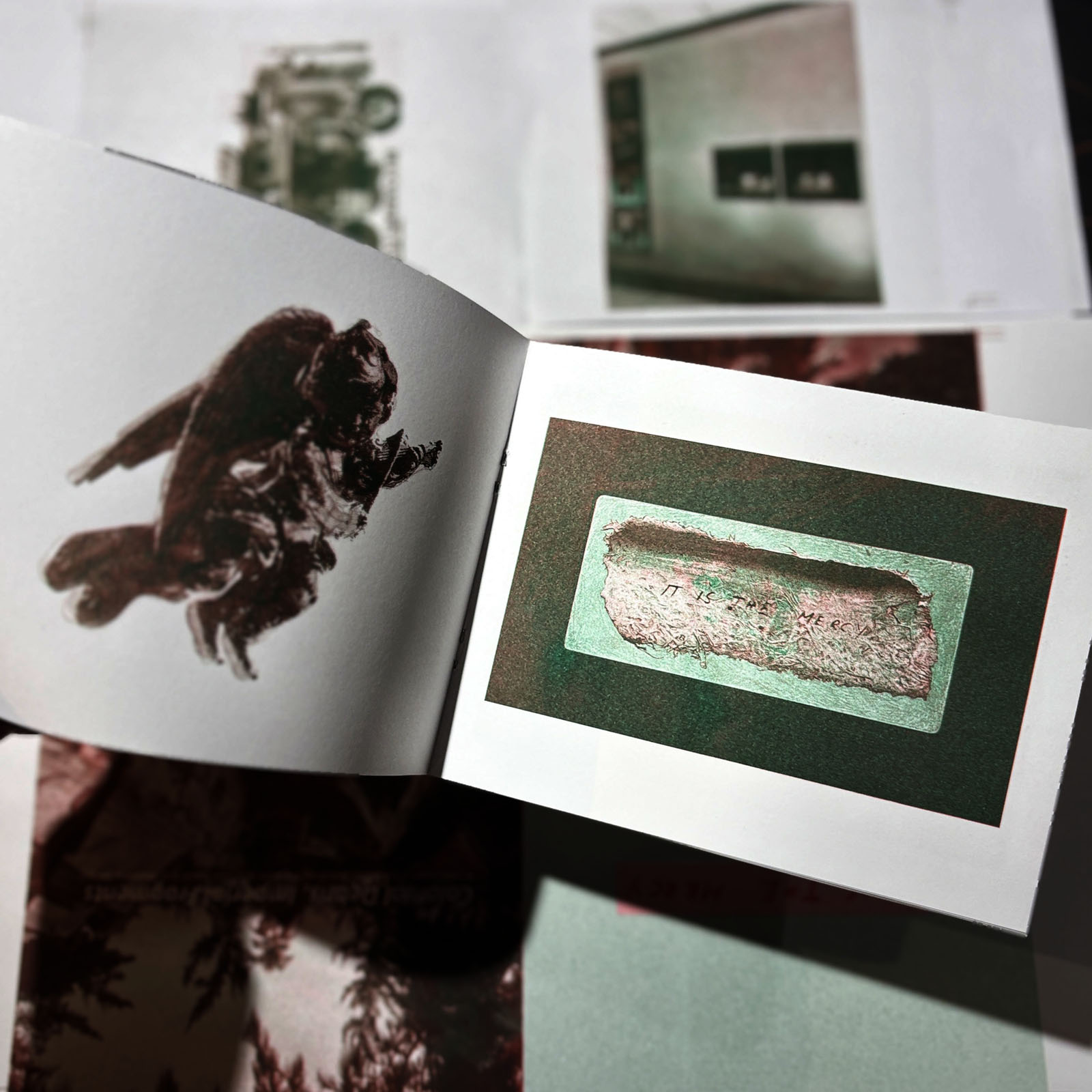
I’m pleased to announce the publication of a catalog about the exhibition that Simon Tatum and I had at Vanderbilt University last year. Working with Oswaldo Garcia at The Riso Room, housed within Mizzou’s School of Visual Studies, I was able to produce a slim volume that highlights some of the work and writing that Simon and I produced for this show. We hope to take the exhibition around to other venues, and these catalogs feel like a great physical supplement to proposals. Click below to take a look inside.
The images show representative examples of the work we include, as well as updated texts that give an overview of the history and context we’re working within. I’m excited by how the risograph process has captured the documentary quality of Simon’s work and the surface development of my own pieces. I love the way the back cover shows Donald Crowhurst’s final coda, “IT IS THE MERCY.” Taken from his logs, this is Crowhurst’s actual writing reproduced.
If you’re interested in obtaining a copy for $25, please send payment via one of the options below:
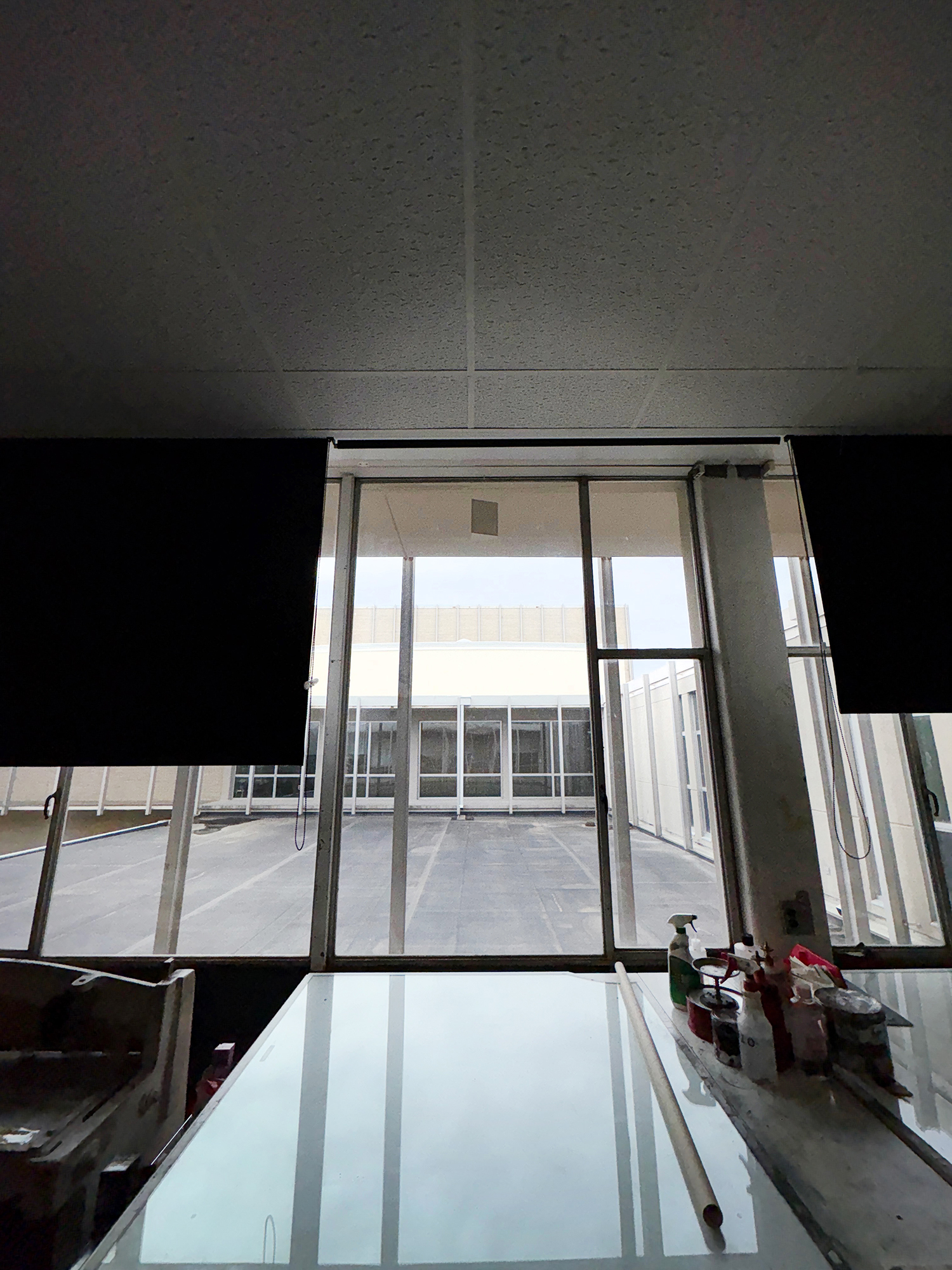
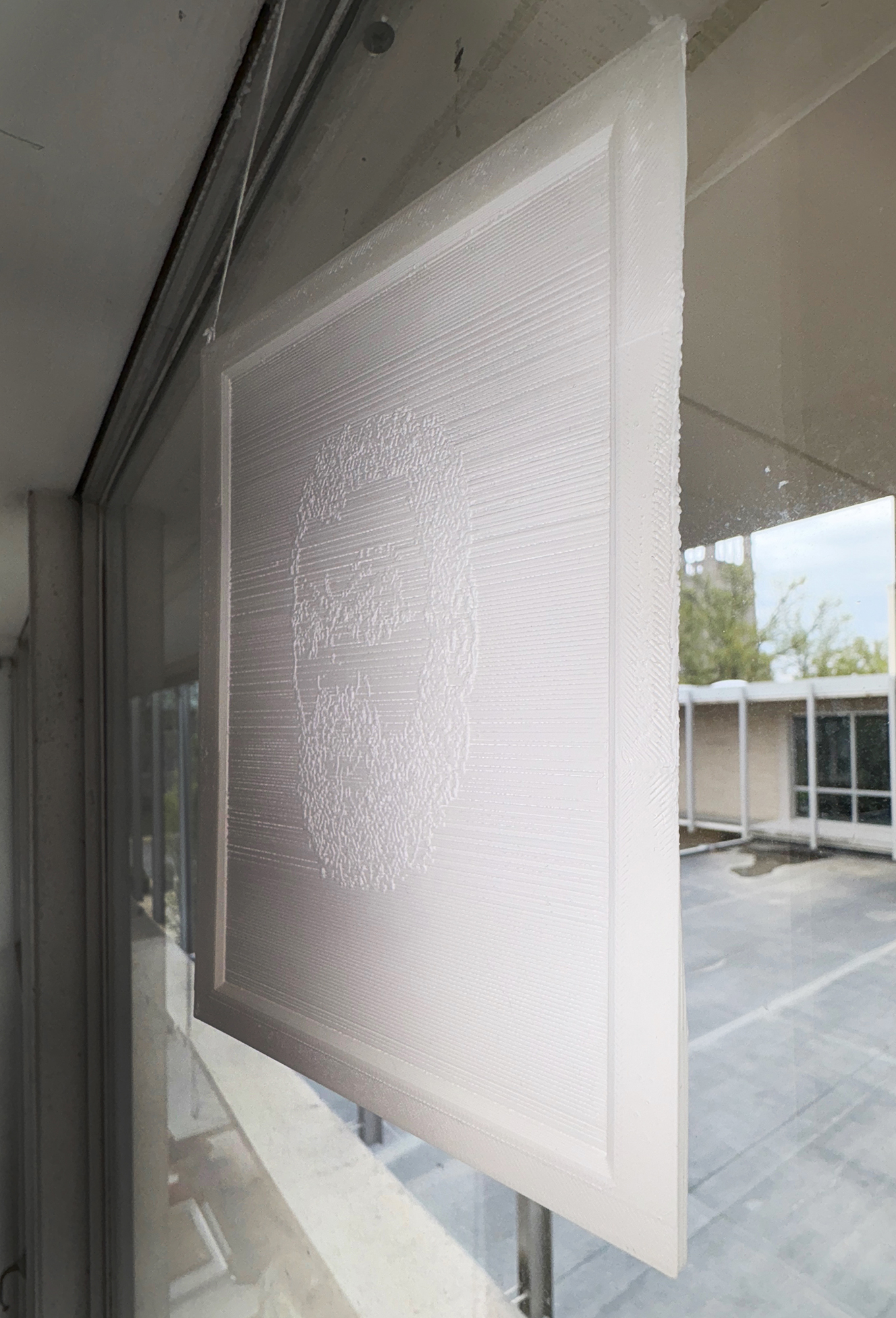
Today I went into the printmaking room at The University of Missouri and placed a lithophane in the widows there.
The idea for this began a few years ago while playing with my drawing robot. I wanted to try different line modes in various images, and happened to throw in a picture of Eric. One of the resulting works was this small ballpoint pen piece:
Head of Sweet. Ink on paper, 5×3 inches. 2022.
The piece I’ve hung today is intentionally related to Sweet’s MFA thesis works, which featured embossed relief and required specific lighting to be seen. Click here to see examples of these works (and a cool picture of Eric in the very printmaking room where my lithophane is now hanging). The portrait of Eric I’ve made is designed to be somewhat inscrutable unless strongly lit from behind. In the documentary images I’ve posted below, you can see the image is barely visible. I have included some shots with a flash on so you can see the relief dimension of the piece.
Ten Years of Seizing the Sixth. PLA, printed on a FlashForge Adventurer 5M. It’s 7×5.25x.25 in size. 2025.
It’s important to maintain the reality of those who have passed on. This is as much about keeping ourselves real as much as it is celebrating their lives. In reminding ourselves of others’ lives, in being creative in that remembering, we find and define ourselves. Keeping Eric in the world through making and practicing attention is a way of honoring him and the values he held.
Ten Years of Seizing the Sixth. PLA, 7×5.25x.25 in size. 2025. This is what it looks like with strong illumination behind the lithophane.
Nine years ago today I experienced cardiac arrest, and I started a journey to becoming a new person. One of the ongoing fun bits related to my heart attack and eventual recovery, was that my friend – famed bookstore co-owner, and local arts organization legend – Kelsey finally accepted the reality of narwhals!
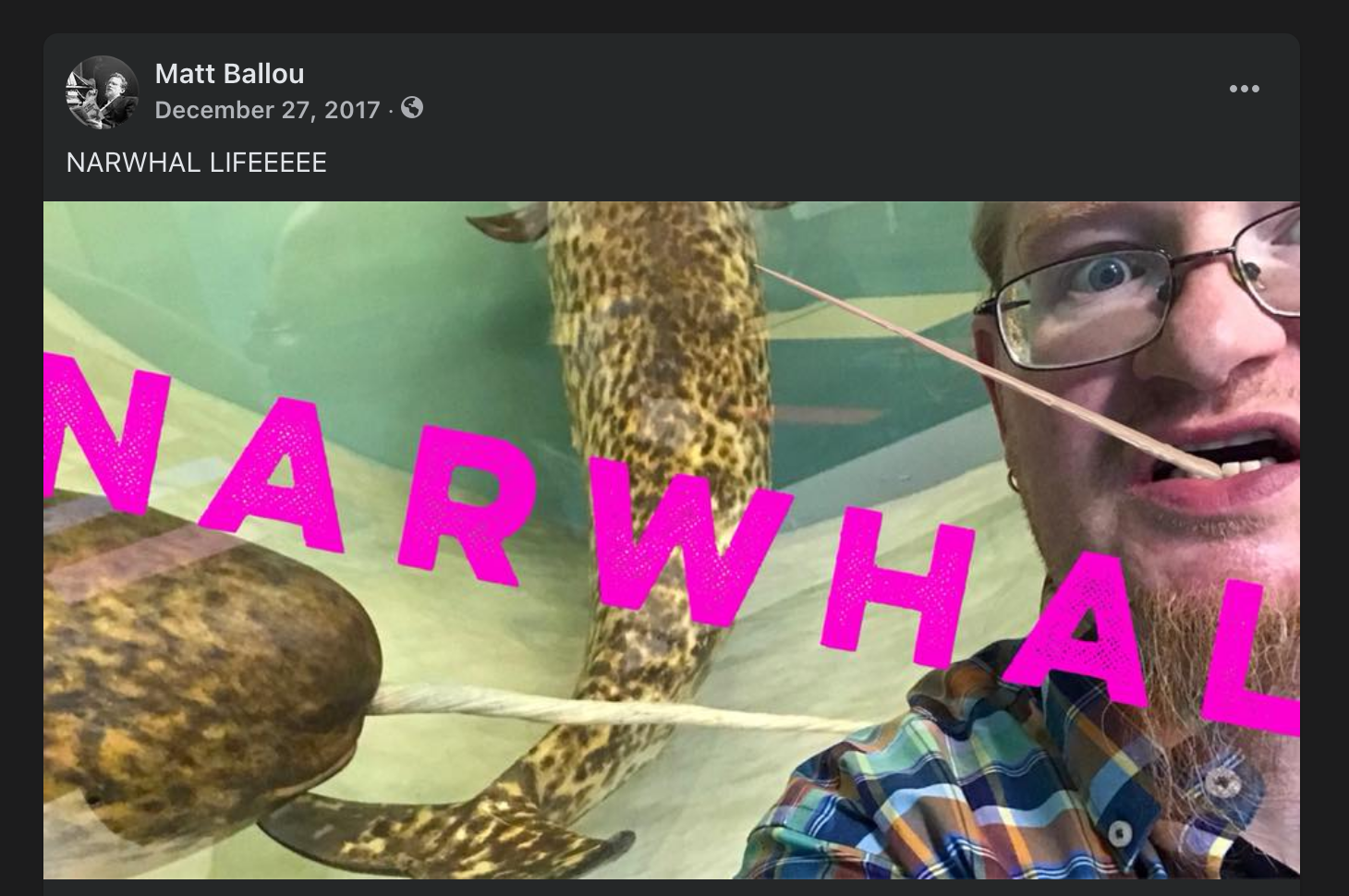
You see, it – the existence of narwhals that is – had been a minor contention between us for quite a while (see above image). I’d mention the unicorn of the sea and she’d push back. But when I woke up from my ordeal and began sorting through the notes, good vibes, and other well-wishes I found a Post-It note from Kelsey. On it she drew the beast and wrote above it, POR VIDA – “for life!” She told me that since I’d pulled through, she could accept the truth of narwhal-kind!
I’ve kept Kelsey’s Post-It note up all these years, right there in my kitchen where I can see it daily. But this year I felt it was appropriate to take it to the next level. I’ve commissioned a local tattoo artist to bring Kelsey’s drawing to life on my very flesh!
Once it is healed up I’ll add a nice shot of it to this post. I’m grateful to people like Kelsey, who have given me so much joy and hope in humanity over the years. She is a true community spirit, someone who understands kindness and laughter. And I’m proud to carry her drawing with me – on me! – from now on, a reminder to seize the day, be happily present, and to embrace the wondrous absurdities all around us.
In March 2003 I had been working at Good’s of Evanston for about 18 months. I worked there after earning my undergraduate degree, and at the time was getting ready to get married and head to grad school.
I worked at Good’s with an amazing cast of characters: Ronnie Boykin Junior, David Gracie, Micah Ebbe, Fred Sturkey, and so many others. One of the people there was Jeremiah Ketner, a man who has gone on to a long and fruitful art career. One day I saw Jeremiah’s coffee cup and we mused together about coffee sometimes being a main meal during the work day. I decided to paint a view of his so-called lunch.
Jeremiah’s Lunch 3/14/2003. Watercolor and graphite on paper. 5×6 inches on 14×11 sheet. 2003.
As the Shipping and Receiving Manager, I often had some time between shipments to make art in my little office. I loved that space. Did a lot of thinking back there.
A picture of me in my shipping and receiving office at Good’s of Evanston. 2003.
During this time Alison and I lived in a 3rd floor apartment that had this amazing accumulation of paint and interesting architectural details. Of course, anyone who has lived in Chicagoland is familiar with paint slathered over outlet holes, quirky entryways, specific brick hues, and questionable back stairwells. We had arches throughout the apartment, and I found myself ruminating on them between doing more “important” work. I made my whole portfolio to apply to grad school in that apartment. It’s strange to think that these two small watercolors ended up being special to me. I wouldn’t have guessed it at the time.
Arching Corner. Watercolor and graphite on paper. 12×11 on 14×11 inch paper. 2003.
Anyway, as we round out another year I find comfort in these small contemplations. Maybe the lesson is that all of my grand attempts to make statements or contribute to important conversations weren’t the best or most effective offering I could make. Maybe it was the fact that I noticed and paid attention to the poetry of spaces, moments, in-between time, and life being lived that really mattered.
























 eikonktizo