Becoming the Student, #5: Captain America

Daniel Glosson (brother to Billy) is another young, passionate guy that I know. I always enjoy sitting down with him. Recently married, working multiple jobs, serving in the community, and trying to work out his faith and beliefs in the world, Daniel is an energetic force of nature. IMG_8425

Glosson (Captain America), Colored Pencil and Gouache on Stonehenge, 15 by 12 inches, 2014.

On Art

“I think art is incredible. But I don’t value the idea over what’s right there in front of us. I definitely miss stuff all of the time and I hate that, but when someone shows it to me I’m blown away. If an artist is trying to make a statement but isn’t doing anything about it that makes me angry. I guess I’m practical to a fault. When I see a problem I’m driven to do something about it, not simply represent it or use it as inspiration.”

On Working at Schilb Antiquarian

“I’m so fortunate. I love the job. It’s awesome. I want to attain the same love for the store and the books that Scott has. I’m trying to learn all I can. I love the chance to just browse through these books, read them. It’s amazing, and now that I’m looking at all these old books and trying to wrap my mind around it, I can really see this expanse of human thought over the centuries. They way they thought, they way they progressed in terms of understanding and rationalization. We just have all this stuff, these records of peoples’ thinking and processing. The questions of what do we value most are all there, and you can see how people have approached it, be it fantasy or escapism or cold, hard truth in the scientific or mathematical works. We even have an exorcism text from 1683, Flagellum Daemonum – literally “beat the devil”! – and it looks like it’s got blood on the cover. Wild.”

On Eucatastrophe

“I think death is extremely beautiful. I love tragedies.”

On his Captain America shirt

“I’m not really a patriot.”

On Michael Bay and Thomas Kinkade

“Fortunately there are two things you and I both loathe – and I think it’s hilarious – that’s Michael Bay and Thomas Kinkade. I think that’s the greatest thing ever. I don’t know if it’s great to bond over hatred but I remember talking to someone about hating Michael Bay movies and they said ‘you need to meet Matt Ballou!’ I’m so happy about that, just knowing there’s another. Those Transformer movies make me throw up in my mouth.”

On Looking Like Billy Corgan

“I don’t see it.”

Becoming the Student, #4: Billy Glosson

In continuing the Becoming the Student project, I’m aiming to use different methods and mediums in building the portraits. In this piece, I focused on something tied directly to Billy’s identity and his presence in the world: his tattoos. I wanted to depict the color, the saturation, and the overtness of these artworks that have been put on his body. They’re really important to him as a way to tell a story and represent his deeply held beliefs.

IMG_8353Portrait of Billy (Fruit of the Vine), Pastel on Stonehenge, 19 by 22 inches, 2014.

Billy on his portrait:

“That’s really cool. I was wondering why you were staring at my midsection the whole time…”

Billy on maintaining awe:

“There’s not a method. I think our hearts are prone to becoming numb. Derek Webb has a song with a line that says ‘we love lovers less wild’ and I think that’s the truth. For me it’s about constantly coming back to the place where I’m asking God to reveal Himself. I want to create good longing in my heart. Difficult moments and hardships and conflict and frustrating things in my life point me back to grace. Another practical way is having people around me who can speak into my life; that’s been huge.”

Billy is on a quest to complete an entire sleeve of tattoos. To help him out, I suggested the classic image from The Cloud of Unknowing. I definitely think it’s skin-worthy:1979654_10103885160284509_1941637934_n

Becoming the Student, #3: Bobby Schembre

Bobby Schembre is a pastor, musician, questioner, lover of fine bourbons, and grill-master. In many ways we are different, but in many ways we are very similar… from the deepest hopes we harbor to the sorts of challenging questions we explore. Last week Bobby agreed to be a part of my “Becoming the Student” project. I greatly looked forward to our conversation. We moved through some intense existential territory over the course of our 2+ hour session. Some topics we touched on were: Pink Floyd and spiritual awakenings, how to understand the taste of bourbon and scotch, the nature of musical liturgy in contemporary Christianity, the glory and grace of our wives, and our experience of scientific awe.

Here is the resulting portrait:

IMG_8350Portrait of a Man (Bobby Schembre, 2/24/2014). Pastel on Stonehenge Paper, 22 x 24 inches, 2014. (Click for enlargement)

Bobby on musical liturgy and storytelling:

“I love the fact that we talk about how God is holy and untouchable and yet He’s here and gracious. It doesn’t make any sense really. Or that He’s indescribable and infinite and then we turn around and spend the rest of the service describing Him.”

“Part of the reality for me is that I can’t believe the bible or have a real experience of Christianity without being OK with deep tension. Everywhere, everything has a balance to it. Everything has a paradox involved in it. Nothing is just something you could put in a box and tie it up neatly and say, ‘I’ve got this.’ When we explore something about God there’s something else that makes us think, ‘well, what about this?’ And so one of the things I’m always thinking about in creating a musical liturgy is how can we expand the way we think about God, uphold the paradox, and marvel at the paradox of God.”

“I’ve been pondering my job as a ‘worship leader’ – which is just something we’ve made up – you know, what is this? I think part of the answer is that I’m a storyteller. I’m helping people think the story and sing the story of the gospel. It’s practicing a pattern.”

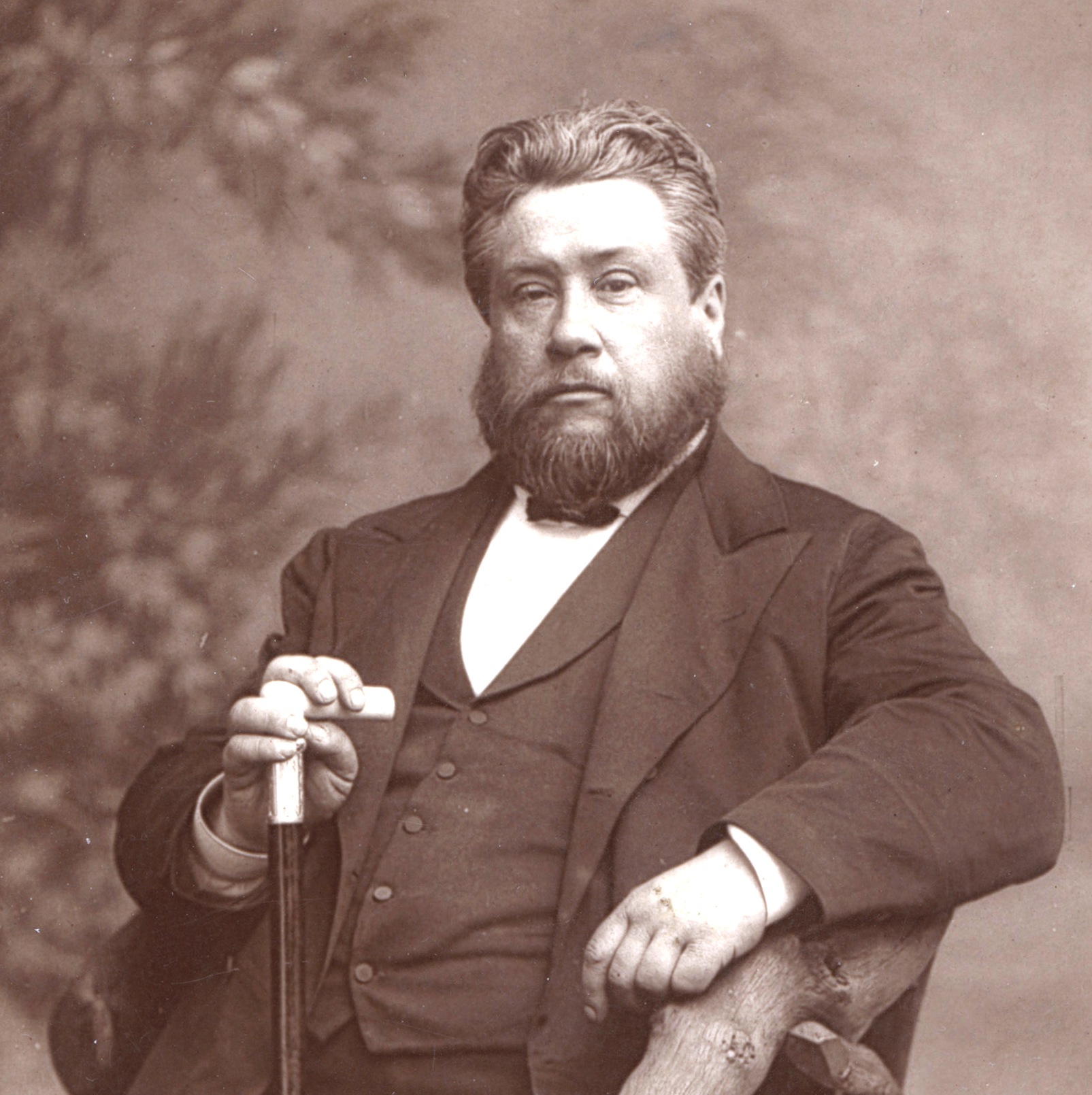
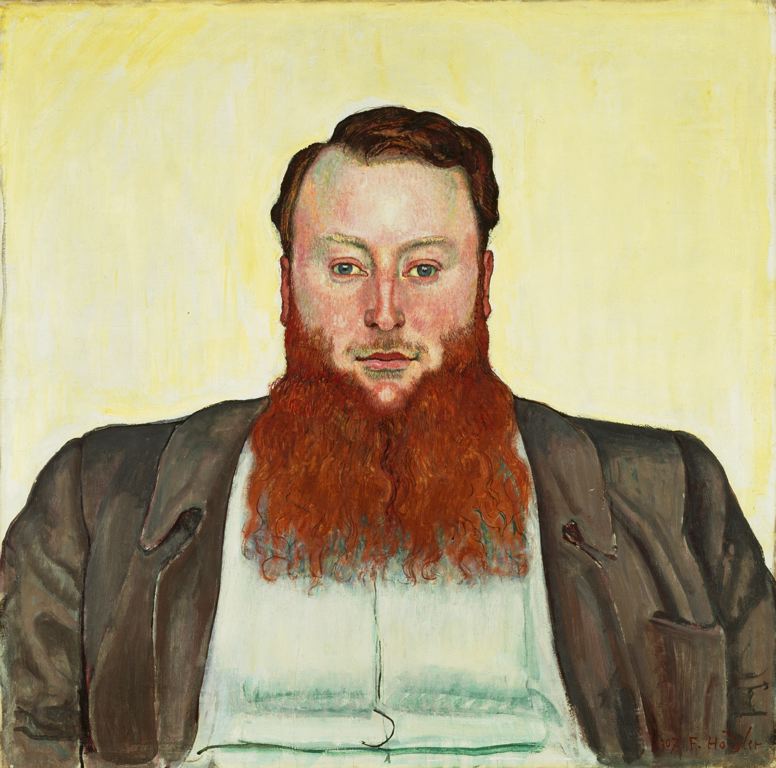
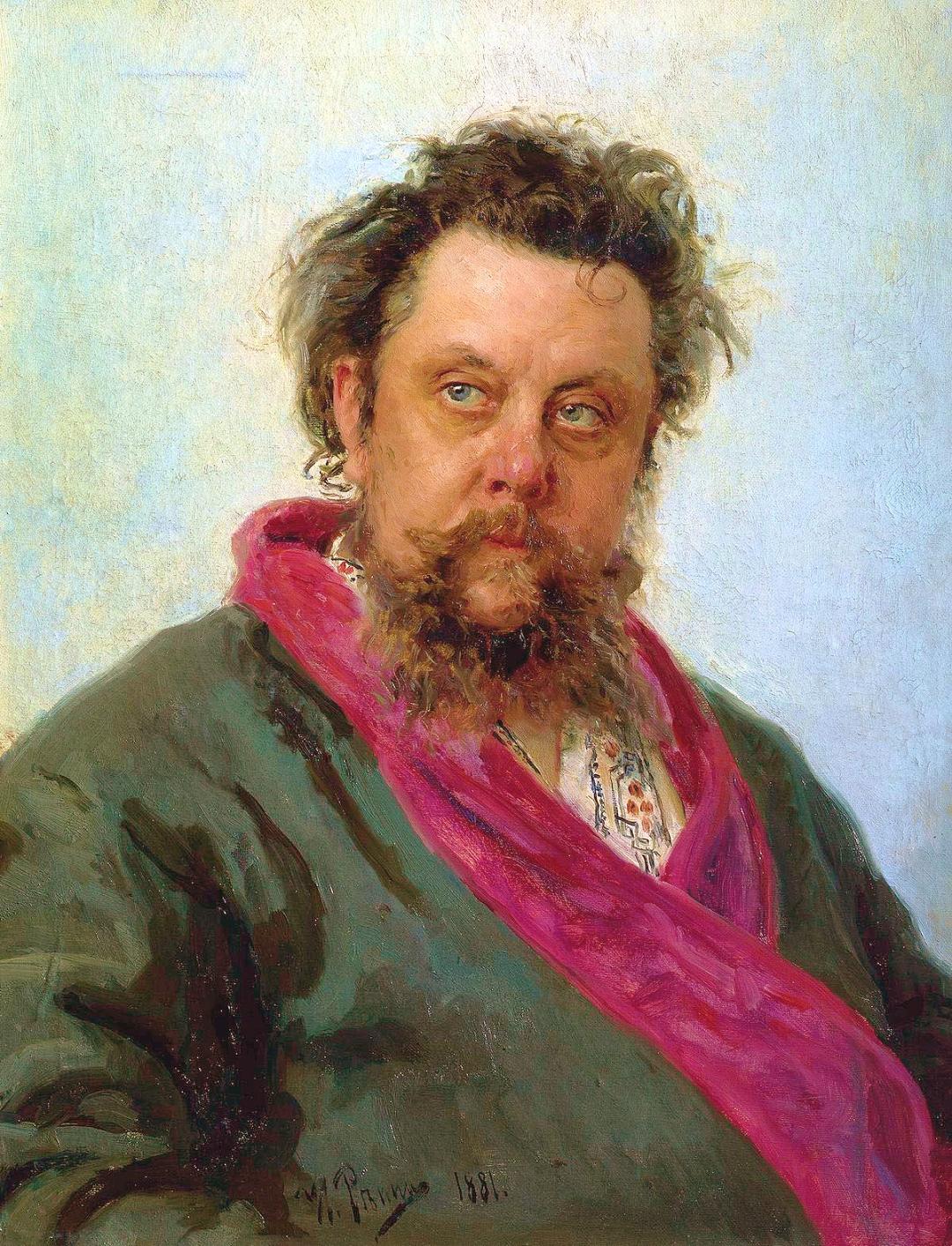
Bobby, with his manly beard and barrel chest reminds me of a few other bearded big men of history…

spurgeon_chair1Famed Christian pastor and author, C.H. Spurgeon

portrait-of-sculptor-james-vibertSculptor James Vibert by Ferdinand Hodler

Repin-portrait-of-the-composer-modest-mussorgsky-1881Russian Composer Mussorgsky by Ilya Repin

Also, there’s this great Portrait of a Man from the collection of the Art Institute of Chicago. Click to check it out.

~

Thanks for being a part of this portrait series, Bobby!

The Star Road

A little more than two decades ago my cousin Chris and I began to take long drives northward from our home in central New York State. We almost never went south. There were many adventures on those forays; our families knew what it meant when we said we were going “up North.”

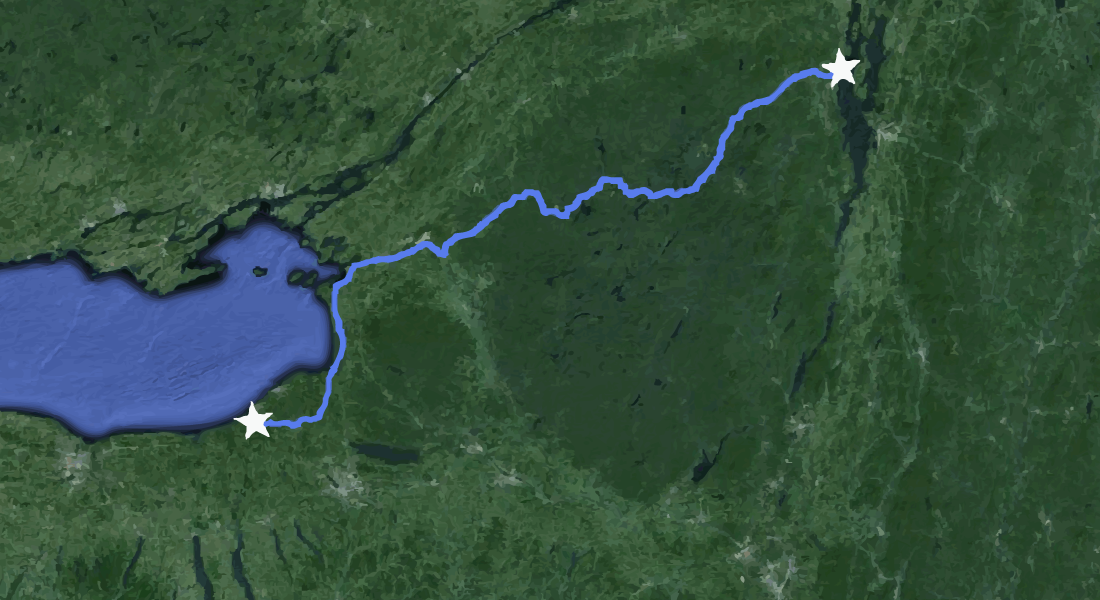
StarRoadThe Star Road’s length over the geography of New York State

Many hours of conversation accompanied the drives, as did many hours of silence or reverie to the music we loved then. Over time the purpose of these trips showed itself in clearer and clearer form: the road was for a kind of tandem contemplation of what had been before us, what lay beyond us, and what was permeating our existence. We drove north to explore. Though moving through space we were motionless and silent in our souls. We found transformation and dreams along the road.

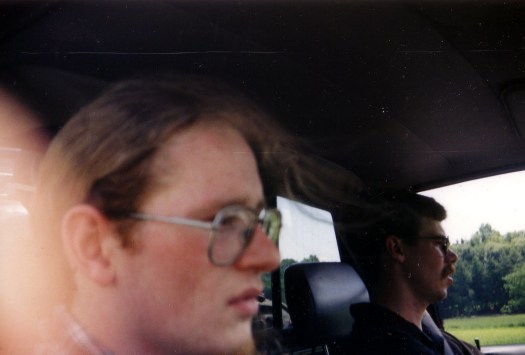
Untitled-14Heading out in the mid/late 90’s in Christopher’s old Nissan pick up truck

One of our favorite routes is an iconic stretch of highway that runs nearly 250 miles through the interior of New York State. State Route 3 begins (or ends, depending on your perspective) near Fair Haven State Park, practically in sight of the southeastern end of Lake Ontario. After a short jaunt eastward, Route 3 turns emphatically north and holds the eastern shore of Ontario for 60 miles. The road’s great northeasterly meander across the deep woods, lakes and mountains of upstate New York commences in historic Sacket’s Harbor, soon passing through Watertown and Carthage, then running just to the south of the Fort Drum Military Reservation. Roughly 70 miles from the streets of Sacket’s Harbor, Route 3 enters the great Adirondack Park.

Untitled-31Chris adjusting his old Pentax SLR during a photo stop, 2003 or so.

Just near this entrance to the Adirondack Park sits the hamlet of Star Lake and its eponymous body of water. The section of Route 3 that runs between Star Lake and Tupper Lake is majestic and ephemeral to drive at night. Tupper Lake is a crossroad of sorts, situated as it is along Route 3 running east/west and other routes running north/south. Though it is often a center of activity in daylight, especially in the summer months, Tupper Lake in the twilight – or at midnight – is glorious. The ancient, rounded-off Adirondack Mountains seem to circle in and provide a black frame for the jeweled vault of the sky. Chris and I have seen this many times.

This effect – a dark horizon circumscribing the grandness of the Milky Way, or Polaris, or Cassiopeia – is perhaps the reason why we started calling Route 3 “The Star Road.” It could have been the presence of Star Lake near the entrance to the Park. It might also be that there are, in fact, two real Star Roads off of Route 11; one between the towns of Malone and Ellenburg along a stretch of Route 190 and the other very close the border with Canada on County Road 17. We’ve traveled both of those roads and they could have influenced us.

Untitled-1A dusty old photo of the shore of Lake Ontario near Cape Vincent

Whatever the reasons, we spent many a dark, snowy night driving along Route 3, or glimpsing northern lights amidst the summer stars beyond Saranac Lake. The ending – for us – was to either come into Plattsburgh then strike a new route home, or to break off The Star Road early and head north toward Malone or south toward Lake Placid and Mt Marcy. There were many nights we merely ran along Route 3 for a short distance beside Lake Ontario, then slipped onto Route 12E from Watertown up to Cape Vincent. There, at the inflow of the St Lawrence River, we’d creep out of Cape Vincent toward Tibbetts Point to sit beneath the lighthouse with all of Ontario spread out westward before us.

Untitled-3Tibbetts Point Lighthouse near Cape Vincent, NY

I loved those drives and talks and silences. I loved listening to the Chateau D’Isaster Tapes while cruising along, angling across the brow of New York State, and imagining what the future might hold. In some ways these trips are behind us. We have families, homes, and other responsibilities. But I know we both still feel the pull of those hills and lakes and forests. I’m sure we’ll aim headlights northward sometime soon, and find ourselves in dream-driving together once again.

~

UpstateNYmapA section of one of the old, fold-able NYS maps we used to use

New Collaboration For 2014

Joel T. Dugan is Assistant Professor at Fort Hays State University in Hays, Kansas, and we have begun a series of collaborative paintings. It was great to meet and hit it off with Joel during my recent exhibition at FHSU, and I’m excited at the prospect of working with him. I’ve decided that, much like my new series of portraits (Becoming the Student), I’m going to keep a record here to show how our work progresses.

The first six pieces have begun, three started by Joel and three started by me. These are the first states of the works. We’ll alternate working over what each other has developed and, hopefully, come to a mutual conclusion about the work.

collab01

collab02

collab03

collab04

collab05

collab06

In other news, I’ve had two pieces of writing made available on the neotericART website recently:

Below the Blue Line: The Recent Work of Allison Jaqueline Reinhart

Trying to Get a Sense of Scale – Tim Lowly’s Precious Labor

~

Inspiration – Kenn Neely

Over the years I’ve made quite a few posts about artists who inspire me. Today I’m putting Kenn Neely in that group.

photo 1Kenn’s work desk – beautiful chaos.

Kenn has always been a maker and tinkerer. His quirky objects take cues from natural surfaces and geometries, as well as from the likes of Alexander Calder and Paul Klee. Kenn works with scrap metal and wire, found objects which he modifies or embellishes, and a variety of wood. Kenn’s wife, Julie, is a great graphic designer who went to RISD. Their home is full of art and warmth.

photo 2A Neely-enhanced cabinet.

asdgphotoOne of the vintage objects in the Neely home. This stool is just classic.

Kenn also makes jewelry, and you can see some of that work here at his Etsy shop. I own a number of Kenn Neely originals, and he’s got some of my work hanging in his home. He’s a thoughtful, genuine man. It was a joy to sit with him and his boys yesterday and make some crafts while chatting over coffee. Good times and a real blessing.

photo 3 The melty bead art thing I made with Kenn’s young sons. It’s sitting on a purple sketchbook that Kenn gave me as a gift.

Thanks for being an Inspiration, Kenn!

Becoming the Student, #2: Glendy

Today, during a visit to some old friends of ours, I had the opportunity to draw a quick portrait sketch of a wonderful young artist named Glendy. I was also lucky enough to sit for her to draw me as well.

image-1

Portrait Sketch of Glendy, Graphite on paper, 8.5 by 11 inches. 10 minutes.

Here’s Glendy drawing me:

afterlight

Originally from Guatemala, she’s got the classic, royal features of the Maya. I love that open-eyed, focused observation. It resulted in the portrait of me below. I sat about 20 minutes for this drawing. I think it’s pretty great.

image

I also had the chance to sketch Glendy’s younger sister, Larissa. She was a picture of pensive thoughtfulness as she sat for me. Though she couldn’t sit as long as Glendy, I think I actually captured a better likeness. Graphite on paper, 8.5 by 11 inches. 7 minutes.

image-2

I asked Glendy to give me some word of wisdom about drawing. She said that drawing people was “just fun!” When pressed for additional information she seemed defiant, as if to declare that obviously “fun” ought to be enough. I think that confidence is an amazing part of her personality. Glendy’s got the clarity of her mom and the practicality of her dad. Good traits to have. Thanks for drawing me, Glendy, and thanks for letting me draw you!

PS: One of my favorite portraits I’ve ever attempted was of Glendy’s and Larissa’s older sister, Natalie. I made this piece back in 2006. I really love it, and was glad to see it again while visiting with the family. Natalie Reading. Oil on linen on panel, 26 by 24 inches.

Screen Shot 2013-12-21 at 8.44.54 PM

Visiting The Milwaukee Art Museum with Marcus

milwaukeesail3

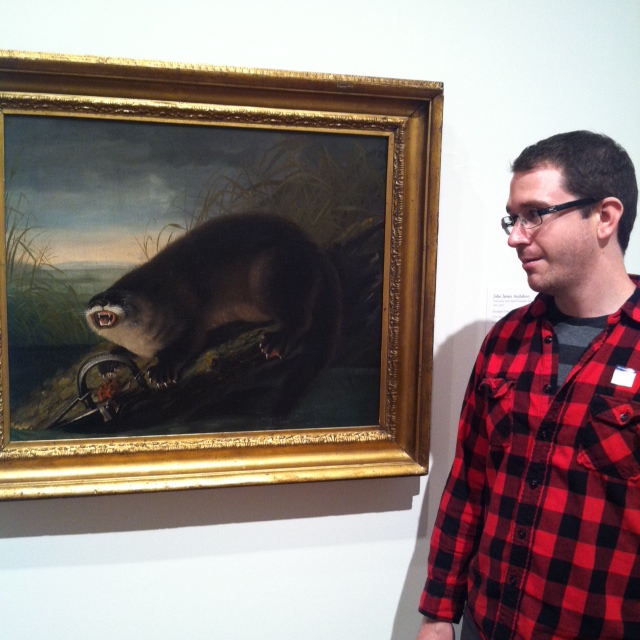
My good friend and former student Marcus met up for a day at the Milwaukee Art Museum today. While there, we took in the wonderful and hilarious Thomas Sully exhibition that was on view. We visited old favorites, like the two Richard Diebenkorn works they own. We also enjoyed a couple new friends, like the Audubon piece below:

marcus7

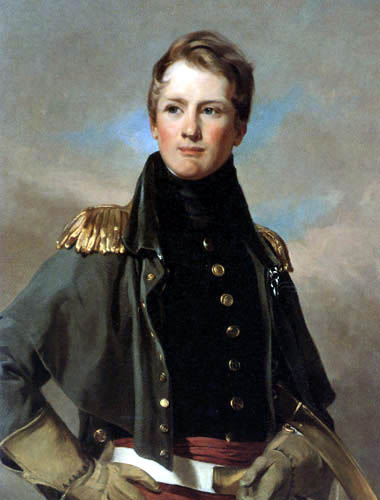
While taking in the Thomas Sully: Painted Performance exhibition, I decided to do a number of quick sketches. I spent between 30 seconds and two minutes on these pieces. If you click on my drawing, you’ll see what the original piece looked like.

They really reminded me of the fantastic Kyle Staver’s work. Staver, who just recently had a show at Tibor de Nagy in NYC, often uses classic themes and large, dynamic compositions in her work. She also manifests a unique sense of the shaping of forms, particularly in how she develops the figures in her paintings. Sully, though very different from Staver and far removed from her in time, also had a feeling for the strange shapes that flesh may take on. What he lost in correct anatomy (foreshortening, proportion) was gained in drama and formal structure. The strange figures he painted often loom from the surfaces in terms of their abstract shapes rather than their representational effect. In some way Sully feels like a progenitor of Staver.

Anyway, here are the sketches – click to see the originals. Enjoy!

image-a

Sketch of Thomas Sully’s Self Portrait, 1807.

image-6a

Sketch of Thomas Sully’s portrait of Mary Ann Paton, 1836.

image-1a

Sketch of Thomas Sully’s portrait of Major Thomas Biddle, 1832.

image-5-a

Sketch of Thomas Sully’s portrait of Mary Siddons Whelen, 1812.

image-9a

Sketch of Thomas Sully’s portrait of Rosalie Kemble Sully as The Student, 1848.

image-4a

Sketch of Thomas Sully’s portrait of John Terford David, 1813.

image-8a

Sketch of Thomas Sully’s portrait of Mrs George Lingen, 1842.

~

All in all it was a pretty nice day. Here’s one more shot of Marcus for the road…

marcus2

Becoming The Student, #1: Shalonda Farrow

Starting this month I will be periodically posting a new series of portraits, beginning with the one below. The title of this series, Becoming the Student, is based on my desire to be quieter and learn from others rather than be entirely bound up in my identity as an educator. In Becoming the Student, I hope to present thoughtful, dignified portraits and use the time while creating the works as an opportunity to learn from the people who sit for me. With each post I will include some observation, quote, or other tidbit of glory that the subject shared with me.

The one below was created in 3 hours or so at a portrait workshop I conducted at The Columbia Art League yesterday. Pictured is my friend (and fellow CAL instructor) Shalonda Farrow. I was struck by how often she used the word “love” (as in: “Thank you, love” or “Do you need any of this, love?”) during the session. In speaking to her friends, she’s always intentional about communicating care and awareness. Shalonda seemed like a perfect initial entry into the Becoming the Student series. Here’s to many more. And thanks to Shalonda and the ladies at CAL!

20131208-155201.jpgShalonda, 13 by 11 inches, pastel on paper. 2013.

The Range Book

My new book, Range: Paintings, Drawings, and Prints ~ 2000-2012, is now available for purchase!

thebook

Back at the end of 2012 I had a solo exhibition at William Woods University. You can read about it and see some images from the reception here. It was a fantastic experience, and I am grateful to Jane Mudd and Jennifer George-Sain for inviting me to present my work there. It really was a resounding success.

I coordinated with William Woods to create a catalog of the exhibition that would present all of the work that was on display, as well as numerous additional artworks that couldn’t be included in the show but which have bearing on the overarching themes and formal ideas with which I was working.  On top of the dozens of images it contains, the book features a series of short texts by me, as well as an introductory piece by the William Woods Gallery Coordinator Jennifer George-Sain. My mini-essays are designed to introduce the different shifts in my production and explain how the different series of work can be understood together. The title of the show, Range, really says it all; there has always been a broad range in my approach to artmaking. In spite of this, all of the pieces contain important threads that tie them together, and this book allows me to briefly introduce those connections and celebrate well over a decade of vibrant, productive time.

This full color book is 192 pages long and features many detail images that highlight special passages in certain artworks. It’s a pretty nice book.

Now here’s the special deal: I know the book is expensive. When you click over to the bookstore from the link below you’ll see just how expensive. But I am going to offer a hand-made, original mandala to everyone who provides proof of purchase. Let me say that again: for the price you pay you don’t just get the book, you get an original work of art as well.

You may be asking just what sort of artwork are we talking about? The pieces will be unframed works on paper featuring a mandala. When you send me your proof of purchase (the receipt that comes with the order or a picture of you holding your copy of the book, etc), I’ll provide you with some examples of what pieces are available and you can choose your own work. Each piece will be made on a piece of high quality fine art paper that is approximately 9 by 9 inches square (give or take a bit). Obviously since these are mandalas the works will be circular but the paper itself will be square. Each piece will be made in one or more of the following media: acrylic, oil, chalk pastel, oil pastel, colored pencil, graphite, and gouache. If you’d like to see a few examples of the type of works I’m describing, click here, here, and here.

If you’re interested, click the image below to see the book purchase page:

blurbshot

If you make a purchase, feel free to email me at balloum (at) missouri (dot) edu to find out how to get your artwork.