Panel Discussion on AI and Art

I had the opportunity to sit on a panel at The Columbia Art League on October 12, 2023. Moderated by Diana Moxon and including CAL Executive Director Kelsey Hammond, the wide-ranging talk engaged with a lot of what artists are thinking about in the age of AI. Watch the video below to see a visual presentation of our research, examples, opinions (and humorous asides) as you follow along with the discussion.

OK Computer Panel Discussion Video

Many artists were mentioned in this presentation, and many others could have been included. A few of them were Daniel Ambrosi, Joey Borovicka, and Geo K. Weissler.

Collab Update

Late last year I talked about how Geo and I were working back and forth with some artwork/carving/A.I./carving/artwork-type collaborative stuff. The process has continued.

I know, I know. You see the initials A.I. and you’re skeptical. As you should be. I’ve been doing a lot of research on A.I. generated images, and while I think the majority of the A.I. space is trashy, there are a few people doing some amazing exploration. Joey Borovicka over in The Timeout Zone is doing quite interesting “synthography” using A.I. models. Wolfe von Lenkiewicz is also making intensive forays into image-making with precision A.I. models.

I have been interested in using image-generation tools in a limited way. Basically, I’ve been incorporating them into the workflow. This means we start with ideas, images that we’ve made ourselves, or carvings that Geo has made. Then, uploading the images as a baseline source for the A.I. generator to use, we add text prompts to encourage various modifications. In this way we use our own images in the A.I. system and calibrate them using the wording we input. Obviously, since the models have been trained on images borrowed from the wider world, we’re viewing this as a limited experiment, but I think it’s worth it.

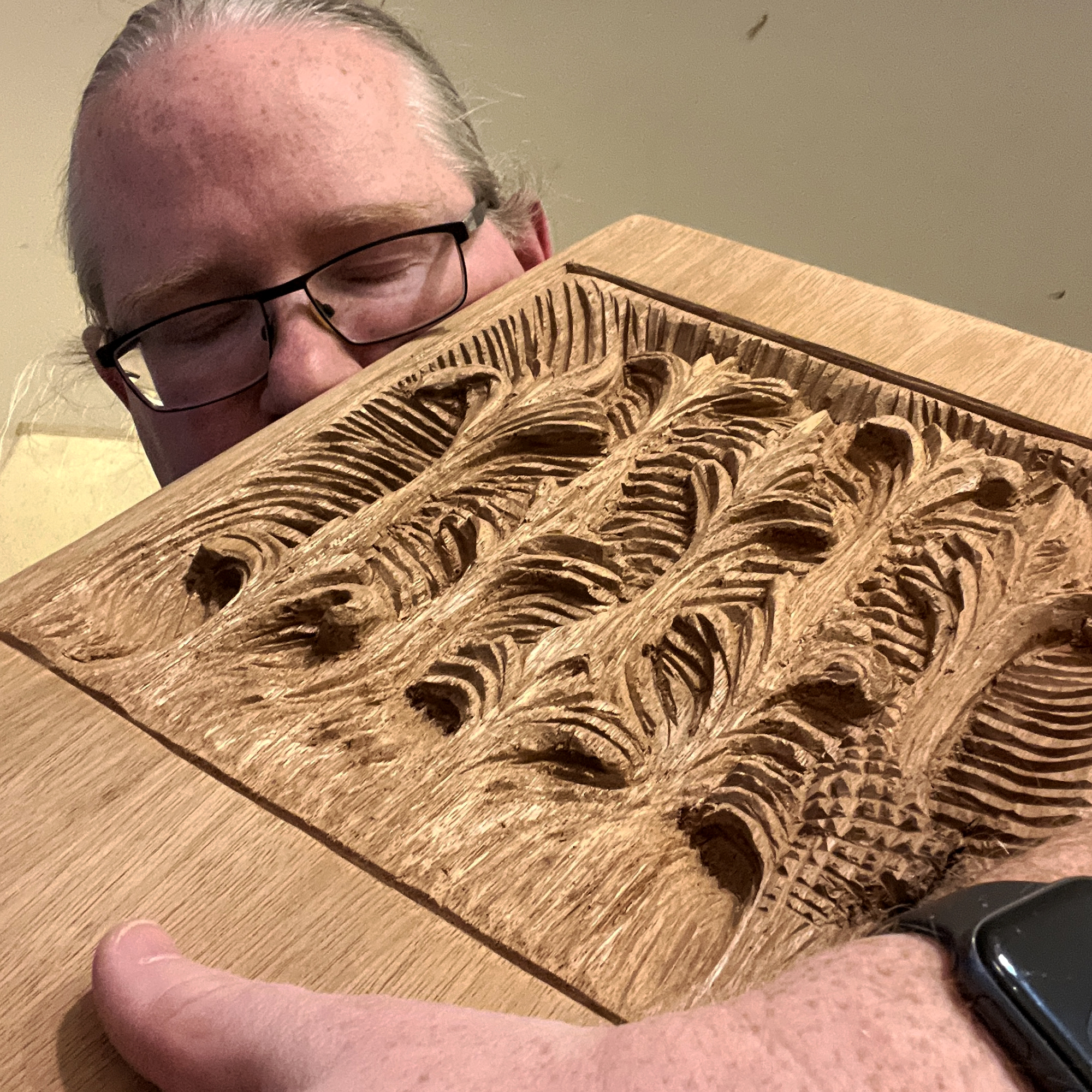
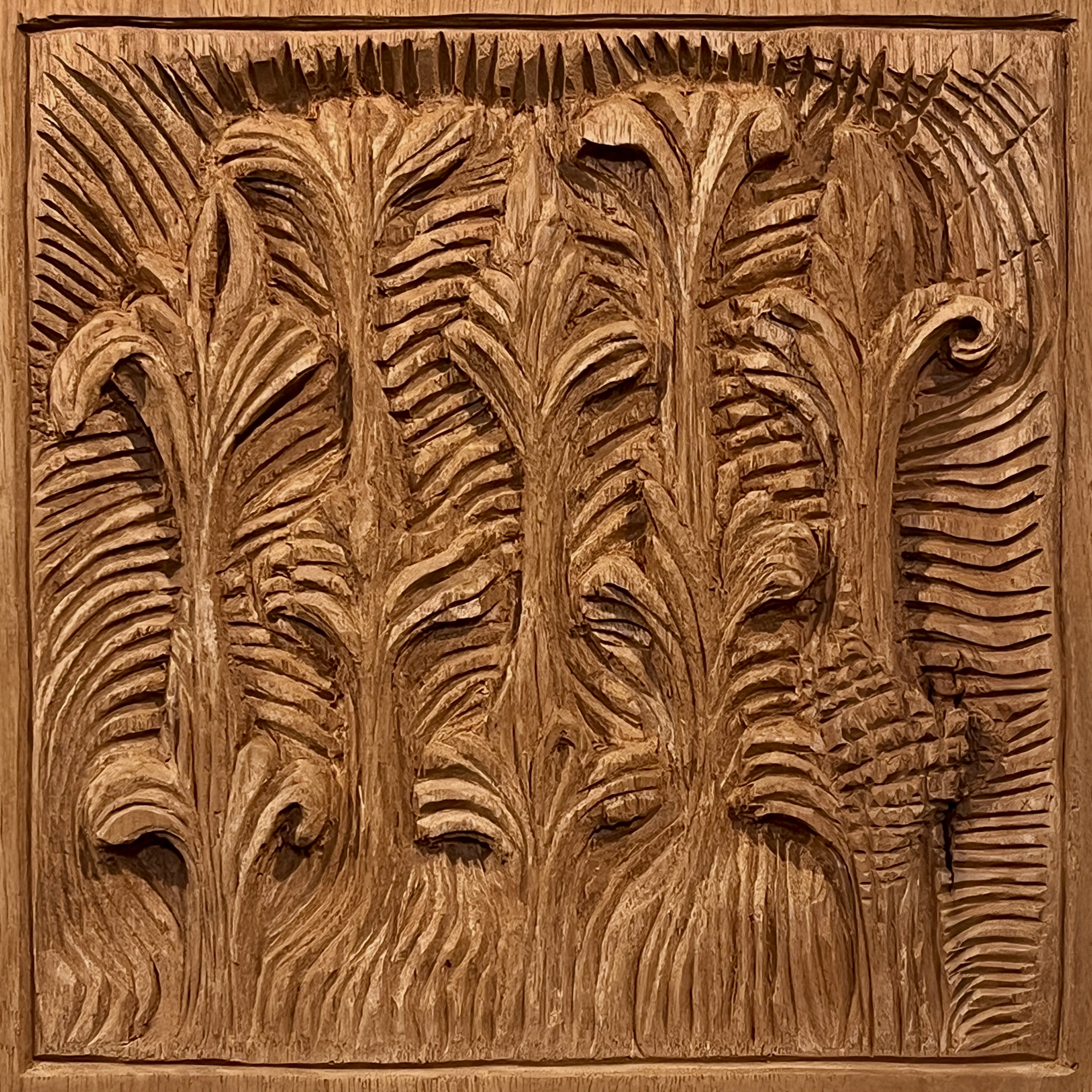
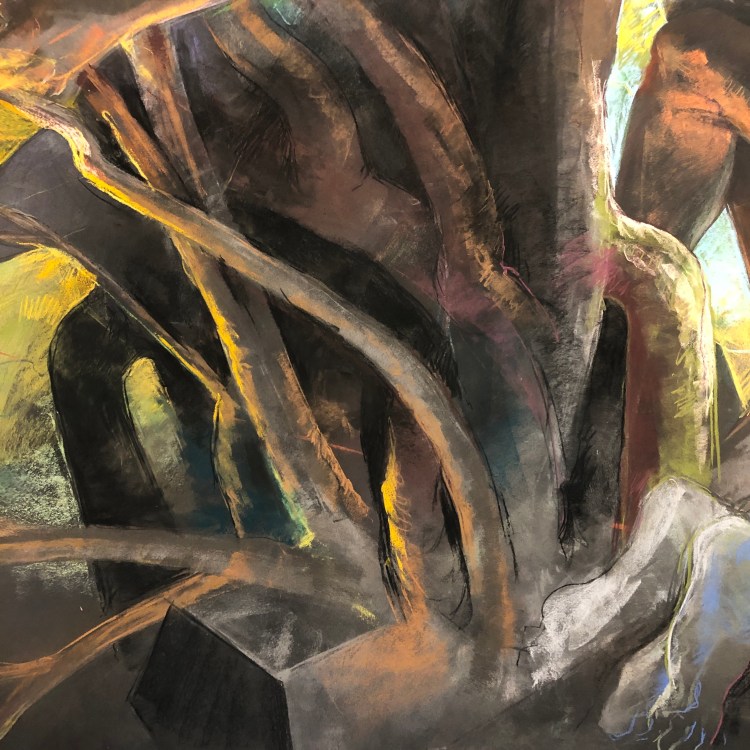
Here’s a sequence of explorations that we’ve done with imagery of the acanthus and my own artwork: first, I used some wording from Geo in the Dream by WOMBO A.I. app, then I loosely drew over the generated images. After making a various edits and selecting one of the versions that I’d drawn, I sent a copy to Geo, who used it as a basis for his carving.

Living Carve. Ballou. 10×10 inches. Ink, colored pencil, gouache on paper mounted on panel. 2023. Private collection.

The image above, Living Carve, was built by using words of Geo Weissler in Midjourney, then modified digitally in Procreate on my iPad. I took that result, printed it on a large format Epson printer using Epson Enhanced Matte paper. I then used colored pencils and gouache to develop the image and enhance the richness of color and depth of surface. Below you can see a shot of the piece framed. You can see some of the surface treatment, the sense of the material accumulating to present the image. I like the chiaroscuro and quality of light. There is a subtle feeling of trompe l’oeil to this piece, which is something I’ve only tried to do a few times before. I may try a composition like this once again. If you’d like to inquire about work like this, visit me on Instagram.

Seize The Sixth, Again

Background

Eric L. Sweet left us suddenly on April 6, 2015, at age 44. Sweet was a beloved member of the MU Art faculty, having worked at MU since 2012 as an Adjunct Assistant Professor, teaching Printmaking, Drawing and 2-D Design courses. He was an alumnus of the Art program, having earned both his BFA (1997) and MFA (2011) from the University of Missouri. In 2008, he received an MA in Printmaking from the University of Missouri-Kansas City. Sweet was an active member of the Southern Graphics Council International and the College Art Association.

The “Running Devil” icon that was embroidered on one of Eric’s shirts.

To celebrate Eric’s life and positive role as an educator, Sweet’s wife, Catherine Armbrust, established The Eric Sweet Exhibition & Speaker Series to continue passing on his gift. I have created a series of work celebrating Eric almost every Seize the Sixth, and this year is no different. I will be donating 100% of the sales of these pieces to the Fund. This program was created because he strongly believed in the importance of community accessibility to art and encouraged meaningful conversations about the state of contemporary art. Funding this annual exhibition and speaker series for the gallery is the perfect way to make contemporary work accessible to the MU and Columbia communities, and to honor this special man who made an impact on so many lives. In fact, the initial funding goal was met in 2021 and the very first iteration of The Eric Sweet Exhibition & Speaker Series took place on December 6, 2021. See the exhibition poster here.

Look over my limited series of CNC relief cuts, posted below. If you’d like one, contact me. You’ll get an icon of Eric’s life and students and community members will get to see art because of the donation I make from the sale. As Eric (and his 4th grade teacher) might say, “You don’t HAVE to, you GET to.”


The Artwork

I’ve made eight artworks for Seize The Sixth this year. There is one group of five CNC relief cuts that feature the classic “running devil” icon that Eric had embroidered on one of his work shirts. Below the devil is featured part of Eric’s axiom, “YOU GET TO.” It’s a proclamation of hopefulness and gratefulness. Here’s a detail of the Running Devil carving if you want to see a close up view.


There are three of these – just the Running Devil without the text.

How to get one?

I can take PayPal, CashApp, and Venmo (click each for a link to my info). If you’re local you can give me cash. The cost $50 each for these. Ones with text are 5.25×5.75 inches and those without text are 4.5×5.5 inches. Each piece is made on a PVC sheet and painted in gold spray paint. Each is signed and numbered. The ones with text are numbered 1 through 5 and the ones without text are numbered 1 through 3. First come, first serve. Feel free to email me if you have any questions – balloum (at) missouri (dot) edu.

Why no Sweet Audio this year?

Most of the time I’ve been able to put together a compilation of classic Sweet audio clips. Unfortunately, I couldn’t find any more usable clips this year. There’s a chance I still have some in the depths of my files, but I just couldn’t locate anything for this year. In lieu of that, please head over to SoundCloud and check out the previous years’ offerings!

Ballou SweetTalk collections for 2018, 2019, 2020, and 2021.


Now, go Seize the Sixth! Remember… you don’t HAVE to, you GET to!

A Talk at Missouri Valley College

On February 25, 2022, I had the privilege to meet with students and give a talk over at Missouri Valley College. It’s about an hour away from Columbia where I teach, and the talk was in support of my exhibition at the college, Digital Art: Exploration and Education. I gave a brief overview of my use of digital tools, from nearly 25 years ago through today. If you’d like to watch the talk, I’ve added in all of the visuals I used, but I also worked in supplemental videos and other support information to bring more background to the talk. Many thanks to Mary Linda Pepper Lane, Sarah Fletcher, and Mike McJilton for their hospitality and conversation during my visit.

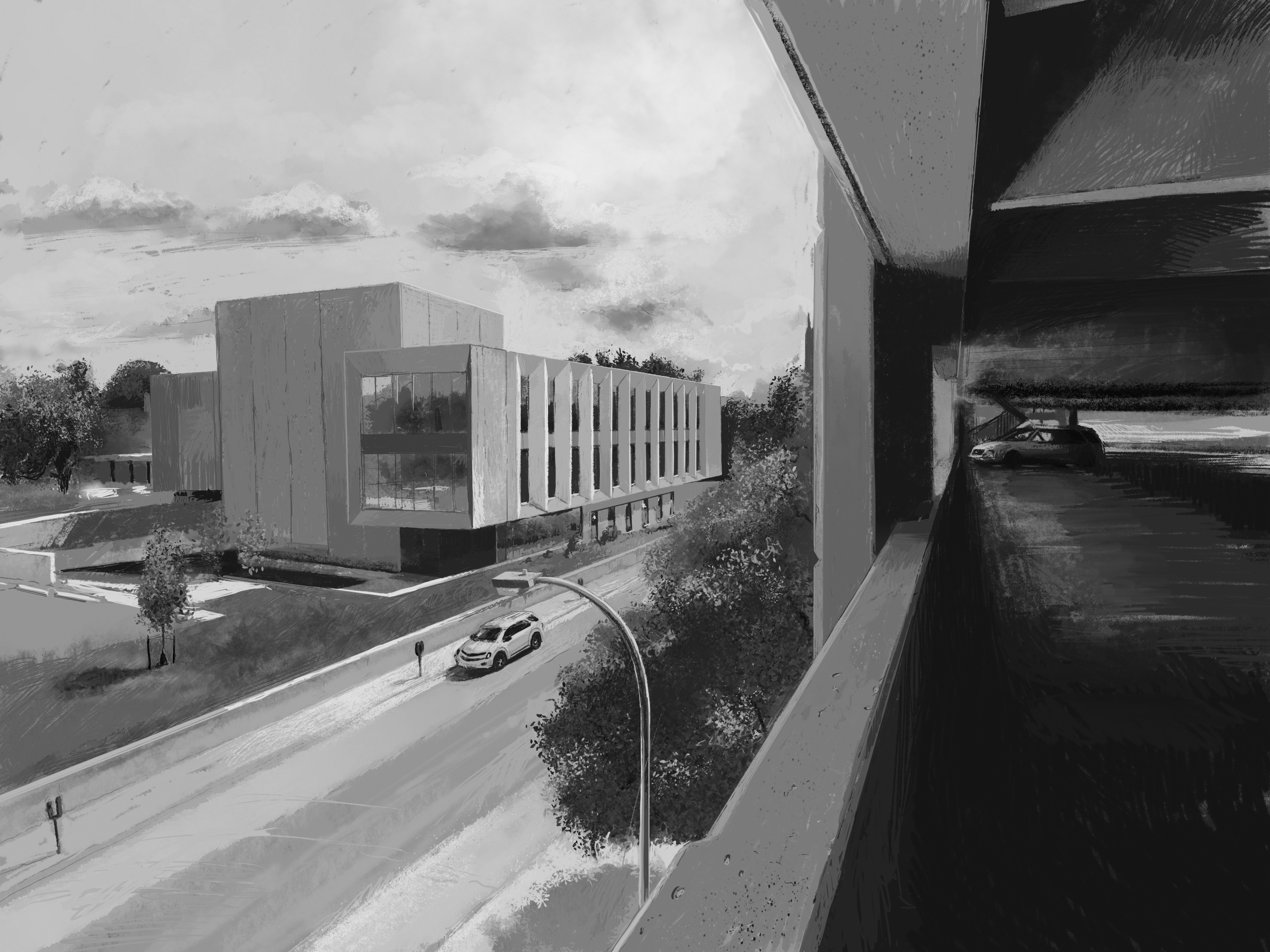
Below are a number of the works I showed in that exhibition. Left to Right, Top to Bottom: “Young Joe,” “Cardiac ICU,” “Touched Pelvis,” “Color Figure Study,” “Hitt Street Parking Garage,” “Jesse,” “Self Portrait With Neck Girth.”

Miranda Grace Makes Interiors

My eldest child, Miranda, is quite the artist (on top of being intense, defiant, powerful, passionate, and smart). Recently she’s been making these very interesting flattened interior spaces.

Miranda, the artist. Aged 10 and a half.

The drawings show an interest in categorization and organizational meaning, which are two interconnected ideas that Miranda has always been focused on. Placement and scale appear to be very important to her right now, too.

Grandma Valerie’s Tea Party
Colored pencil and ink on paper, 11 x 8.5 inches. 2020.

There is also a straightening and flattening of space in these new pieces. This is a little different for Miranda as she does understand perspective to a degree and has shown knowledge of recession of space in the past. However, these works seem to me to be more about the idea of the scene and less about naturalistic space or light.

Aunt Clarice’s Dinner Party
Colored pencil and ink on paper, 11 x 8.5 inches. 2020.

The way that forms extend unnaturally or terminate on two dimensional lines are unique aspects of these drawings. Above, see how the door extends into the floor or how the shelves stop right on the separation between the floor and the wall. These characteristics make the drawings function more as tableaux rather than structurally “correct” space depictions.

I’m interested to see how she combines the symbolic spaces of these drawings and the more expressionistic and observed spaces from her other drawings/paintings. I think that the organization and delineation of objects in her recent drawings are related to a desire for control. When she’s feeling more tense and uncertain, she wants to establish control. When she’s feeling more at ease and free her creates much more expressionistically and with fewer hard lines and forms.

I’ve taken Miranda on solo dates to museums a couple times (see most recently below) and she loves to do sketching from the master works and take in the quiet, calm spaces…

I am sure Miranda will keep growing as an artist and hone a unique way of making her experiences take shape in the world. ❤️

Halloween Portraits

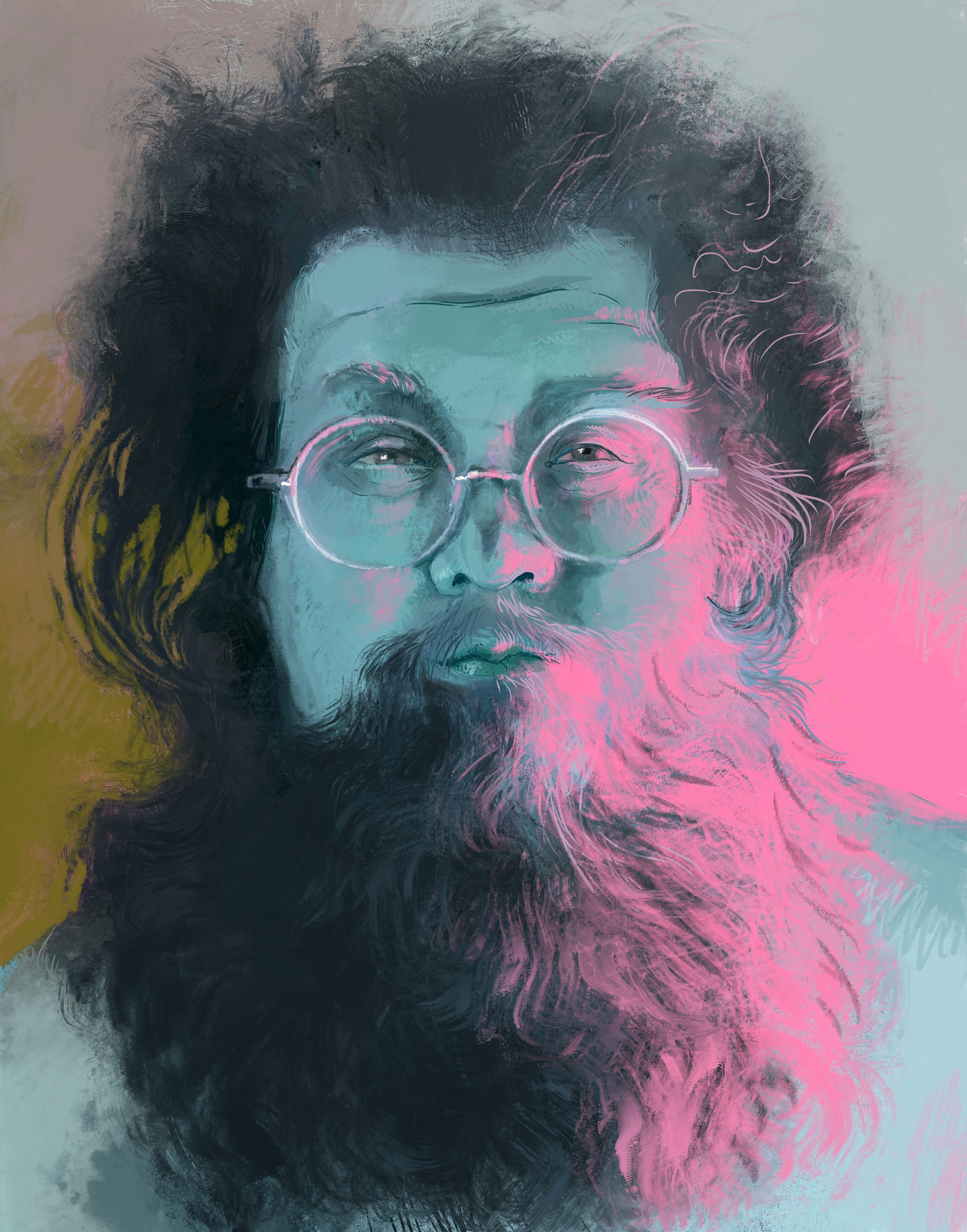
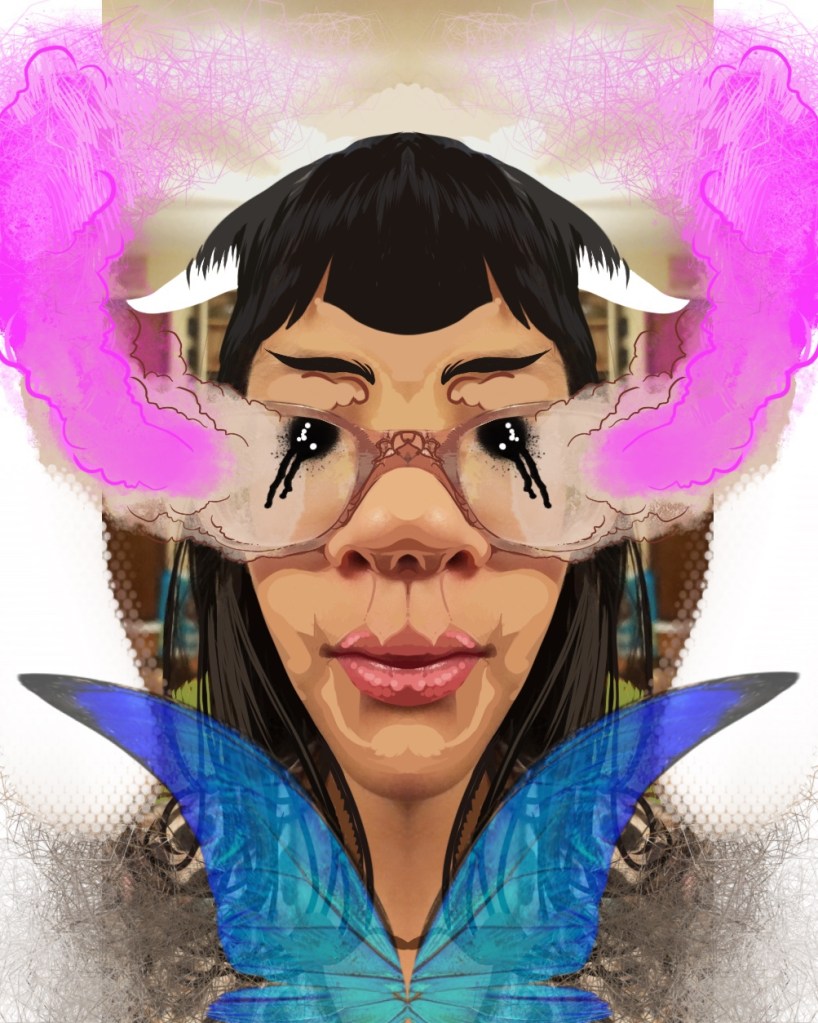
I decided to make a few strange and wonderful portraits for the spoooooky Halloween time, but it ended up turning into a whole family kind of thing. So here we are…

Miranda Grace
MeiMei
FangFang
Atticus
Alison
Matt

I had a fun time manipulating these in Procreate on my iPad Pro. Hope you enjoy them – or are freaked out by them. Don’t forget, fear and anxiety can (CAN, but not always DO) produce a redemptive tension. So go out there and watch The VVitch, or Hereditary, or Mandy, or Goodnight Mommy. Embrace it, then look towards a day of All Saints.

Recent Artist’s Talk and Q&A

My current solo show, The Eternal Idol: Conflict, Impossible Scenes, and the Denial of Human Value, is on view right now (April 4-June 2, 2019) in the Montminy Gallery inside the Boone County Museum.

Detail of Head and Hole.

The exhibition features older work based in personal and spiritual conflict. One such piece is from 2001, created along the eastern shore of Lake Michigan amid the reverie of a pre-social-media world. A number of the large drawings were begun in 2006 and 2007 behind the apartment we rented on Elmwood Avenue in Evanston, Illinois. Little did I know then that those works would find their completion more than a decade later in Mid Missouri after many iterations.

The most recent paintings came from my fury over the US bombing of a Doctor’s Without Borders hospital in Kunduz, Afghanistan in October of 2015.

Detail of Current Events.

All of the works represent my ongoing attempt to picture the impossible spaces created by our collective unwillingness to constrain power, war, greed, consumerism, and ignorance – in ourselves and in society at large. Whether using documentary photos and videos or inventing from the history of the human form as a zone of violent incidence, I attempt to make plain the foolishness of conflict, oppression, and war.

At the reception event for this exhibition, I gave a talk and took questions from the audience. I present that talk here as a video, which features many images of the works on display and a number of photos taken during the reception event.

Detail of The Falling.

Here you can watch the video I’ve uploaded to YouTube. I’d love to hear any thoughts or questions you have – hell, I’ll even respond with more details if you ask me any!

The Glory of 2019 in Color Drawing

Listen. Look and Listen.

The recent work coming out of my color drawing students is phenomenal. They are thinking around my assignments, participating with the materials, and generally making leaps and bounds into understanding the physical properties of pastel and colored pencil (among other things).

Here are just a few of their amazing works this semester.


Sveta Wunnenberg. Study of Hose and Other Objects. Chalk Pastel. 18×24 inches. 2019.
Sveta Wunnenberg. Still Life in Colored Pencil. Colored Pencil. 18×21 inches. 2019.
Madison Read. Still Life with Strawberries and Glass Jars. Colored Pencil. 24x18x inches. 2019.
Devan Sweeney. Gummy Bears. Chalk Pastel. 18×24 inches. 2019.
Jessica Parker. Lunch. Oil Pastel. 16×16 inches. 2019.
Lydia Kappelmann. Apples and Brownies. Colored Pencil. 15×15 inches. 2019.
Elizabeth Finck. Bottle Caps and Pills. Colored Pencil. 17×17 inches. 2019.
Ashley Bigos. Spoon Reflection. 22×10 inches. Oil Pastel. 2019.
Jessica Parker. Reflection in the Angel. 14×16 inches. Colored Pencil. 2019.
Madeline Amack. Lunch. Chalk Pastel. 24×18 inches. 2019.
Sveta Wunnenberg. Me and Carter Reflected in a Spoon. Colored Pencil. 18×18 inches. 2019.


Drawing Logic – Teaching Fundamental Drawing at Mizzou from 2007 to 2018

Examples of various line manifestations from my foundations drawing course.

I’ve taught hundreds and hundreds of students beginning observational drawing methods for over a decade at Mizzou. This is something I’ve been stimulated, encouraged, and challenged by. It’s wonderful to be a part of an ancient tradition.

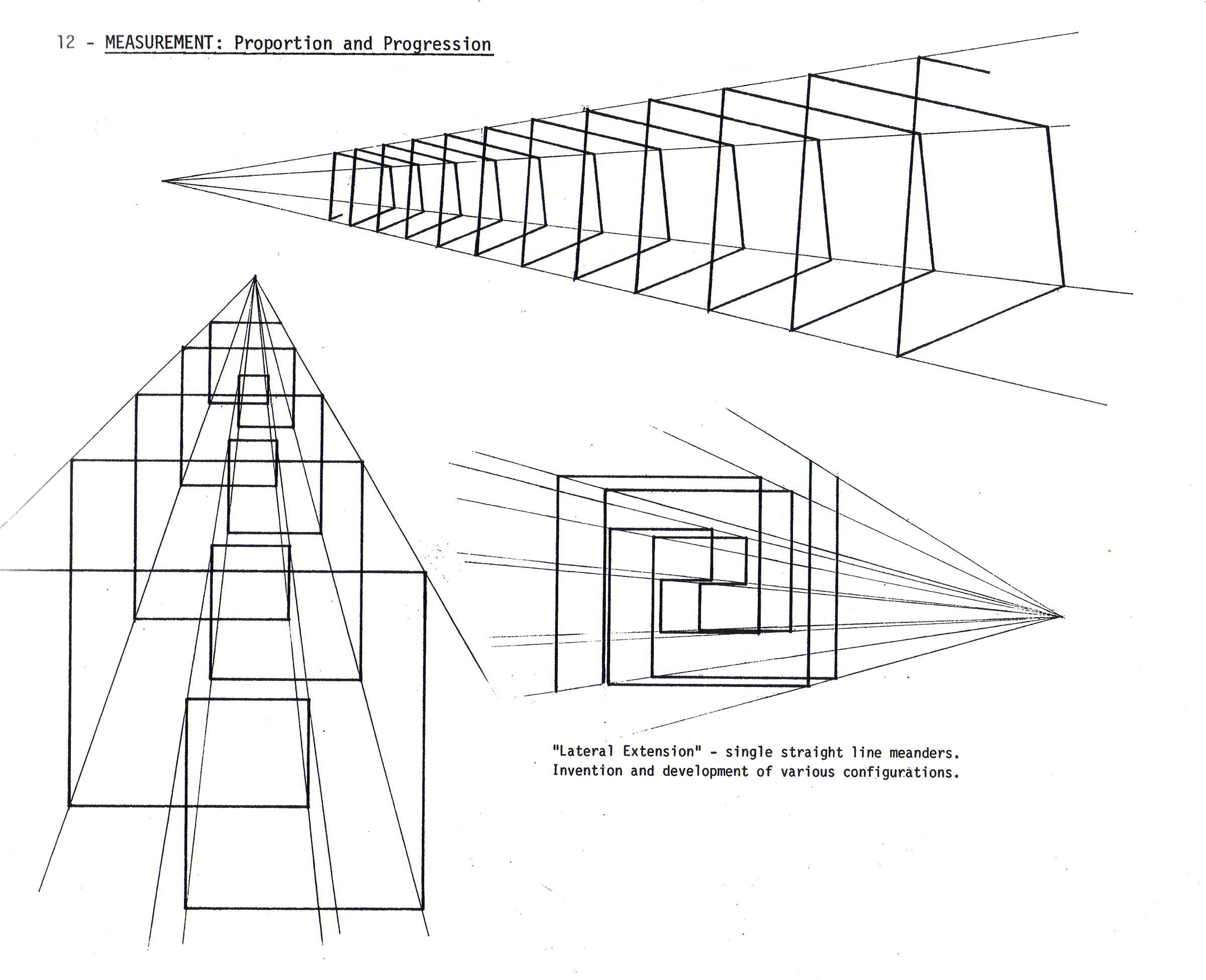
One of the main points of the first few weeks of my Drawing: Materials and Methods course (foundations level drawing for beginning students) is the notion that line, in and of itself, doesn’t make an illusion of space (fig. A). Rather, value – the quality of light and dark – creates a perception of space (fig. B, C). To develop value we accumulate lines, adjust pressure on the tool, or blend the material with which we’re drawing (among other actions) in order to attenuate or amplify the line quality. The coalescing lines form a varied superstructure representing – in 2D form – the perception we have of 3D space (fig. D). These and many other lessons are certainly intuitive and, though they are not an exclusive method, do help novices recognize space and how to translate it. The first few drawings my students make are centered around these concepts. It was Professor William Itter’s Fundamental Studio Drawing text that I used in developing my own pacing, scope, and sequence in the teaching of Beginning Level drawing.

At Indiana University, Itter was a strong force. Having taught there for more than 35 years when he retired in 2009, Bill crafted and then honed a foundational drawing system that influenced me and many of my fellow grads. Over the years a number of the projects he either developed or adapted have been a part of my teaching. In particular, I have been inspired by his Cornice Combo and Linear Topographic Contour projects. Most of us ended up with physical copies or PDF prints of Bill’s collection of projects and syllabus materials (pictured above).

I think you can see the through-line of intention when you see Bill’s project examples and compare them to what I do in class. While I no longer directly reference Professor Itter’s text, it is a strong part of the pedagogical lineage I claim as an educator. Below you can see some of Itter’s Radial and Lateral Extensions, which were influential in my own Atmospheric Beams project.

Atmospheric Beams by Robert McAnelly. 18×24 inches.

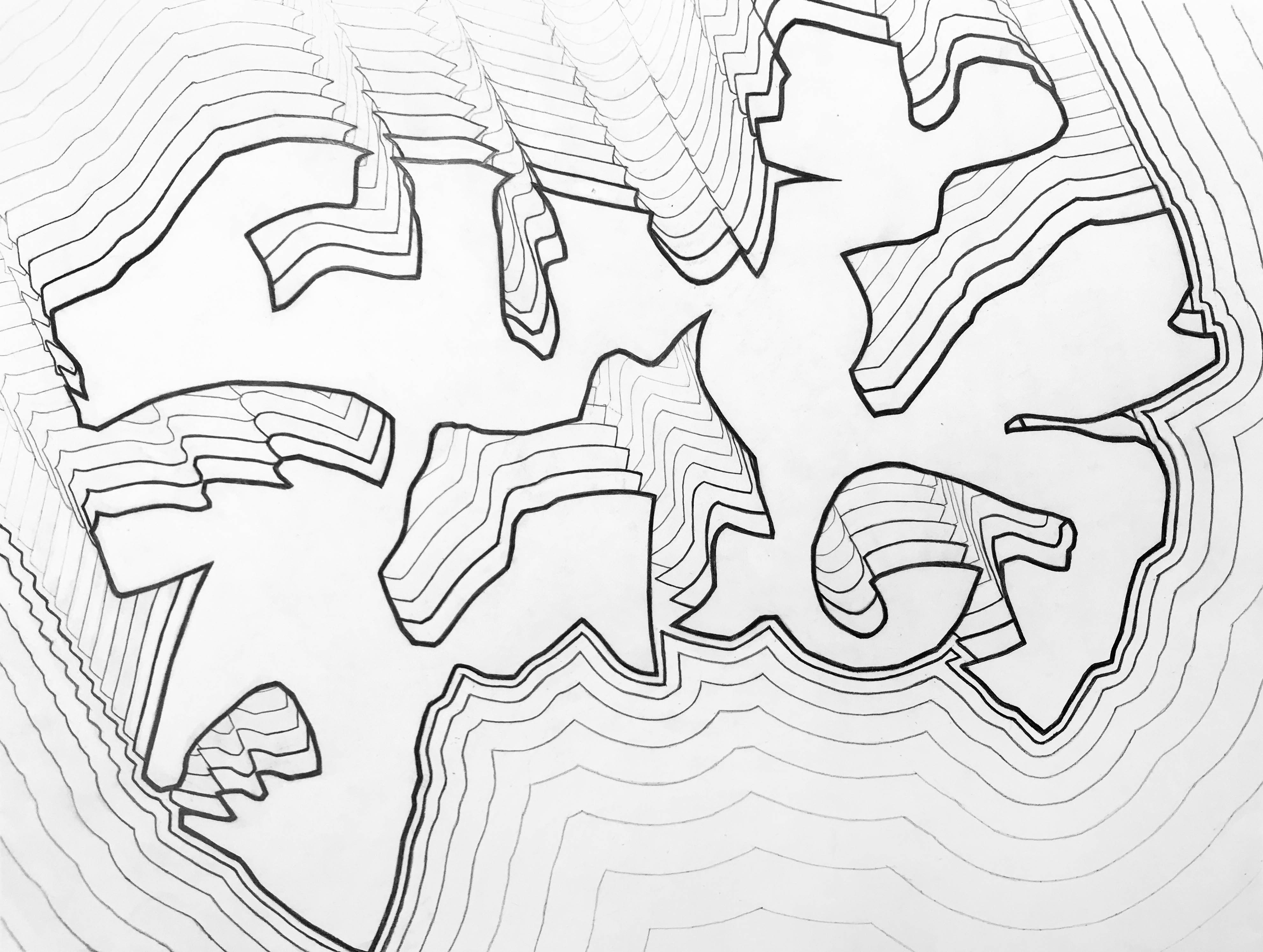
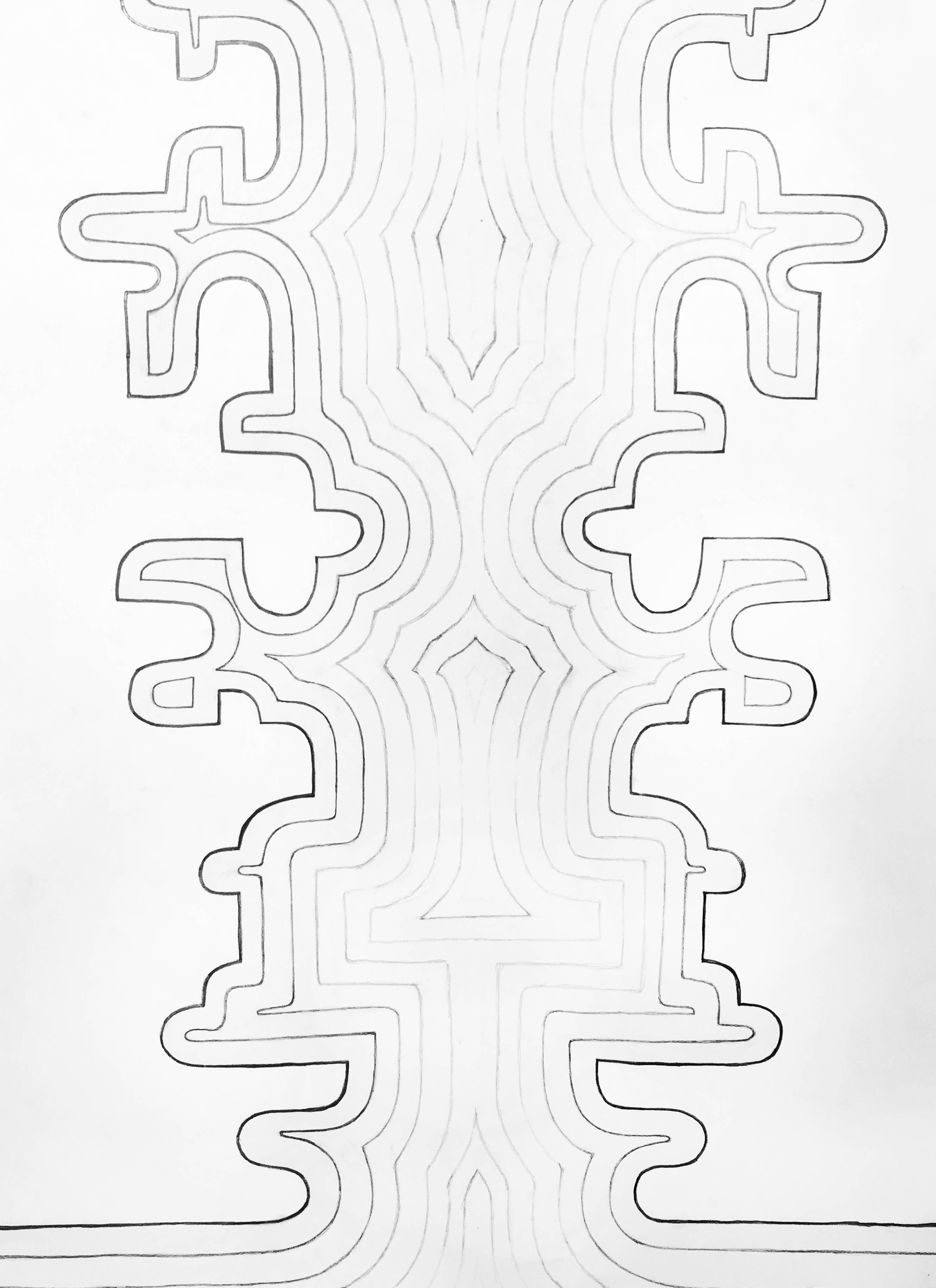
Of all of the various projects crafted by Bill that I used back in the early days, only three are truly and deeply connected to my foundations drawing teaching today. Of primary importance is Meandering Band, as well as the aforementioned Atmospheric Beams. You can see that Professor Itter’s example images are still being reiterated through time in the work of my students.Notice how this Cornice Combo image relates to my recent students’ Meandering Band works:

Photo Aug 31, 10 54 11 AMMeandering Band by Hannah Westhoff. 18×24 inches, graphite on paper.

Professor Itter used many examples of gradients in his projects, and he began by asking students to conceptualize line quality through the idea of space and physical pressure upon the tool (at least that’s how I integrated his ideas into my thinking). So sample studies from Itter such as this one (which I use as a first class ice breaker project)…

…translate into more formal Meandering Band works such as this:

Meandering Band by Katie O’Russa. 18×24 inches, graphite on paper.

…or this:

Meandering Band by Seth Steinman. 24×18 inches, graphite on paper.

My ultimate aim in carrying on a very truncated version of Bill’s foundational drawing projects is really an attempt to establish the importance of observational iteration in my classes. All of my classes are, at their deepest center, about attention and awareness. My hope is that continuing to use a few of Professor Itter’s projects my students gain an understanding of what their eyes are doing in the world. The way we amalgamate visual and material structures into meaningful ideas is part of what makes us human. Now that we are living in an age where algorithms designed to manufacture our purchasing consent drive much of our cultural events and expressions, it is so important to grow in our awareness of how we are being manipulated by these systems. This understanding begins with a knowledge of visual dynamics and the ability to take command of how our eyes operate. I think Itter knew this when he created his foundational drawing projects, and I try to bring that tradition of thoughtfulness into the 21st century.


Collaboration

In my experience, there are very few artists who are NOT, at heart, essentially collaborative (I recently wrote about artist collaborations here). Certainly there is a neurosis to creative living that sometimes results in isolation and resistance to the free flow of ideas and actions. That’s a stereotype, though.

Above: Three Exquisite Corpse drawings I made with two of my daughters – Miranda and CaiQun. Graphite on paper, 11×8.5 inches, August 2017.

The truth is that we find strength in our collaborative efforts. This is true whether the collaboration is in the context of specific works of art or if it is (as it often is) in the context of making community. So many artists I know advocate for each other – that’s collaboration. So many artists I know curate shows, craft opportunities behind the scenes, and act as allies to those around them. That’s real collaboration.

They do this without expecting or needing a slap on the back.

In my own life as an artist, especially since I started teaching full time, collaboration and shared creation has been gigantic. I also think my children have played a huge role in developing my sense of receptivity and shared ownership of creative endeavors.

We aren’t islands. We don’t have to be disconnected. Connection is hard – it makes us vulnerable and awkward. It also forces us to mature, to live beyond a kind of precious singularity or purity of thought and action. It asks us to believe in other people and to believe in ourselves.

I’m posting a few of my current/recent collaborations here. Of course, my best and most central collaboration is with Alison. But in terms of art, the pieces I’m showing here are ones I’m really proud of.

img_7422Above: Collaboration with Kyle Hendrix – in progress. Ceramic, paint. Approximately 10x10x10inches. 2017.

Below: Works made with Joel T Dugan. First is Plié – Oil, acrylic, marker on shaped panel. Approximately 10.5 by 10.5 by 1.5 inches. 2016-2017. Below that is Jaunt – Oil, acrylic, marker and spray paint on shaped panel. Approximately 11 by 11 by 1.5 inches. 2016-2017.

ballou01-plie

ballou02-jaunt

The collaboration with Joel has been very important to my development, especially since my heart attack in 2016. There is a constellation of Indiana University MFA grads scattered across the US, and I feel as if we are all constantly jostling each other. It is not uncommon to see many of us working together. I think that says something about the strength of that program. I am always aware of what many of the IU people are doing. Their work motivates me and challenges me.

Another friend I’ve worked with on and off over the years is my former student Allison Reinhart. We’ve worked on a variety of projects over the years, from exhibitions to prints, but right now we are building a very special box. The mirrored box, which I am fabricating, and that Allison conceptualized and is designing the external features of, is a container of containment.

Above: views of the mirror box – approximately 14x14x14 inches, 2015-2017.

My professional work over the last half decade has included a significant curatorial component. This means building proposals, playing with ideas, working with artists, finding funding, giving talks, and really so much more. I’ve gotten the chance to work with some of my heroes – like Anne Harris and Tim Lowly – through this process.

Right now I’m coordinating with several awesome artists for a show that I hope with travel to a number of venues – our first exhibition opens at the George Caleb Bingham Gallery at the University of Missouri the last week of September 2017. In particular, it is so wonderful to have the chance to present works by Sharon Butler and Gianna Commito. These women are two of my favorite painters, and the way they challenge and nurture painting as a form is inspirational.

Perhaps the most effective art collaboration I have is the one with Deborah Huelsbergen at Mizzou. Deborah is a graphic designer, lover of mandalas, and fierce advocate for the power of teaching. She LOVES it. She LIVES it. And our university is better because she’s here. Over the last few years Deborah and I have gotten to give a number of workshops and orientations together, and I just love getting to share the room with her wisdom and passion. Whether we are leading other educators in exercises to stimulate their own creativity or helping new grads understand how to handle their classrooms, we always seem to know how to wordlessly coordinate. Deborah is awesome!

I am really looking forward to my upcoming collaborative exhibition with former student and current friend Simon Tatum. Whew – the Cayman Islands?! Colonial histories?! Cultural excavation and interrogation?! It’s going to be amazing – check back for more information.

And how could I mention collaboration without talking about my work with Marcus Miers? You Show Me Yours, I’ll Show You Mine. WOW.

marcusmatt02Above: Photographic pairing – a shared work by Matt Ballou and Marcus Miers, 2010-2011. We showed these works at the 930 Art Center in Louisville, KY once.

There are MANY more instances I could go into (like making beer with Norbz), but perhaps the best collaboration to end on is the one I have with my students. They come from all over the world. They have all sorts of different experiences and expectations. Yet, without fail, every semester we work together to build a fun, challenging, strange, stimulating learning climate that makes a difference. I couldn’t do it without them.

Making paintings, crafting shows, team-teaching… so many ways to become more than myself. I’m very grateful for that. Here’s to collaboration!

13725109_10154344363709491_3439759102298509937_o

Collaborative Online Drawing – for more information see here.